
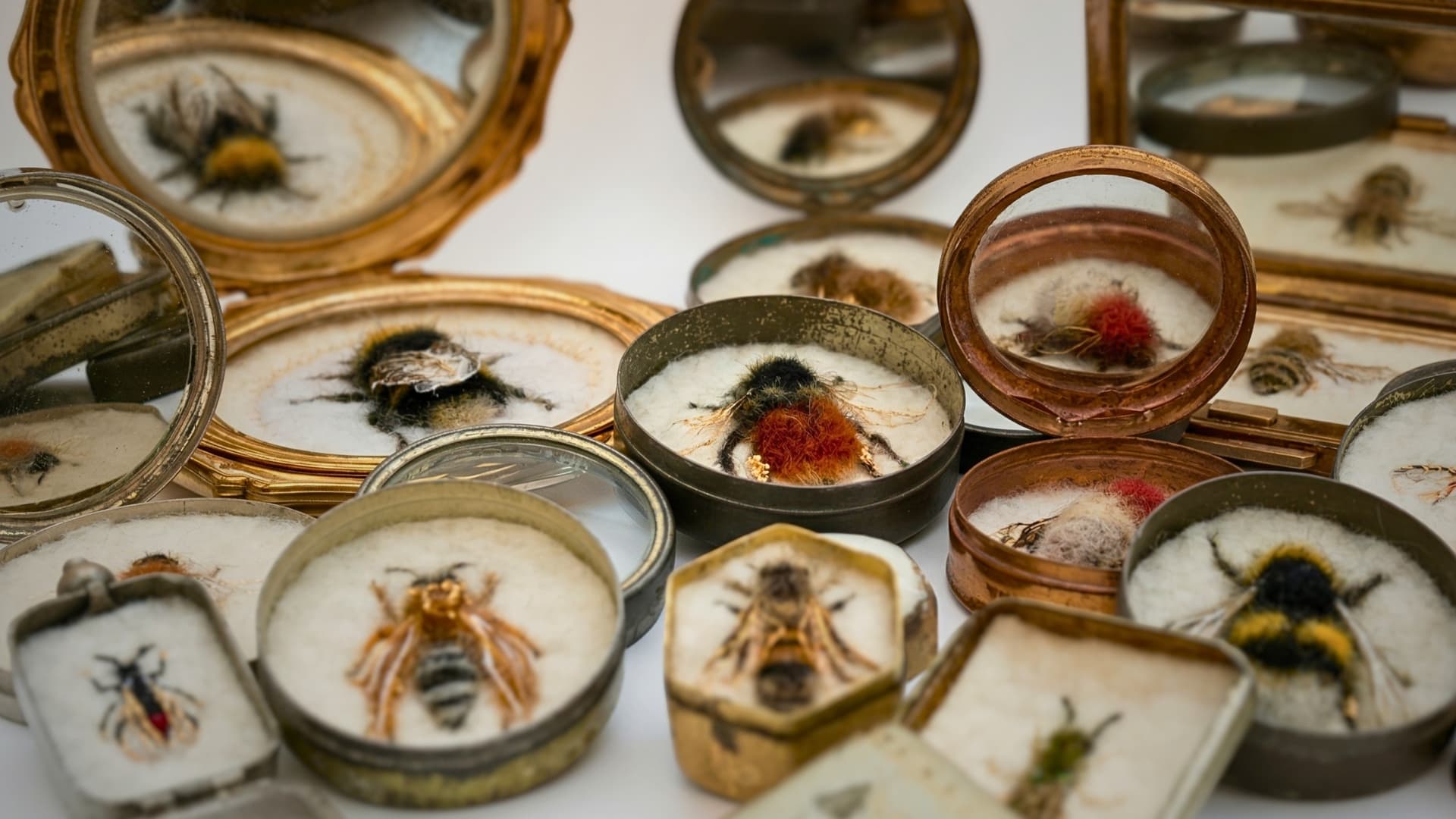
Lydia Needle, an eco-activist, reimagines waste and vintage textiles into art. Her work encourages deeper thinking and stimulates conversations about the human and environmental impact of the textiles industry.
Needle felting embellished with stitch is just one of the techniques Lydia uses to deliver her message. Her work references how interconnected we all are. And her practice shows how collaboration can drive reflection, growth and collective impact.
A lifelong maker, she combines experimentation and play with in-depth research, creating a balance between intuition and a strong conceptual foundation.
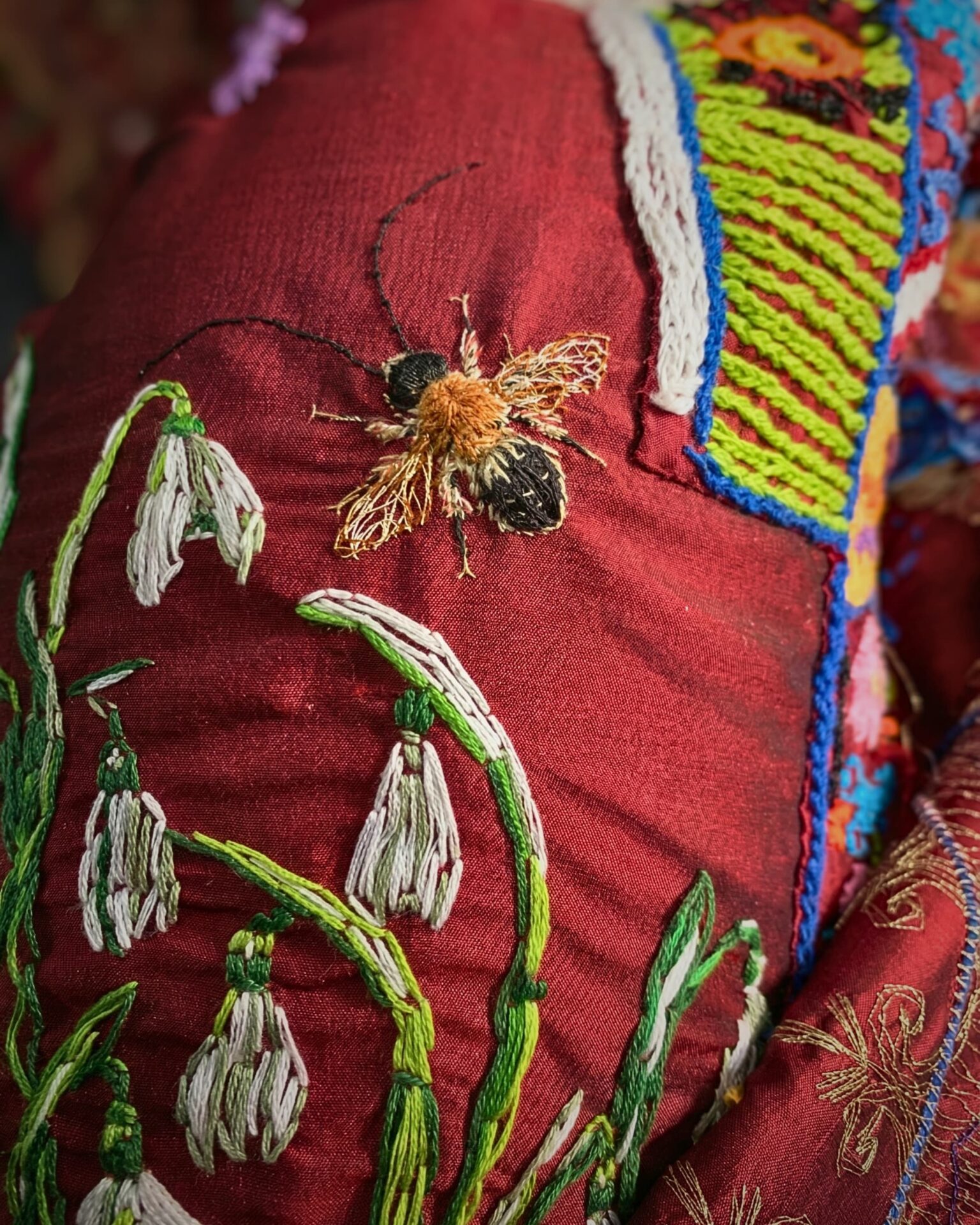
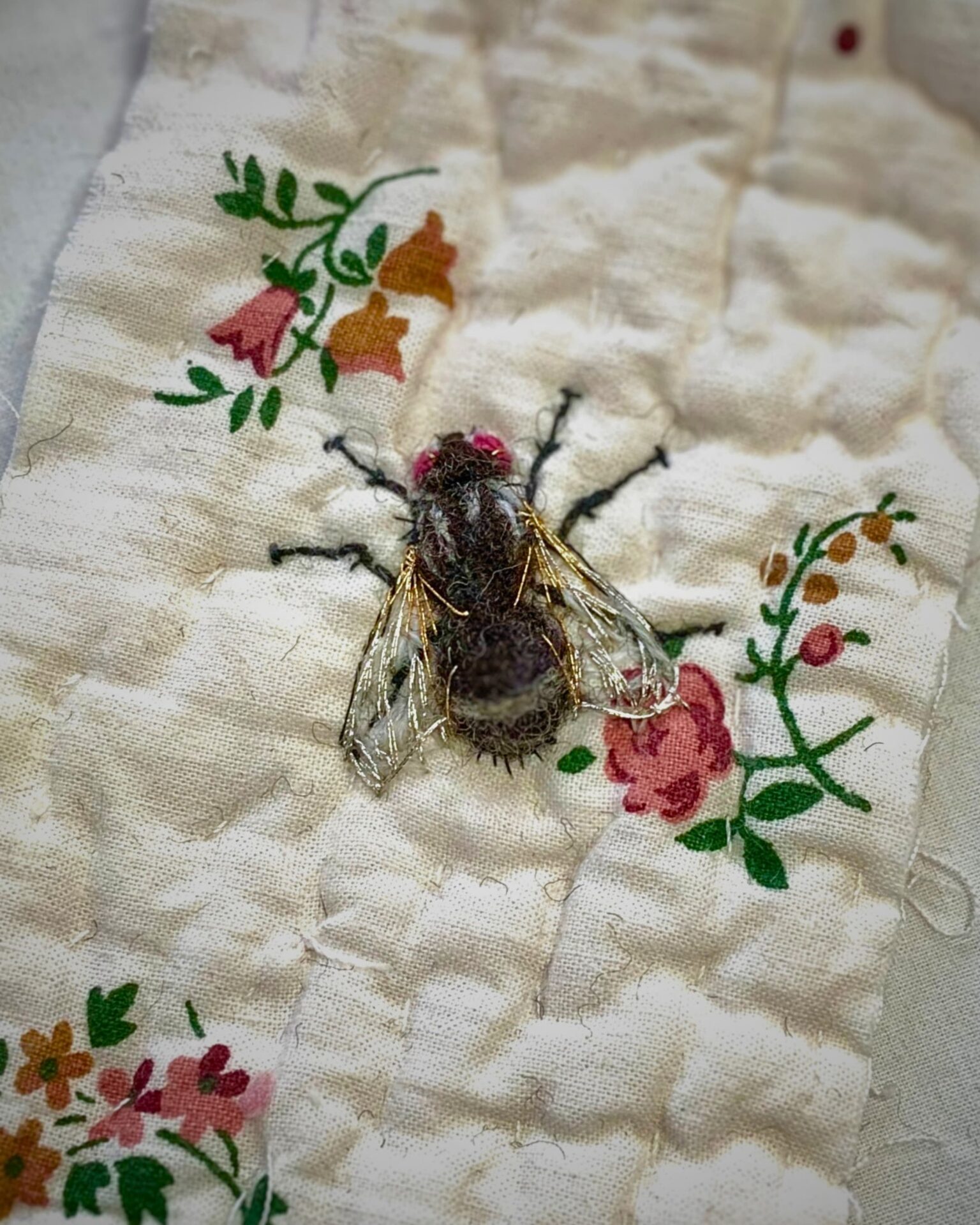
Lydia Needle: I create eco-conscious art that uses reclaimed materials and collaboration to explore environmental interconnection through gentle, reflective activism. My aim is to raise awareness about issues like biodiversity loss, especially pollinators, as well as textile waste.
My approach is subtle – it’s a ‘gentle protest’. I invite reflection as opposed to demanding it through confrontation.
I’m drawn to the quiet, often overlooked relationships between people, places and the natural world. We are all interconnected.
“I allow my process to be guided by place or weather or creature.”
Lydia Needle, Eco-conscious artist
Guided by the natural world
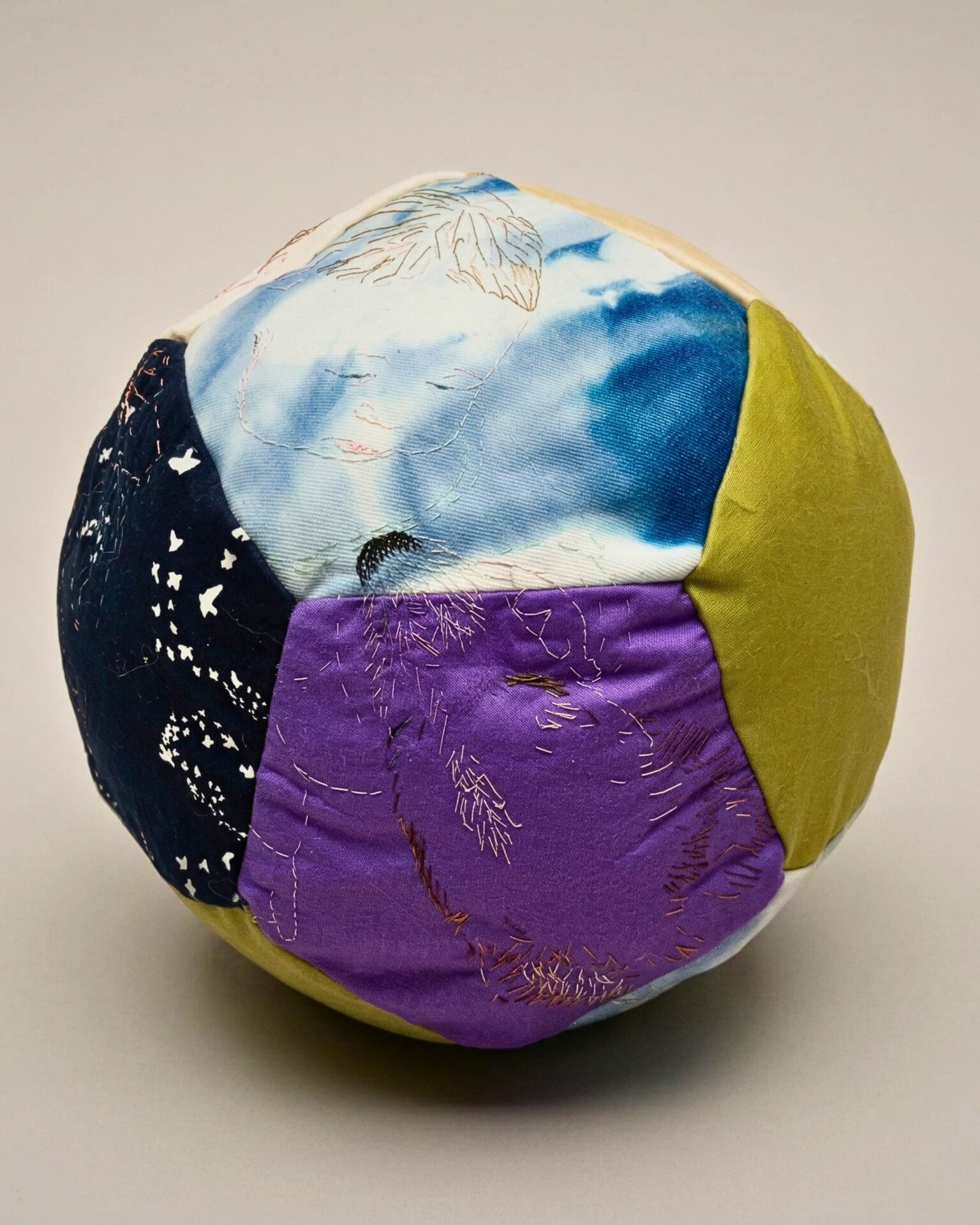
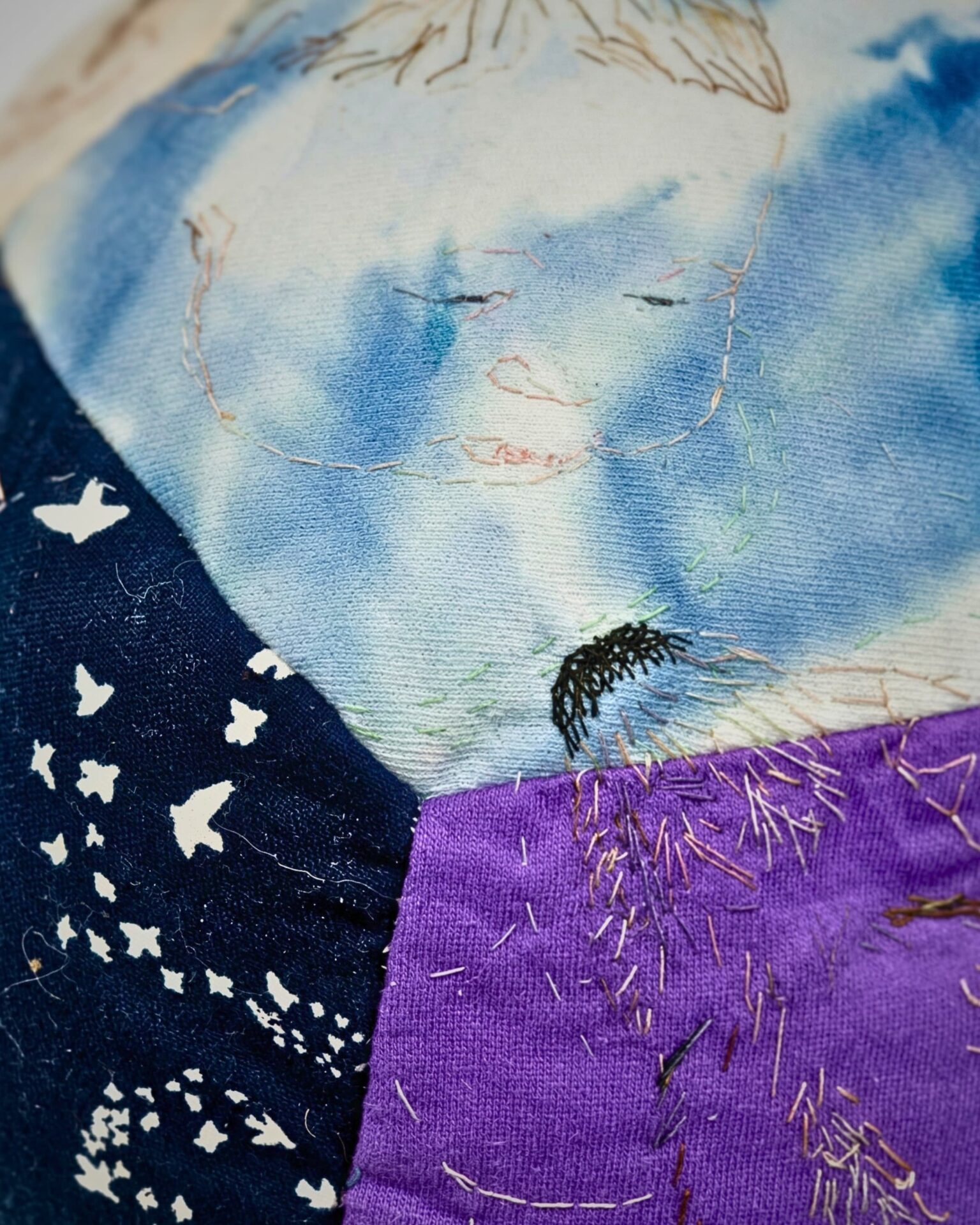
My work emerges from a need to pay attention, particularly to native bees and their fragile, specific habitats. Materials and process are integral to that attention. I work mostly with waste fabric and old threads, and I use a lot of stitch.
I tend to work in ways that are slow and responsive, often shaped by the environments I’m focusing on. This might mean observing, gathering or working directly within a site.
What attracts me most is the tension between visibility and disappearance. For example, how something as vital as pollination can remain largely unseen and unknown to most of us.
Through my work, I try to hold space for those small, essential presences, while also finding ways to engage and inform others. I’m inviting closer observation, sparking curiosity and encouraging a deeper understanding of our shared environments.
I’m interested in how creative practice can inspire greater awareness and care, opening conversations about how we notice, value and coexist with the natural world.
Flexibility in process
How I plan and create my work varies depending on the project and the stages within it.
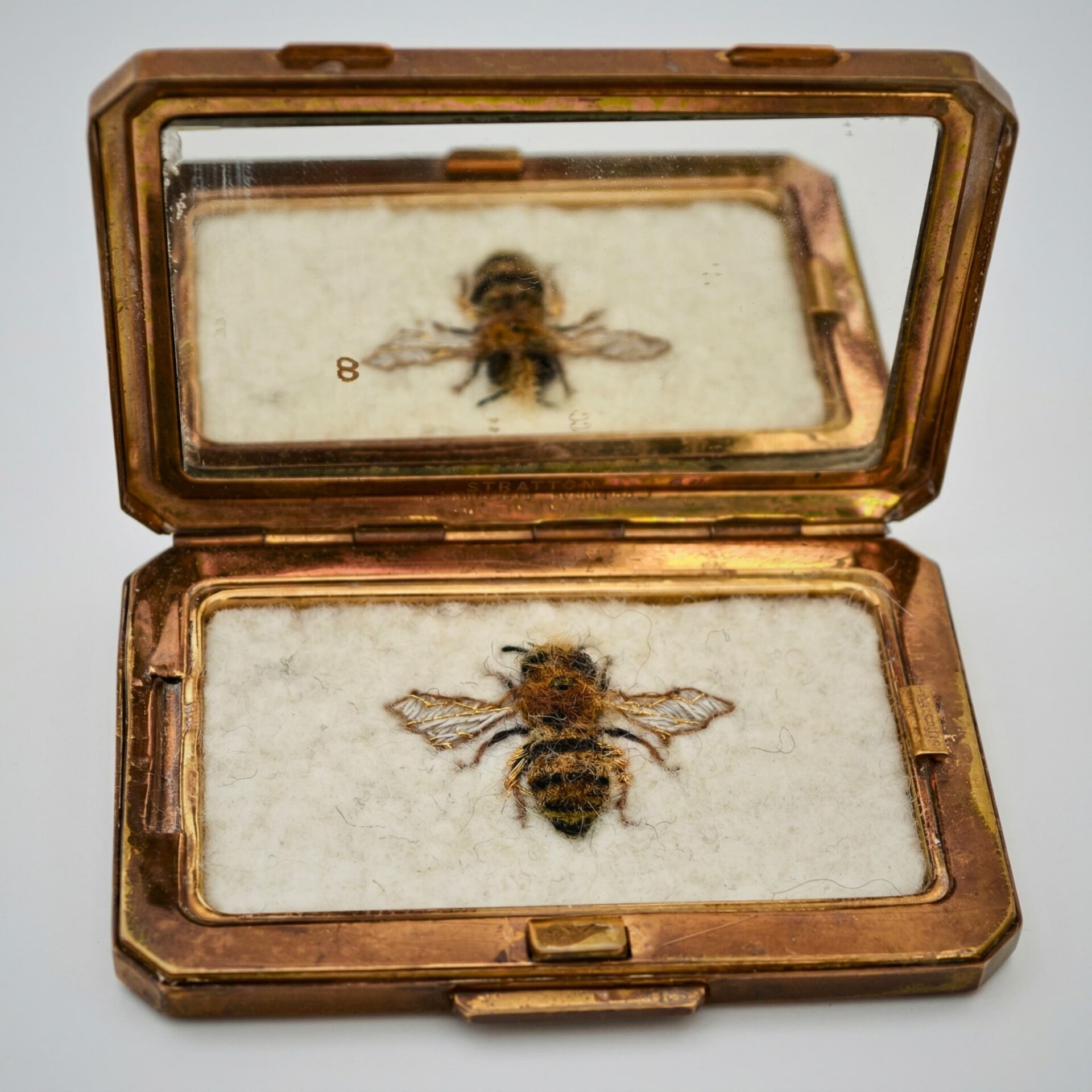
For example, for the Fifty Bees The Interconnectedness of All Things project there are months of planning, admin and research. I have to decide which bees will be included, as well as select and support the companion artists.
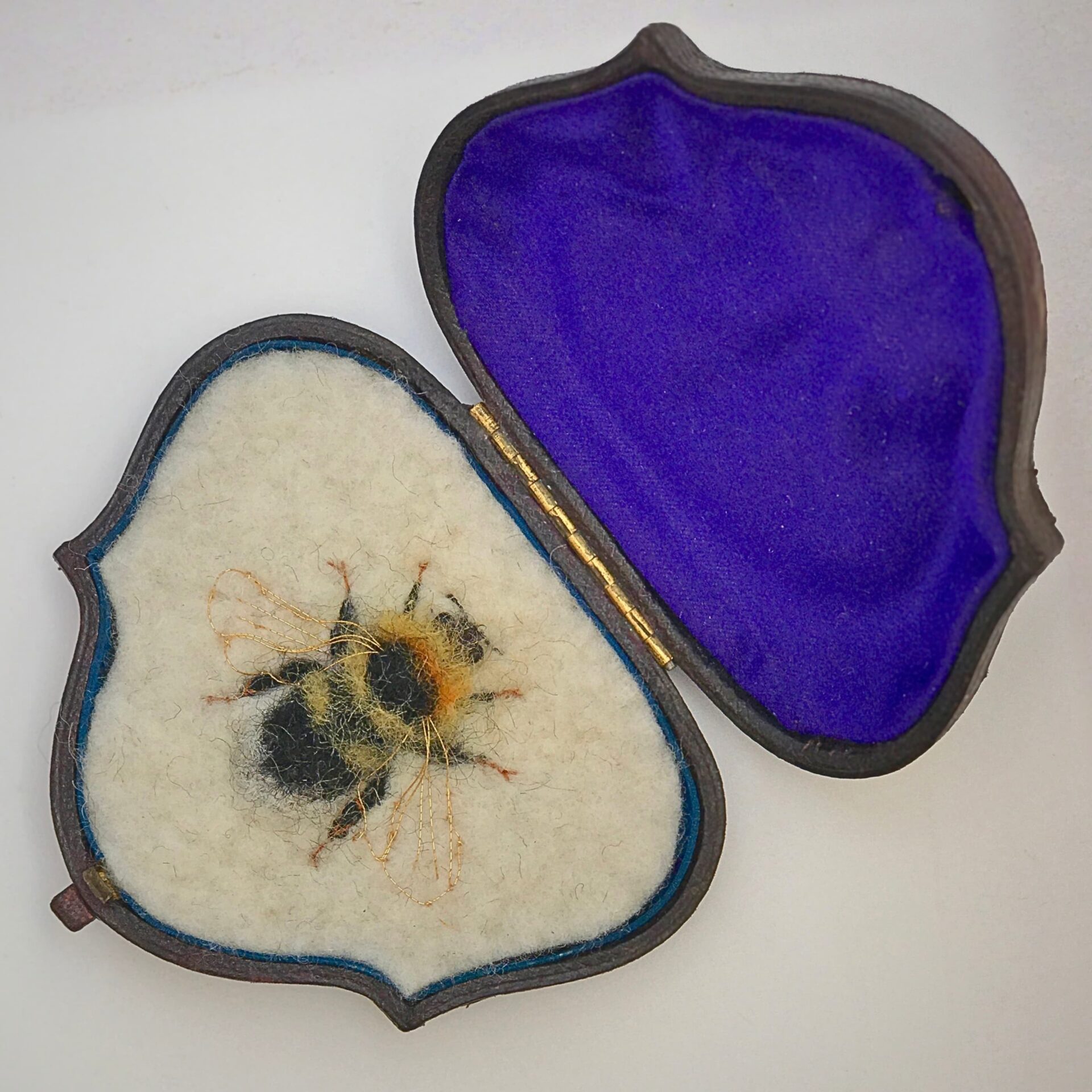
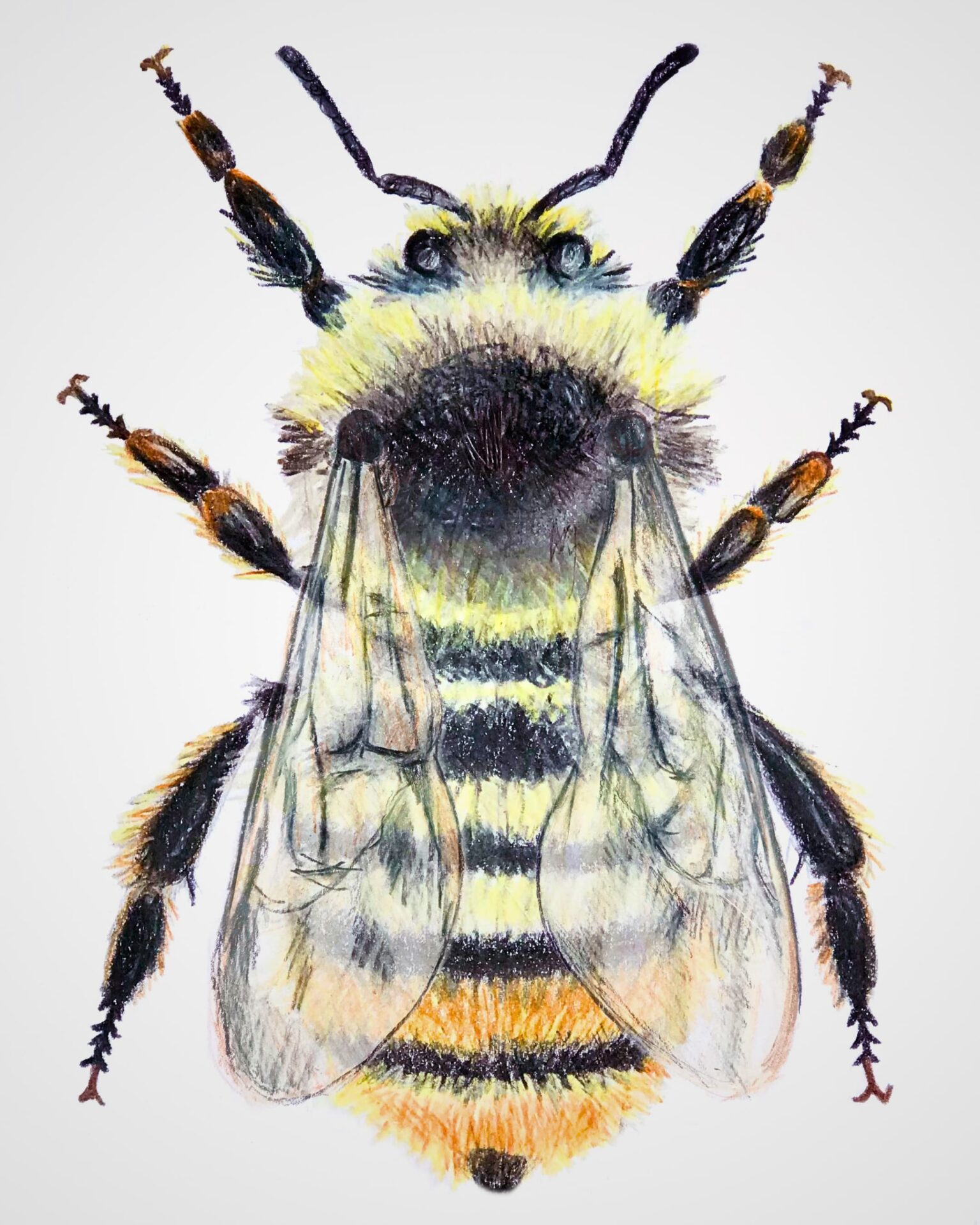
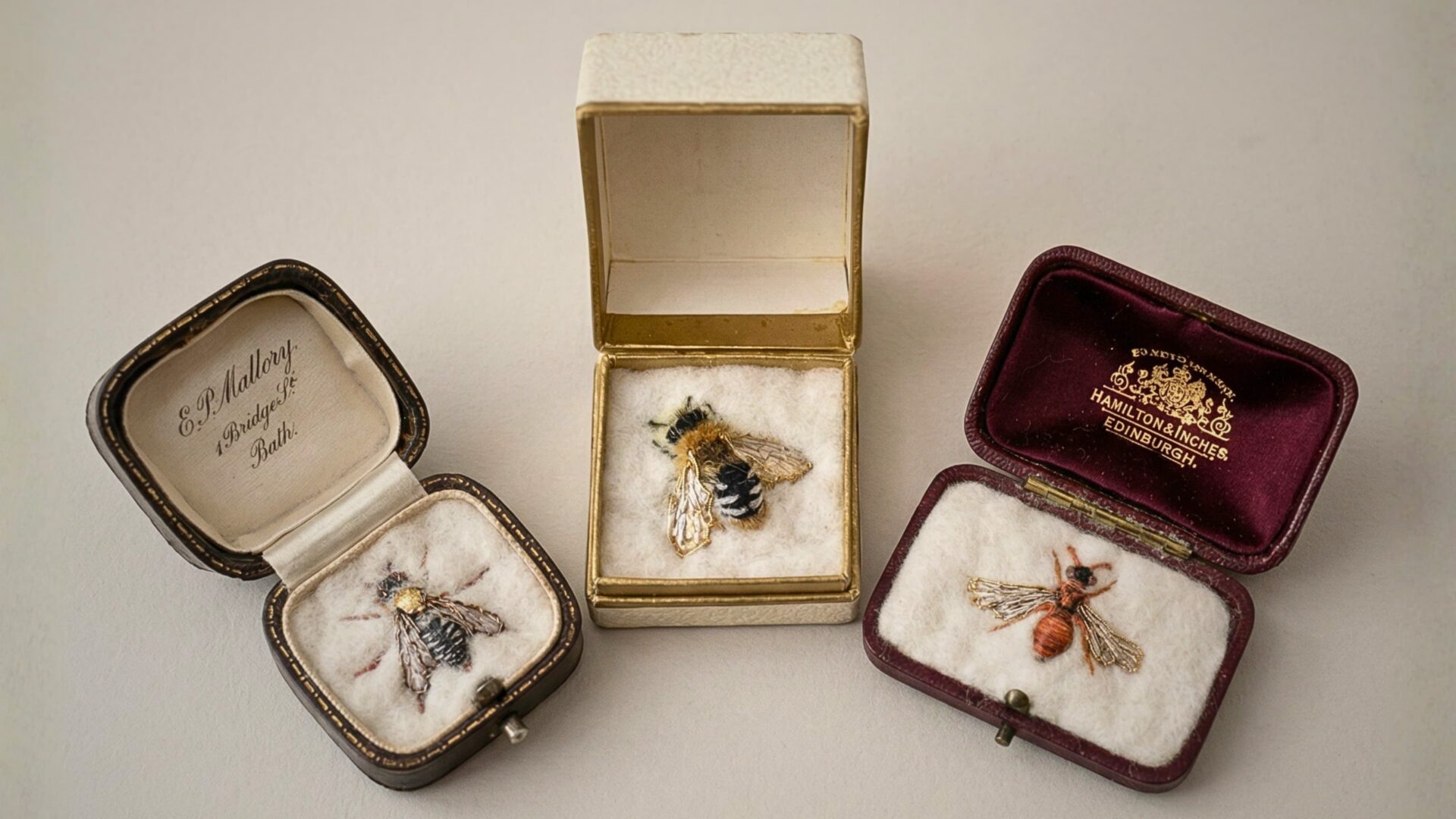
Then there’s the research about the bees themselves. If I want to create a work of art that resembles an actual bee species, I must ensure that the foundation, the bee’s body, is anatomically correct. Only then can I build the colour and character on top.
Although this labour and time is invisible in the work or the exhibitions, it’s like scaffolding; without it, the work isn’t as strong.
However, the execution of work is very different. At the start of making an individual bee, I don’t know how it will look, how the wings will be positioned, the threads or even the container it will be presented in. That evolves once I start.
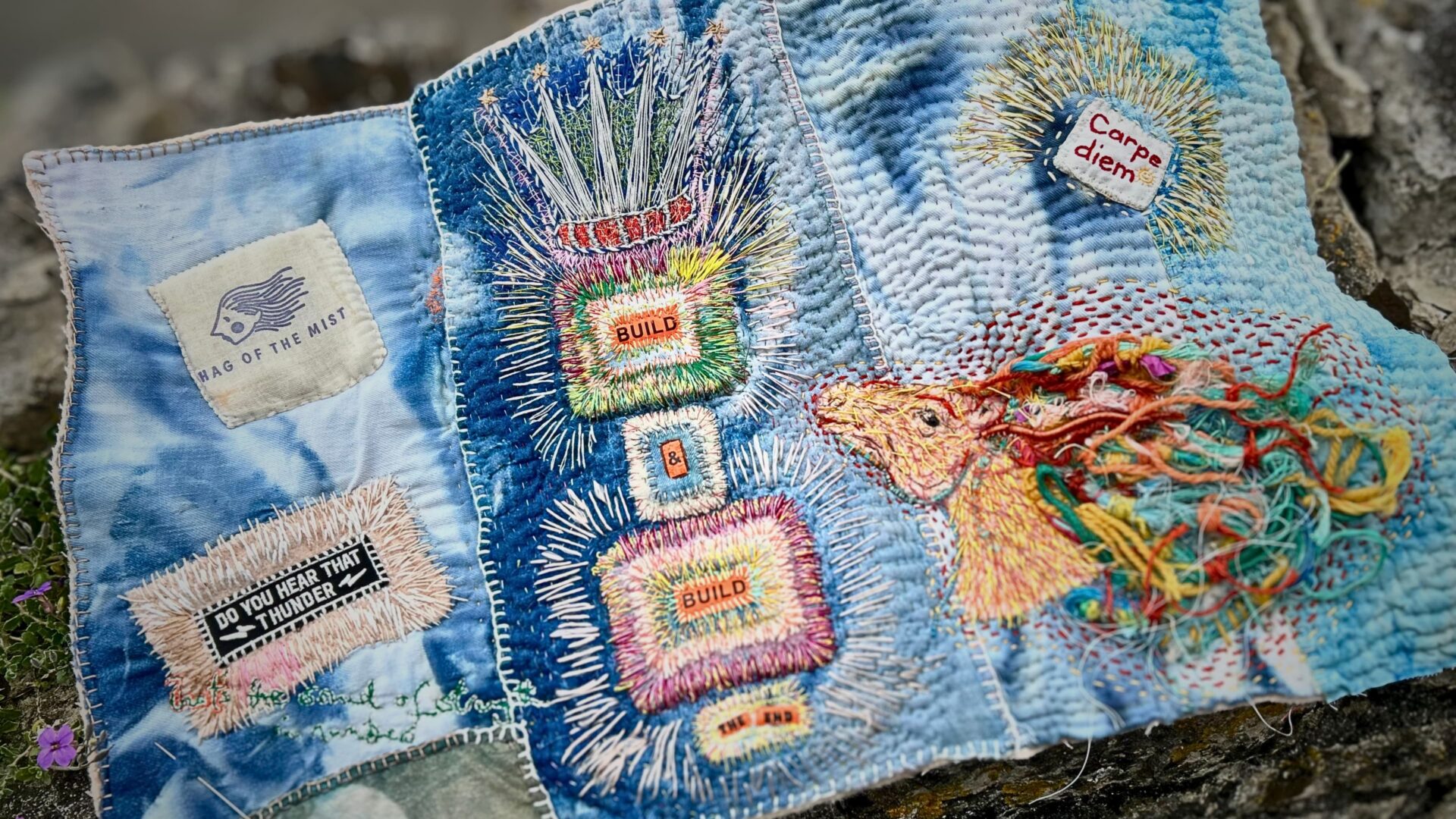
For much of my other work, I don’t plan how a piece will end up. I clear my desk, assemble my materials, along with a thread of an idea and then I let my hands and intuition take over.
“As a work builds, I begin to learn how it will look, and then I react, adding in stitches or other materials as it grows.”
Lydia Needle, Eco-conscious artist
Leaning into uncertainty
Like many people, self-belief and letting go have been my biggest challenges. Learning to release control has been difficult but also a real joy.
Allowing my work to evolve intuitively, rather than trying to resolve it too quickly, has been both an education and a liberation.
Over time, I’ve embraced a more open and responsive way of working, trusting that the process itself will lead to stronger outcomes. In turn, this has helped build my self-belief.
Once I stop trying to create work that feels ‘safe’, pretty or marketable, I create something more authentic.
“When I lean into uncertainty I make work that connects more deeply with people.”
Lydia Needle, Eco-conscious artist
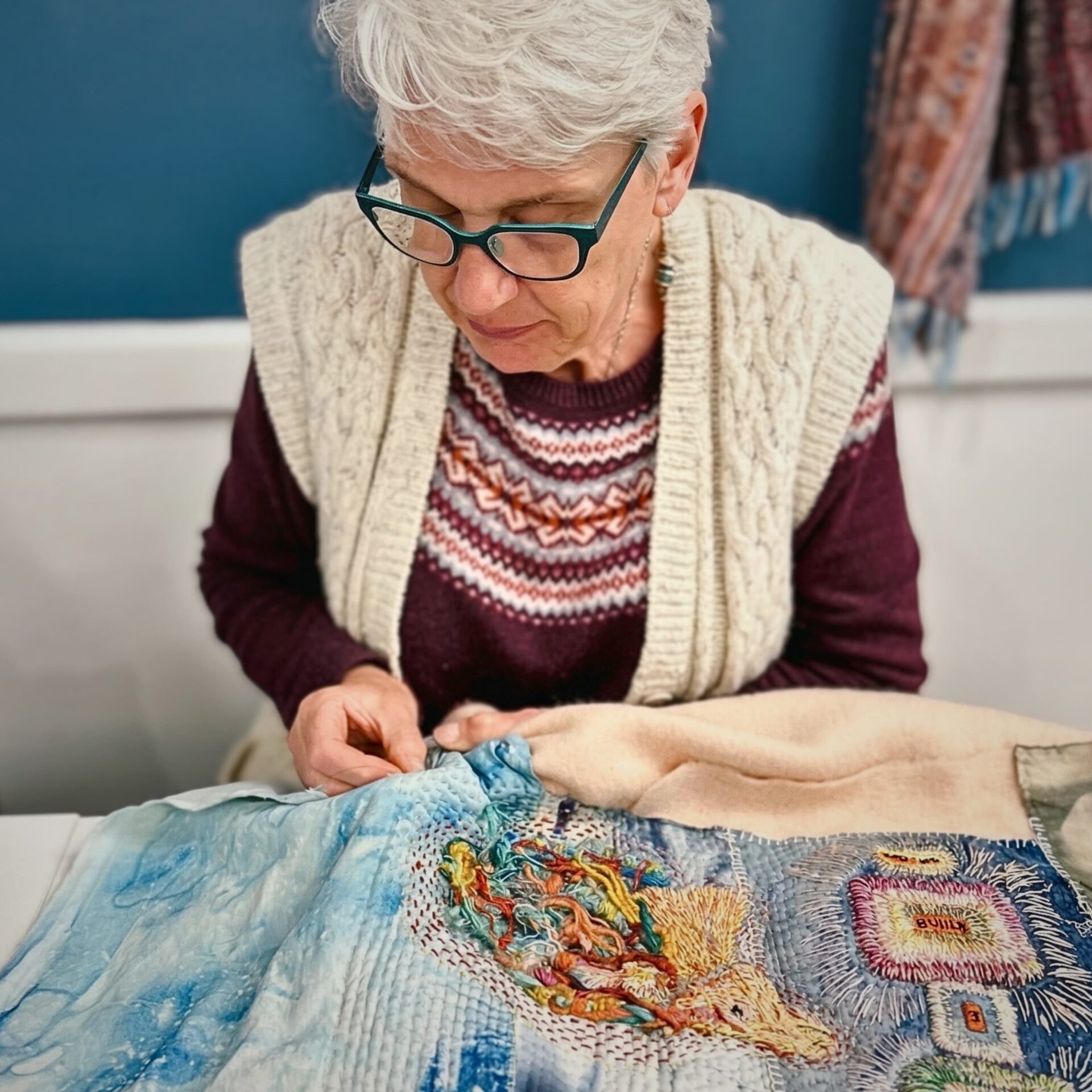
The importance of junk
My early experiences have had a lasting impact on my practice, particularly in my use of textiles, found materials and an ongoing interest in process and making. Two people were especially influential – my mum and my maternal grandmother.
My grandmother was a prolific stitcher and embellisher. Although she never formally taught me, I watched her. I was fascinated by her work, her relationship with textiles, and her constant drive to keep embellishing.
My mum was, and still is, a huge inspiration. No matter our financial situation, she made sure we always had space to create and access to materials, whether that was paper and pencils, paint and packaging for junk modelling or a sewing kit.
We expected to make mistakes. It was during this time that I began to develop my intuition and honed my skills in 3D making and construction. In fact, junk modelling was a massive influence and educator.
Later, my mum went on to complete an art degree and became a brilliant abstract painter. This was a real inspiration and reinforced for me that creativity can evolve throughout life.
Never too late
I grew up in the Midlands, but aged 13, we moved to Somerset. The transition was a complete culture shock. I struggled at school and often skipped classes. As a result, I didn’t pursue further education until I was nearly 30.
I then went on to study for a Creative Arts degree at Bath Spa University, focusing on Fine Art and Creative Writing. My art involved large textile sculptures. Later, I achieved a PGCE for teaching qualification in Art, followed by an MA in Fine Art, also at Bath Spa University.
In 2023, I attended a residency at Brisons Veor in Cornwall, where I focused on the topic ‘Where do the bees go?’. I developed work that explores and is situated within the places where our native bees hide at night or exist out of season.
“My skills are rooted in the conception and delivery of larger projects.”
Lydia Needle, Eco-conscious artist
Time to play
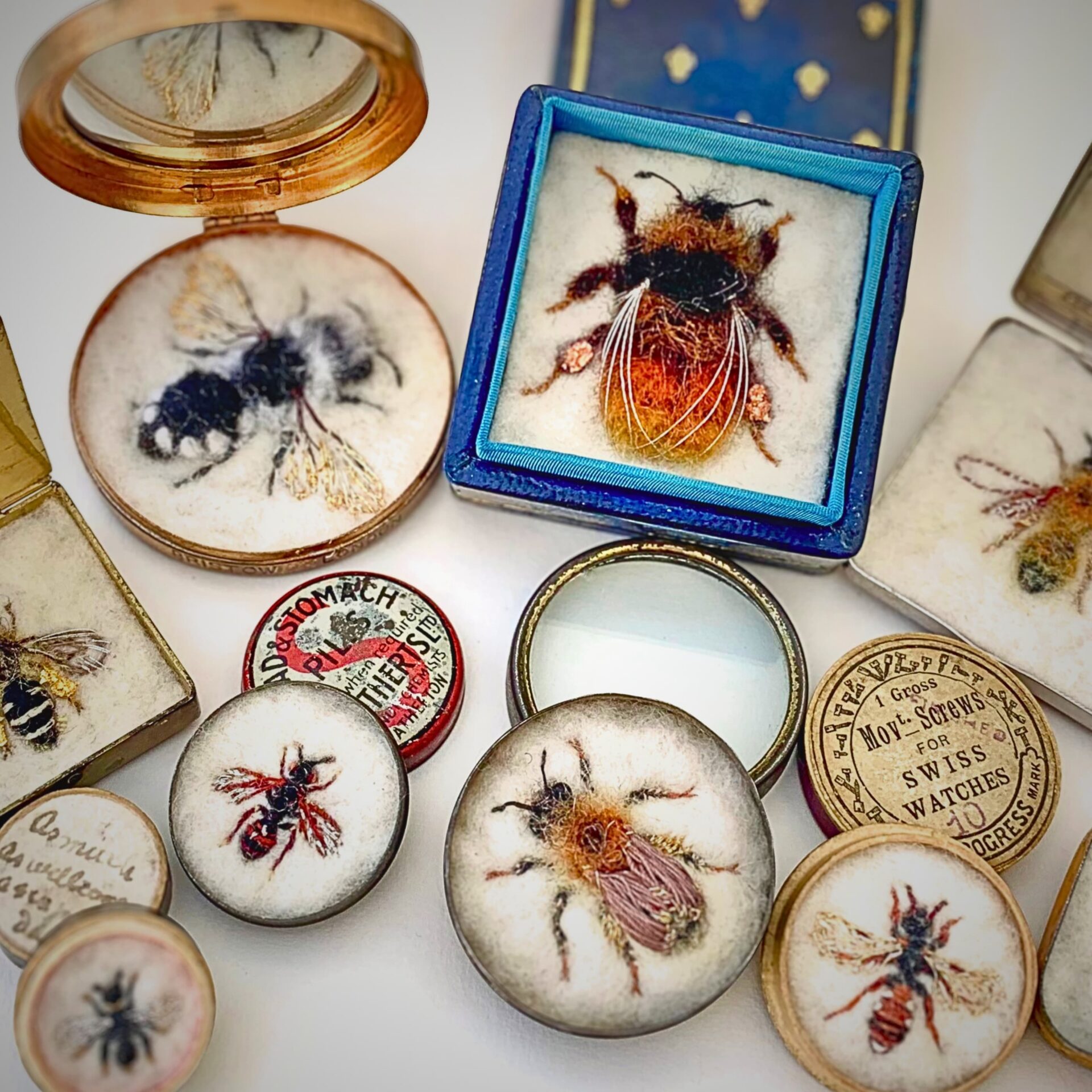
I’ve developed my making skills through play and experimentation. I use everyday inexpensive materials that I collect, scavenge or repurpose. I’ve honed my craft over time through trial, error and failure.
The idea of ‘make do and mend’ is central to my practice. It’s shaped as much by necessity as by intention, particularly during the many periods of financial constraint in my life.
However, my artistic development lies as much in the realisation of ideas as in the making process itself.
My skills are rooted in the conception and delivery of larger projects, such as Fifty Bees and my work with the Seam Collective. These have evolved through ongoing and often challenging processes of thinking, discussion and dialogue with peers and exhibition visitors.
Even all these years into Fifty Bees, I’m still refining my ability to communicate its concept, purpose and accessibility succinctly.
Growing and evolving
Being part of textile communities is invaluable for sharing knowledge and for building confidence and a spirit of experimentation in my work.
Working collaboratively with Seam Collective is inspirational. You are sharing ideas from the initial spark of what the group wants to achieve through to the making of individual work. The members create while being supported by peer feedback and constructive critique.
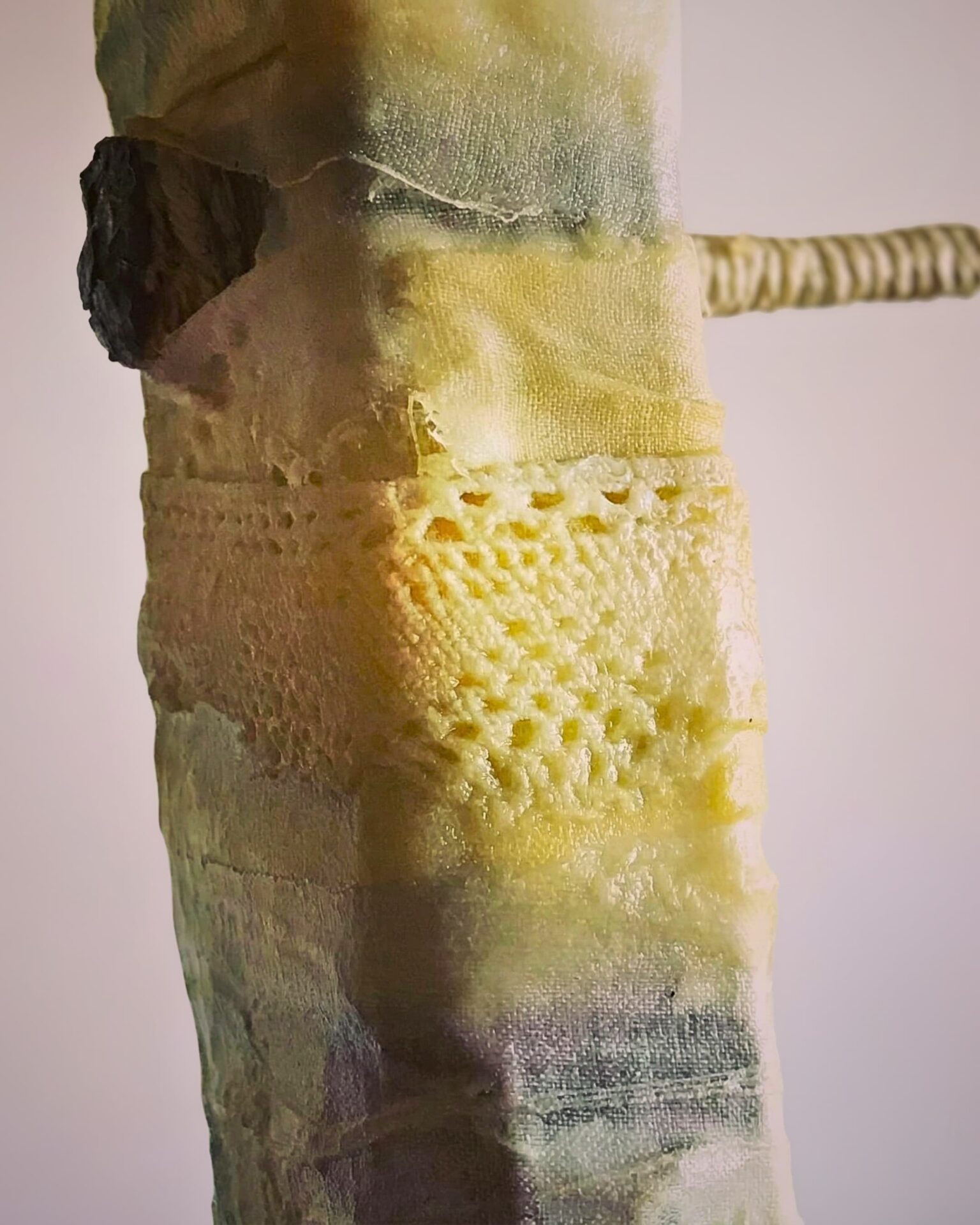
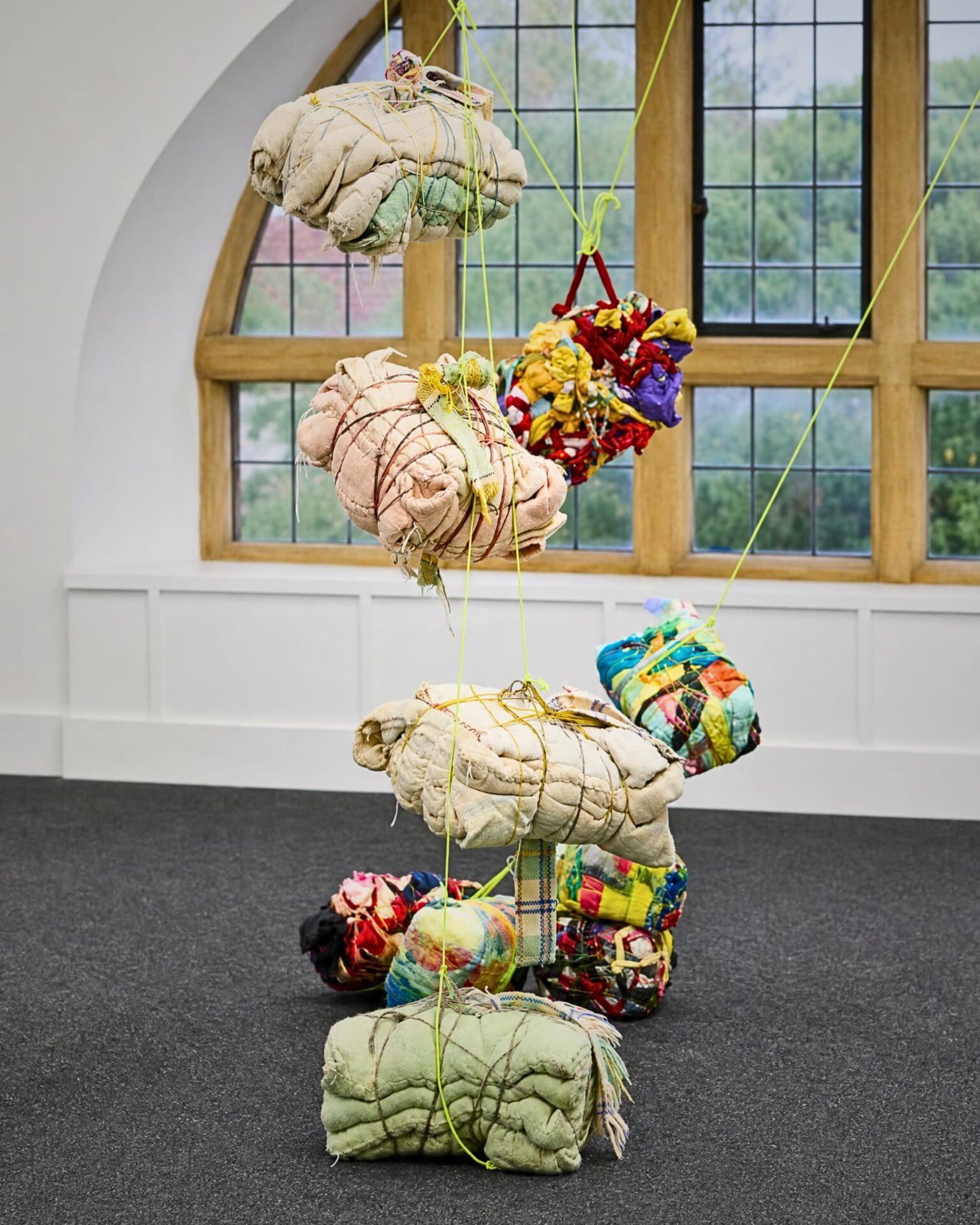
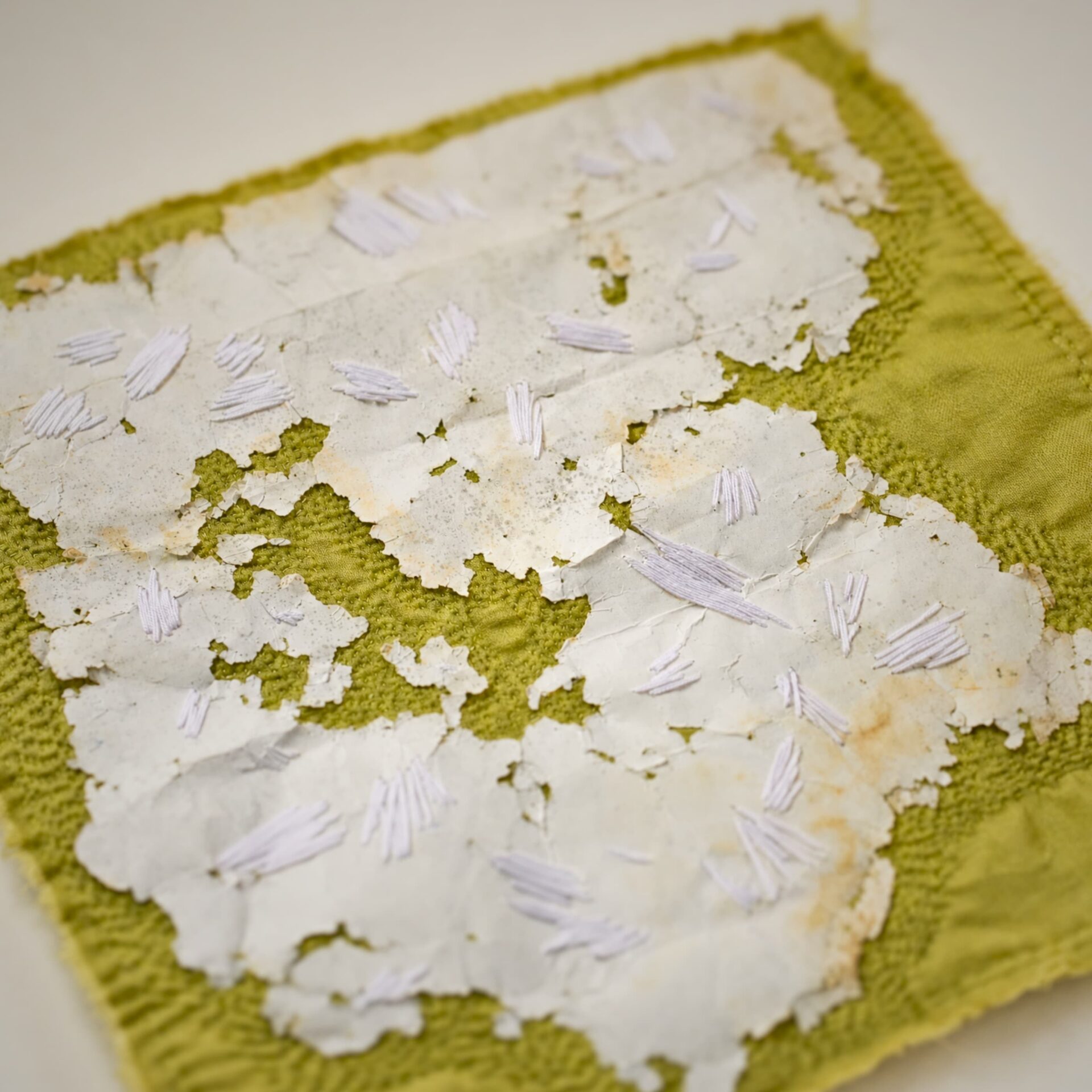
The Warped and Wasted project gave me the opportunity to finally process my ‘stash’ into work I would never have made alone. It afforded me the time and space to create sculptural forms.
I transformed what was once waste into pieces that invite touch, interaction and reflection. It also satisfied my own desire to work in three dimensions.
The collaboration allowed me to exchange ideas, encounter new approaches and challenge my own ways of working. It created a supportive environment that encouraged experimentation and kept my practice evolving.
“You rise to the challenge together, pushing each other into less familiar territory, whether in methods, materials or ways of thinking.”
Lydia Needle, Eco-conscious artist
Bee-ing collaborative
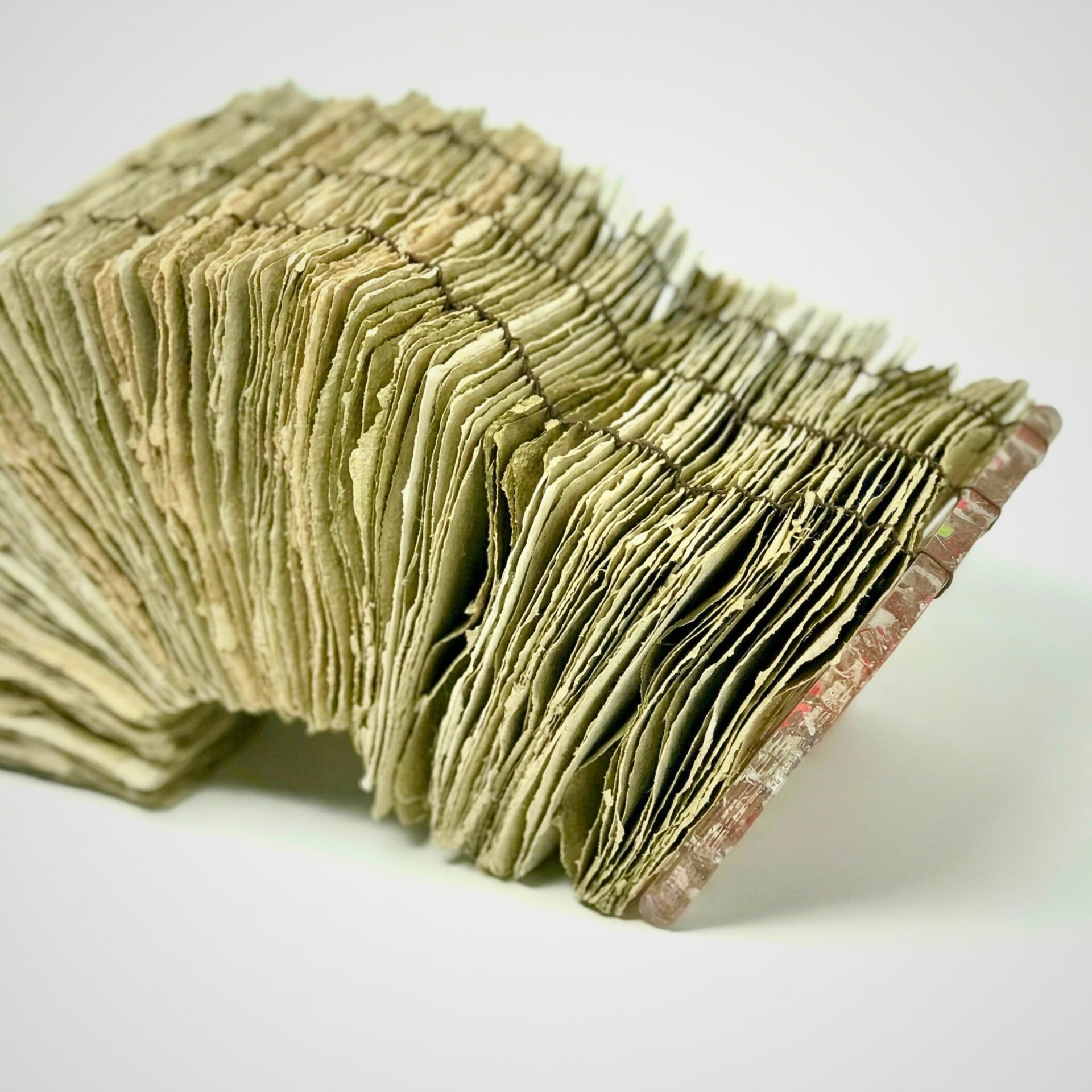
For Fifty Bees, the collaboration takes on a different dimension. The project started in 2017, and in five exhibitions I made 250 bees from wool, stitch and vintage containers. For each exhibition, I invite 50 collaborative artists to make work in response to the ecology of one bee.
I realised from the start that collaborating with other artists would strengthen the message I wanted to convey.
Throughout the process, I support the companion artists through mentoring where needed. More often, I introduce them to ‘their’ bee and then step back as they research, reflect and create, rising to the challenge of becoming advocates for their species.
While I focus on producing 50 small individual bee artworks, they respond in diverse ways. Using paint, print, poetry, song, sculpture and more, they create a rich narrative between art and ecology.
Together, they form a mosaic of responses that helps audiences better understand our pollinators and recognise how vital they are.
“What the other artists bring to the project is entirely different from what I could offer alone, and I learn a great deal from their perspectives.”
Lydia Needle, Eco-conscious artist
Embracing imperfection
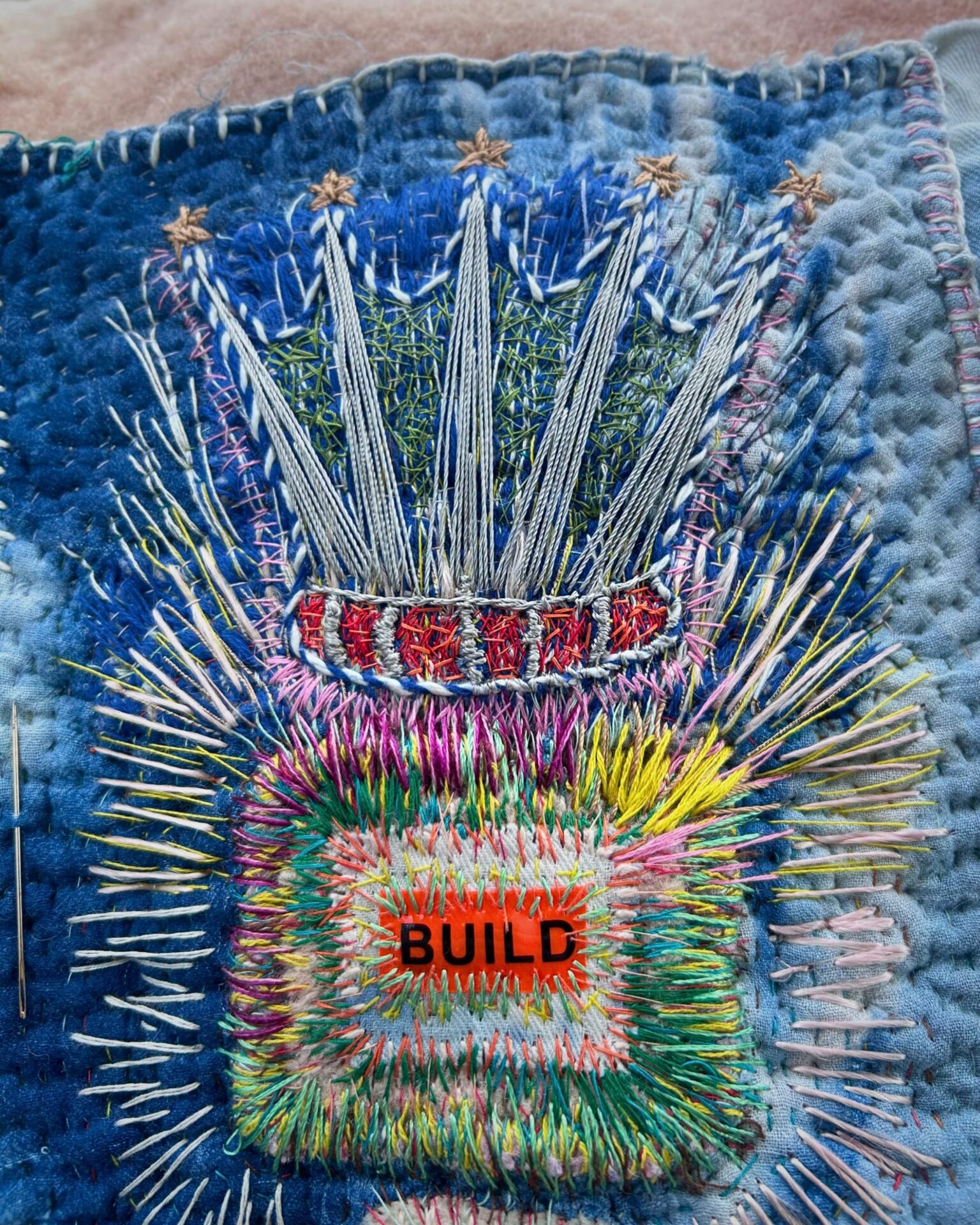
In my workshop for Stitch Club, I explore needle felting combined with expressive stitch techniques. I focus on mark-making, layering and working intuitively with the wool and thread.
My main hope is that participants let go of perfection. I want them to respond to these simple materials in a more open, playful way.
I hope they come to understand that if you’ve tried needle felting once, you can do anything with it. Members can use this workshop to gain confidence in their own unique creative style and a deeper appreciation for the possibilities of stitching needle felted forms.
Guided by intuition
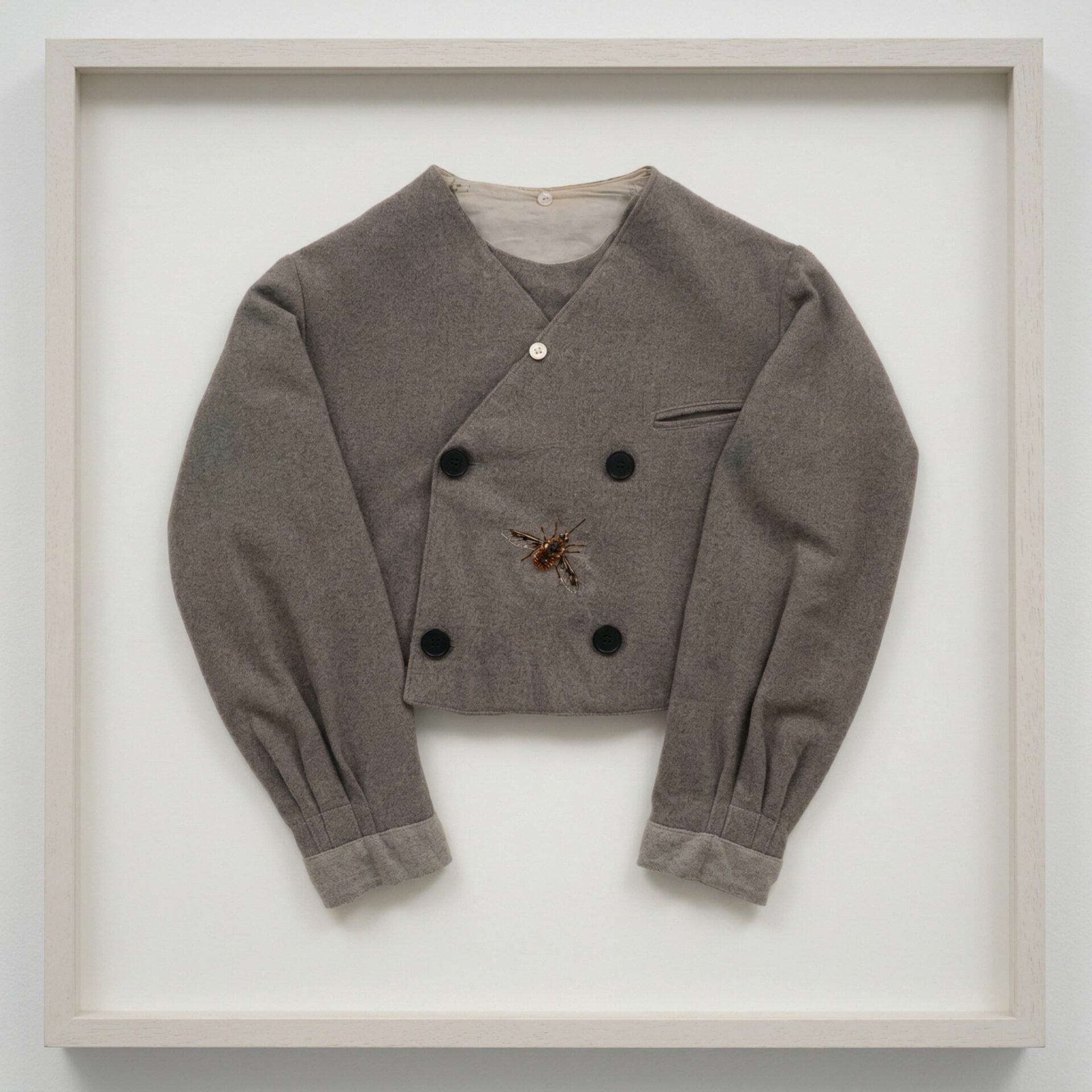
My work has become increasingly intuitive and process-led over time. I’ve moved away from trying to tightly control outcomes and work towards a more exploratory approach, so I allow my materials and techniques to guide the direction of each piece.
I work from my small home studio in Somerset, where the upstairs window looks out across the Somerset Levels, an important wetland area.
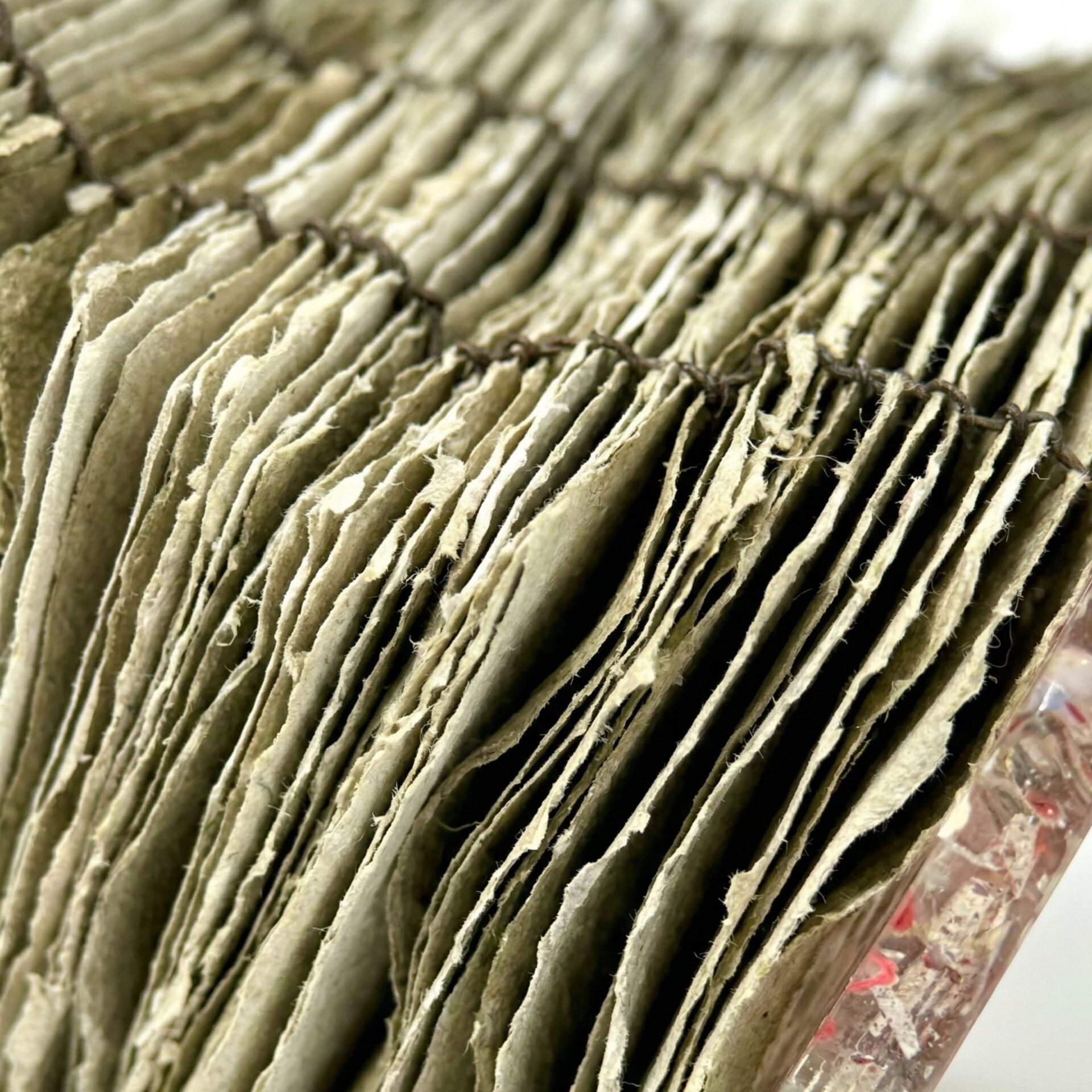
I am surrounded by discarded and second-hand materials – cast-offs, remnants and waste accumulated over many years. My studio is filled with the quiet history of these items: moth-eaten wool blankets, hessian, old threads and yarn, as well as natural fibres sourced from small-scale producers.
I no longer attempt to make work that doesn’t fit my hand. This has led to richer, more layered work that feels closely connected to my thought processes and the messages in my work.
2 comments
Deborah Deal, APR
Great story and wonderful woman!
Siân Goff
Absolutely! Lydia is so inspiring, thanks for reading and commenting.