
Lindsay Olson brings together the seemingly unlikely worlds of art and science, transforming complex ideas into captivating textile works.
Once a self-confessed ‘science avoider’, she now creates art that demonstrates science is not only accessible, but can inspire anyone. Whether viewers connect with the science or simply appreciate the beauty of the work, each piece invites curiosity and discovery.
Nothing in Lindsay’s work is accidental. Every material, technique, process and design choice is carefully considered to deepen the narrative and reinforce the ideas she wants to communicate.
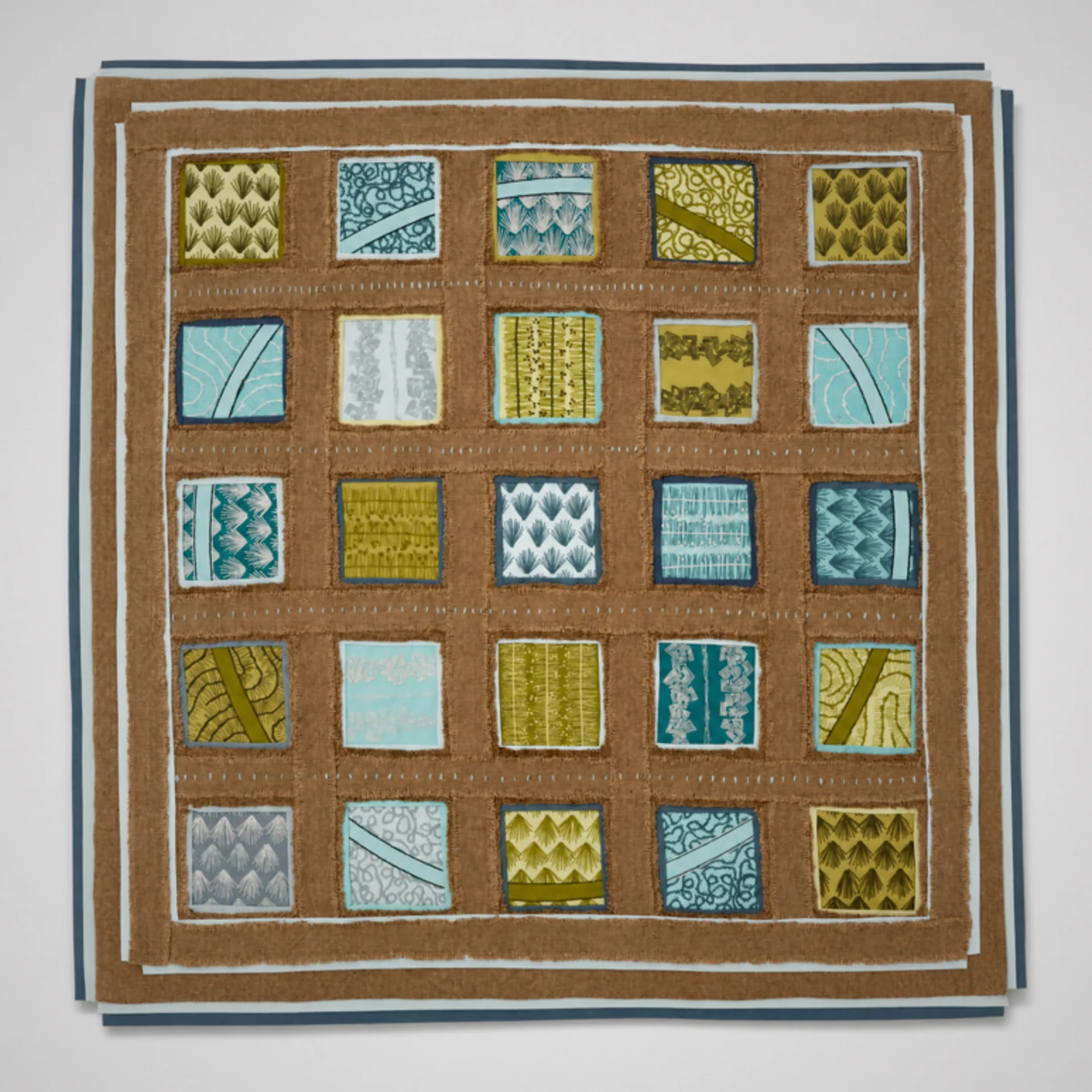
From choosing colours that evoke a sense of place or history, to intentionally unfinished elements that reflect the ever-evolving nature of scientific enquiry, every detail carries meaning. Subtle design features, such as grid patterns reminiscent of scientific graphs, bridge the language of research and creativity.
Through her practice, Lindsay Olson reveals that art has the power to illuminate science, spark meaningful conversations, and inspire a deeper appreciation of the natural world.
Her work is a celebration of curiosity, proving that art belongs everywhere – including at the heart of scientific exploration.
Lindsay Olson: My artistic practice is driven by a deep curiosity about the systems that support and shape our world. I use artwork to communicate the necessity of the lifesaving work of ecologists and scientists.
For the last decade, I have been partnering with scientists and conservation groups to create art that tells the story of how scientific research supports our society.
‘Sci art’ exists on a continuum. At one end is scientific illustration, art in the service of science. At the other end is art inspired by science: art that hints at science. In my practice, I’m aiming for something in the middle.
Using science and art together has energised my studio practice and changed the way I see our universe.
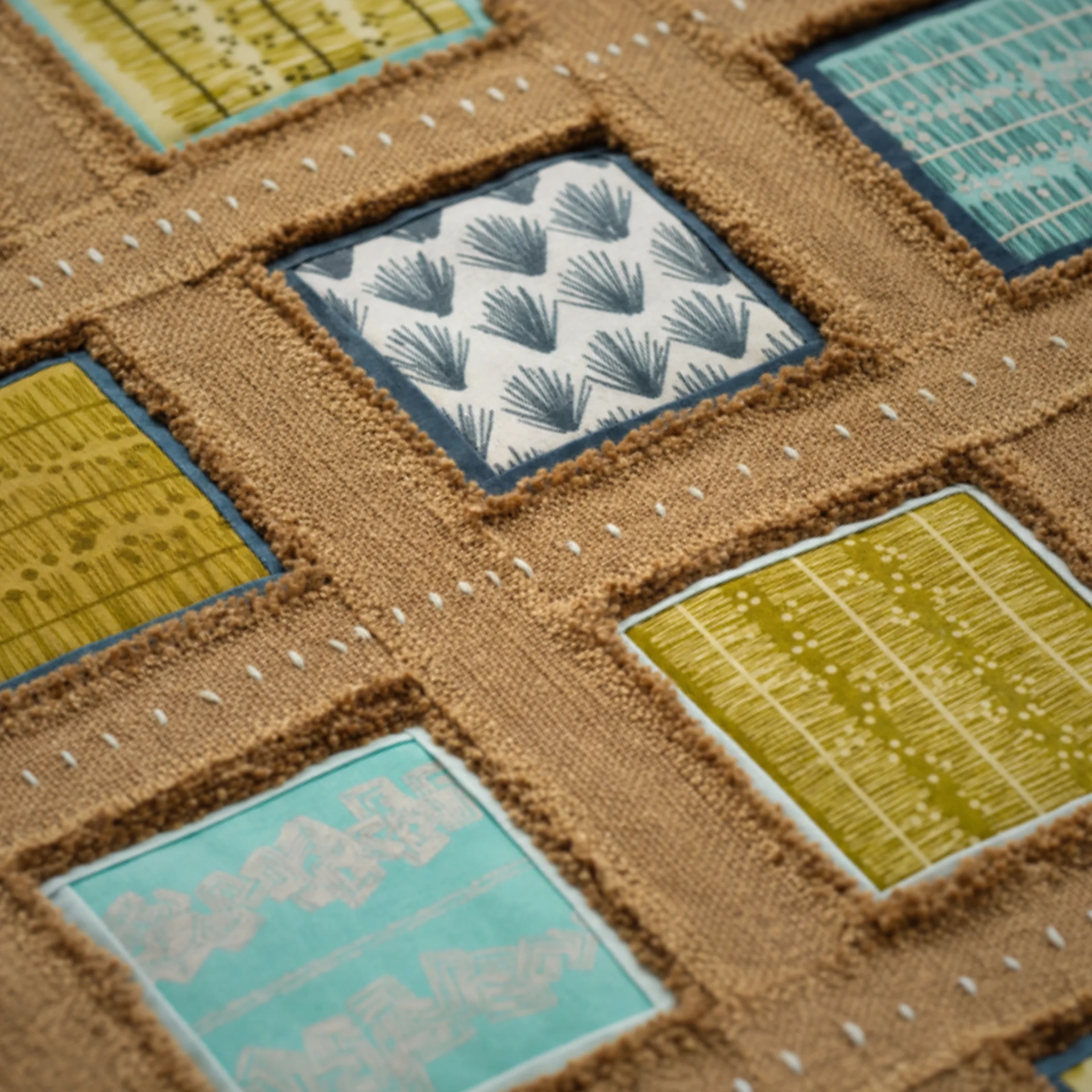
“Art can function as a safe introduction to science.”
Lindsay Olson, Artist
Research, translate & communicate
My studio practice has three phases. The first involves conducting research: both my own visual research and working in the field to understand the particular area of science I’m working on.
I translate what I have learned into accessible art and then use the project to help others appreciate the science I have learned. With the experiences of field work, book learning and interviews under my belt, I turn to my studio work and begin the process of collecting ideas from the art side of things.
I want my art to be grounded in accurate science, while using all the tools in my artist design kit to draw the viewer in, such as colour, value, line quality, texture, symmetry and craftsmanship. I aim to make my artworks as beautiful as I can. Even if someone is not interested in the science, I want them to enjoy the art on its own.
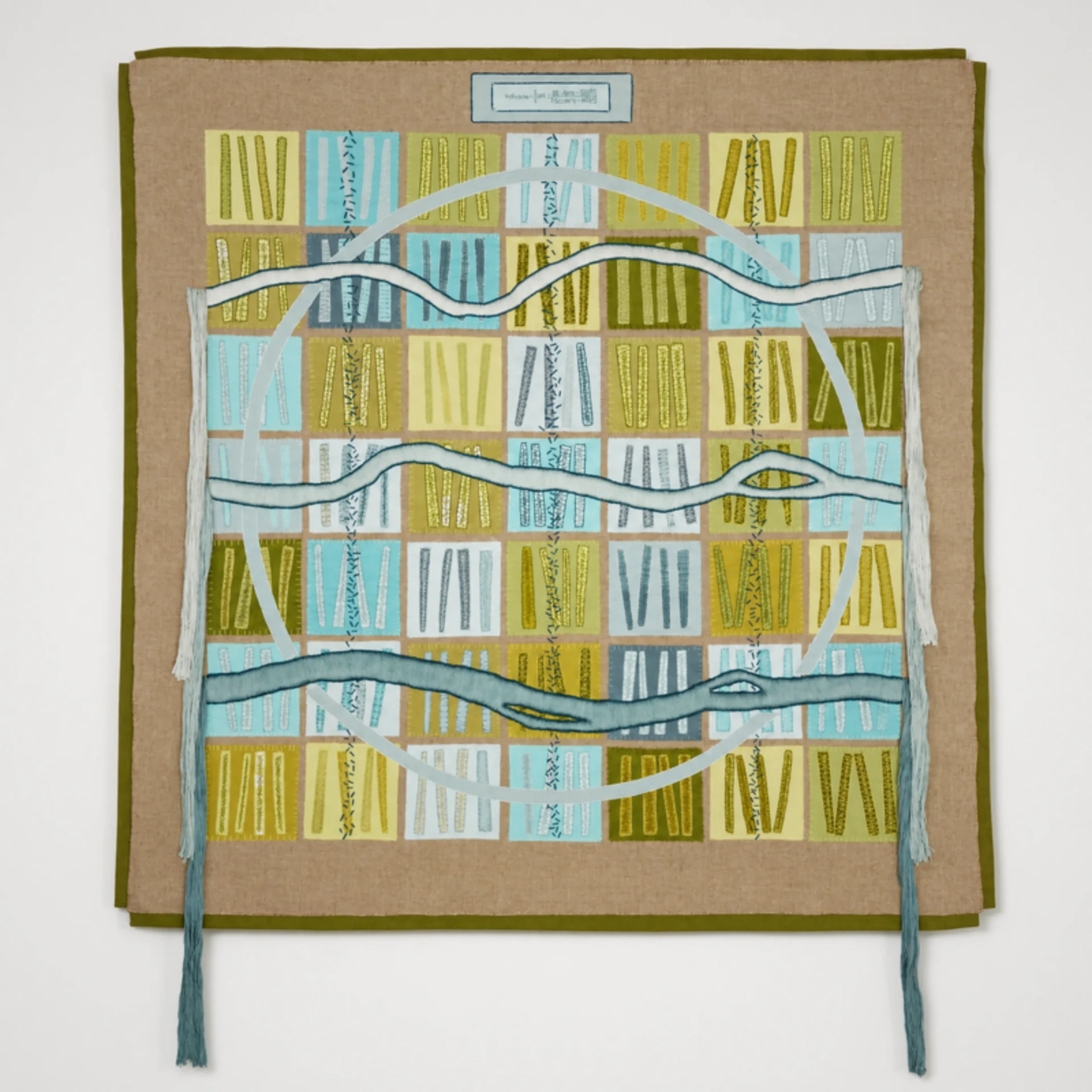
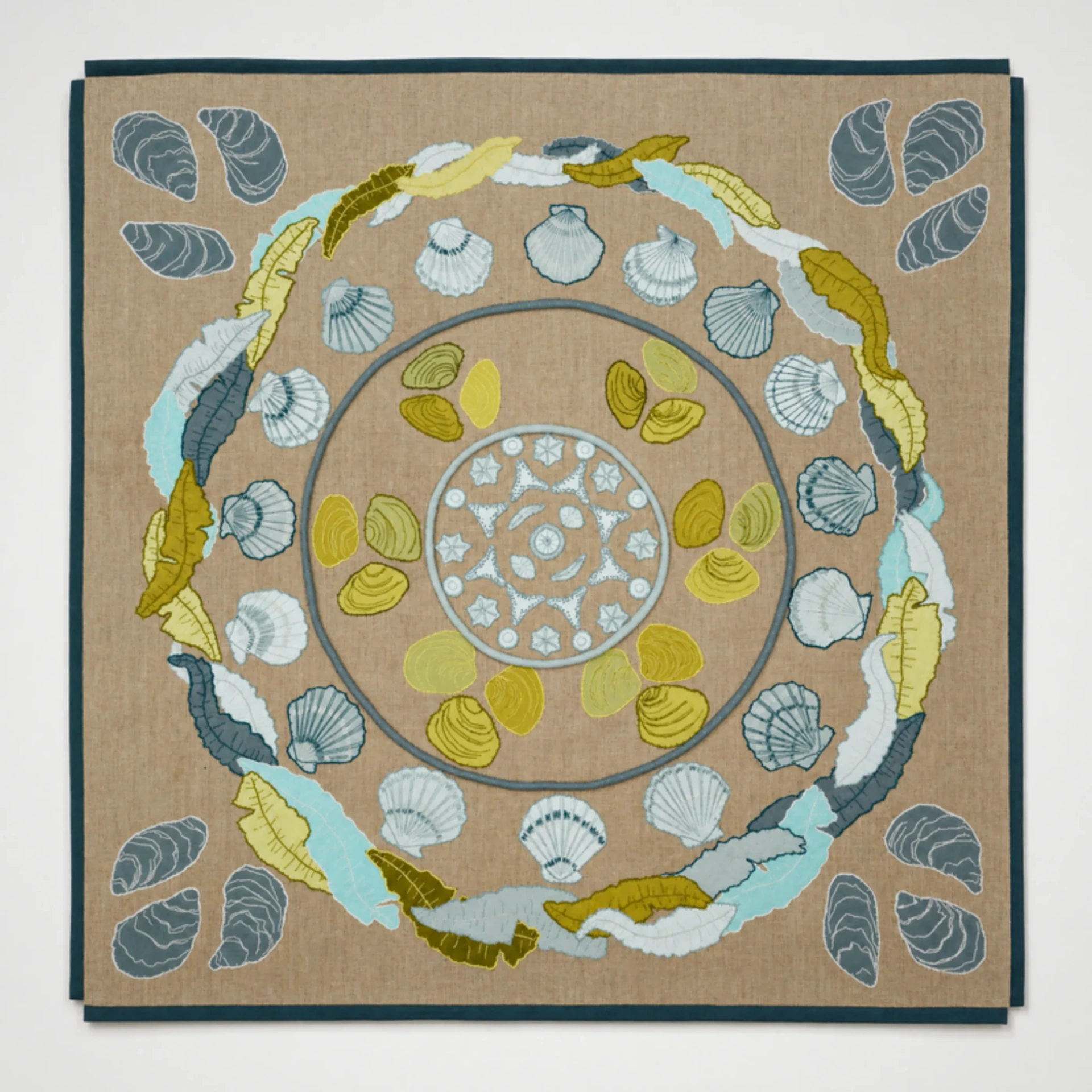
“I want to communicate that science is a key part to creating a more vibrant, just and climate-friendly world.”
Lindsay Olson, Artist
Finding creativity in discomfort
Like many artists, I tried my best to avoid science and maths in school. It wasn’t until I was an adult that I learned I could use my training as an artist to help me learn science.
Working across academic boundaries and with no science background is challenging. But it’s this very discomfort – the effort of learning something totally new – that inspires me to come up with a strong idea for my projects.
Over the years, I have refined my process. Often the entry into the science is leaning into the vocabulary. Every branch of science has its own. And, to my consternation, a whole alphabet soup of acronyms that scientists use for shorthand speech. But because I’m leaning on my training as an artist and my love of stitching, I feel like I have my best friend along with me.
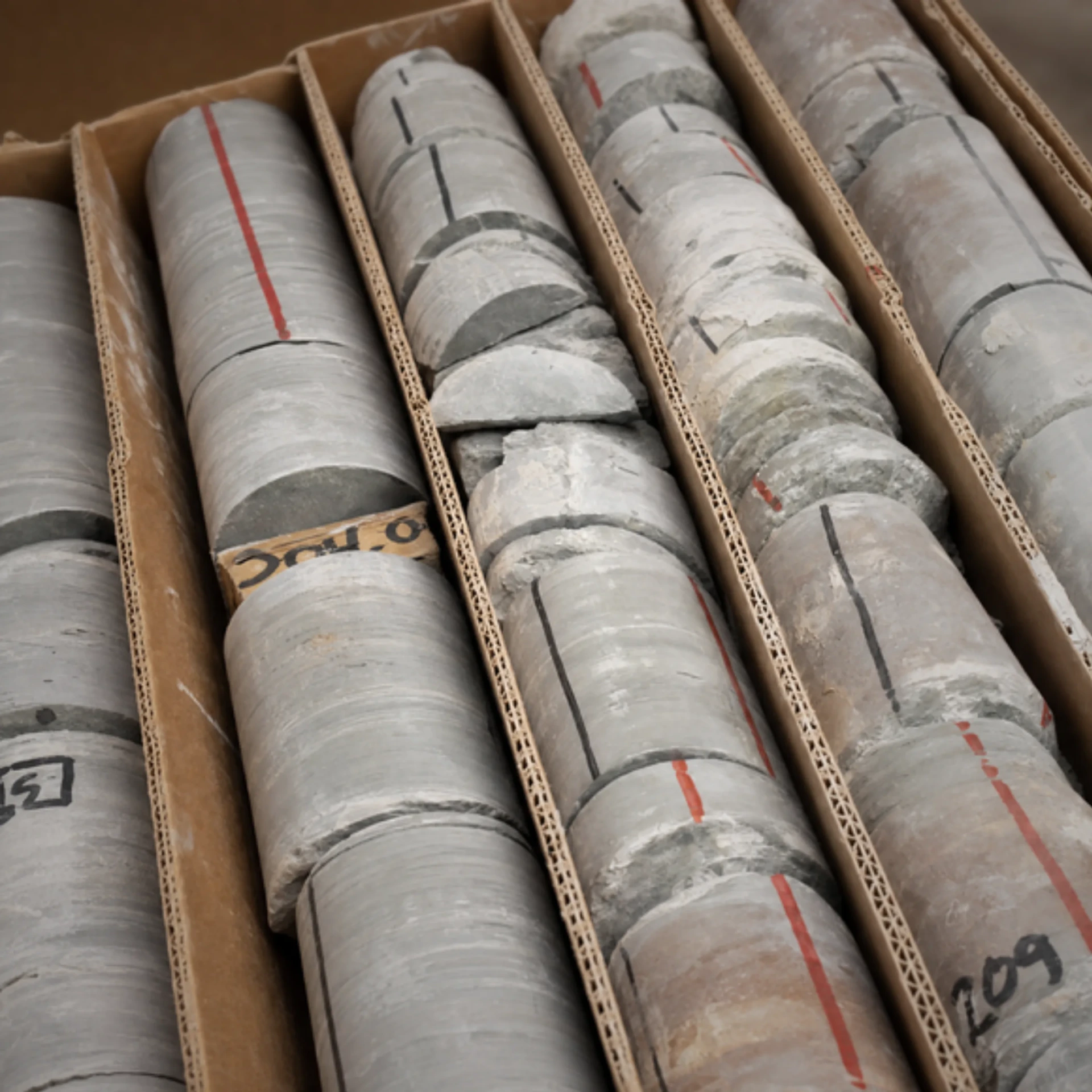
Braiding science & art
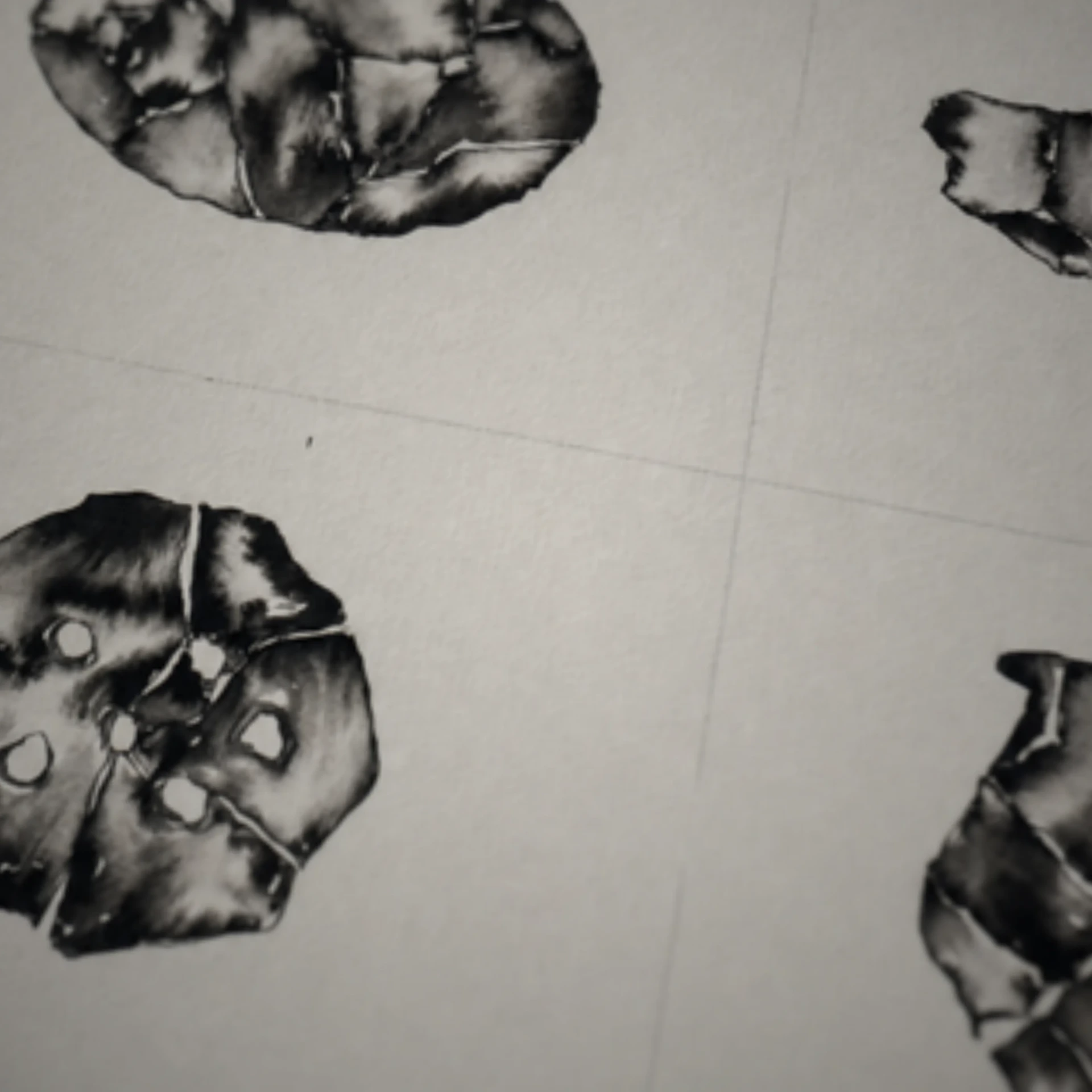
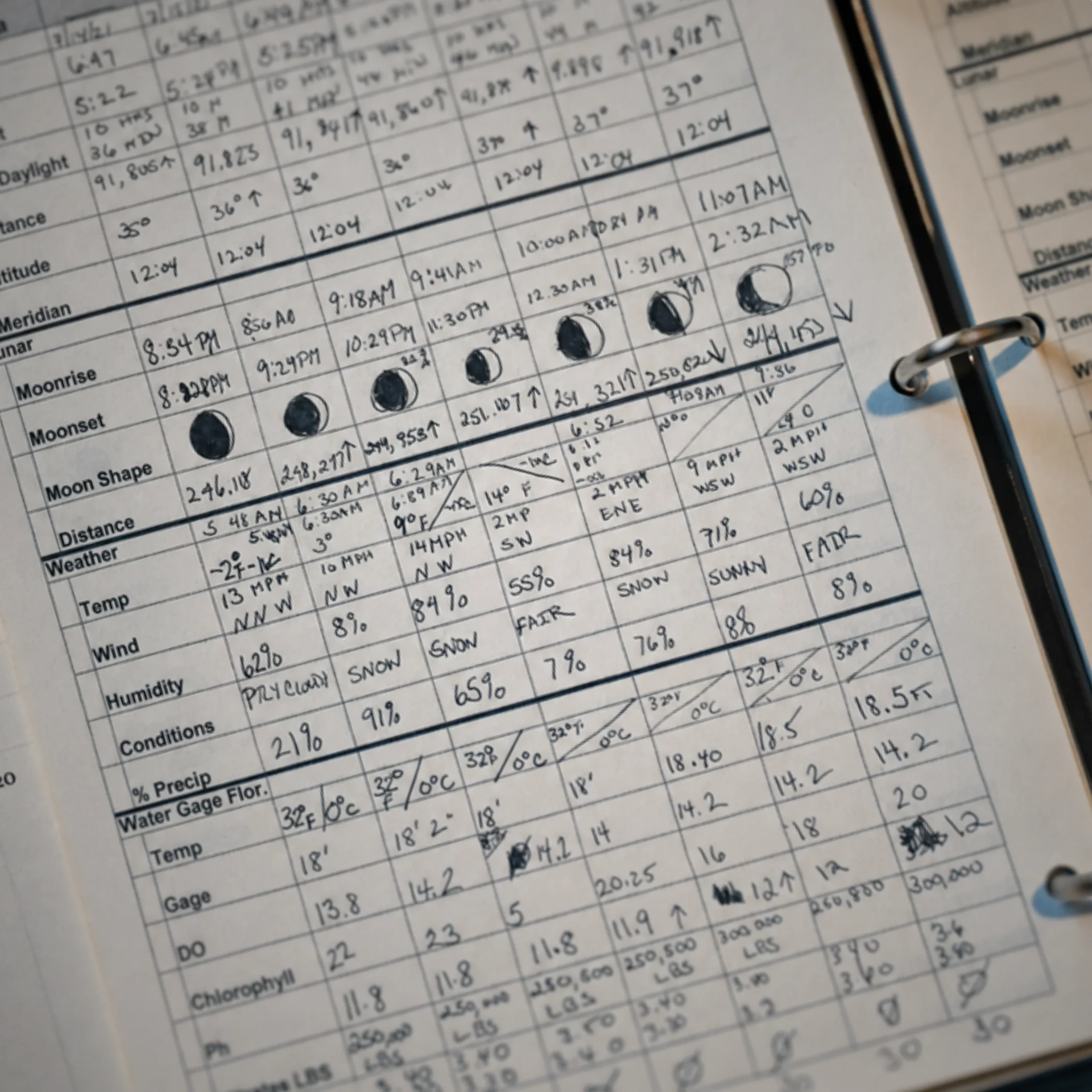
The scientific research and the visual research go hand-in-hand when developing my projects. I keep a separate sketchbook for the science I’m learning and the art ideas I’m mulling over. Eventually, I transfer the braided science and art ideas into a larger sketch or cartoon.
It’s useful to work on more than one piece at a time and to bounce between the science research and the development of a piece.
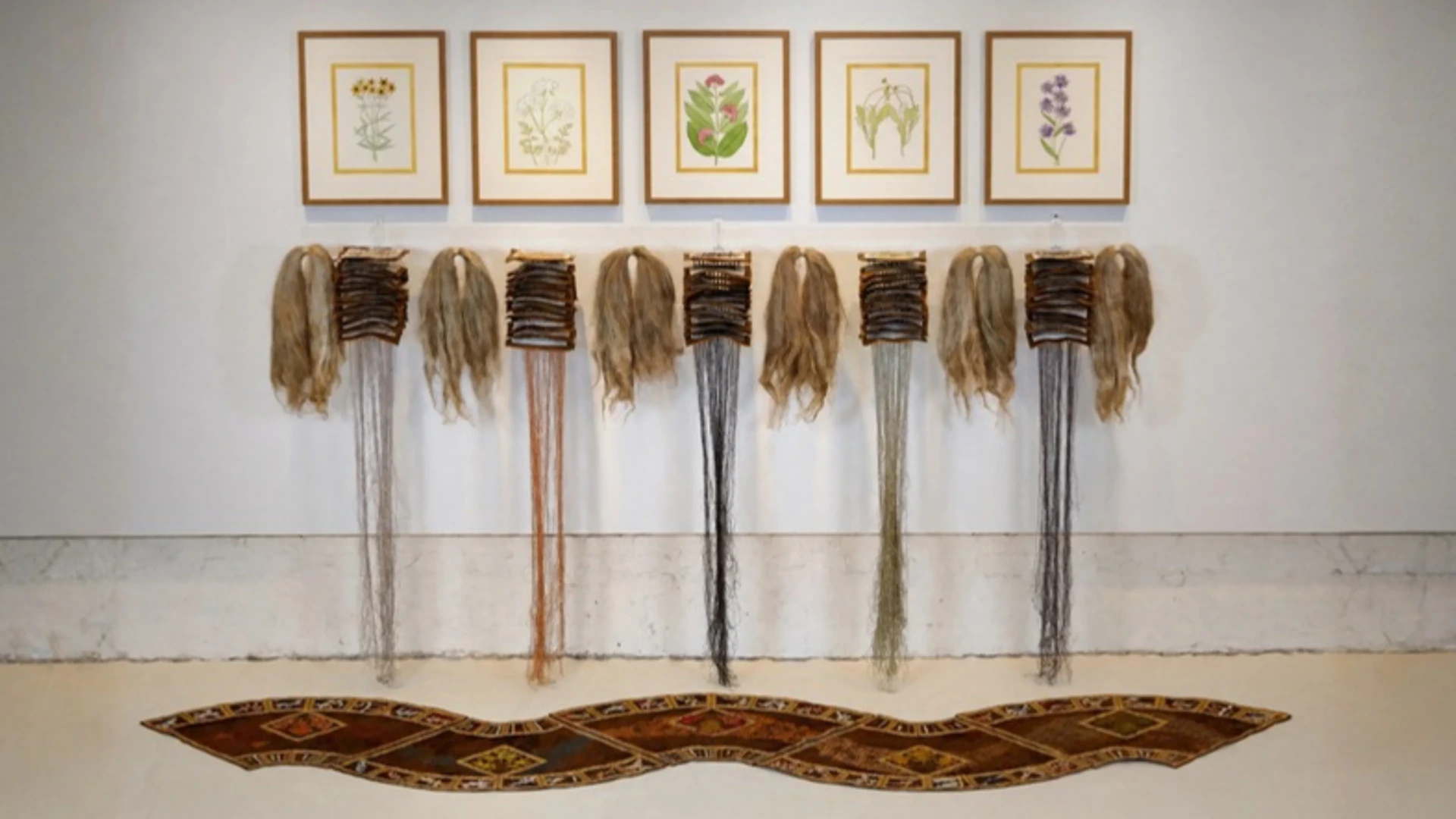
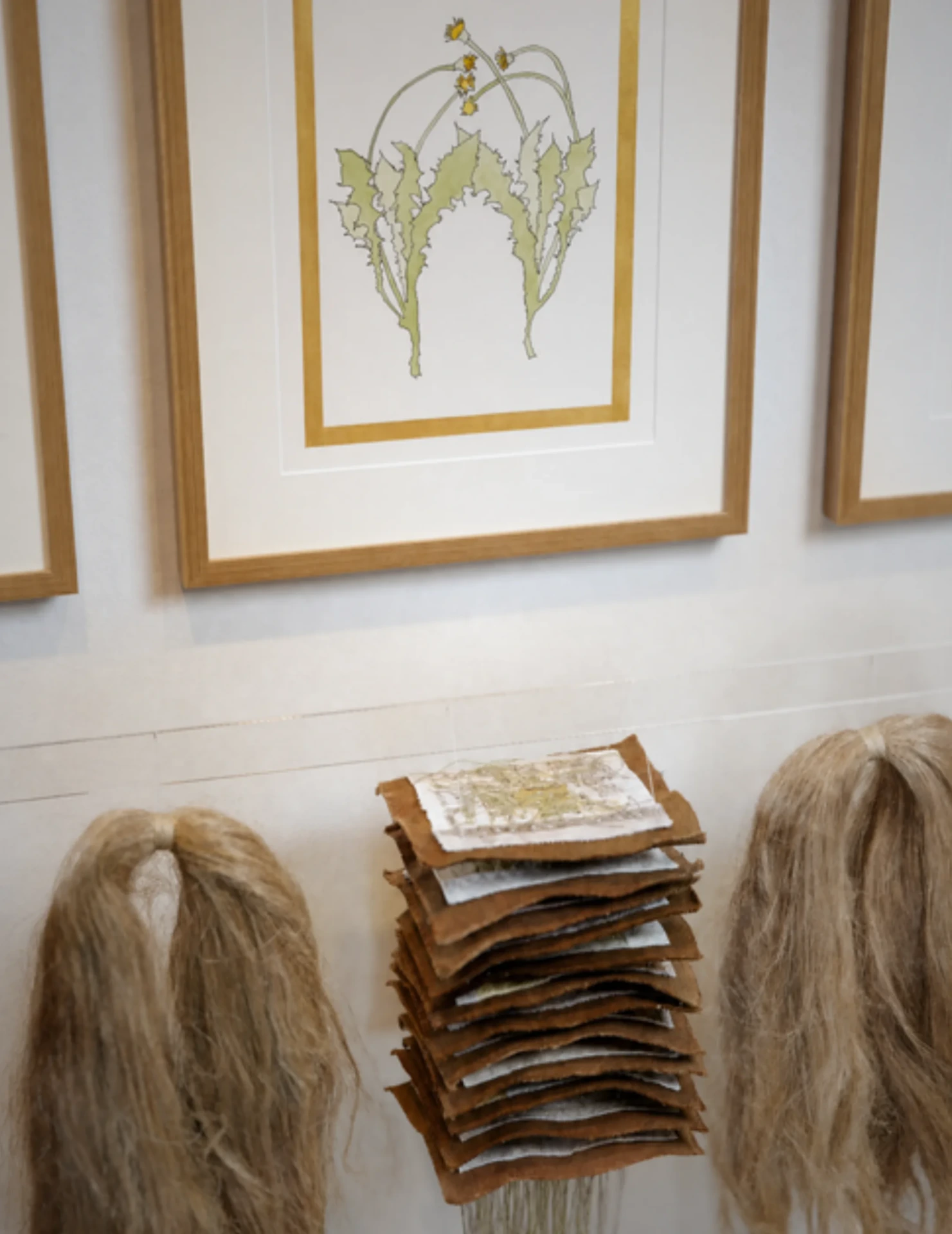
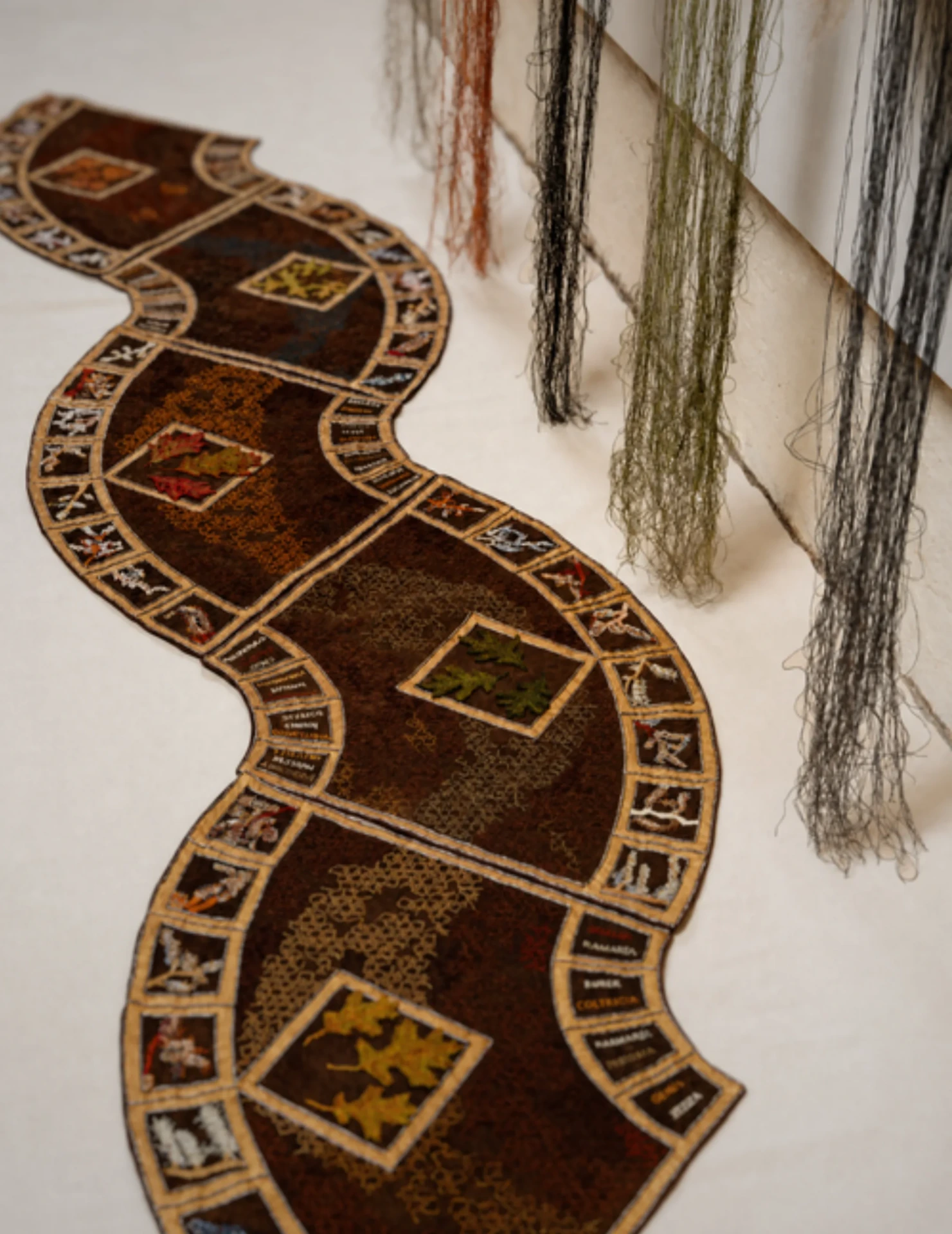
Sometimes I draw out designs, as with the works based on the King Tut floral collar that I did for The Wetlands Initiative (TWI). On other projects, I’ve begun by sampling materials and stitches. I use both hand and machine stitching. I might choose a grid format, not only to visually anchor the work but to hint at the graphs used in analysing data.
The process is never quite the same because I’m responding to a specific situation, the culture of the organisation I’m working with, the colours I find in the field, and what might be happening in my personal life.
The materials I use for each project are as much a part of the work as the subject matter. Because some people find science intimidating, I want to have the least amount of artistic distance between the viewer and the art. Everyone uses textiles in their daily lives so creating work using them feels like a natural choice.
I choose whatever techniques best support the concepts I want to explore. I use embroidery, quilting, appliqué, beading, painting and printing on fabric and machine stitching. I also love to use water soluble textiles and layered fabrics.
I like to study the visuals found in advertisements. Although these ads are designed to sell a product, they are also designed to snag the attention of viewers. I like to learn their tricks because as artists, we too often only have a few seconds to capture the attention of viewers.
“I use whatever best communicates my ideas: colour, line quality, texture, values shift, unity/symmetry and chaos.”
Lindsay Olson, Artist
Embracing flexibility
For my Sound in the Sea project, I worked with ocean acousticians for three weeks at sea as part of the science team. It was the first time I’d been away from home that long, and as usual, I knew nothing about ocean acoustics or life aboard a science vessel.
One of the things that helped me was to simplify my colour palette. It sounds small, but that one shift really helped me focus on my learning without the pressure to choose a large colour palette.
I also decided to do only hand stitching in case I had time aboard to work on sampling my materials (silk dupioni and DMC stranded floss). I had a tiny desk-size portable studio that I broke out when I had a few moments.
Over the years I’ve learned not to edit my initial ideas too heavily in the beginning. I try to remain flexible and hold in my mind both the big picture ideas and design details.
It’s important to try out new materials or approaches. I loved learning how to handle silk dupioni and have also learned how to use fusible appliqué and machine stitching to streamline some of my projects.
Capturing images of locations where my projects are based helps me remember what I learned, where I was, how I felt and even triggers memories of scents. Sketching too helps me to learn.
“One of my art teachers told us that when you engage the hand, your art follows along.”
Lindsay Olson, Artist
Loving the wetlands
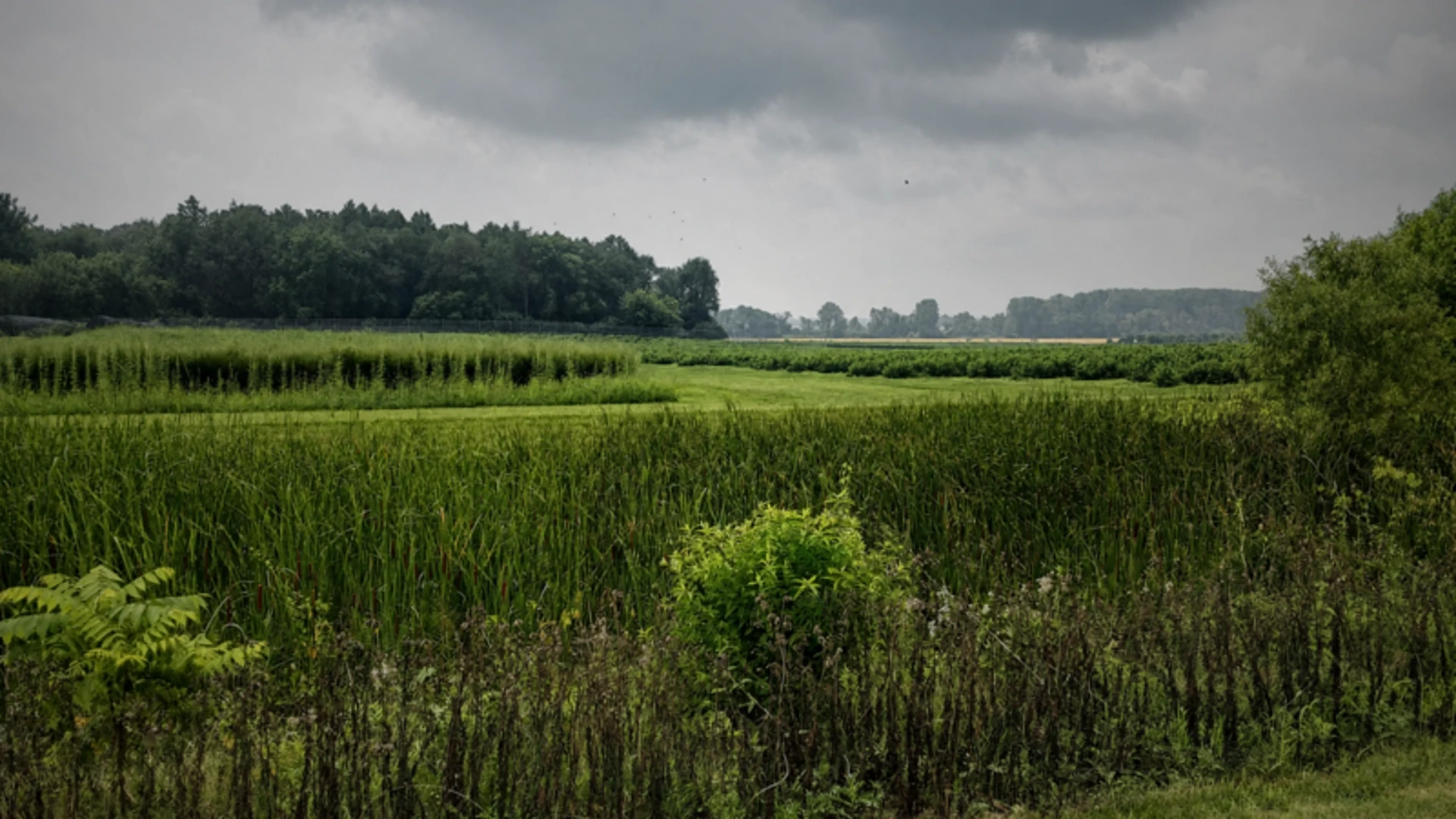
One of my most interesting challenges was working with The Wetlands Initiative. As their artist-in-residence I created three artworks based on their restoration work in the Calumet Region of the Midwest, USA.
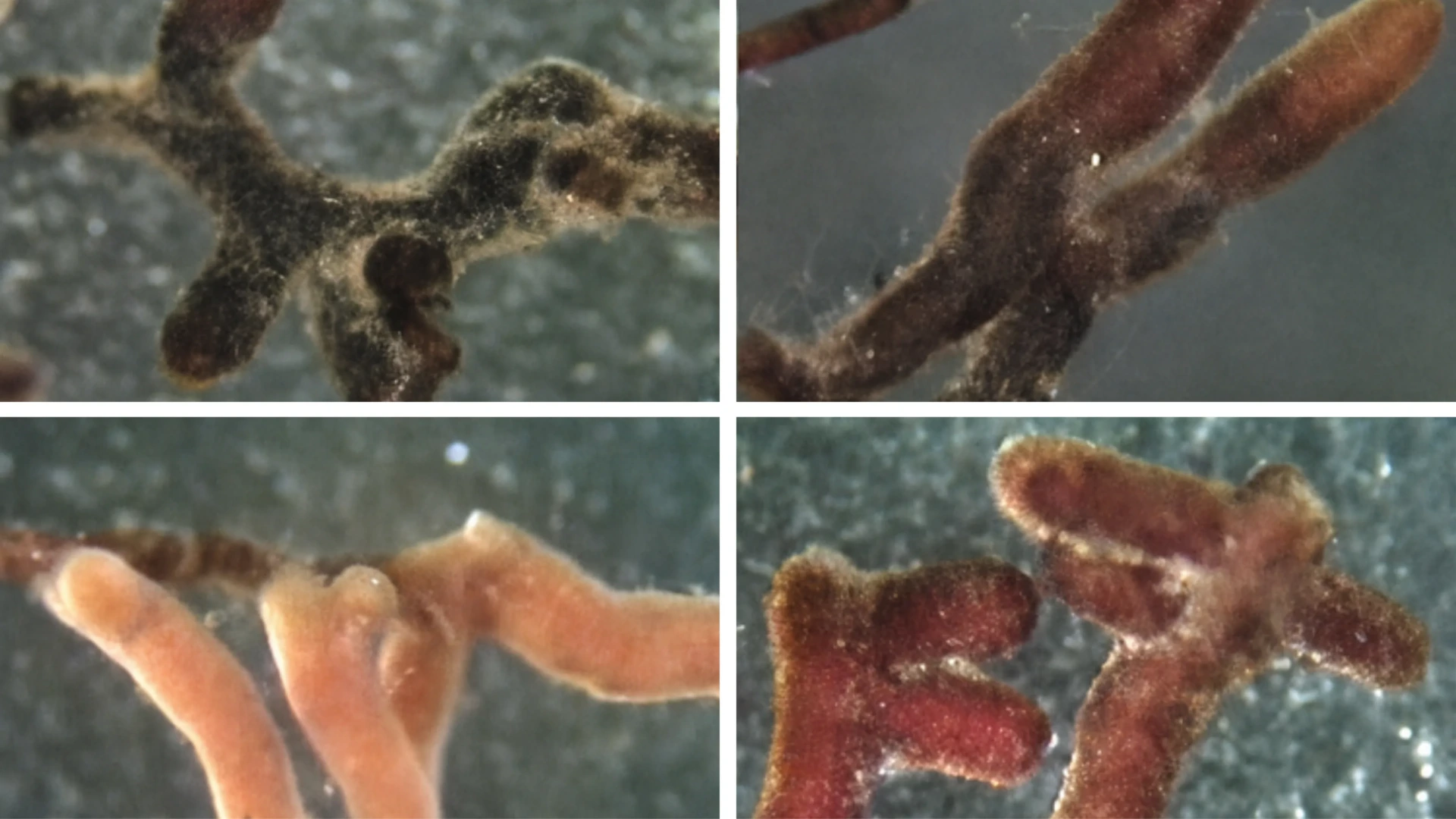
This area was once dominated by wetlands and was filled with waterfowl, insects, rare plants, animals and microbes. In the 20th century, it became the centre for shipping and industry. Wetlands were filled in, the land paved over, levees (flood embankments) constructed, and the area was heavily built up.
After the collapse of the steel industry, TWI found a way to restore these severely degraded parcels of land into welcoming, publicly accessible natural areas that support rare birds, insects and wildlife.
I admired their work and was fascinated by their expertise and determination to work in such a challenging environment. Working as the artist-in-residence is where I fell in love with wetland restoration.
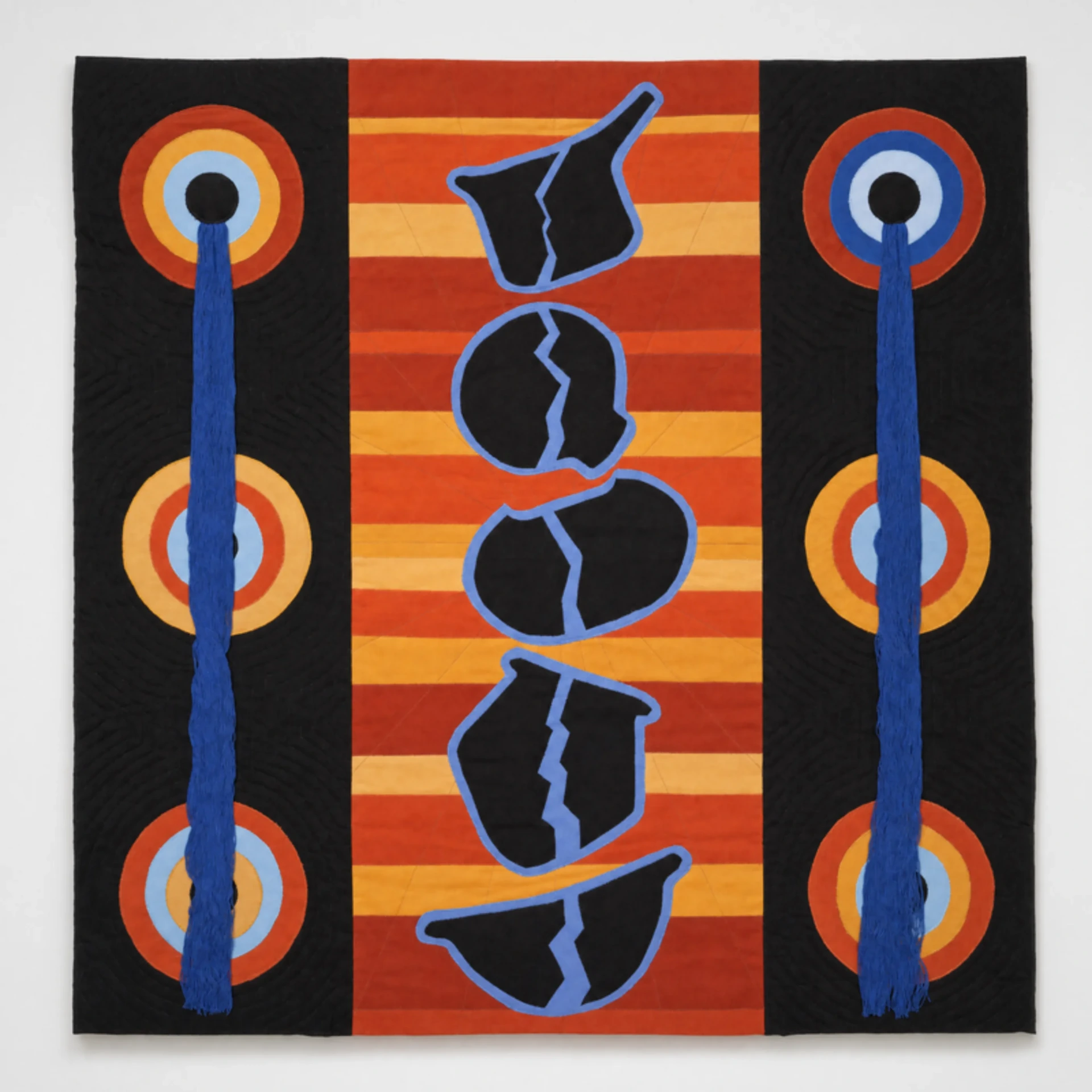
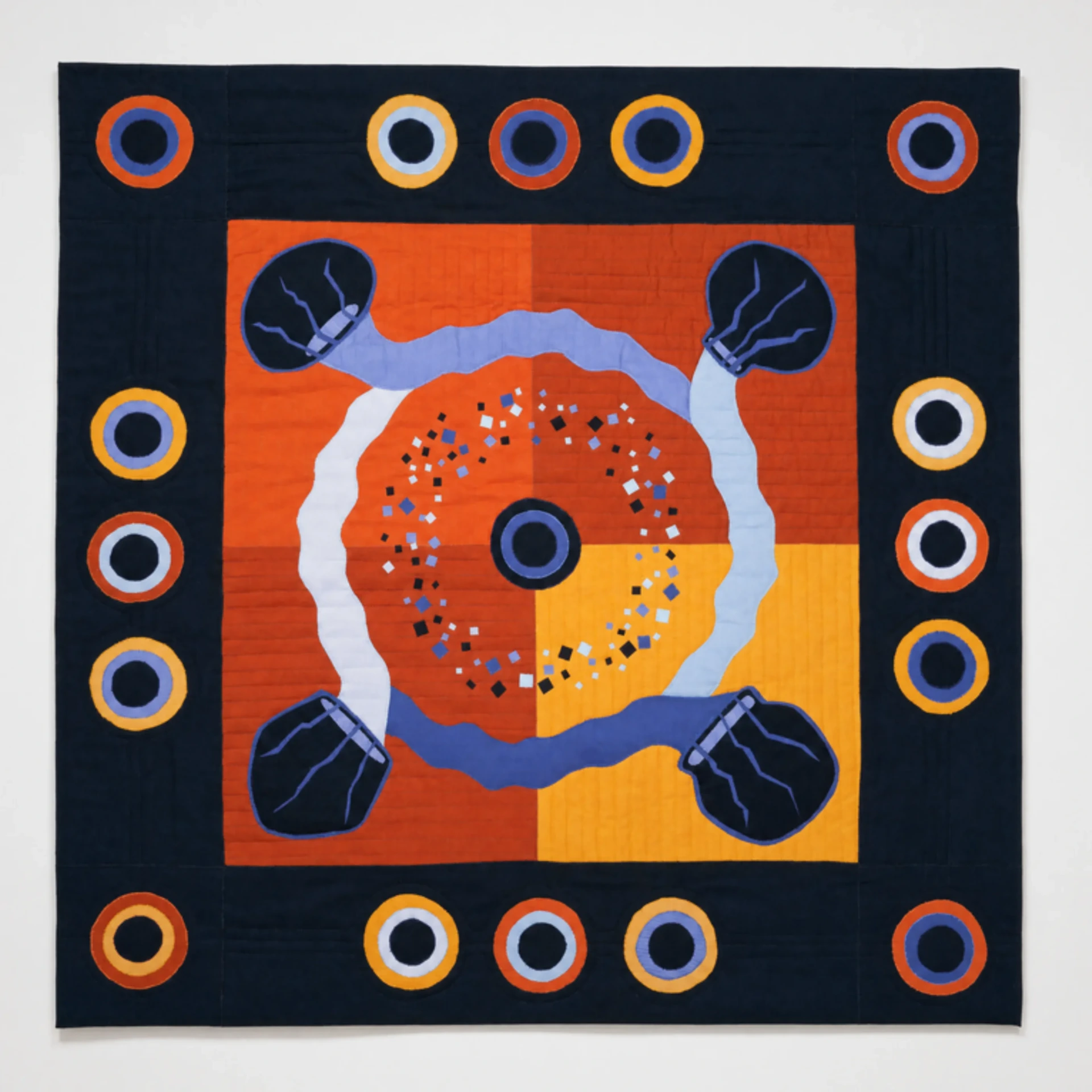
Early on in my visual research, I discovered a floral collar buried with the funeral regalia of King Tut. This collar was meant to accompany the dead king into his afterlife. I was amazed to discover that ancient people also honoured their dead with flowers and that these particular flowers had survived for 3000 years.
The broken circle of the collar was also a perfect metaphor for the broken ecology of wetlands and the work of TWI to restore them once again to fully functioning, beautiful wetlands.


Taking my time
All of the women in my family were needleworkers of one sort or another. My grandmother taught me to sew clothing; my mother taught me to knit and needlepoint. My father encouraged me and my four siblings to try new experiences and challenges.
I loved working with my hands and used stitching to help settle myself in my turbulent teenage years. I studied fashion design as a young person and worked in the field for a number of years. It’s a great source of satisfaction to integrate all the creative areas of my life into my current work.
I am the first professional artist in my family. I didn’t have much support for this career choice, so I was a late bloomer. I finished my art degree as a mature student, and I graduated from art school, Columbia College Chicago, in my early forties. However, I have come to realise that this was a wonderful outcome.
“Being an artist requires a sturdy ego and a steady home life, both of which took time to develop.”
Lindsay Olson, Artist
From science rebel to advocate
When I tell people that I make art about science, they want to know how I, a former ‘science avoider’, came to use science as the foundation of my practice.
Throughout my career, I’ve been inspired by water. One of my earliest art projects was titled Waterways (begun after graduating art school), and I was painting impressionistic waterscapes. I would deliberately edit out parking lots, electrical wires and buildings because I was trying to portray a more rural waterway.
Shortly after starting this project, my husband Craig and I bought a canoe. As often as I could convince him, Craig would be paddling in the back, and I’d be painting in the bow of the boat.
One day while canoeing on the Cal/Sag Canal, Craig and I passed a beautiful SEPA (Sidestream Elevated Pool Aeration) station. This is an engineered waterfall designed to add oxygen to the sluggish canal.
It didn’t look like any ordinary fountain I’d ever seen, and it was located in a very obscure part of town. The structure nagged at me, and I wanted to learn more about it.
The process of finding out who built this structure and why is what led me to the world’s largest wastewater treatment plant in Stickney. After an 18-month process of obtaining permission and pitching my request to the Metropolitan Water Reclamation District of Greater Chicago (MWRD) elected board members, I was given permission to work at the Stickney plant.
I knew that if I wanted to portray the real story of water, I had to really dig in intellectually and learn the science and engineering of wastewater treatment.
Accidentally stumbling over the scientific underpinnings of water management in a dense urban area transformed my studio practice, and it has never been the same since.
I went on to collaborate with leading scientific institutions, serving as the first artist-in-residence at Fermi National Accelerator Laboratory and working at CERN in Switzerland, The Wetlands Initiative, the Field Museum and the University of New Hampshire’s Center for Acoustics Research and Education.
Sharing it forward
I’ve been working in science art for over a decade, honing my process and trying out different approaches. When I developed my Stitch Club workshop, I enjoyed finding a way to share what I have learned. I want participants to be able to build their own project that allows them to advocate for a corner of the world they care about.
Artists have something important to contribute to our communities. Often in science, the facts are portrayed in words and graphs, but art images can reach people in places where works alone can’t.
Also, as an artist, I’m not only using design principles to draw people in, but I want my work to have an emotional impact. I want viewers to care about the issues I’ve learned about.
One of the most powerful lessons I’ve taken away from my residencies is that I am not afraid to learn any kind of science. I hope my artwork inspires others to explore their own questions and discover for themselves that you don’t need to have a Ph.D. to fall in love with science.
3 comments
Margot
WOW
Denise
I love Lindsay’s creative interpretations of physics, and this article was a great insight into her thinking and techniques. As she says “you don’t need to have a Ph.D. to fall in love with science”.
Dianne
What a fascinating article The integration of science and art Inspirational pieces