
There’s a gentle magic in Emily Jo Gibbs’ stitched portraits that comes to life through layers of organza. Sheer, ethereal fabrics transform into strikingly human faces that seem to glow from within. Each layer of organza and thread adds a whisper of colour or contour, creating likenesses that feel both fragile and enduring.
Organza is notoriously tricky: slippery, fraying and hard to control. But Emily has developed a process to overcome those challenges. She’s now sharing her signature techniques, as well as describing her artistic path that includes metals, wood and luxury handbags.
Emily’s latest projects, celebrating industrial and artisanal makers, are especially exciting. She carries a deep reverence for the act of making and offers her portraits as a tribute to those whose skills often go unnoticed. Each portrait is an act of care that proves the quiet value of human hands at work.
Hard & soft materials
Emily Jo Gibbs: I love fabric and the immediacy of working with textiles. I’ve always enjoyed making things, and I have a real appreciation of colour.
After a fantastic 3D foundation year at Ravensbourne, I studied Wood, Metal and Plastics at Wolverhampton. I chose the course because I wasn’t ready to specialise. It wasn’t until my final term that I started combining textiles with metal to create fashion accessories. I loved the juxtaposition of the hard and soft materials and the different textures.
A year after graduating, I launched an evening bag business, and it took off quickly. The next 10 years were fast paced, hugely exciting, and at times, glamorous! I sold handbags to stores around the world.
A change of direction
In 2005, I won an award to make a new body of work for a different audience, but I found the change in pace between running a fashion-driven handbag business and establishing myself as a textile artist quite challenging. I also applied to become a member of the 62 Group.
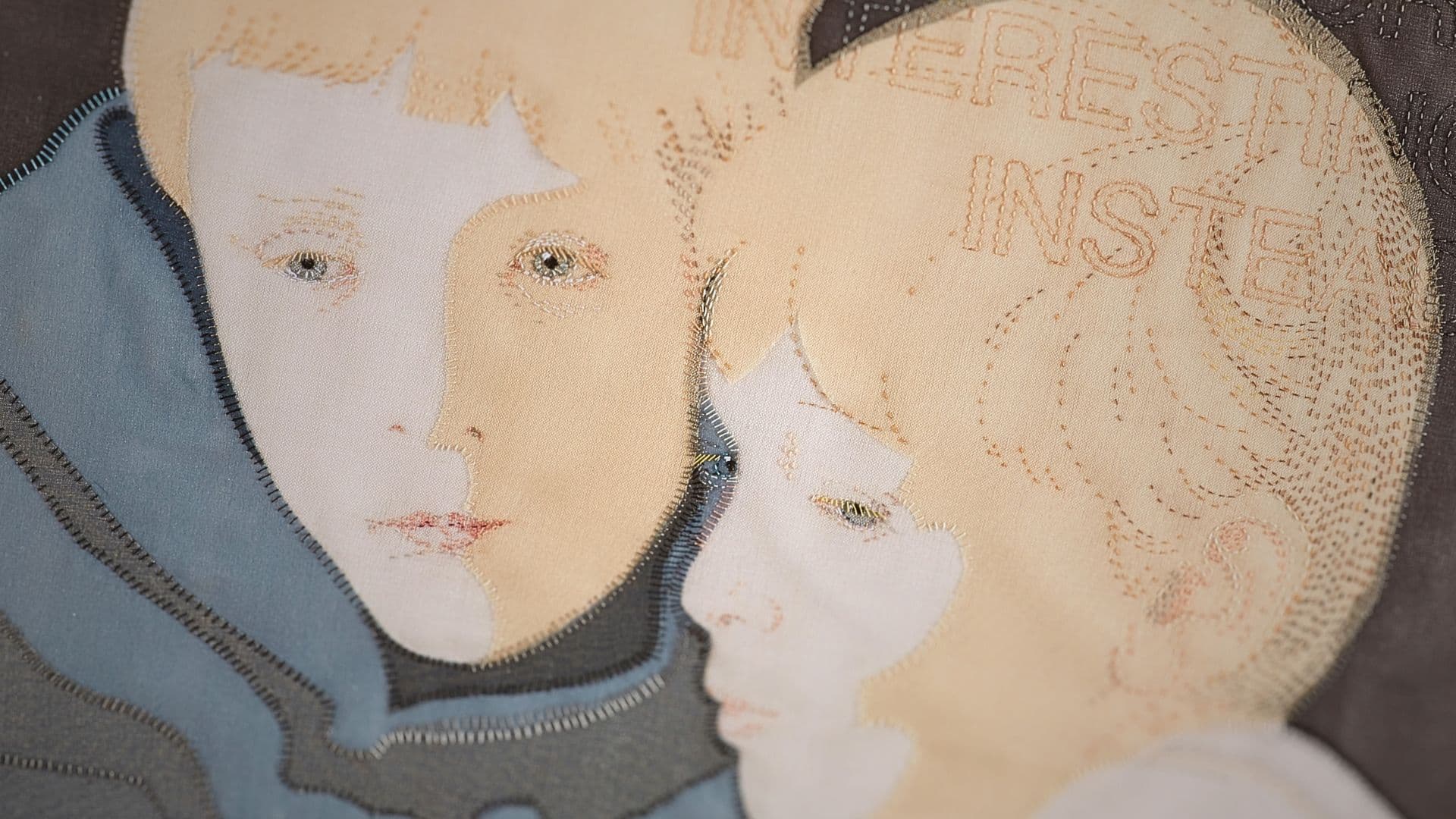
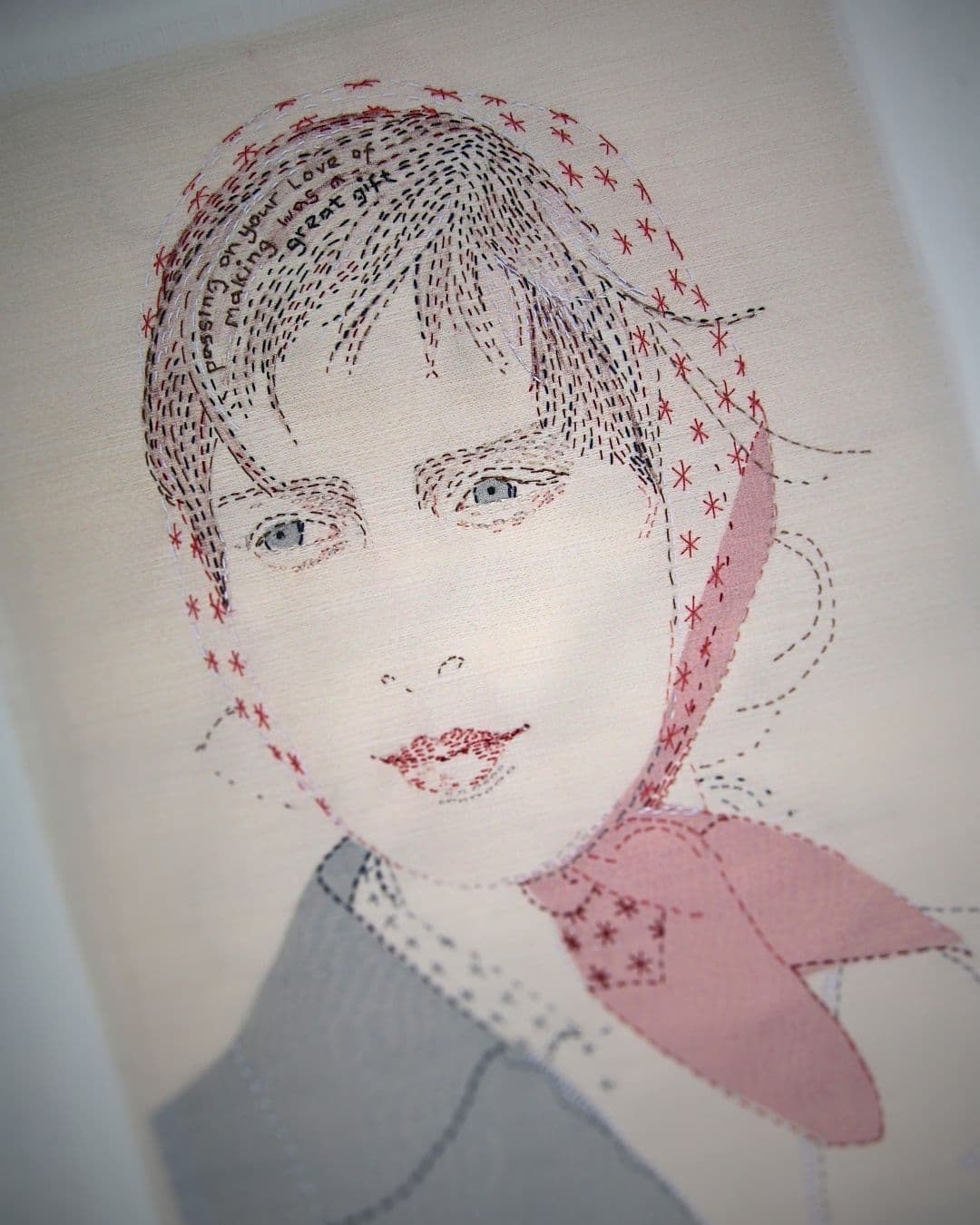
In 2010, I was determined to make work that was personal and creatively rewarding. I embarked on a series of portraits of my family, embroidered with my thoughts, wishes and aspirations. Those intimate studies constructed from layers of silk organza and hand stitch combined to convey a love story.
The message wasn’t sentimental, but rather a list of instructions that might help a person navigate the contradictory messages parents and community give to children. I’ve always been interested in the contradictory nature of our society, and how we navigate and disseminate the messages that bombard us.
“The process is what captures me: drawing a line with stitch, repeatedly moving the line and varying the colour or intensity of the mark.”
Emily Jo Gibbs, Textile artist

Capturing personality
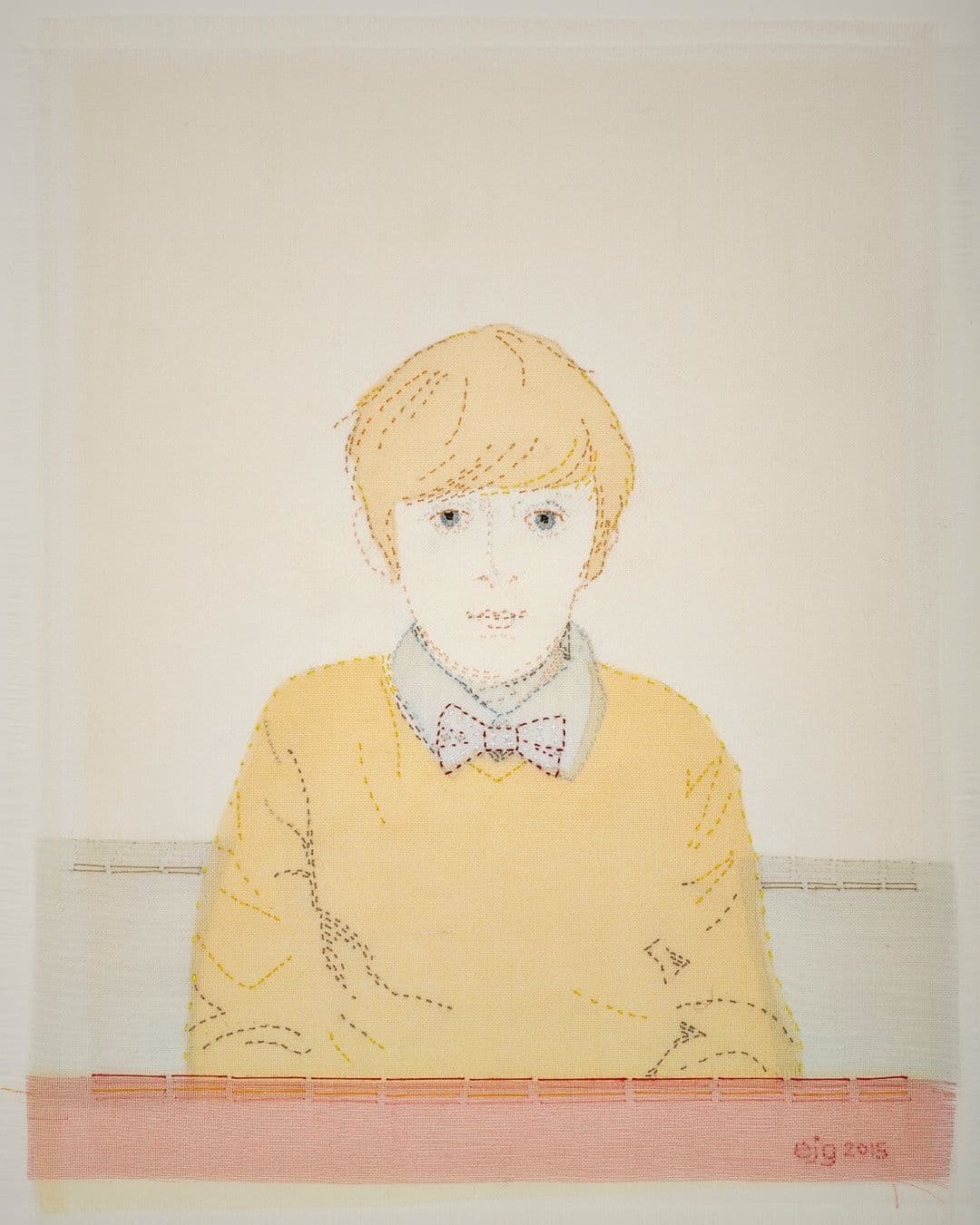
I most enjoy thinking about the person I’m stitching whilst I’m stitching them. I really enjoy looking closely and trying to capture their personality.
I prefer stitching facial expressions that are still because that reflects my slow process. A camera is great at capturing an animated expression, but I’m trying to do something else.
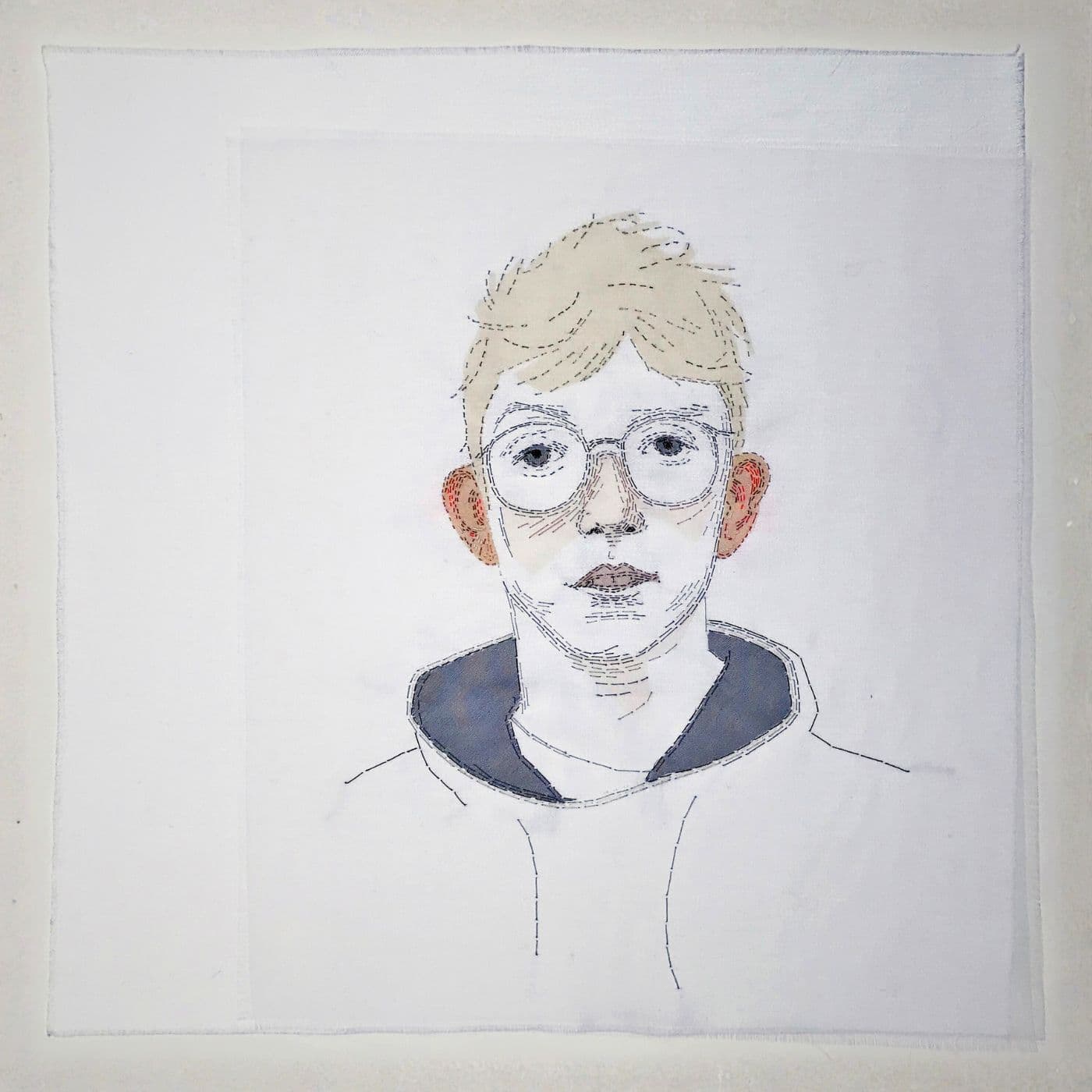
I pay special attention when stitching the eyes and ears, but the rest is quite minimal. I’m trying to achieve a likeness versus a detailed image.
A likeness can also be reflected in someone’s posture.
To keep myself from getting lost in the details, I try to stop stitching as soon as possible. A certain amount of stitching is required for the appliqué technique. But once that’s done, I critically evaluate how much more is needed. There is certainly a tipping point where added details start to distract.
I also don’t like my stitches to crash into each other, so I try to keep everything looking light in touch. Overall, I’d say my approach is ‘less is more’, which also informs my preference for neutral backgrounds.

Drawings, photos & templates
I put a lot of effort into designing my composition and using drawings, photography and photocopying to make to-scale templates for the finished piece. I photocopy the final design several times to use as cutting templates for the organza.
I cut template-sized pieces of linen and white organza fabrics and fray the edges of each. And I layer and pin the white organza over the template.
Using a sharp HB pencil, I make small dots, each representing a stitch. I need enough dots to know where to position my pieces. Some areas will have lots of dots while others have very few. I then set the marked organza to one side.
Cutting & stitching
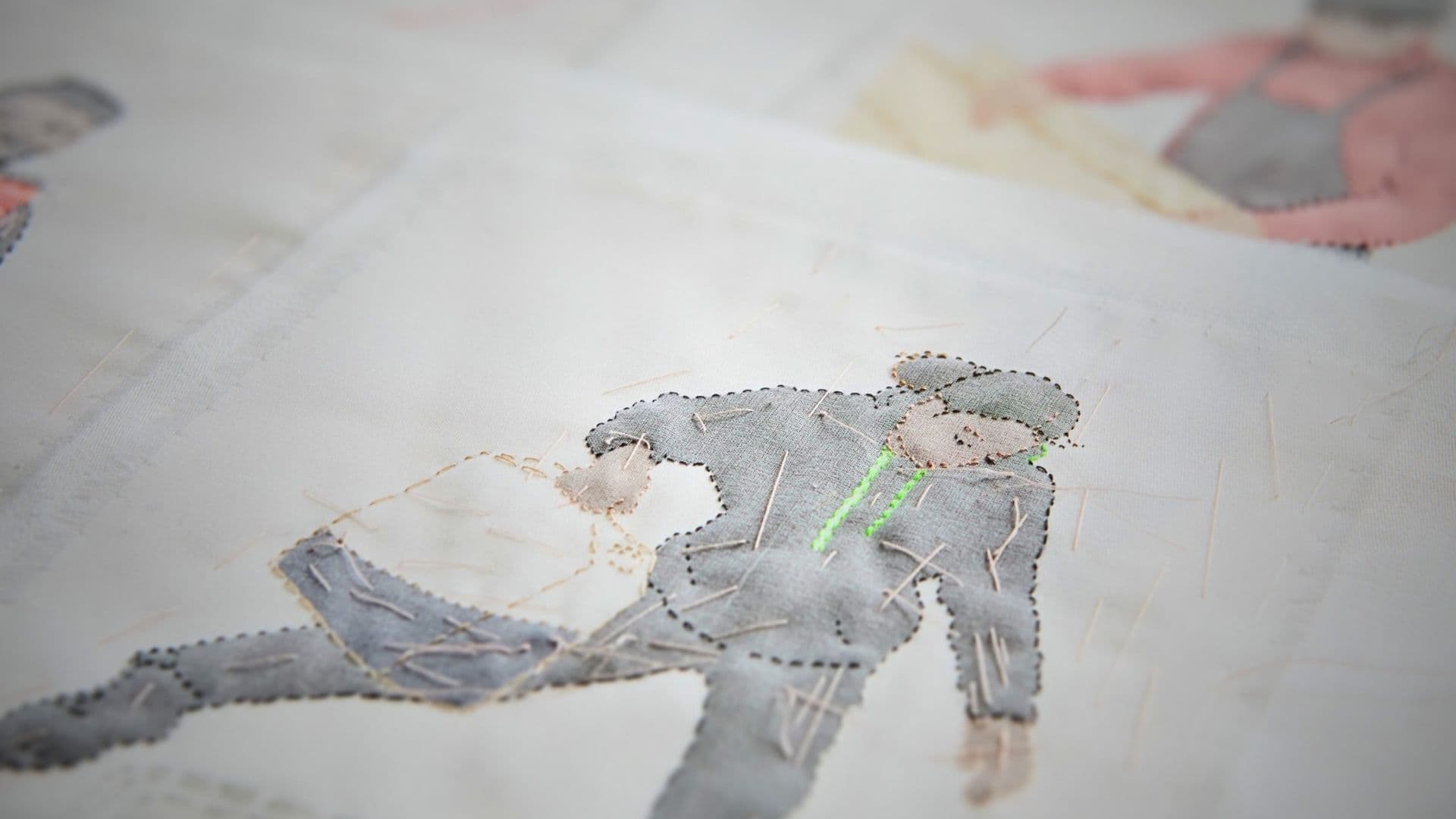
I look carefully at the design to identify coloured areas, as well as what will be fabric-and-stitch and what will just be stitch.
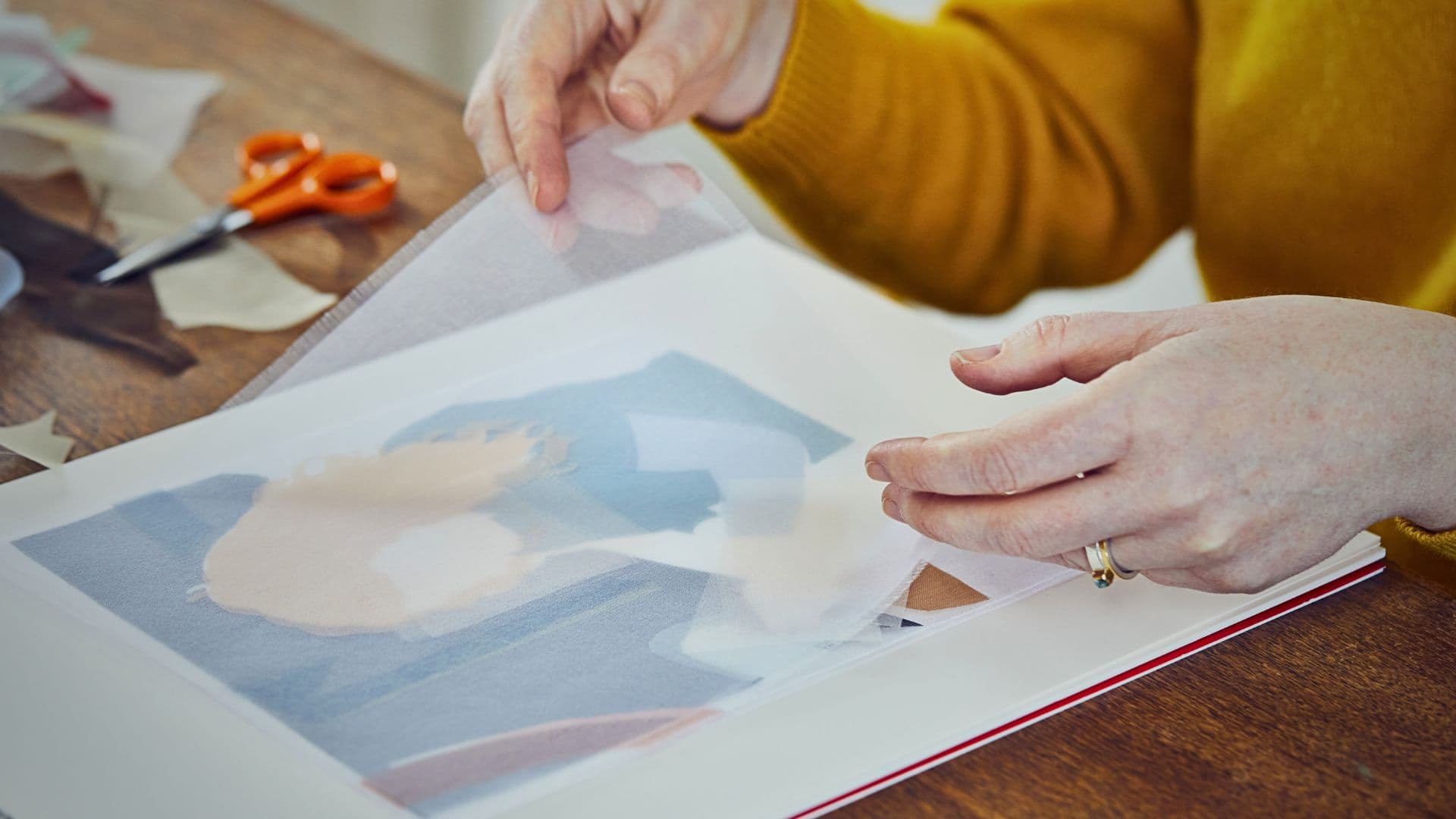
It can be quite tricky cutting organza into accurate shapes. To prevent slipping, I lay the coloured organza over one of the photocopy templates, pin it, and then cut out the shape through both the paper and organza.
Once all the pieces are cut, I position them under the white organza layer. I’ll cover some areas with two or three layers of the same colour.
I use the dots to help me see where each piece goes and then pin and tack everything into place. When all the pieces are tacked onto the white organza, I lay the whole lot onto the linen background, and tack around the edge and across the piece to hold everything in place.
Next, I use short and long stab stitches across the whole piece, stitching over the dots and alongside the colour pieces to trap them in place. I change my thread colour often, even for only one or two stitches if I want a particular colour in a certain spot. Finally, when the composition is complete, I remove the tacking stitches.
Organza love
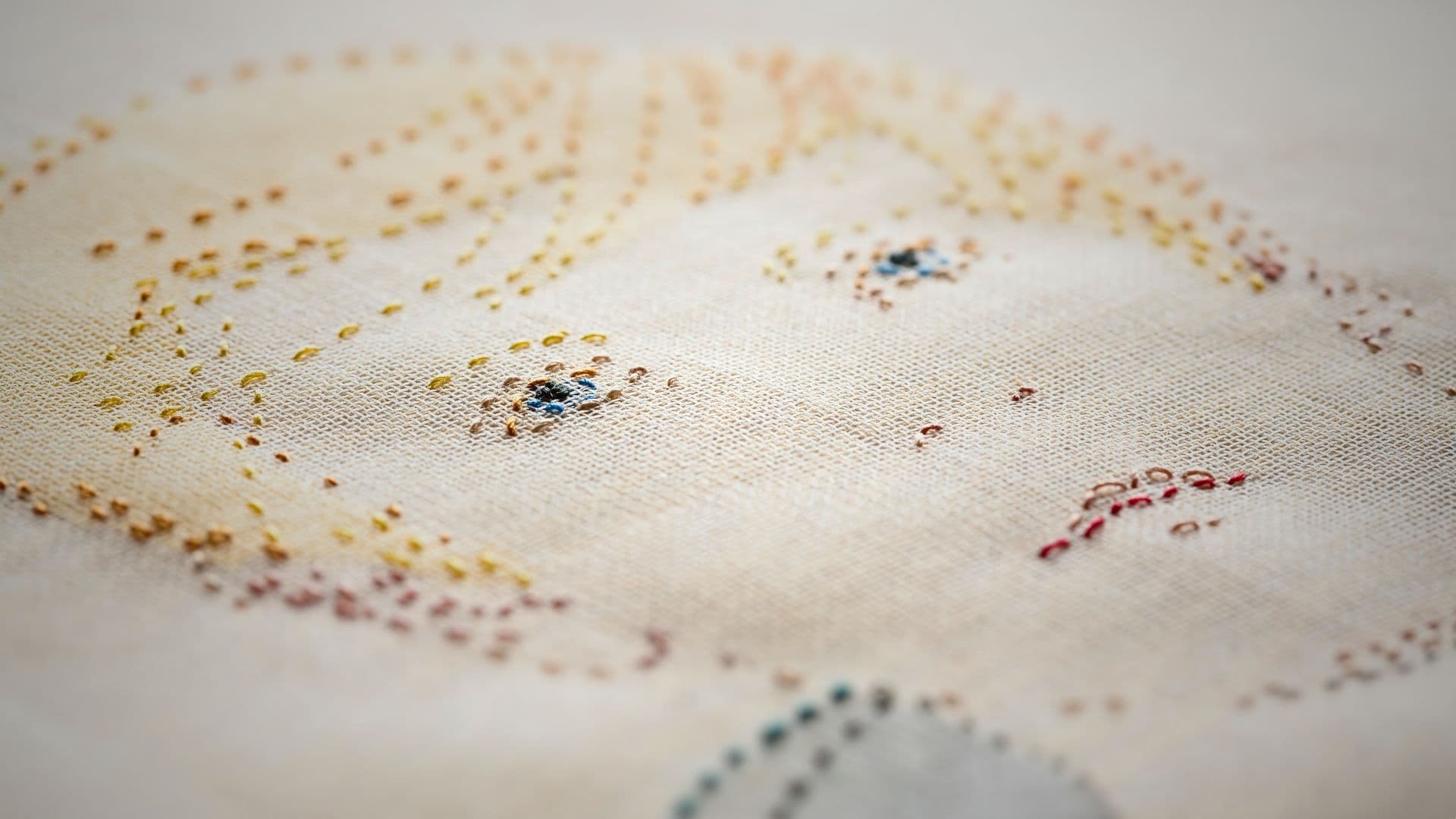
Organza is a translucent fabric made with coated fibres, so it has a paper-like quality. I only use silk organza, as synthetic organza is more shiny and wriggly. It’s hard to cut accurate shapes from synthetic organza.
My favourite silk organza is slightly coarse and is usually woven in India. I do, however, enjoy organza manufactured in China with its finer and more closely woven fibres. My two regular suppliers are MacCulloch and Wallis and Pongees. I also recommend Top Fabric, as they sell short 10cm lengths.
I don’t wash the organza before using it, because water removes the finish that creates its paper-like quality. But I do iron it with a dry iron on the cotton setting. Organza can scorch, so I move the iron around quickly. I avoid steam because it can sometimes spit and leave a water mark.
In terms of fraying, it’s easy to intentionally fray edges if the organza is cut along the grain. I can remove one or two threads at a time. And the frayed edges are quite stable.
It’s trickier to handle smaller pieces, though. They can fray more easily, so my best advice is to handle the smaller cut pieces as little as possible.
I’m excited to be teaching an upcoming Stitch Club workshop where I’m hoping students will be inspired by my simple portrait techniques. I’ll also be helping students explore the possibilities of working with silk organza. It’s surprisingly tough, and I’m hoping they’ll learn to love both its brilliance and versatility.
“I want students to understand that the care and love we put into our making can be conveyed onto the person we are representing.”
Emily Jo Gibbs, Textile Artist
Working in series
I enjoy working in series, especially when working with specific groups. But I do have to keep in mind time constraints, as well as my access to members of the group.
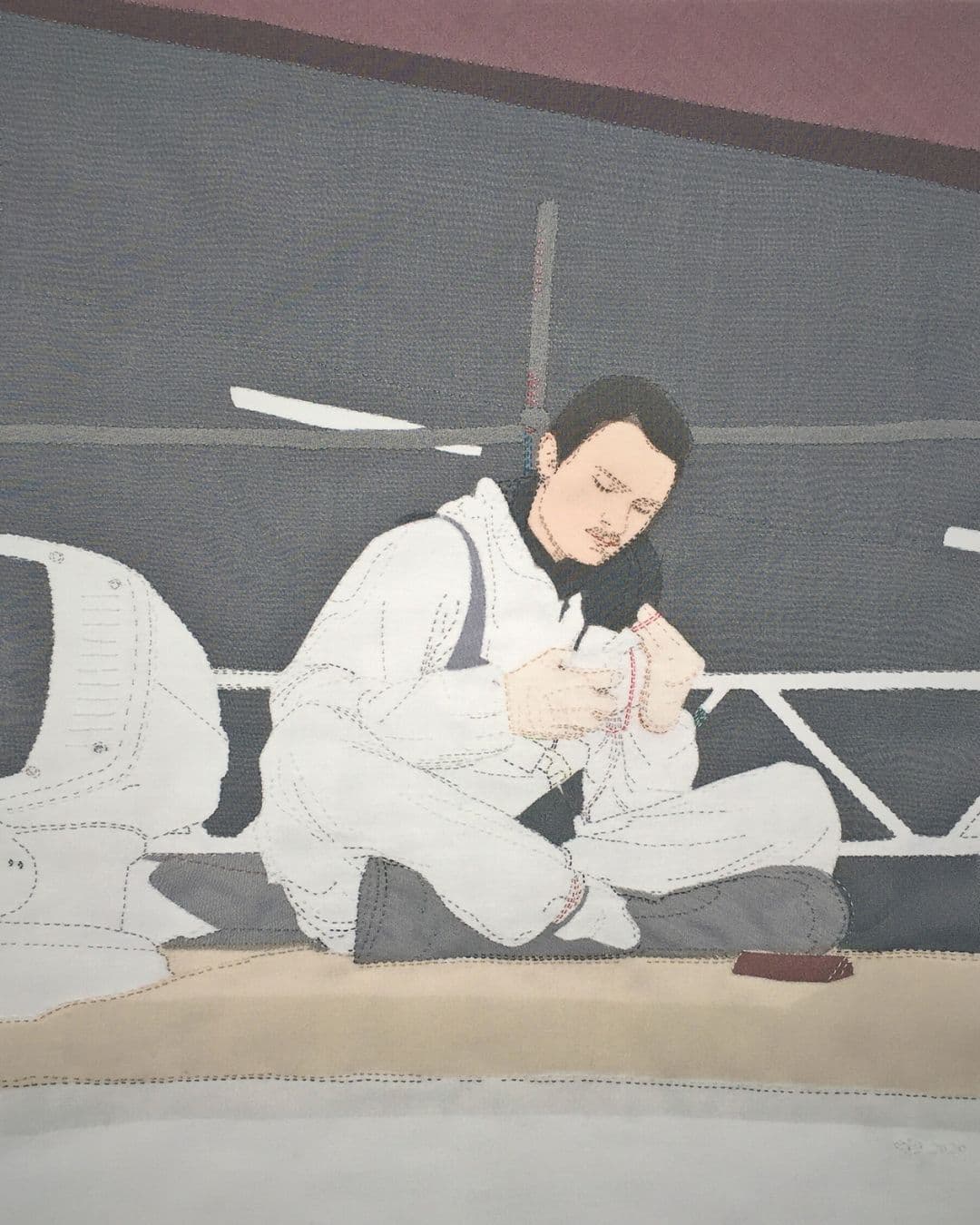
For example, for Boat Builders, many of the portraits feature people I met on my first visit to the boatyard. I then asked to meet people in other departments. I was interested in the apprentices, but I also depicted their foreman who had been an apprentice 30 years earlier. I thought that created a richer group and more interesting story.
“I enjoy curating my work in series, because my pieces have a strong visual language when they sit happily together.”
Emily Jo Gibbs, Textile artist

Must-have tools
I couldn’t do what I do without lovely, sharp scissors to cut nice crisp shapes. I like the 13cm classic micro-tip scissors from Fiskars. I also need a magnifying visor to wear over my reading glasses. Being able to see is crucial for fine work.
For threads, I use normal sewing thread or a top stitch thread. I like Coats/Mez cotton threads. I also use both polyester and cotton Gütermann threads.
I have a studio near my home, but this year, I’m enjoying a special place two days a week as artist in residence at Trinity Buoy Wharf. It’s in a tiny wheelhouse that’s about 2m x 2m. It’s now on dry land, and it has windows on all four sides.
The light is great – sometimes too much, so I put up paper blinds. I trundle my work and supplies to and from the wharf in a wheelie suitcase. It’s in London’s Docklands, about 45 minutes by tube from my house.

Kids today
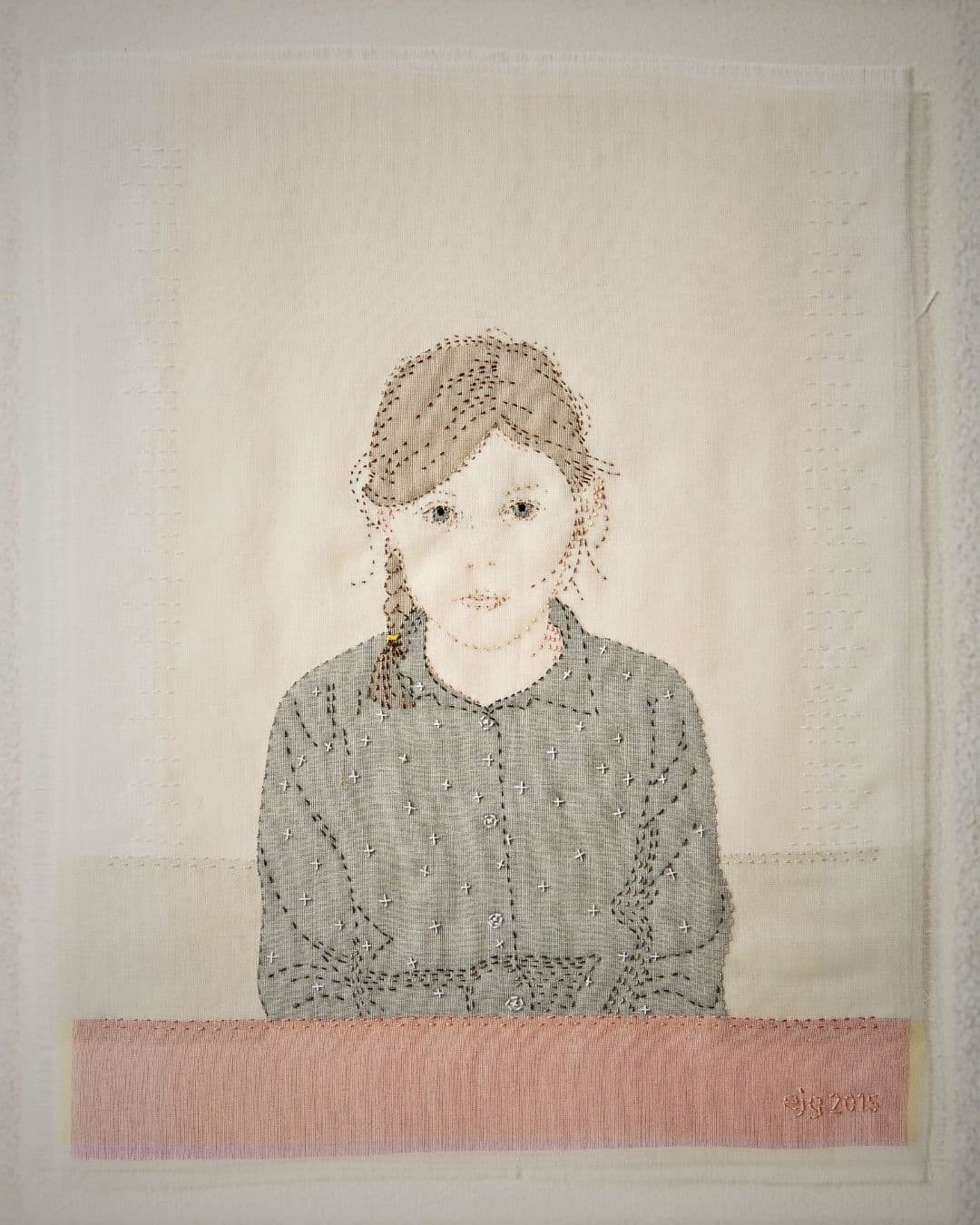
Prior to making my series based on children, I’d only made portraits of my family. But I was struck one day watching my boys playing in the street in front of our house with our neighbours’ kids. It felt like a precious thing, a moment in time.
They rode their bikes, roller-skated, climbed lamp posts and played make-believe games. It inspired me to create small portraits of people other than my family.
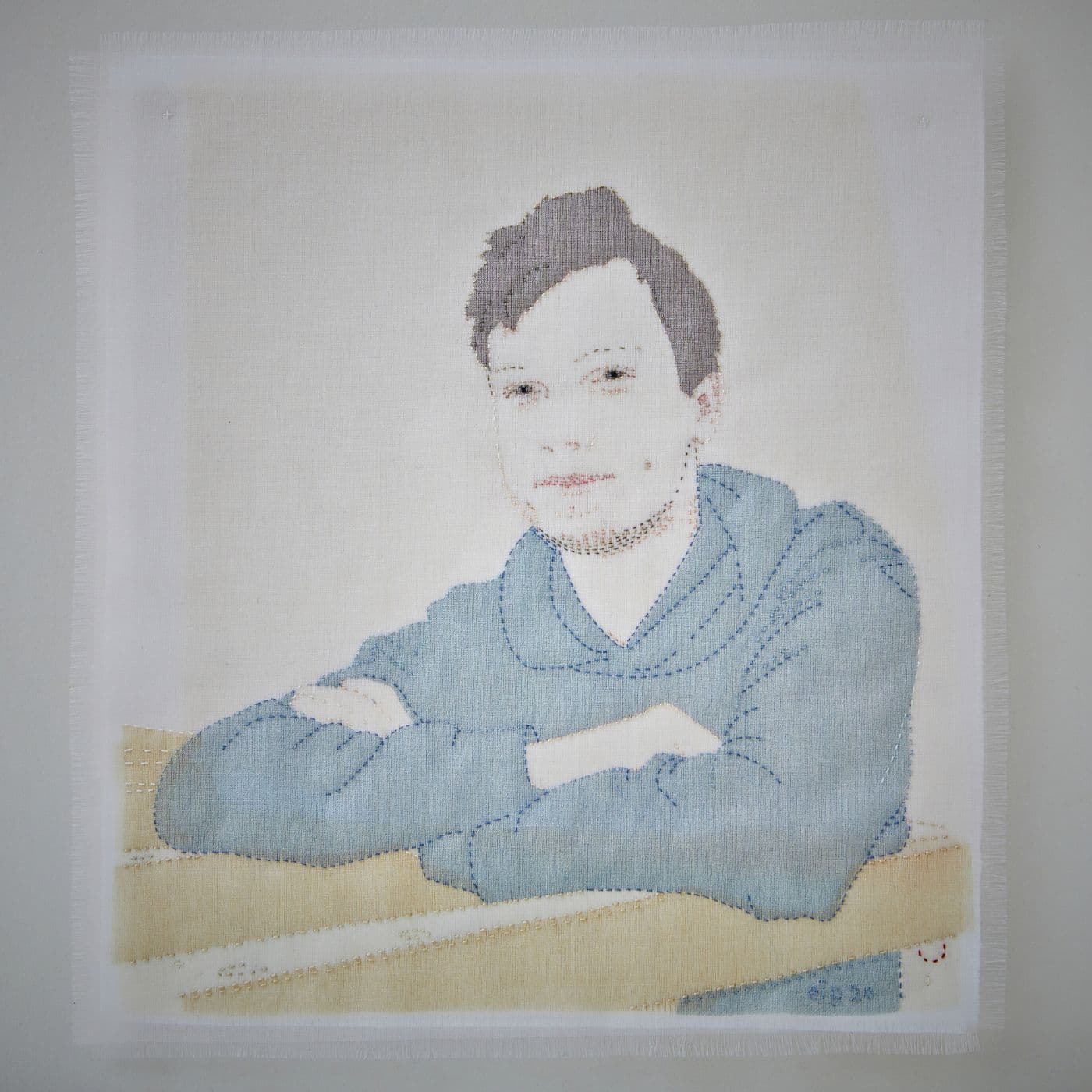
I created a test piece featuring my son Fred and approached the parents, who said yes. Then I asked the kids – a couple of the boys weren’t sure, which was fine. But as the project gathered pace and word went round there was going to be an exhibition, they all got on board. I photographed each of them sitting at my kitchen table, as I liked the idea that they were all different heights.
I made my son Bill’s portrait last because I was worried about running out of time. He wanted to wear a specific band t-shirt with a complicated design. I made him put on a hoody instead so there was less stitching involved!
Violet wore a shirt with a skull and cross bones design, and I think she was a bit disappointed I didn’t embroider each of those individually.

Boat builders
In 2019, Maria Regan from St. Barbe Museum and Gallery invited me to have a solo show. After exploring various themes, the idea evolved to base the show around apprentices working at Berthon Boat Yard, a local business in Lymington.
Maria and I had a brief initial site visit to the boat yard that was very inspiring, so I returned a few weeks later to document a series of apprentices learning the trades of Shipwright, Engineer and Sprayer. I also met with other trades people and the Apprentices’ foremen.
I enjoy finding artisans and people who make things that are somewhat hidden such as in manufacturing.
I think society generally undervalues people who make things. I think it goes back to our whole schooling. From primary school on, children are channelled to pursue academics over making skills. And as we’ve become less of a manufacturing nation in the UK, those making skills are valued even less over time.
“My work is really about finding makers and saying ‘I see you’.”
Emily Jo Gibbs, Textile artist
Celebrating makers
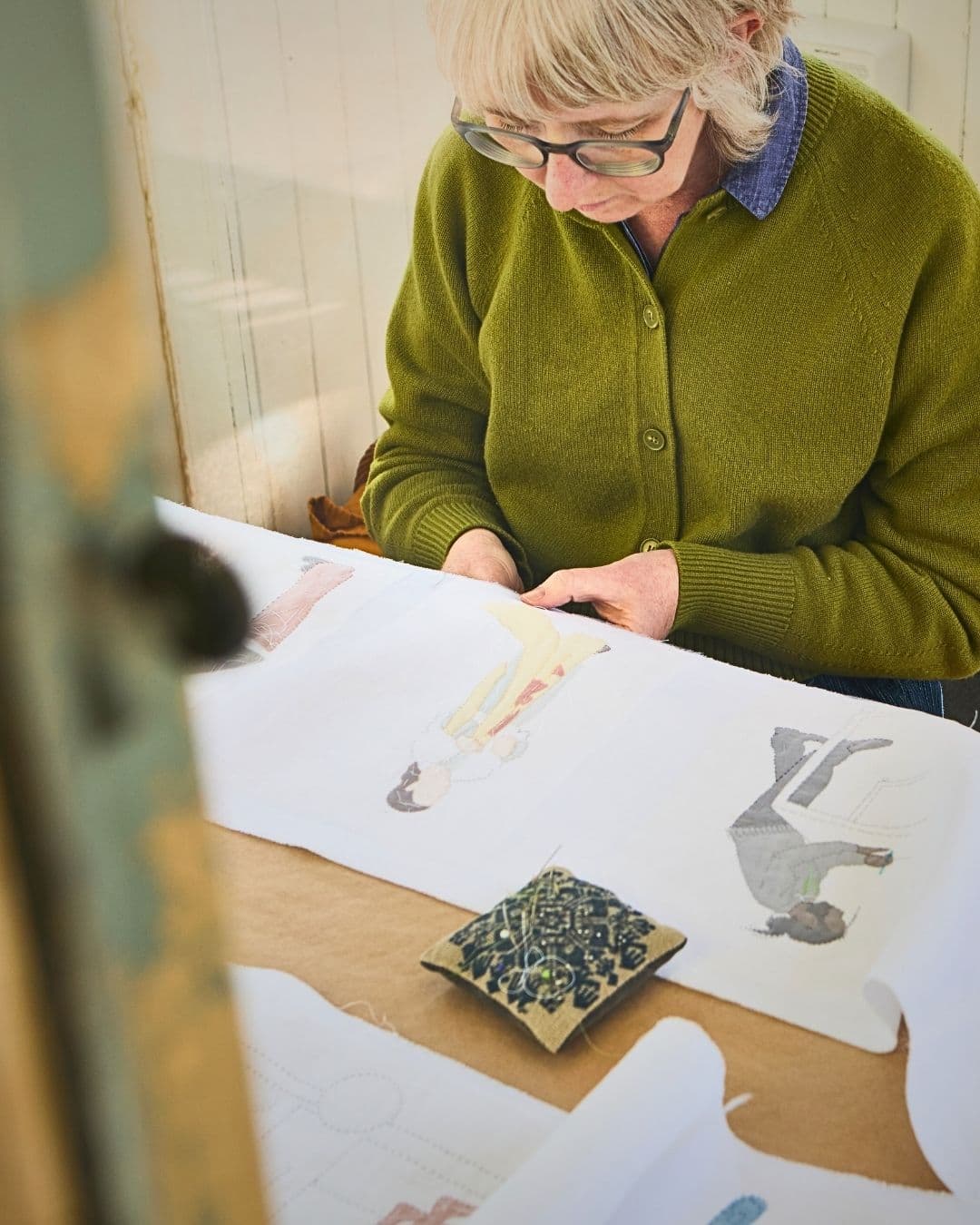
I’ve been working on Procession of Makers whilst serving as an artist in residence at Trinity Buoy Wharf. I had proposed creating a body of work to shine a light on the people that work there. I wasn’t entirely sure what form the work would take, but I suggested it take the form of a visual diary based on drawings.
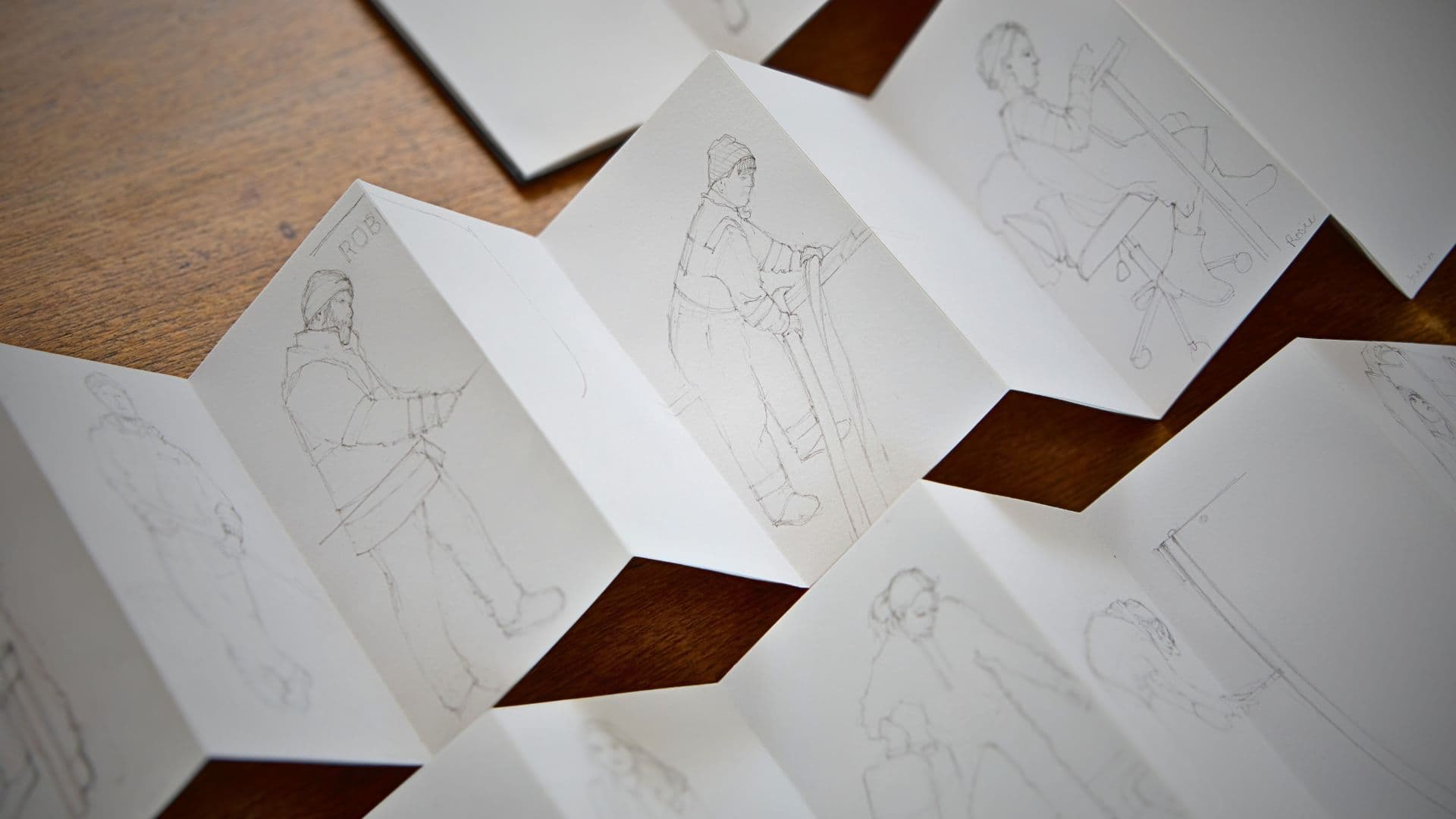
Early on, I drew a group of workmen who were repairing the river wall. I used a concertina sketch book and was inspired by how they seemed to travel across the pages.
I love how the whole piece has movement, and they are less detailed because they are taken from drawings. It’s also been very different for me in that the whole piece wasn’t designed from the start. Instead, it’s grown as I’ve met and drawn people.
The final work will be exhibited as a long ribbon. It feels exciting not to constrain the work to fit a frame and stay true to the concertina sketches where it all began.

3 comments
Kit Sutherland
The Little One Knew is stitched on 50-year old white Indian cotton that once lined a red satin moiré evening dress. The panel design includes a mother and her children, copied from a drawing by a three-year old. The group is outlined in acqua blue silk running stitch set above an illegible text stitched in silk and linen thread with the ends of threads left dangling. Along the sides of the work, some small pieces of pale green and mauve, irregularly shaped glass beads were applied to add light. The cotton was incredibly soft and pleasurable to stitch on. The idea of reworking a garment that had lived another life had special meaning for me. The almost see through material was surprisingly easy to work on. It took the best part of a year to finish. 70cmX120cm
Siân Goff
Wonderful! Do send us a picture of this work. We’d love to see it.
Emily Jo Gibbs
Wow this sounds terrific. I love the idea of using the child’s drawing and the vintage dress. What a super project.