

Britta Ankenbauer thought she’d pursue a textile degree after high school, but the courses weren’t what she expected. She studied social sciences instead, but her desire to work with fabric and thread kept insisting.
After graduating, Britta picked up a needle and thread to start translating all she had learned about human connections and societal change. She quickly discovered fabric, thread and print allowed her to tackle life’s big questions in ways a textbook never could.
Britta also committed to working in series. Life doesn’t offer neat conclusions, so why should her portfolio? That’s exactly what makes her textile collections so timely and exciting.
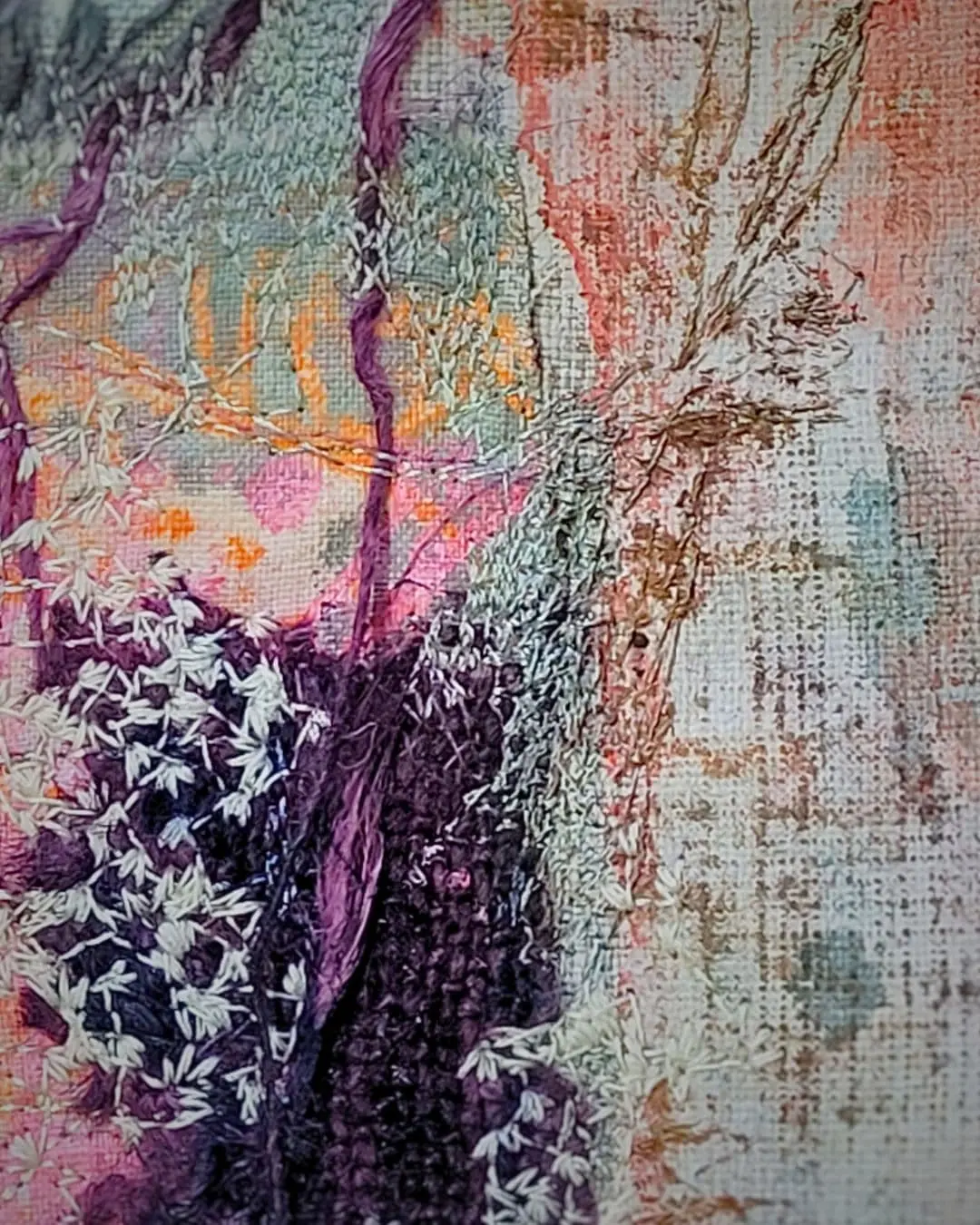
Finding my voice
Britta Ankenbauer: I thought about studying textiles after finishing high school, but I didn’t find the course programmes interesting at that time. They seemed to mostly focus on weaving brown tapestries. I decided to pursue social sciences and earned my MA at the University of Heidelberg.
After graduating, I moved to Switzerland. I found myself still wanting to explore textiles, so I took some art quilting courses with wonderful artists such as Katie Pasquini-Masopust and Ann Johnston.
I entered my very first quilt into a juried national show, and I won first prize. I was totally surprised! I received another prize weeks later, but I knew there was so much I still had to learn. I wanted to go deeper into artistic approaches and the basics such as composition and colour theory.
I couldn’t go back to fulltime education, as I had two small children. So, I studied textile arts and printmaking through distance learning. It took me over six years to complete my degree at Open College of the Arts, UK. That was such a turning point in my career, and I’m so grateful to the fantastic tutors who really pushed me forward.
“I wanted to take what I had learned and discover my own artistic voice.”
Britta Ankenbauer, Textile artist
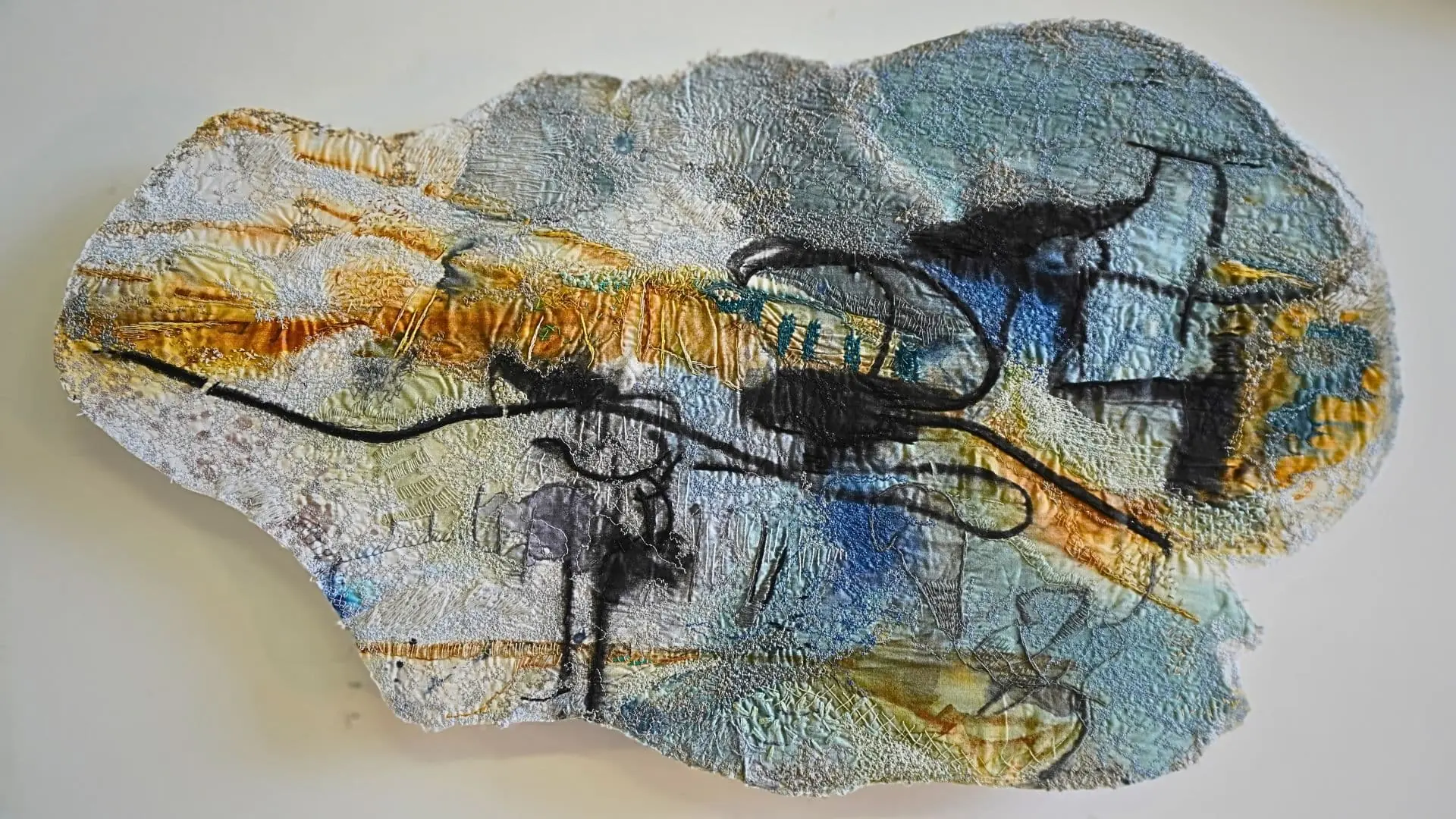
A focus on change
I’m a storyteller and I’m interested in human interaction and the idea of change. Having studied social science, my favourite stories are about metamorphosis over time.
Textiles have tactile and haptic qualities that allow me to bring social issues to life in new ways through layering, construction and deconstruction.
I’m also interested in capturing people’s forgotten stories, especially those found in abandoned objects and photos. I imagine new stories based on the small amount of information I can identify.
One of my most treasured photos features an older woman smiling as she holds a big bouquet of flowers. Someone had written ‘For my beloved mum’ on the back. It’s a wonderful example of how love is a timeless social theme.
“Textiles and print allow me to go beyond the words and facts of a particular social theme.”
Britta Ankenbauer, Textile artist
Sketchbook playground
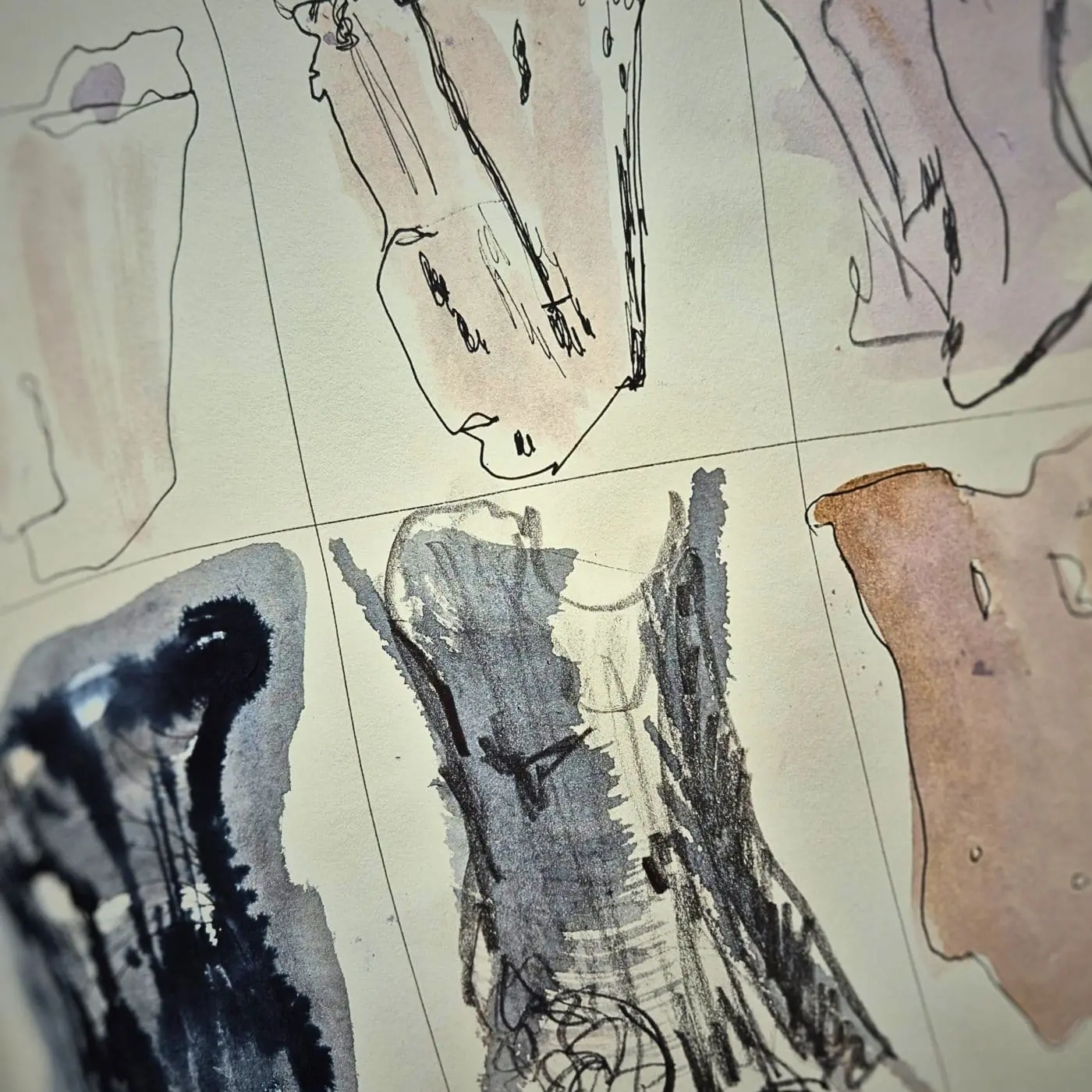
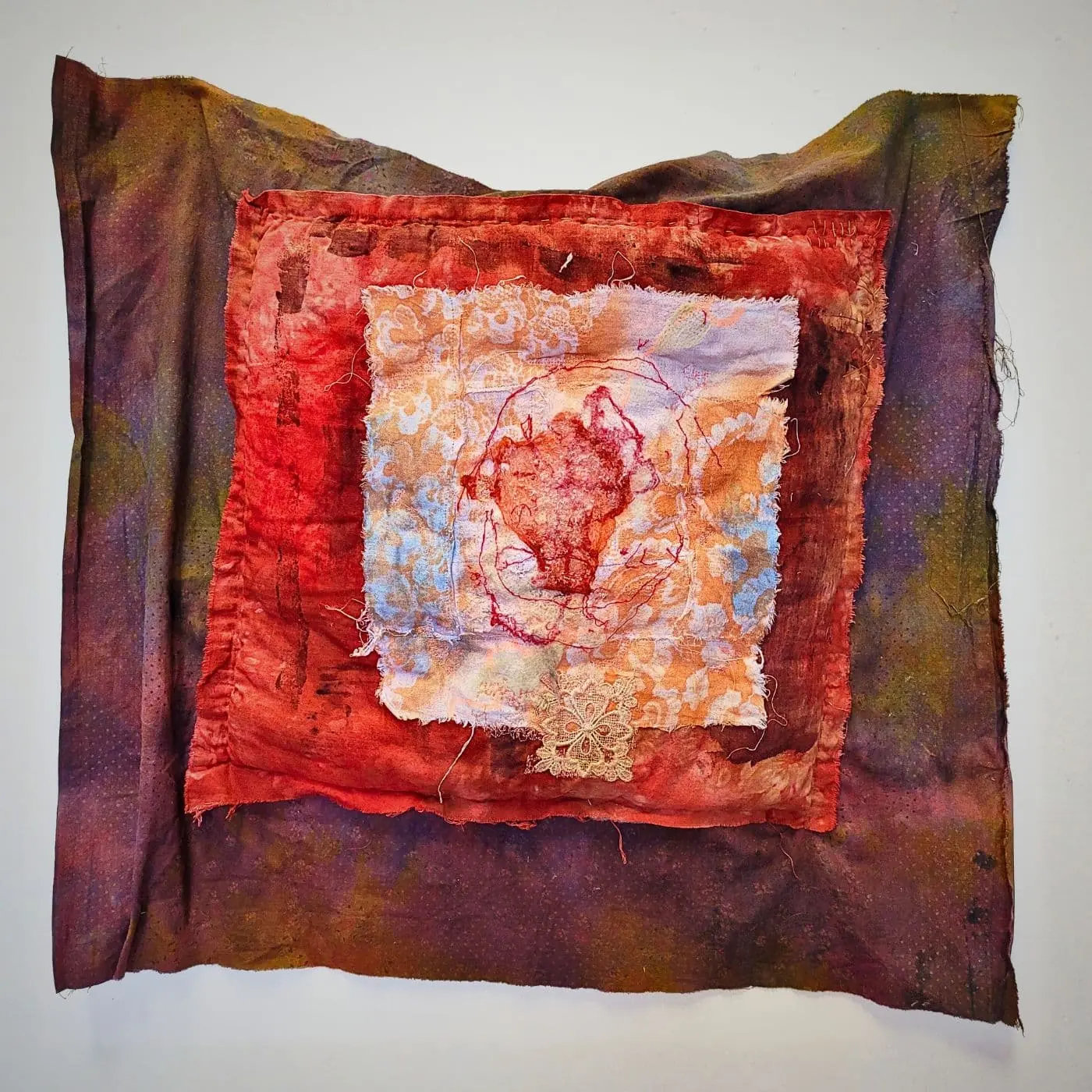
Working with sketchbooks is one of the most important parts of my artistic process.
I view my sketchbooks as ‘playgrounds’. It’s where most of my creativity and artmaking takes place. Not only for drawing and painting, but to also explore materials.
Sketchbooks help me develop my artwork into special pathways, and they’re also great learning tools for a lot of technical and material issues.
I’ll be hosting an upcoming Stitch Club workshop in which I’ll be sharing some of my strategies for creating work in series. A key part of that workshop will be helping students understand the value of first sketching their ideas to help push them in multiple directions.
They’ll make several small pieces and consider ideas or themes that help the works connect, or not. Sometimes a work may be singular and not ripe for a full series.
Slow making
Working is a slow process for me. At the beginning, I don’t know exactly where a piece will end. I just start with raw materials and let the issues, projects and ideas I have in mind emerge through experimentation.
For me, being an expressive artist and living an artist’s life means dealing with a lot of soulful and authentic emotions. I not only explore positive feelings such as excitement, passion and joy, but I also delve into life’s challenges and failures.
Dealing with challenging emotions is a necessity to create art, as it allows an artist to express the truth of their vision.
Technical skills alone can never bring one into the world of art. Crafting is the technical aspect, but using one’s passion, visions and imagination is what leads to authentic art.
“Authentic art is the type of art that shows the artist’s voice, no matter what techniques or materials are used.”
Britta Ankenbauer, Textile artist
Stitching in series
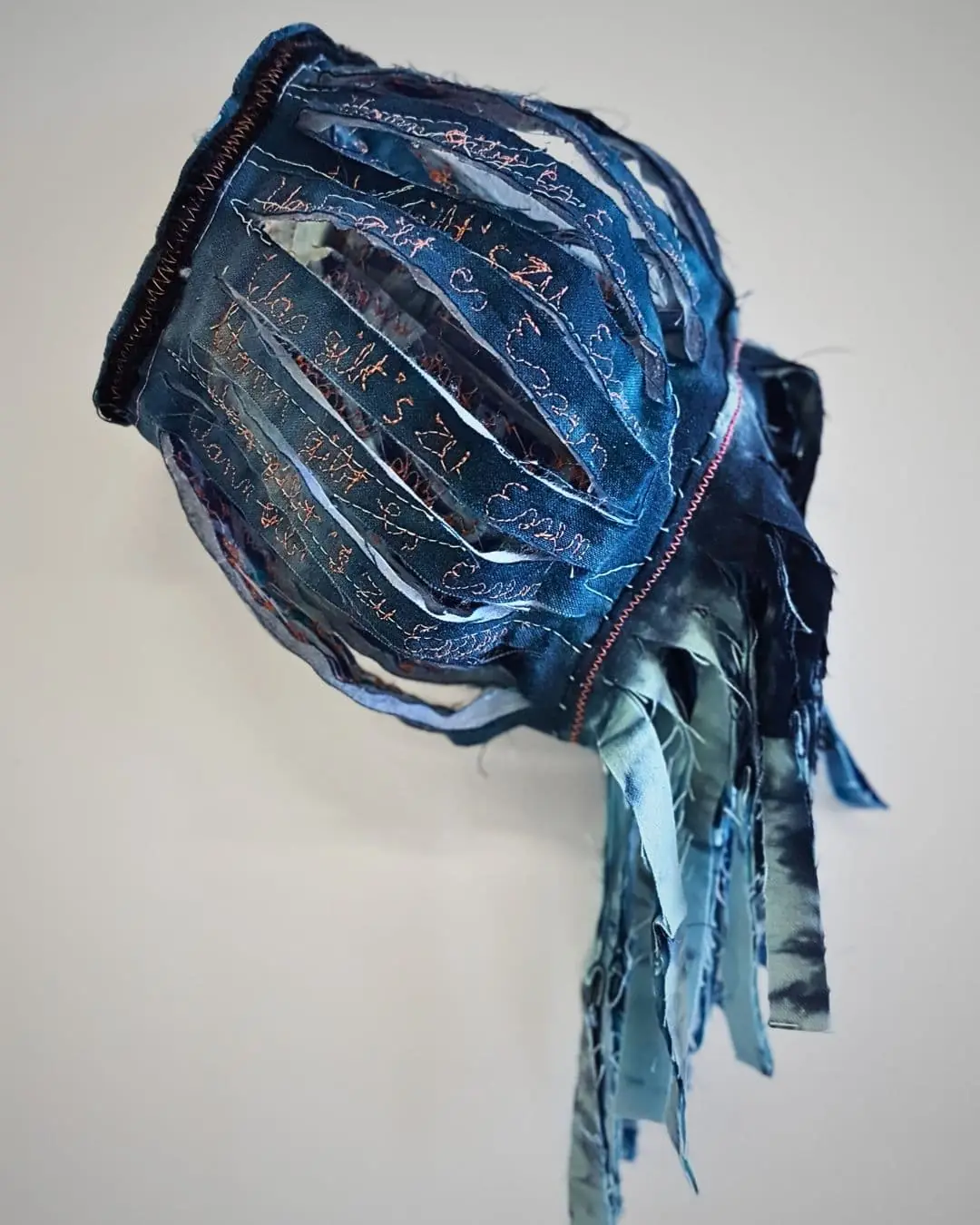
Working in series, versus a singular work, allows me to explore many possibilities. As I collect questions about my subject along the way, I’m pushed in directions I wouldn’t have thought about beforehand.
That’s why I enjoy working in series. My ideas are always complex, and I often have more than one notion in my head.
Revisiting a theme multiple times allows me to respond to what I discover along the way. And over the years, the series grows into a full body of work.
Creating a collection also allows me to experiment with different approaches and materials. Each work is unique, but there’s still a connection with the others. It’s much like siblings in a family: there are similarities in terms of colour choices and sizes, but they all have their own personalities.
“I love being astonished and surprised by my materials.”
Britta Ankenbauer, Textile artist
Multimedia mashups
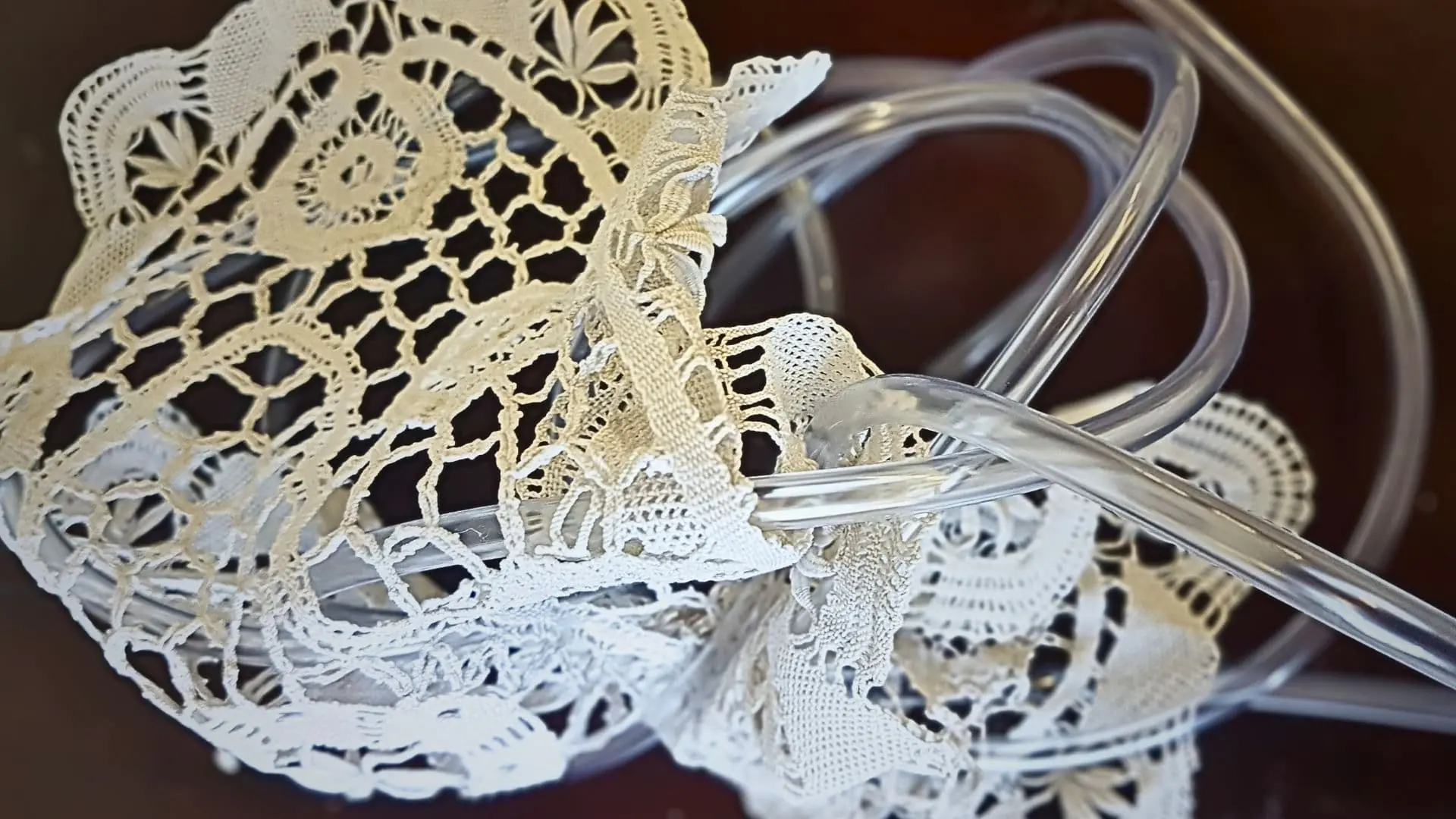
I enjoy working with a variety of materials that fit the story or themes I want to express. For example, if I’m wanting to explore the ideas of ‘connections,’ weaving is a wonderful technique as it connects materials with threads.
It’s been a long, but interesting, process figuring out how to combine traditional fine art techniques with textiles. I worked hard to break away from traditional use of some techniques, and I was also challenged in adapting materials for textiles.
How does the paint behave on fabrics and threads? How do the different materials meet at the borders? Are transitions seamless or do I emphasise contrasts?
I’m a big fan of sampling. And as soon as I recognise I’m getting stuck in the details or I am simply confused, I’ll set the work aside and come back to it later. My ‘reflection’ stage finds me making notes, asking questions, or making small drawings in my sketchbook.
Editing my work can be challenging, as I love abundance and deep thinking. I compare my editing process to composing music: there is a main theme that’s complemented by quiet or loud areas. Composition is about balancing all the elements related to rhythm and visual weight.
“I try to find answers through making.”
Britta Ankenbauer, Textile artist
Mark making
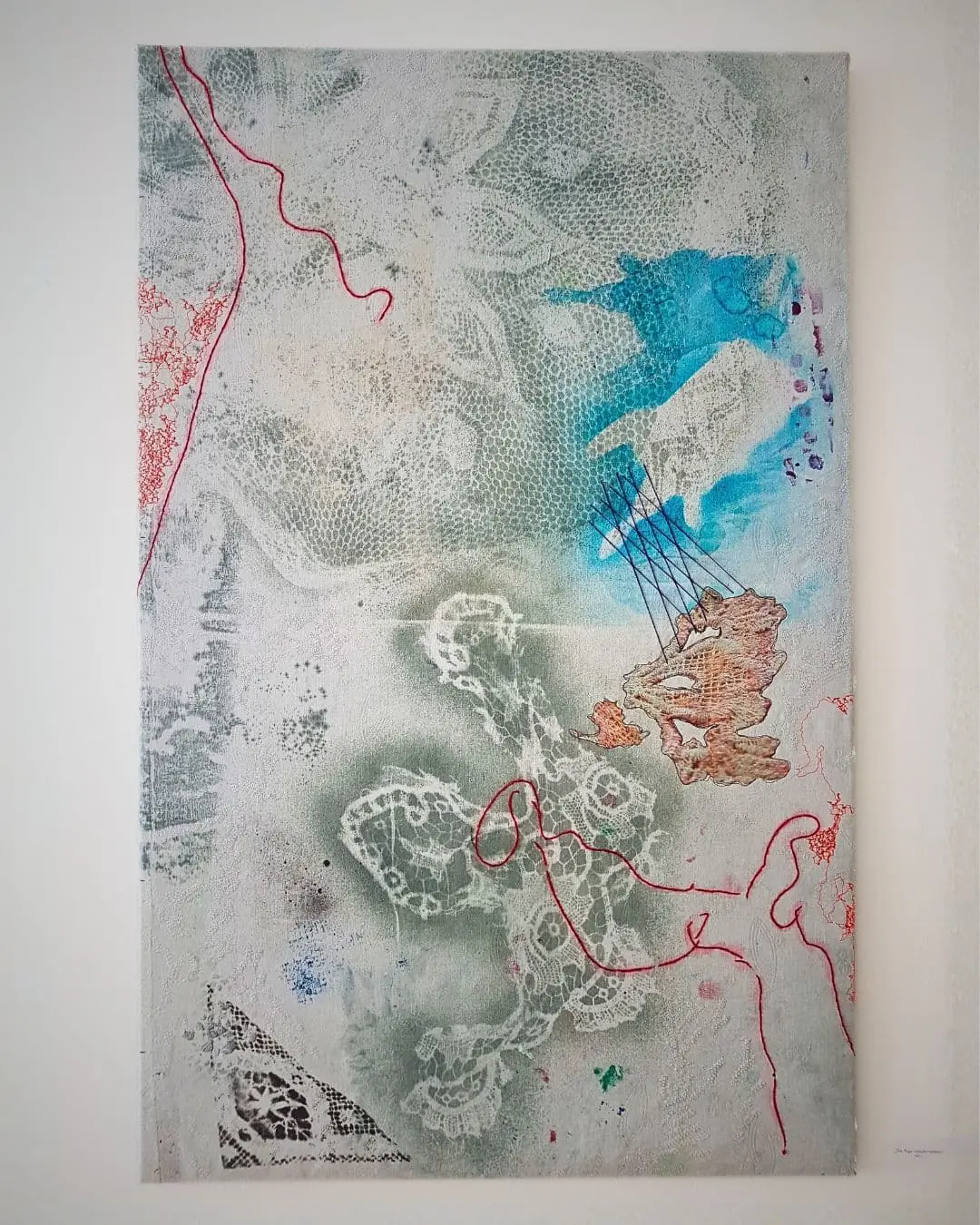
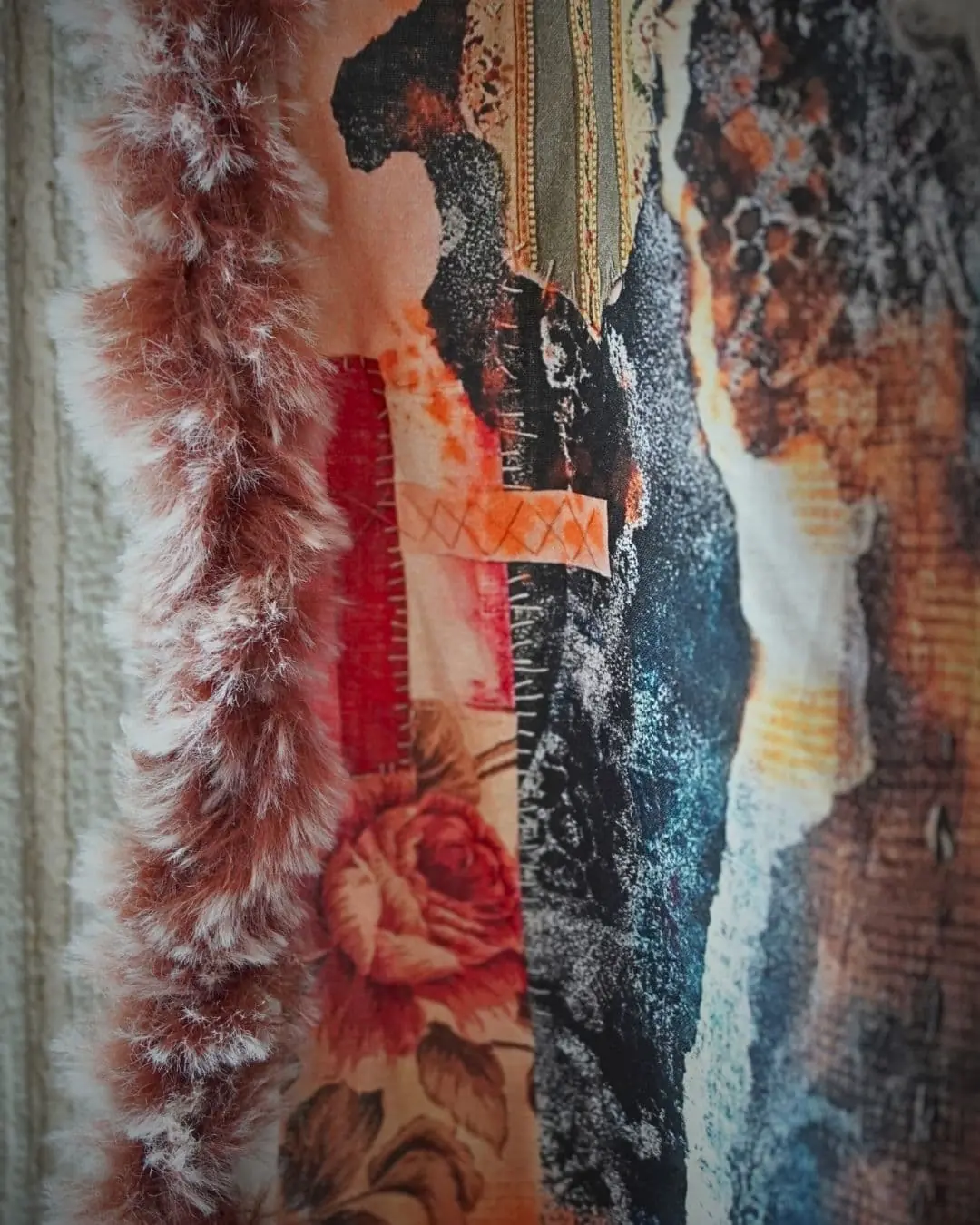
I love working with synthetic dyes like Procion MX and acrylics. I use acid or natural dyes for wool. I’ve also explored combining watercolours with natural dyes. Tea, coffee and other pigmented natural solutions can also be very interesting.
I enjoy the unexpected and accidental approach of dyeing and the details that appear after ironing. Small differences in tone can show vibrancy and subtlety.
In terms of printing, I view print marks as ‘traces’ and ‘echoes’ of objects or actions (think of the marks left on a towel after cleaning your hands). Every mark will be unique, as it depends on the printer’s use of their inks, tools and surfaces.
I use a wide variety of materials to print, including old carved items, wood, stones and grass. I also work with stencils, woodcuts, lino and silkscreens.
“After years of practice, I’m mostly able to achieve the colours I want, but accidents are still fun.”
Britta Ankenbauer, Textile artist
Digital imagery
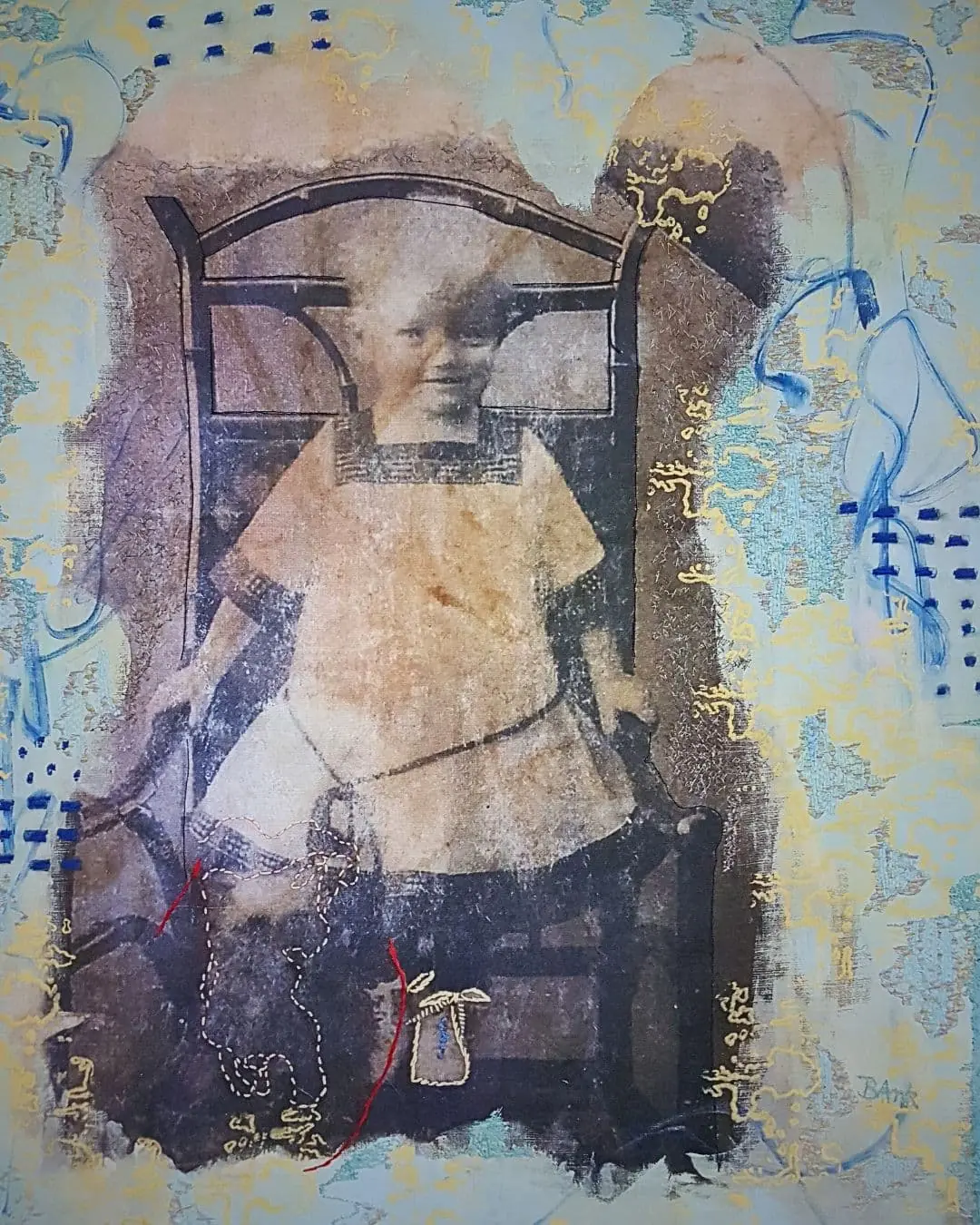
Some of my historical images come from flea markets, but all other photos I take myself. Going on a ‘photo safari’ is an important part of my process. Some images are about textures, others about nature. I enjoy the dialogue between digital and handmade.
I use a variety of photo transfer techniques, and there are photo transfer mediums and processes that make it fairly easy. I often print images on my home computer and use gel medium to transfer them to fabric.
Layers & contrast
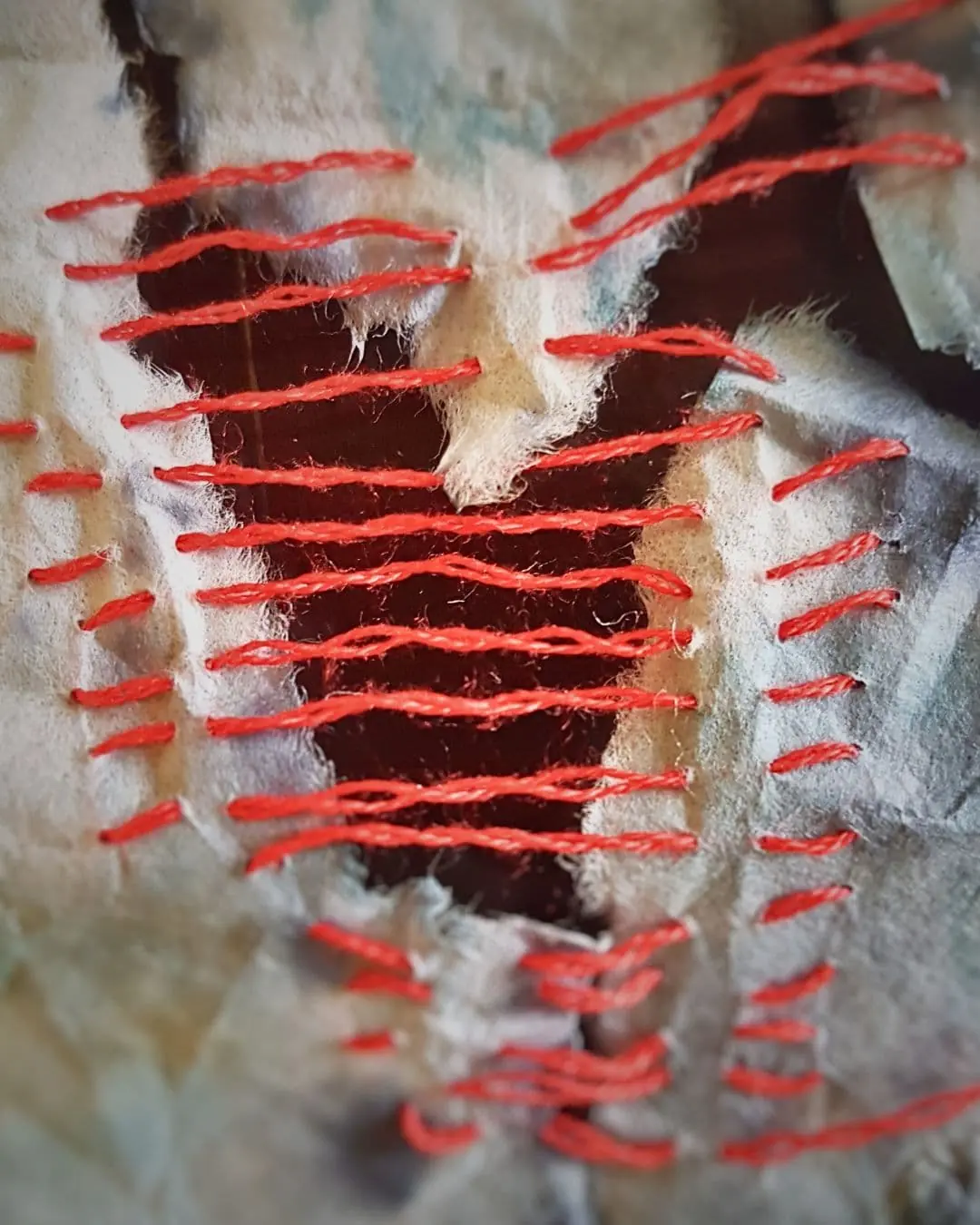
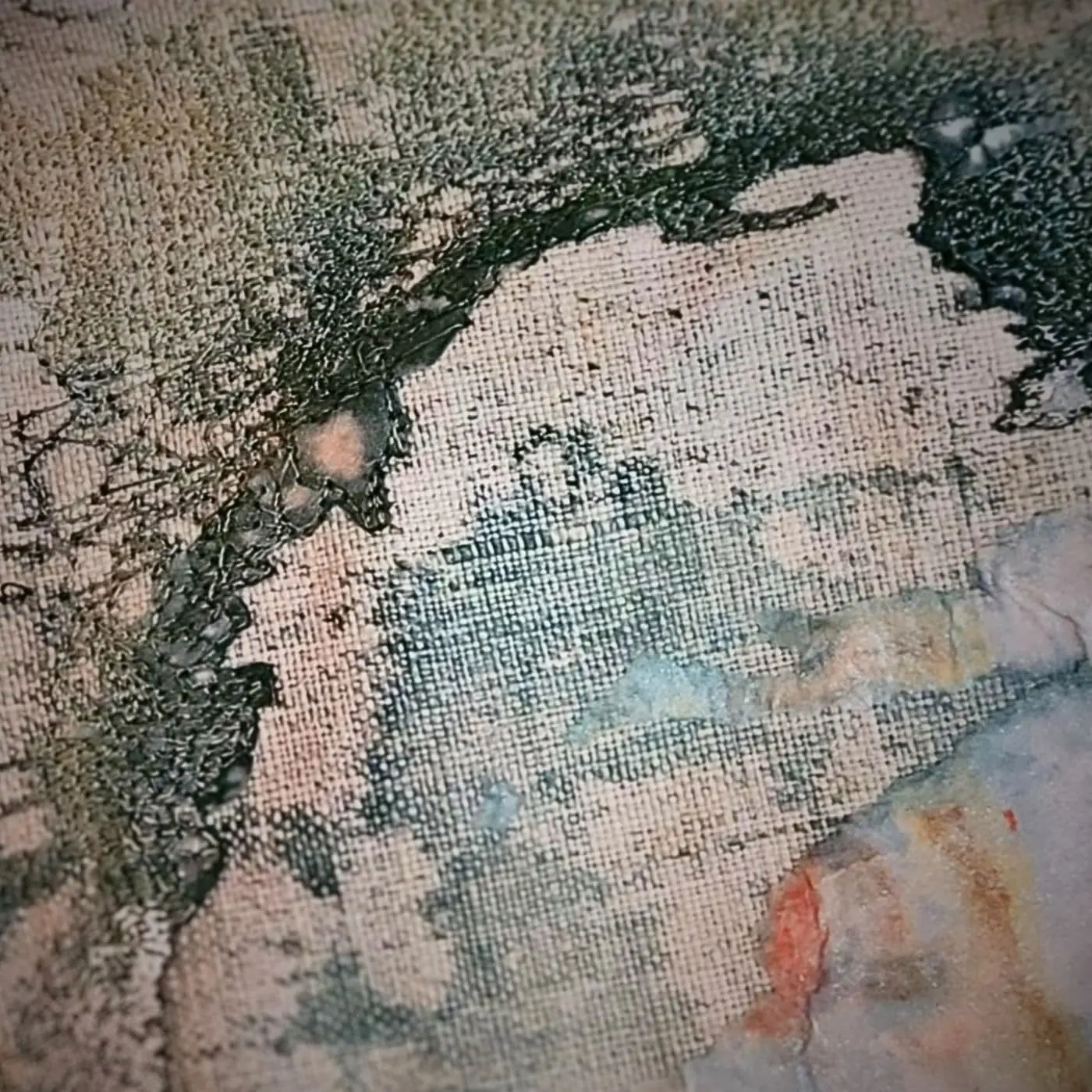
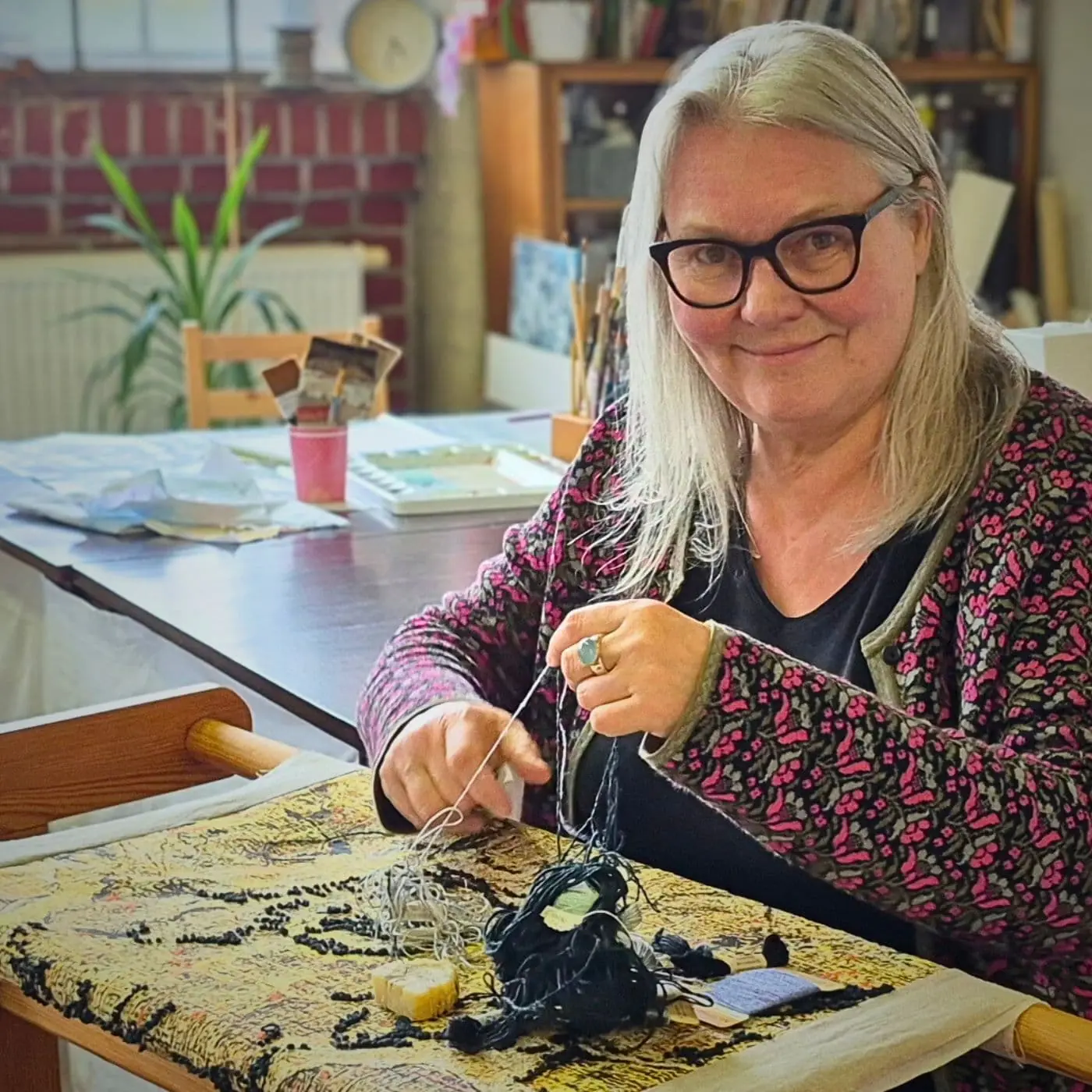
My sewing machine is my drawing tool, and I use it daily. For me, machine stitching is a slow process because I use very dense stitching and layering.
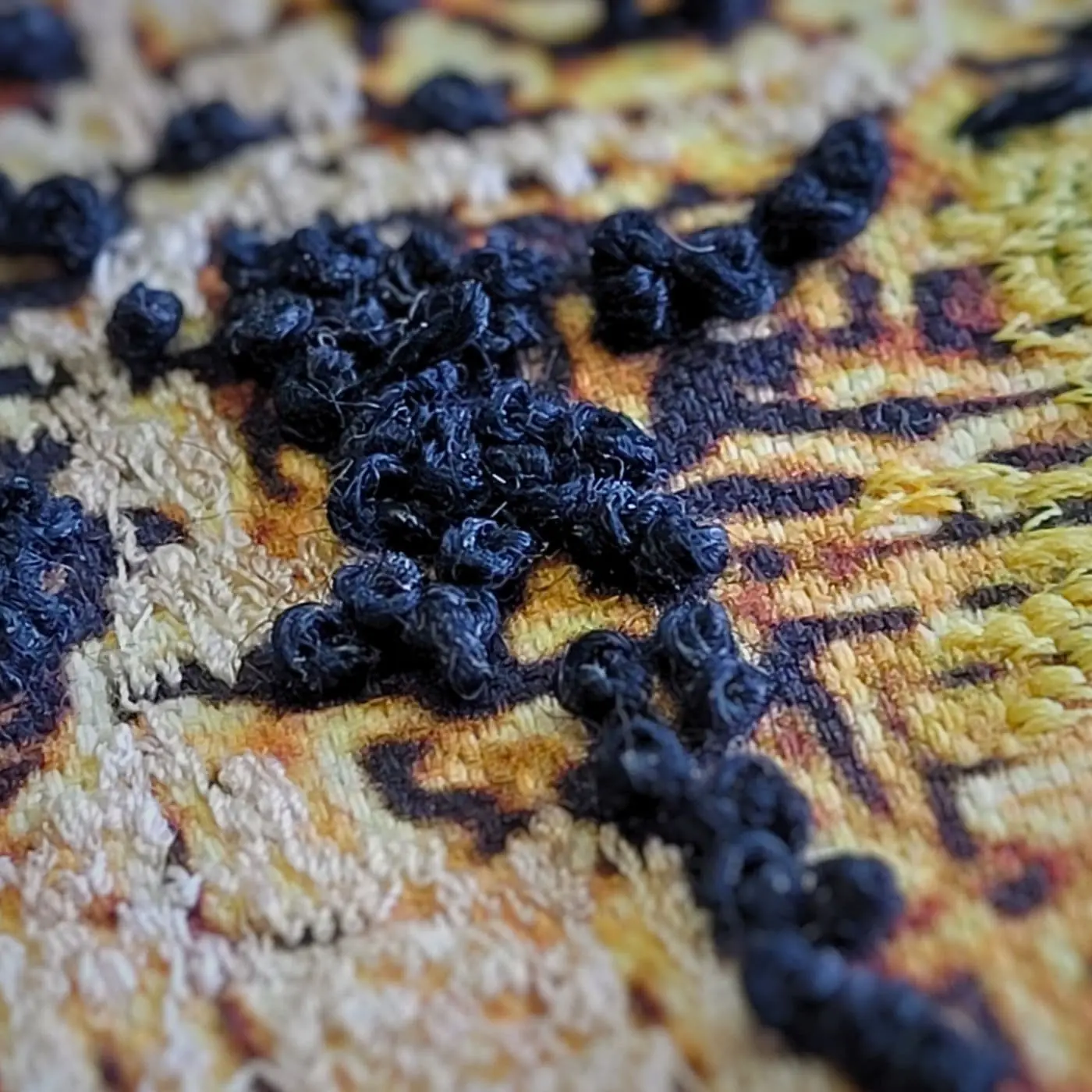
I also include hand stitching to create an interesting contrast to the machine stitching. I use easy linear and filling stitches, as well as french knots. Placing random stitches is like drawing or mark making.
Both machine and hand stitch are introduced across the creative process. Stitching in the beginning or middle stages mostly helps define contours or create contrast. And because I love having thread colours visible in the final work, I’ll often stitch a very intense layer at the end of the process.
“Threaded textures are what make my art so vibrant and different from painting.”
Britta Ankenbauer, Textile artist
Lockdown art
I received a grant during the Covid lockdown for a special project. I asked women to send me photos they took during the lockdown, and I received hundreds of images. It was overwhelming, and I didn’t know how to react artistically.
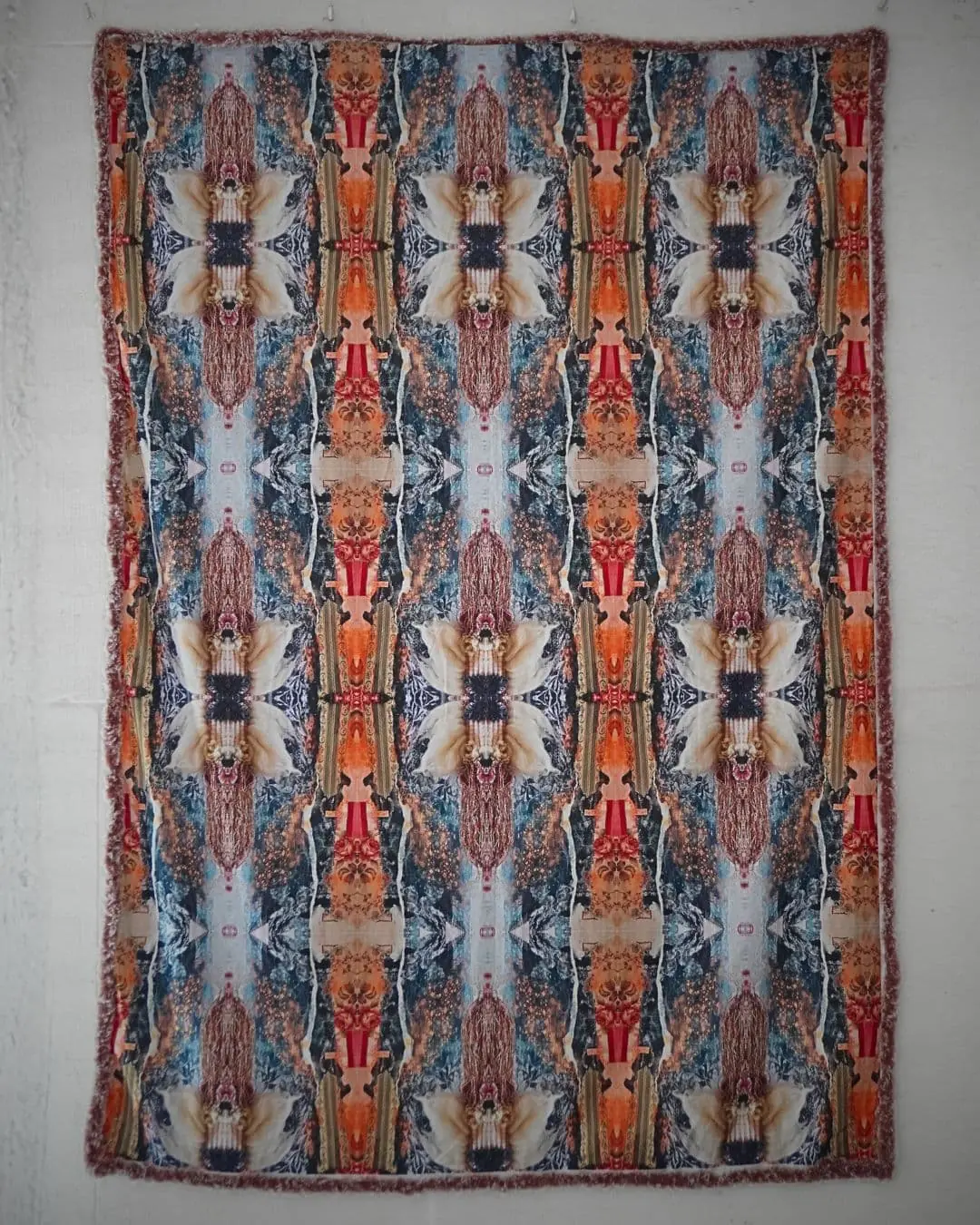
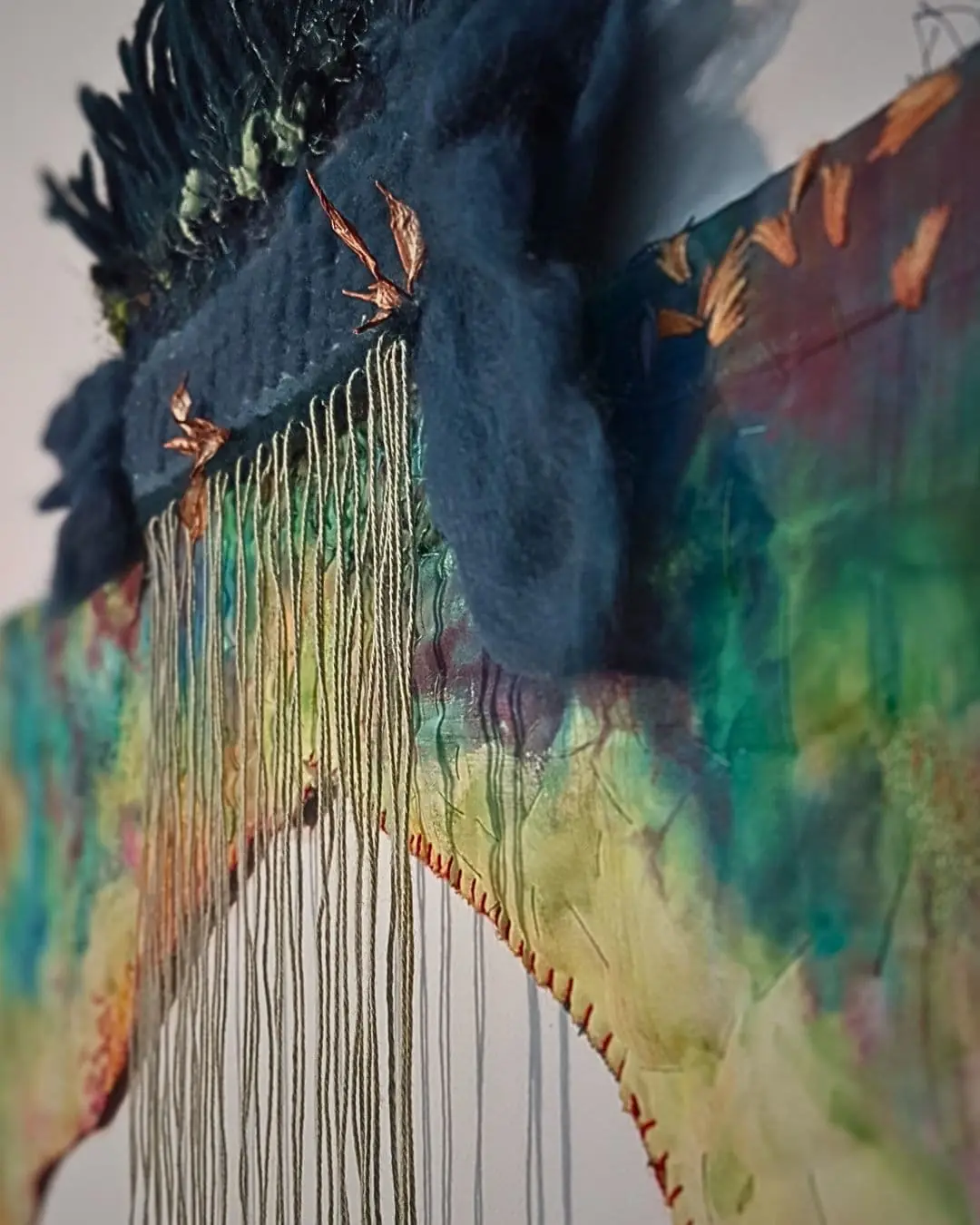
I decided to categorise the photos into five categories, one of which was nature and landscapes. I abstracted nature as a ‘manteau’, which is the French word for ‘coat’. I sought to create a coat that protected and cared for people.
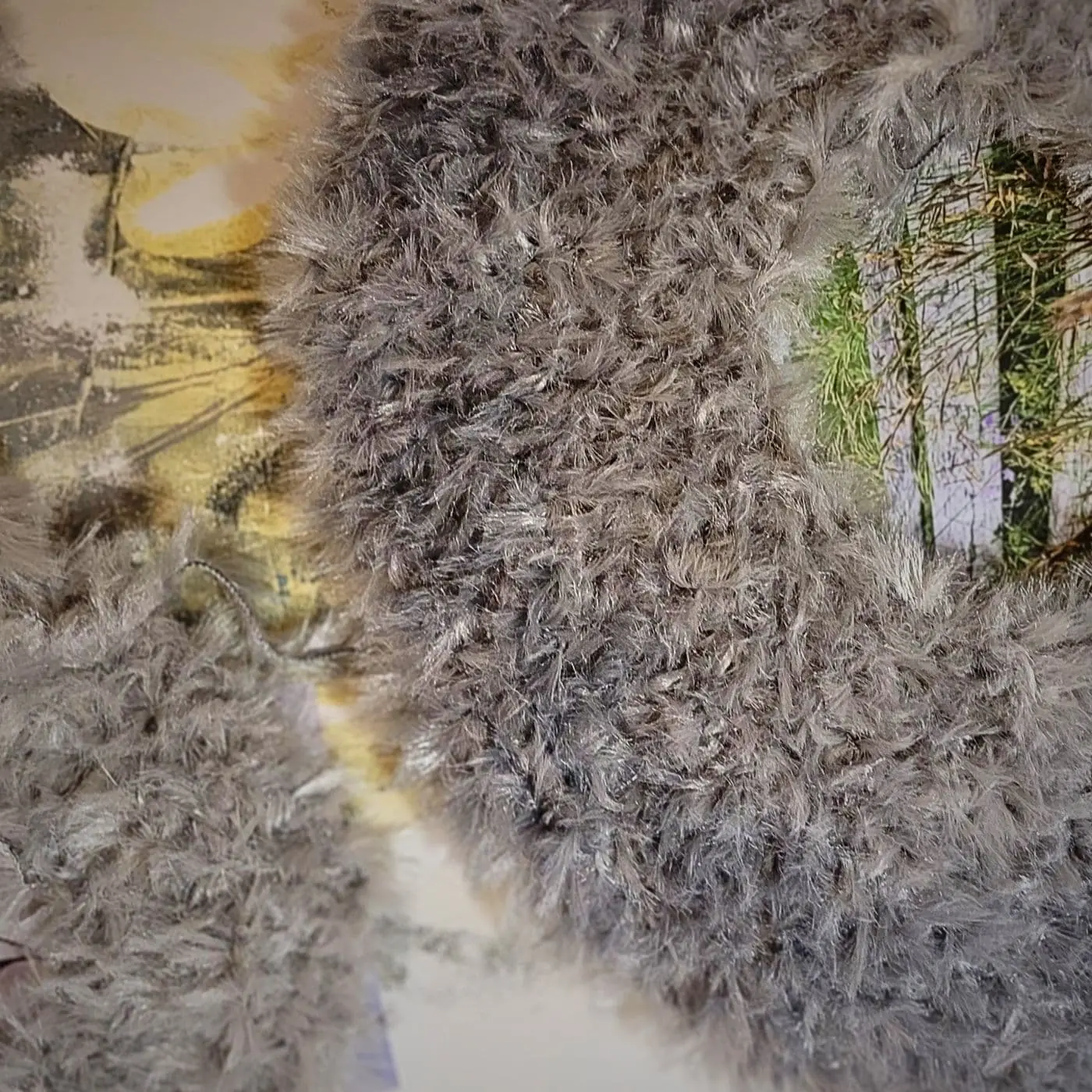
I dyed the fabrics and assembled them into a rectangular piece. But then I decided to cut the work into more of a landscape shape, like one was looking down from above or viewing a contour map. I used both weaving and quilting. The weaving materials were cozy dyed fibres and I added tiny hand stitching in spots.
Capturing childhood
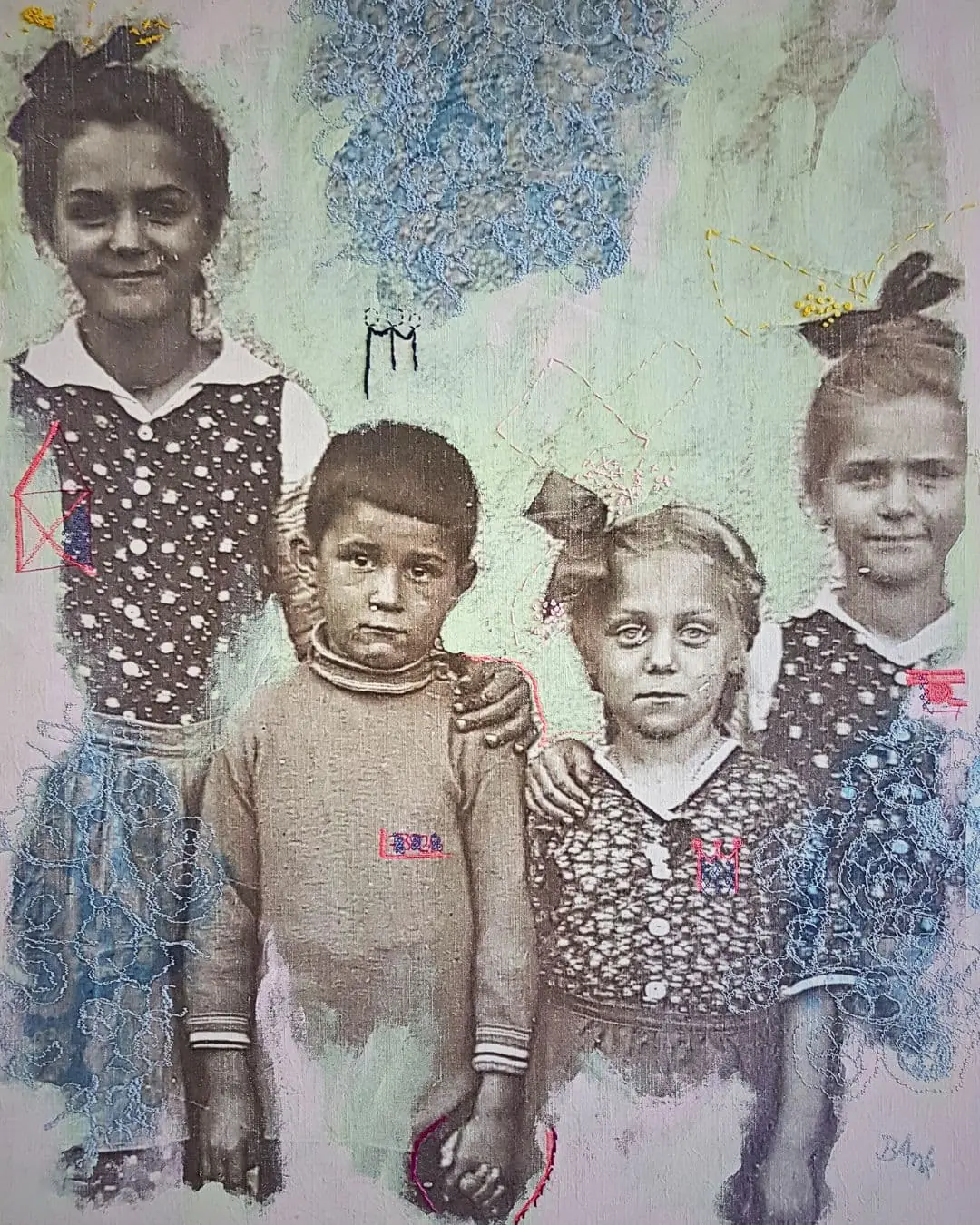
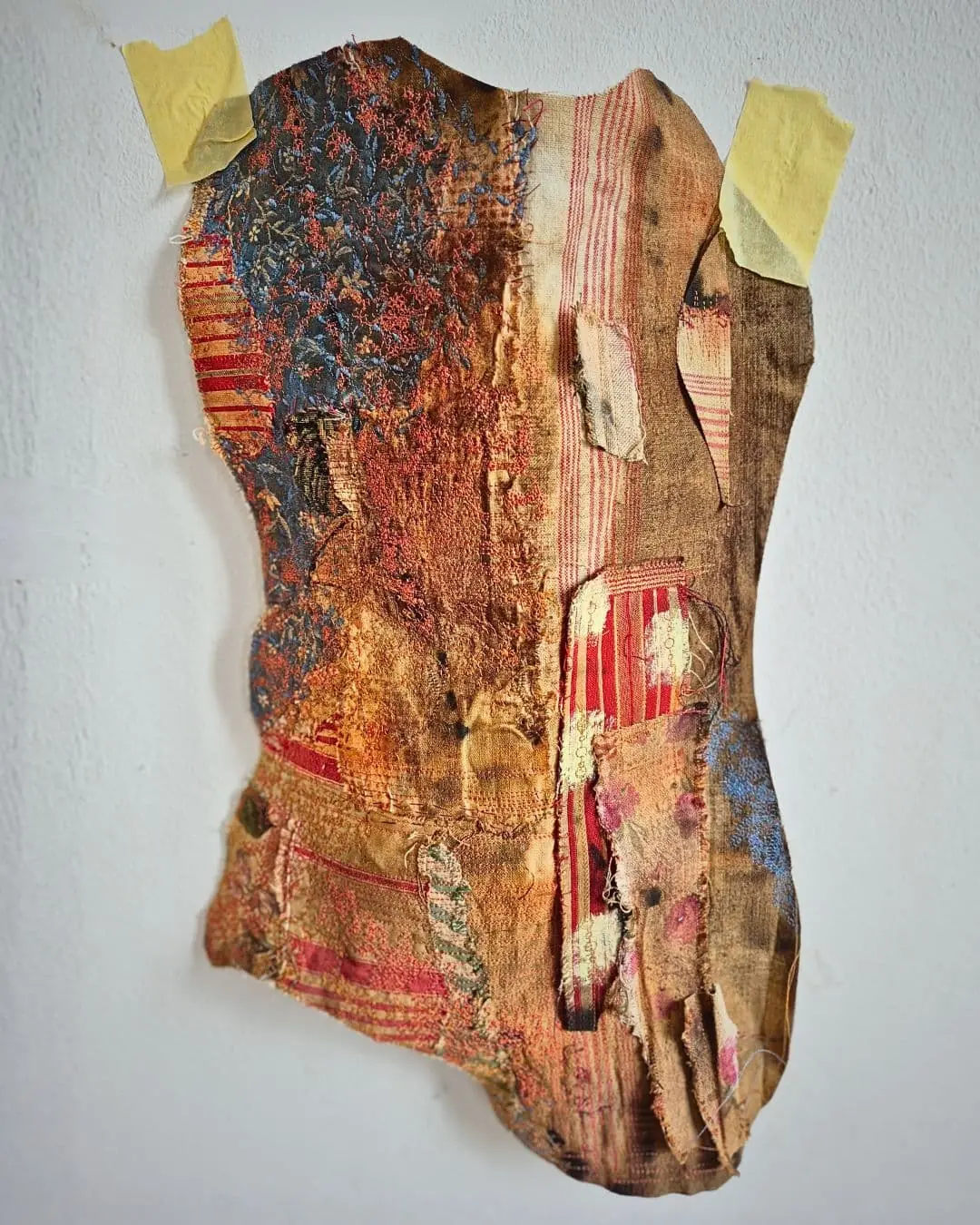
I created a six-part series about childhood in history and how we view it today. I don’t know who any of the children are, as I found the images at a flea market. I’m guessing photos were taken in the late 1800’s.
For Roles, I was touched by the children’s positioning, how arms are around shoulders and two are holding hands. My guess is it’s a family photo, and the children likely lived in the countryside.
Because childhood was so much shorter in those days, I imagined the roles they might have taken as adults. The oldest girl on the left likely got married and lived on another farm, while the boy in the middle probably went to war. Perhaps the smallest girl became a princess.
Ongoing creation
Years ago, I was making a lot of work that was very expressive and experimental. When the pandemic hit, I pursued similar experiments in series like Nest, that captured the feeling of being locked down, and Cocoon, that reflected the feeling of insecurity following the lockdown.
These works collectively grew into my Inner Landscape Project that I’m still creating today.
Although the collection features art made in many different styles, they are related by a red thread of working with the invisible worlds.
Inner Landscapes focuses on what is inside and hidden. Not only emotions, but also dreams, experiences, history and time. It’s a huge term, and I’m happy to have found it. Every piece I make is now related to that concept.
I’m planning a solo exhibition of my results in 2027. It will be interesting to see if I make more expressive and wild work or if I go more in the direction of my boxes with digital prints.
“In my eyes, a series can always continue and grow.”
Britta Ankenbauer, Textile artist
Comments