
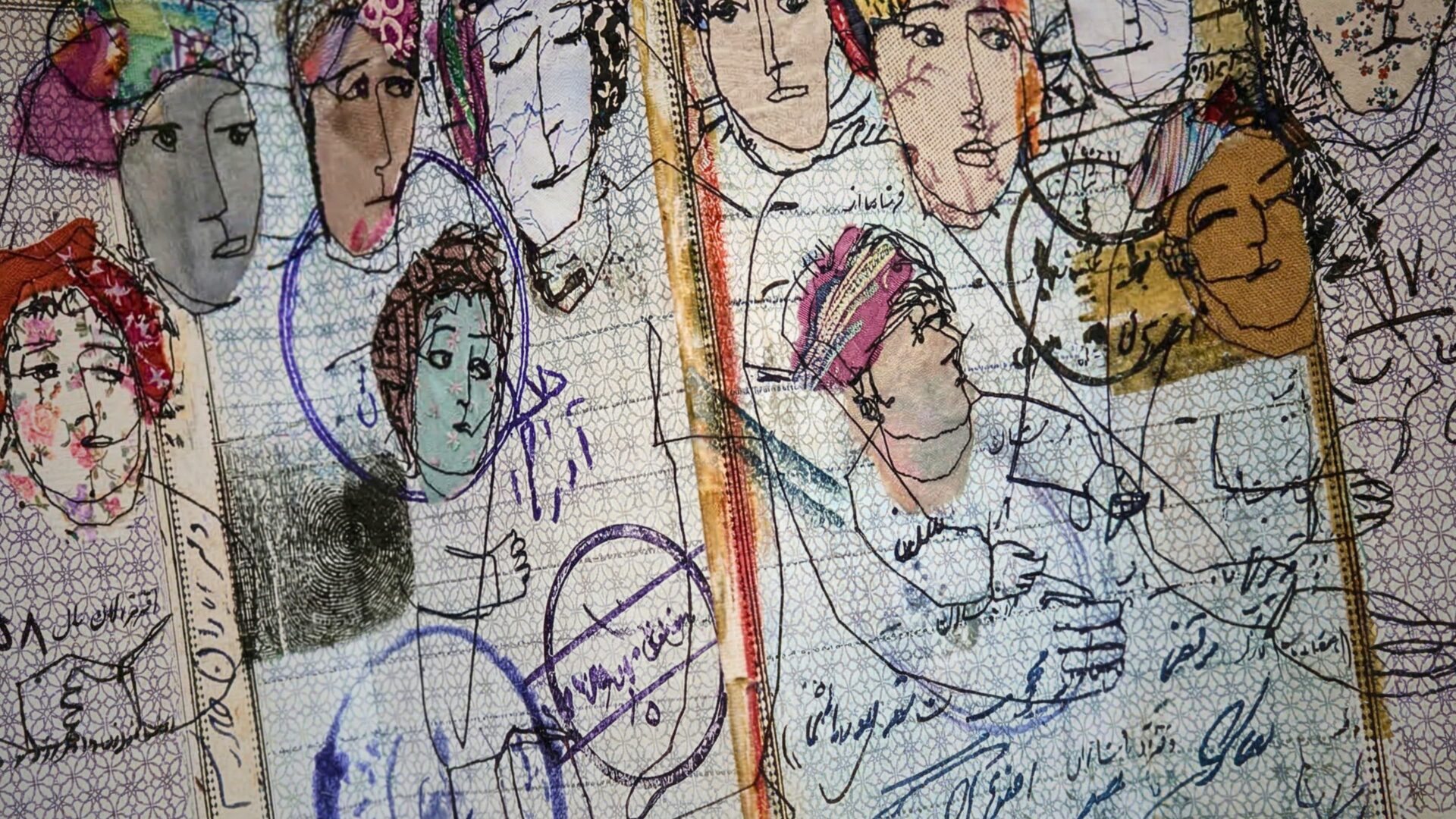
When Batool Showghi moved from her birth country, Iran, leaving family and friends behind, she carried her memories with her and poured them into her art.
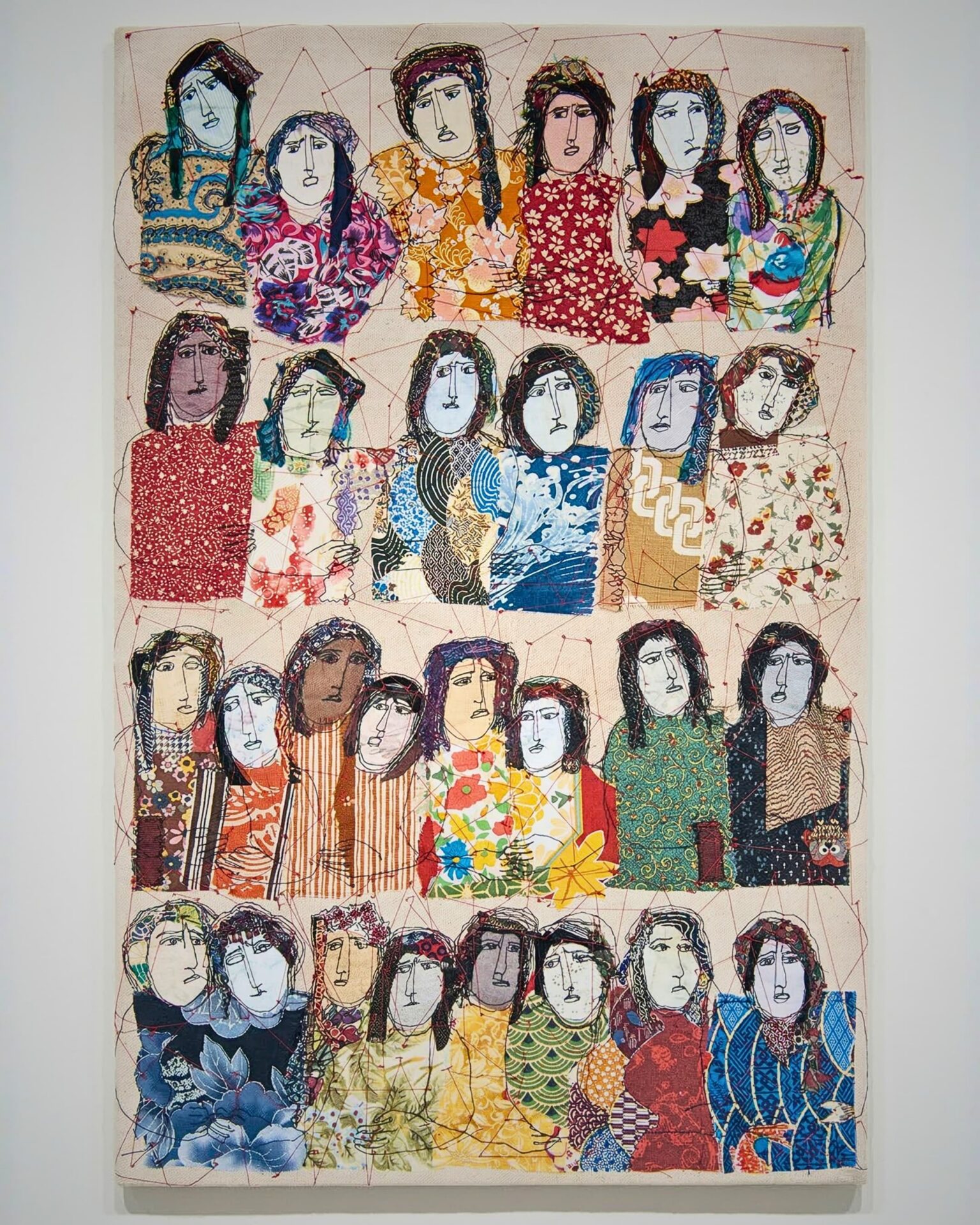
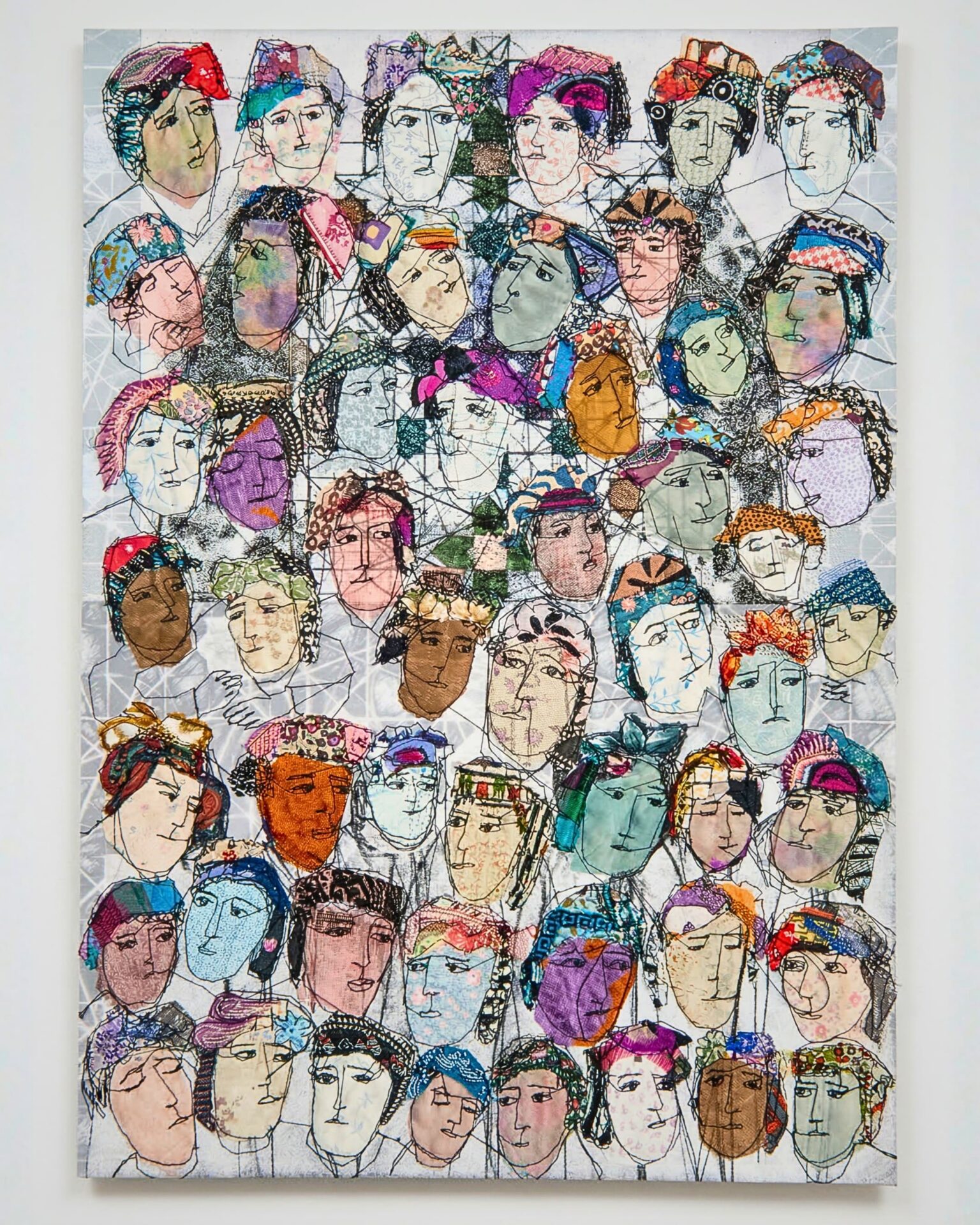
Working with paper, print, paint and stitch, her textile art bears witness to displacement, silenced women and the damage that authoritarian regimes impose on ordinary lives.
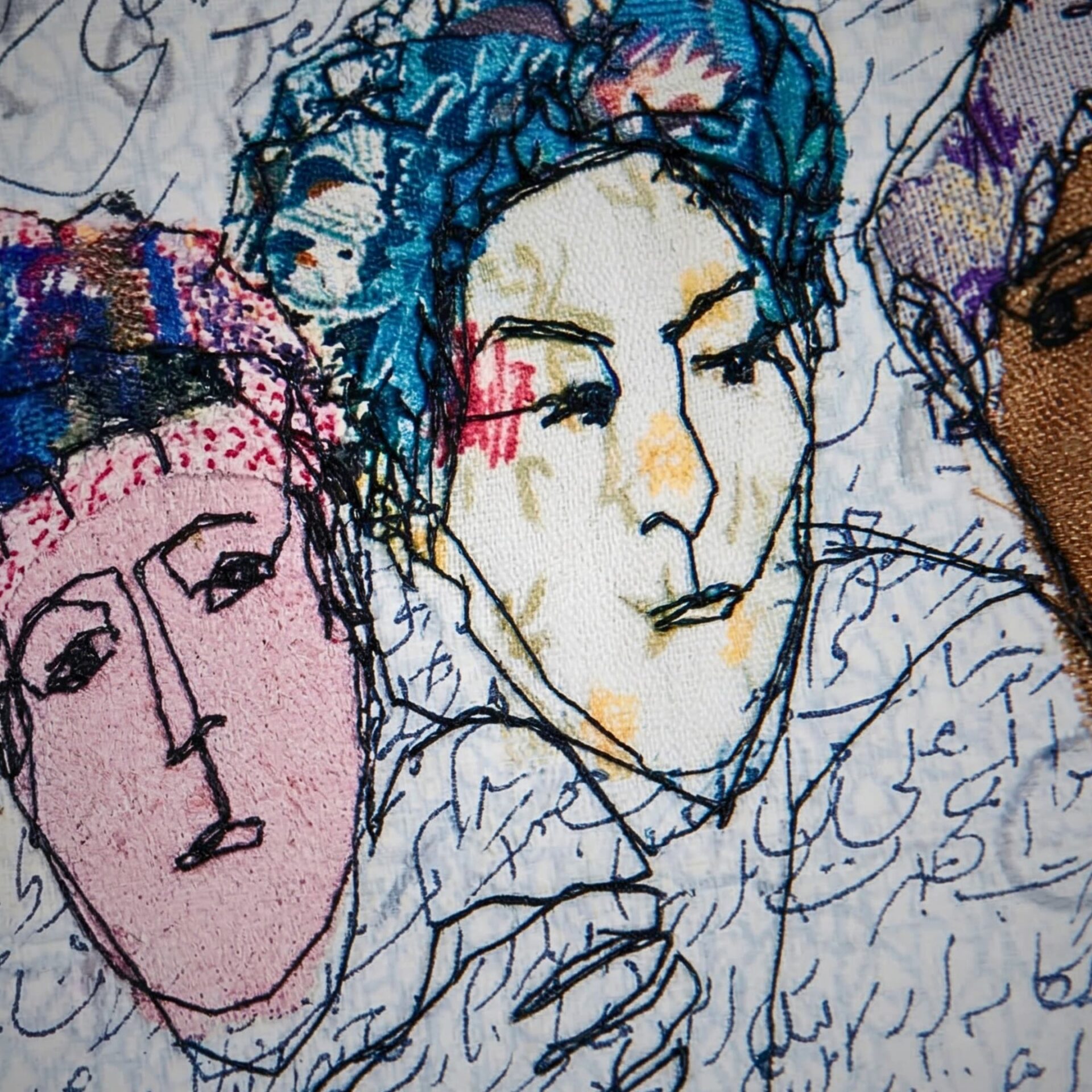
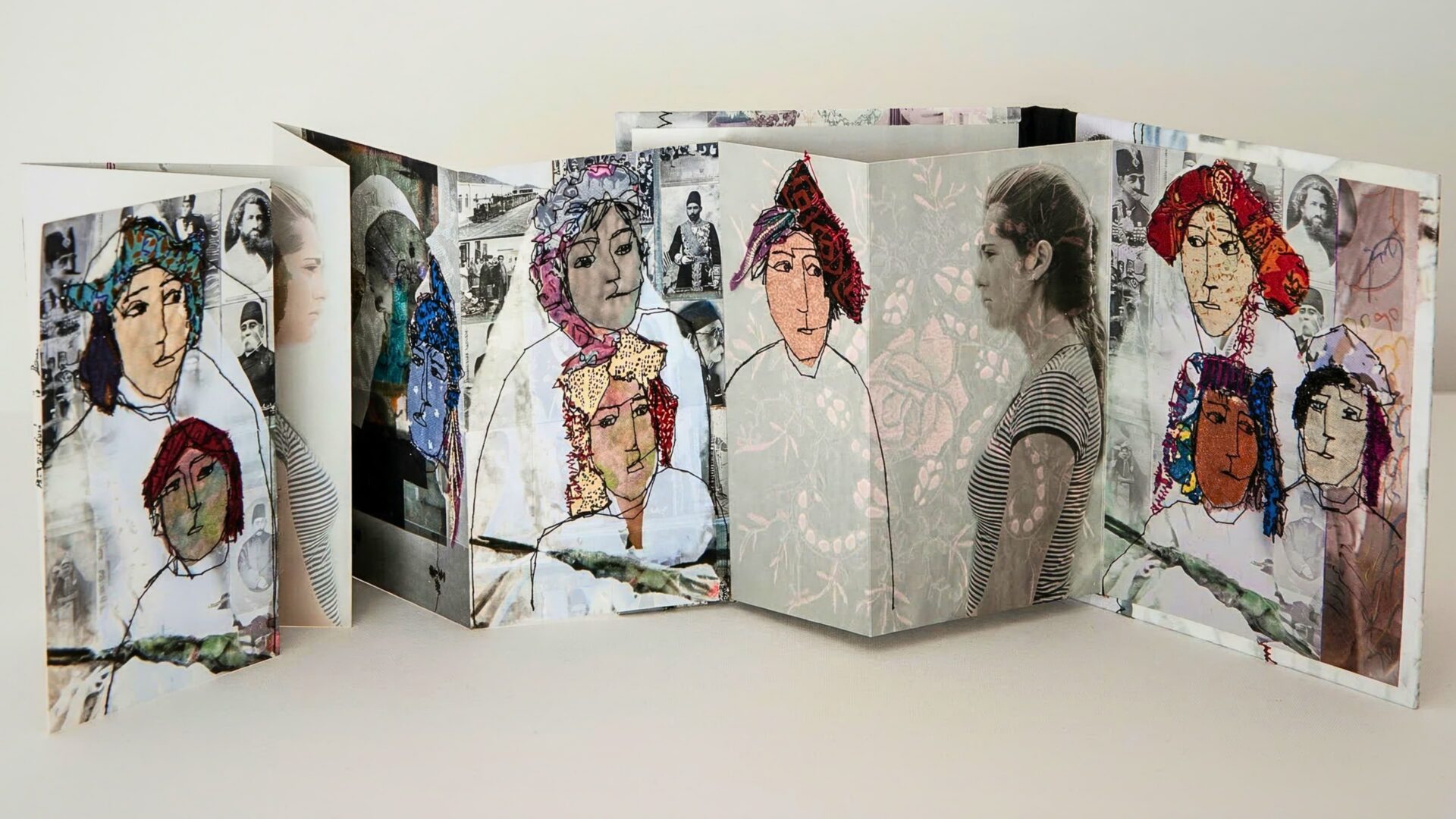
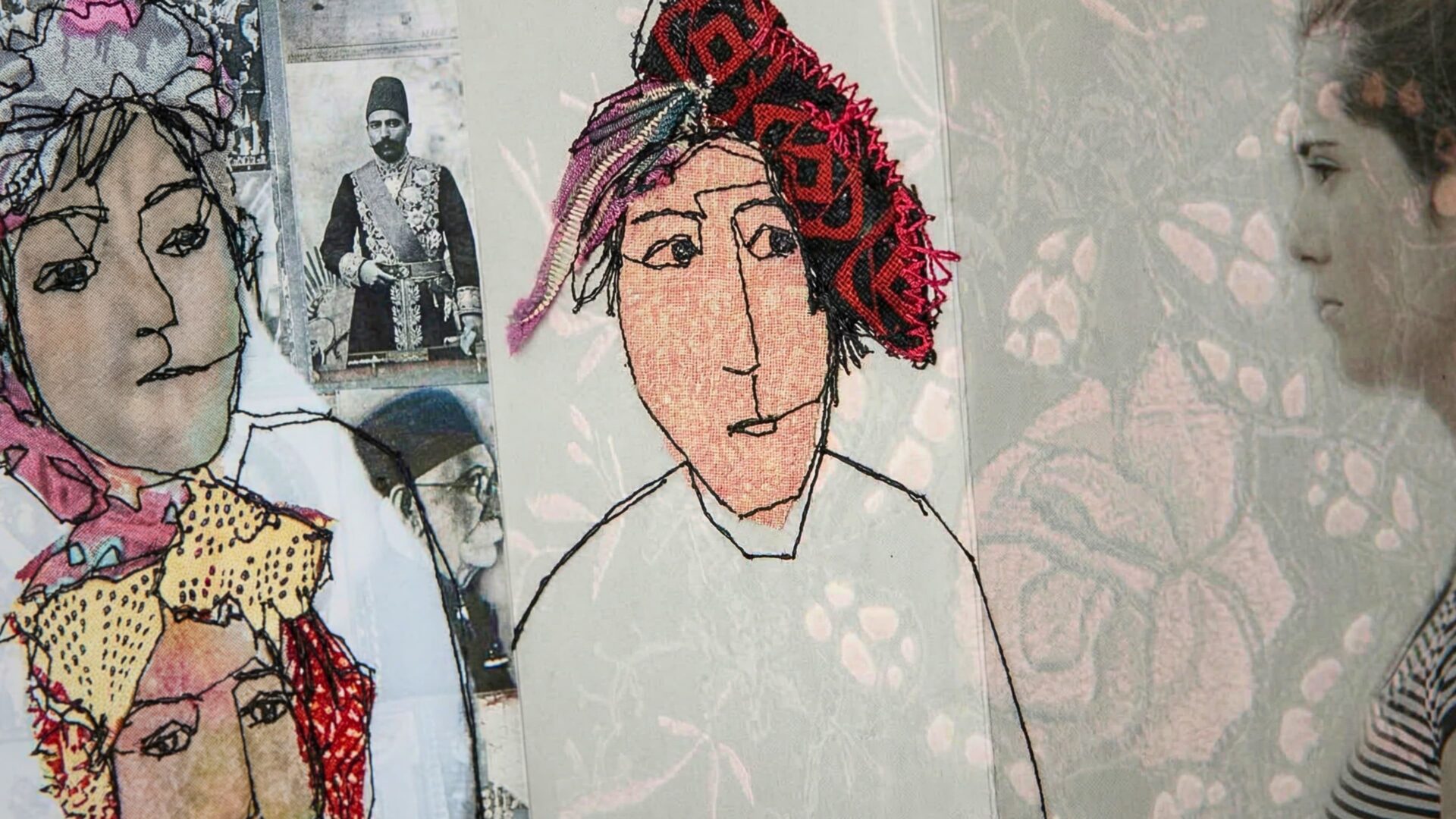
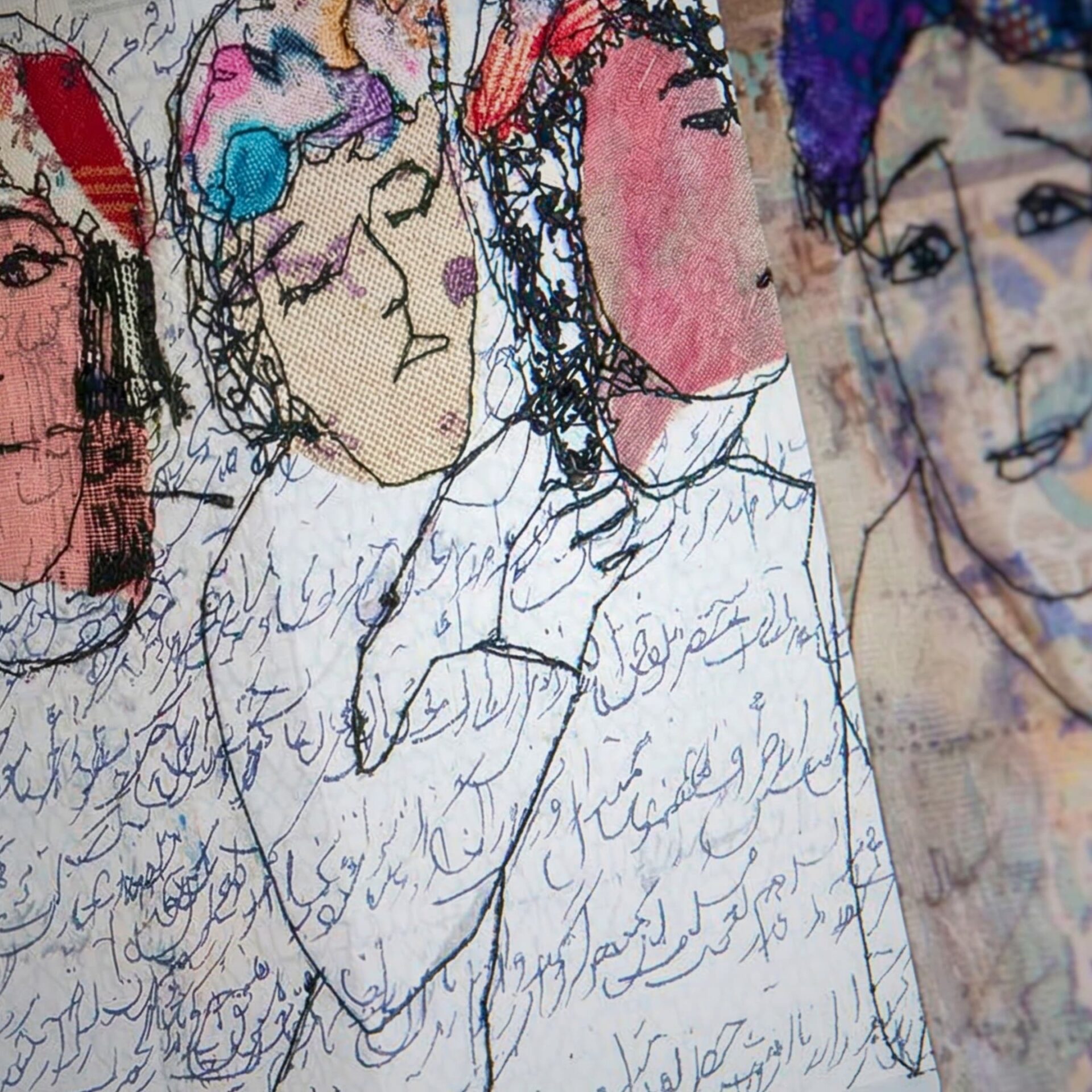
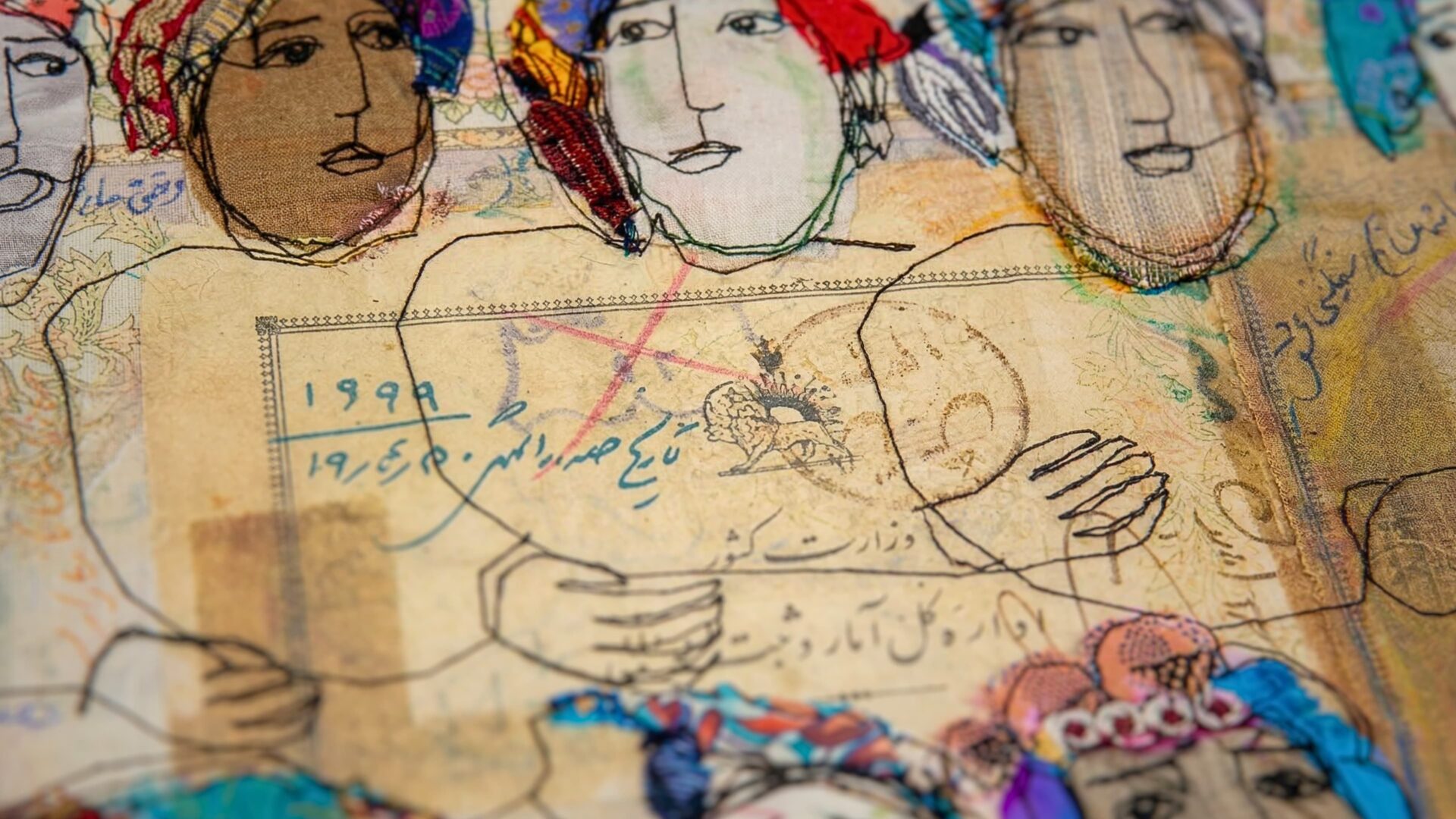
Batool’s mixed media wall pieces are incredibly striking, but her artist books truly set her apart. Printed imagery of family photographs, birth certificate documents and her own Farsi handwriting are complemented by intricate machine stitching and paint.
Of special note is the way Batool uses the folds of her books’ pages to hide and reveal clues to her narratives. Viewers are invited to interact with the pages to discover what happens next.
Batool’s art grapples with identity and loss, after leaving and being displaced herself because of war and religious restrictions imposed on women. Her stories can be hard to listen to, but they need to be told.
A love for mixed media
What are your earliest memories of working with textiles?
Batool Showghi: My mother was a good tailor. She used to sew all our clothes on her Singer sewing machine. When I was 14, I made my first skirt and then embroidered all around the hem. I remember feeling so happy about the entire process.
By the age of 16, I was designing and making my own clothes. I also loved drawing and painting.
Did those experiences lead you toward the textile art you create today?
I specialised in photography and printmaking at both London Guildhall University (BA Honours) and the University of Westminster (MA). I loved mixing different media from the start, and I always used elements of stitch, thread and textiles in my practice.
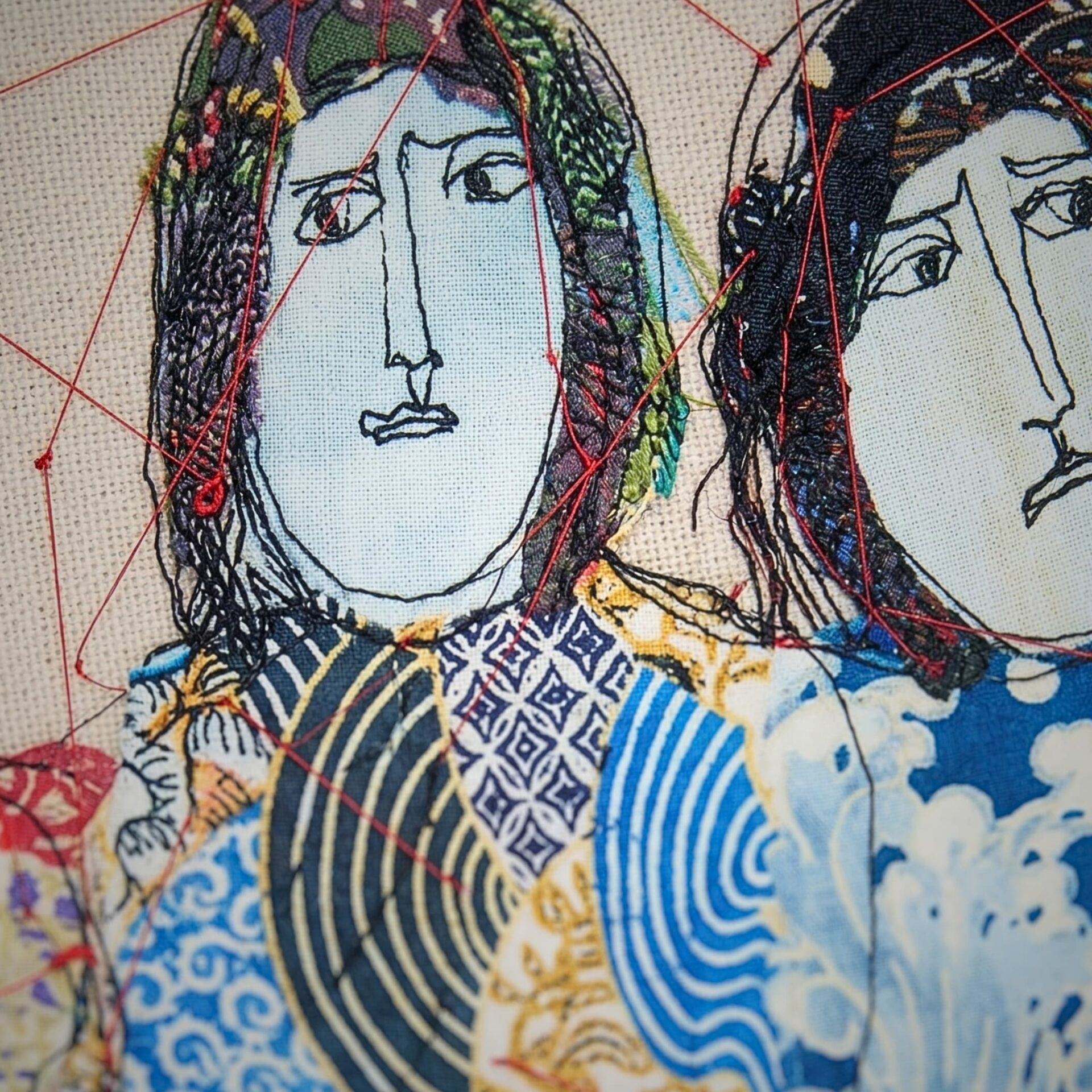
In 2018, I decided to use my sewing machine as a drawing tool to create my characters.
“Women have long been fighting for their rights in Iran because of religious boundaries and Islamic traditions.”
Batool Showghi, Textile artist
Tackling oppression
Your portfolio focuses on women facing discrimination and displaced peoples. Tell us more…
I was born in Iran and have lived in England since 1985. There is always some form of crisis happening in the Middle East, and my textile art responds to devastating wars, immigration issues and the many discriminations against women.
I was brought up under those restrictions, but things got even worse for women in 1979 after the Islamic government came into power. There was more discrimination regarding divorce, the right to their children, travelling abroad or making the simplest decisions for themselves.
In 2022, a young woman named Mahsa Amini was beaten and killed for not wearing a head covering (hijab) properly. People protested across Iran and fought bravely. Since then, the government has not been able to push women back to where they once were.
Women now work side by side with men. And why not? They’re as intelligent and hardworking as men. How can you tell a female lawyer or doctor or scientist that they are lesser than a man? And these women are supposed to obey their husbands?
The government still tries very hard to control women, but they have not fully succeeded.
How does Iran’s government treat women artists?
Both female and male artists find it challenging to express themselves freely. They are heavily censored, so they must find different ways to express their artistic voices. Artists, writers and film-makers are watched closely, and they cannot exhibit, publish or release anything without getting a license from the Ministry of Arts. Those applications are usually rejected.
A layered approach
How would you describe your approach to using mixed media?
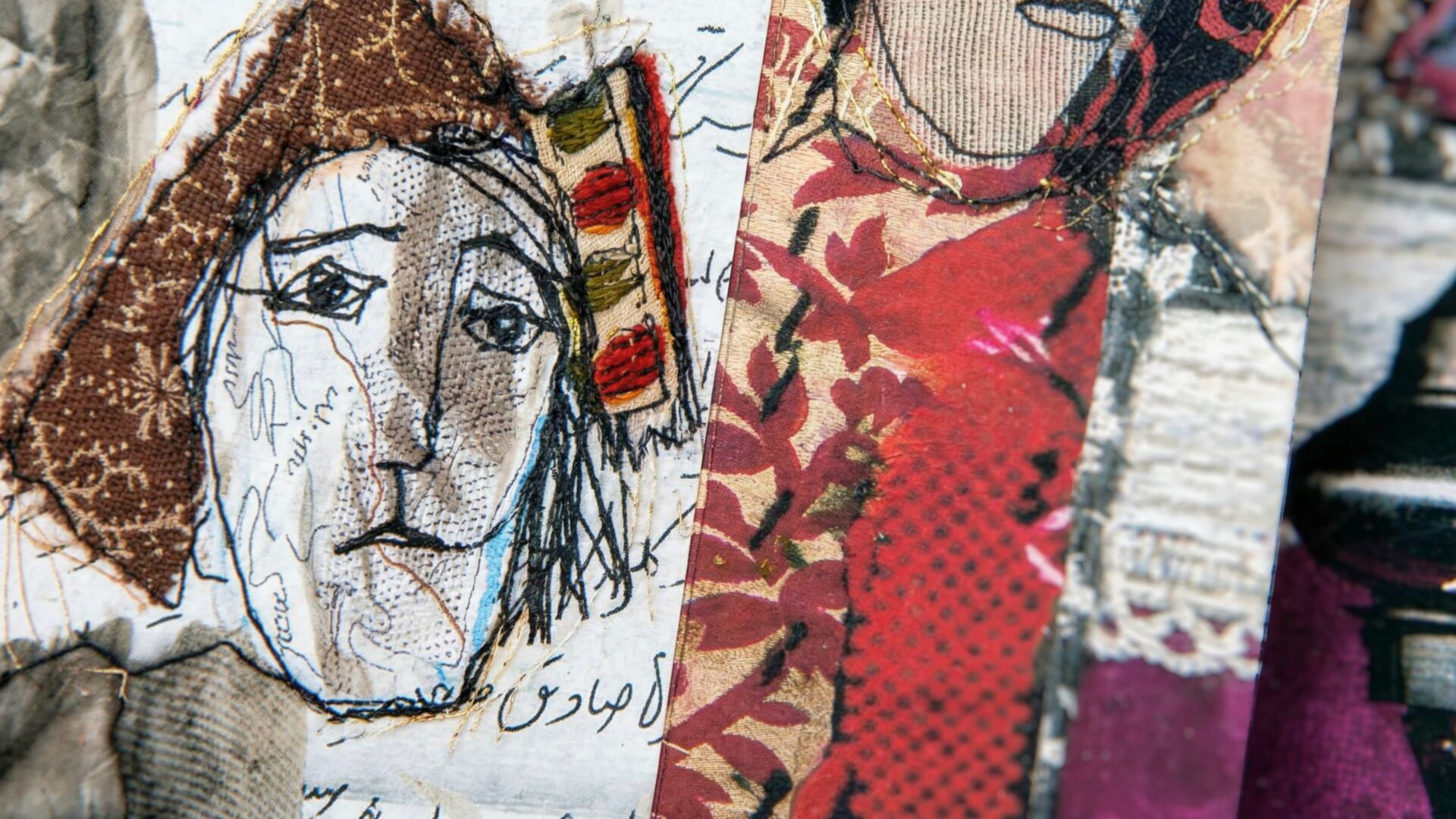
I like to use photography, printmaking, paint, drawing and collage to create my images for my books. Then I add stitching and textiles on top of my images. On some of the canvases, after adding stitch and textile, acrylic or coloured pencils are applied to enhance my work.
I like to layer my images and create collages which relate to each other and convey my narratives. It’s important to keep a consistent transparency that allows all the layered elements to be seen. I make sure nothing is obstructed as I layer paint, writings, textile and stitch.
“Stitching on my illustrations, photographs and prints gives me an immense sense of fulfilment.”
Batool Showghi, Textile artist
Where did your passion for making tactile, interactive artist books come from?
When I was working on my undergraduate degree, one of my lecturers taught us how to use printing to make artist’s books. It was my first time seeing that format, and she was a very good influence.
I view my artist books as objects of art. A book’s design, layout and content all play an important role, especially the content and cover.
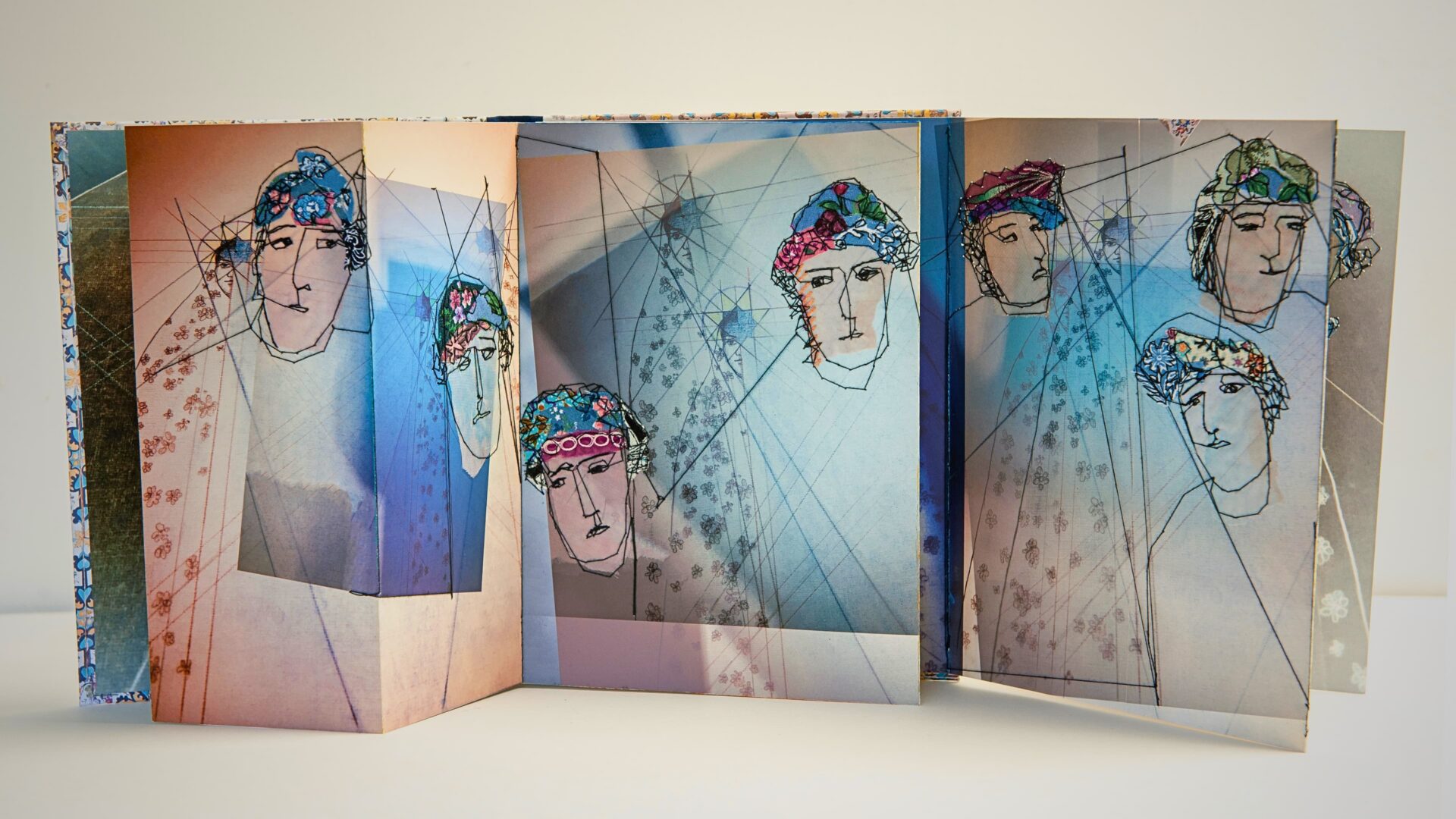
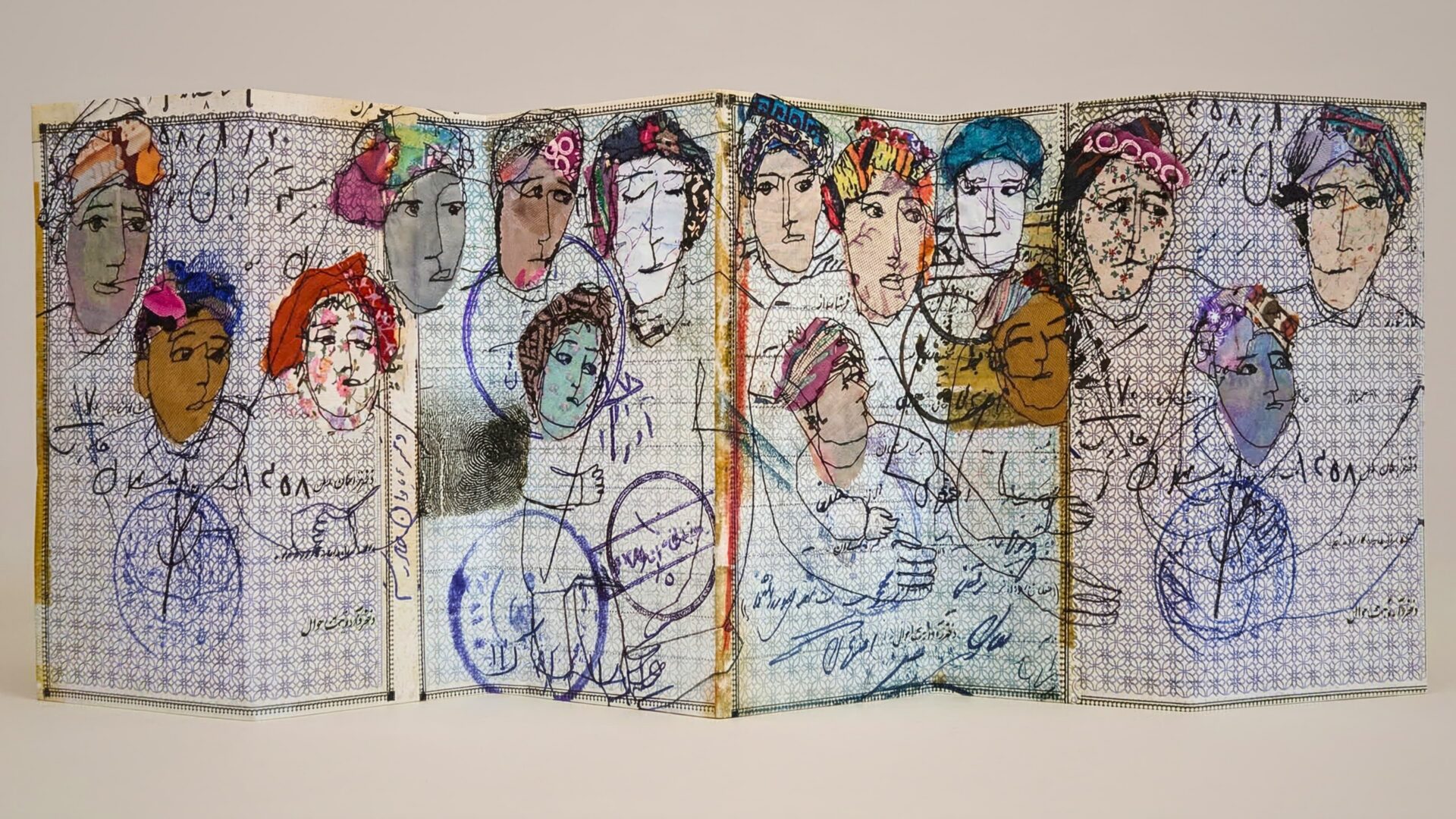
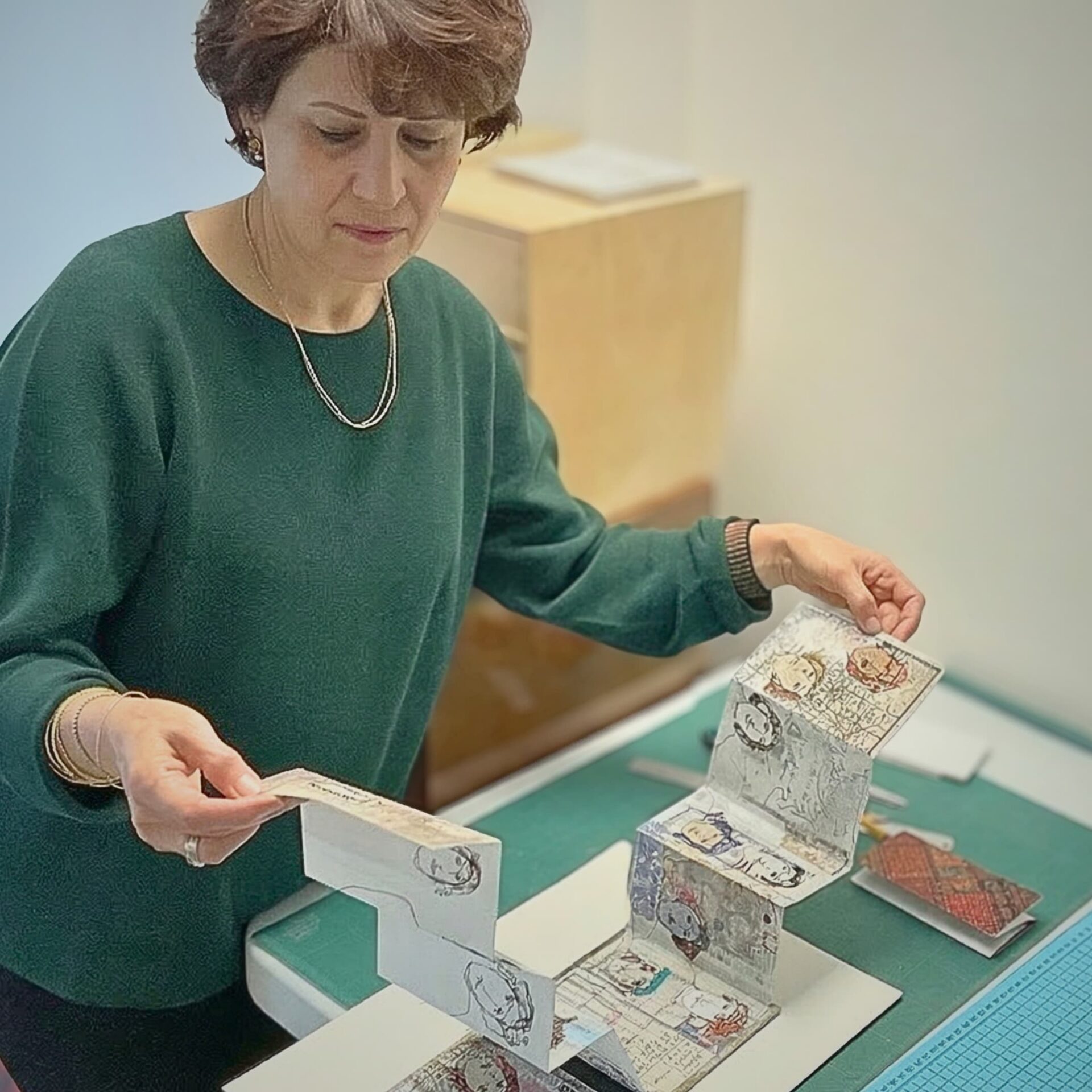
When a viewer opens one of my concertina books, it’s like seeing a performance come to life. They instantly become involved in creating the book’s meaning.
“Each book illustrates a process or event that takes viewers on a journey.”
Batool Showghi, Textile artist
Tell us about the first artist book you made. What did you discover?
For my early artist books, I experimented with different formats. I felt free to cut windows out of pages, to hide sections of the pages, add collage, stitch straight into the book and fold the pages creatively.
I also tried many different papers, fabrics, and transparencies. I had a lot of fun.
Now the content has become most important to me when making my books, as well as exploring how a fold in a page can reveal or hide information. When a fold is opened, or a page is turned, the viewer is confronted with something like a surprise or discovery.
“The physical interaction with the book is very important as viewers open and enter the pages.”
Batool Showghi, Textile artist
Meaningful page folds
It sounds like the folds in your artist books play quite an important role. Tell us more…
The way pages are folded not only adds to the meaning of my books, but they also engage the viewer in discovering the book’s content.
The folds of a concertina artist book are especially appealing to me. I love how both the even and uneven folds open like a fan, and only one side is revealed while the other is hidden or in shadow.
Viewers need to look carefully at those hidden parts where other images and stories are revealed.
I often fold smaller papers into larger pages to create new chapters with new stories. The larger pages refer to the past, and the smaller insets reflect current times.
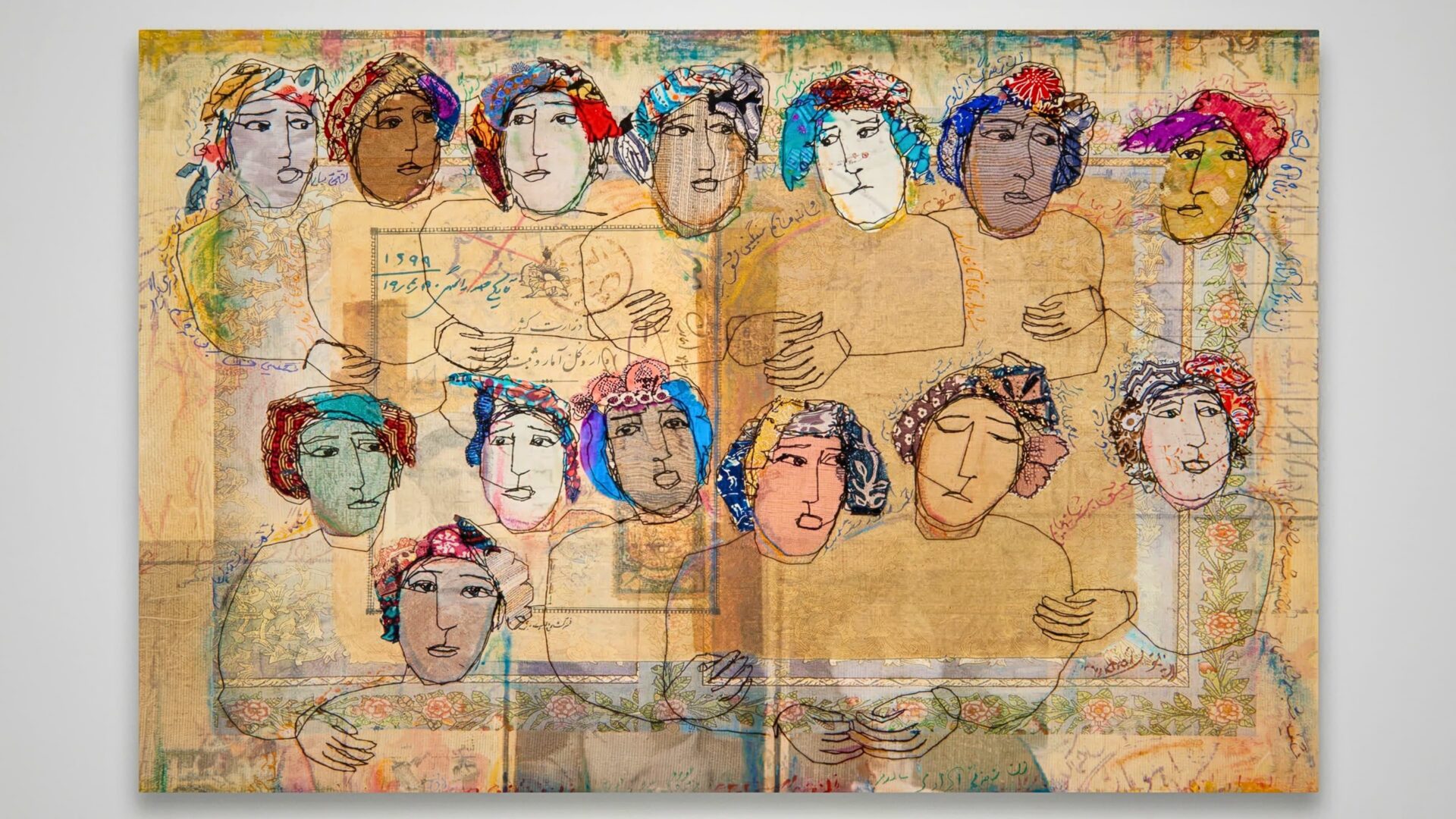
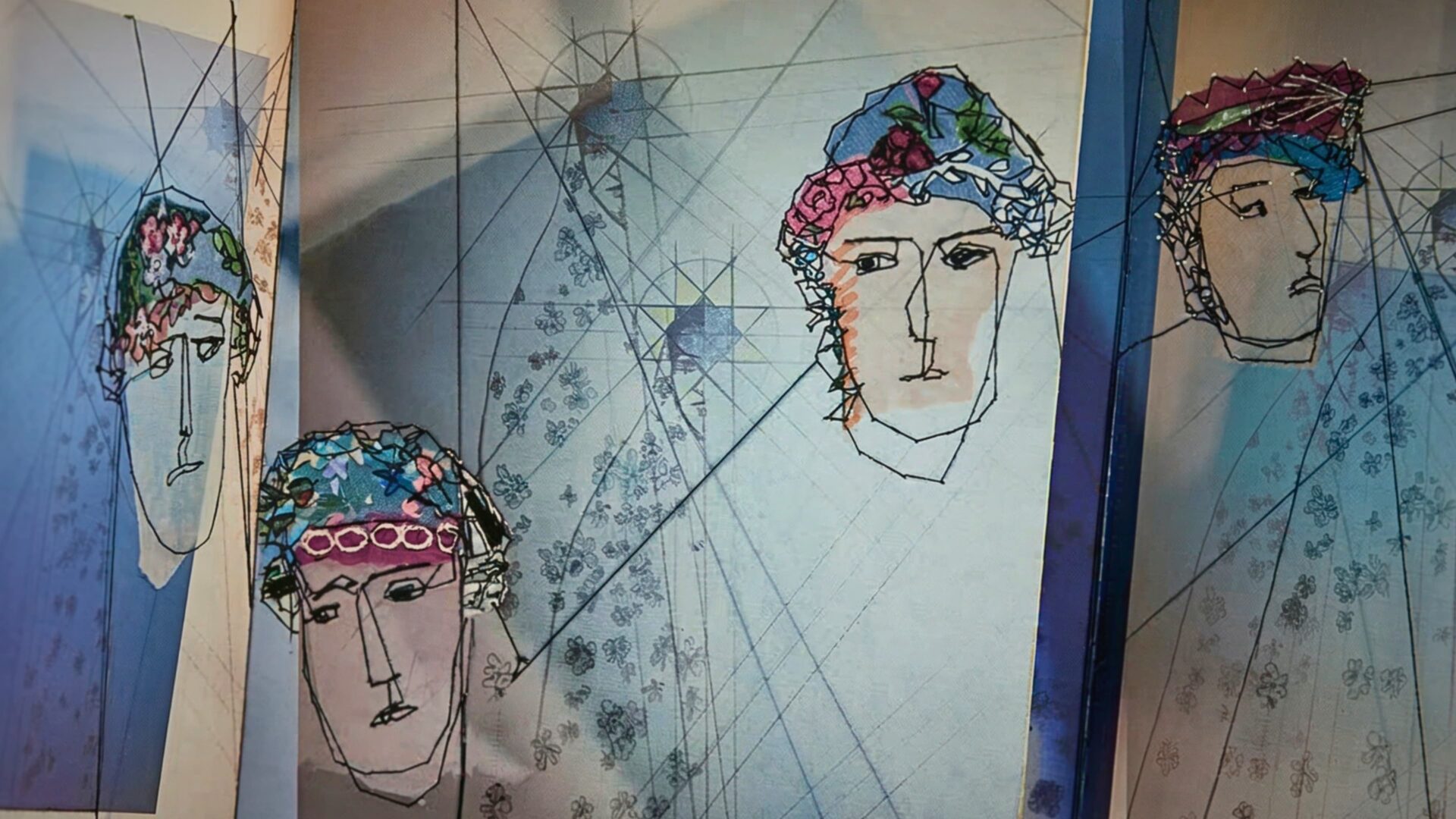
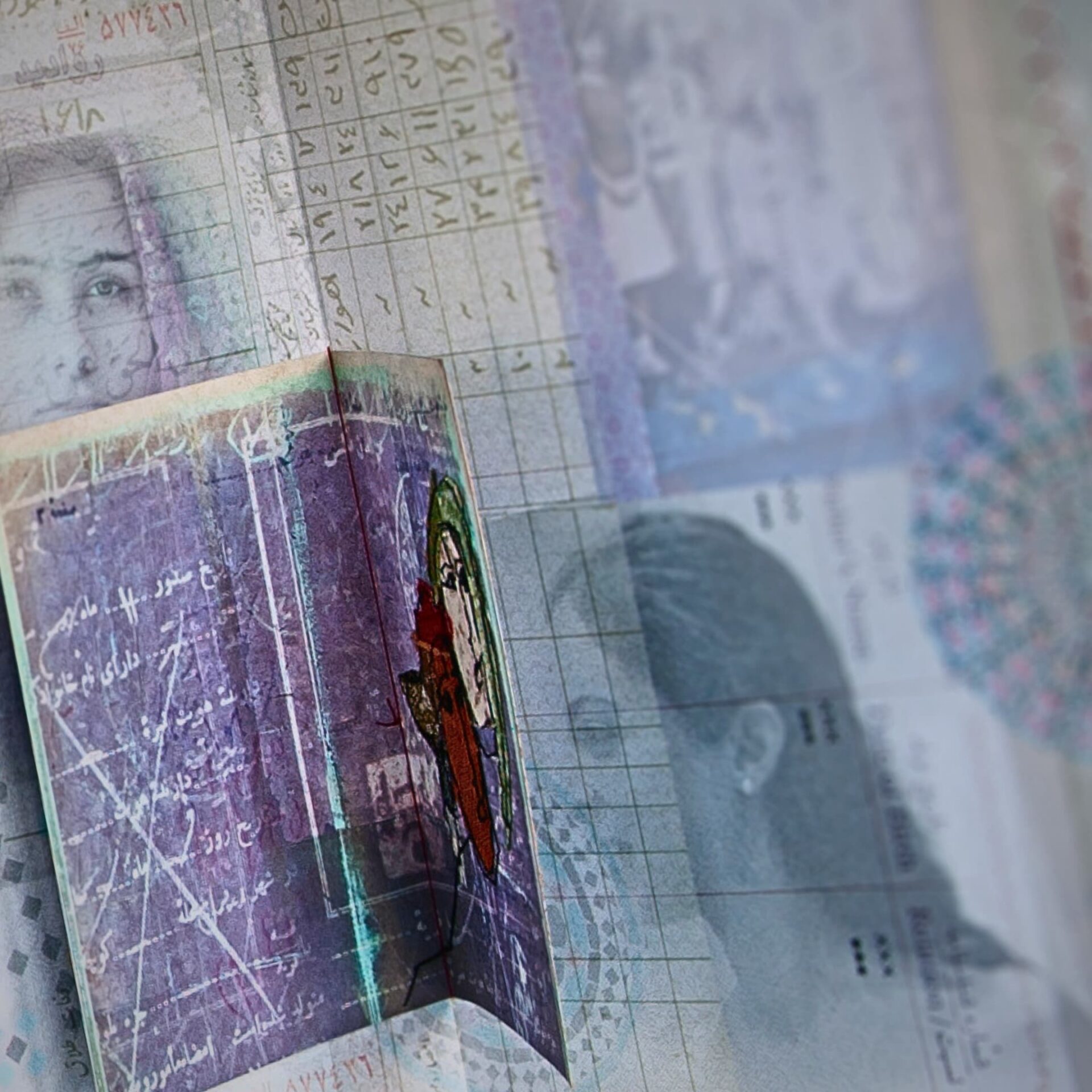
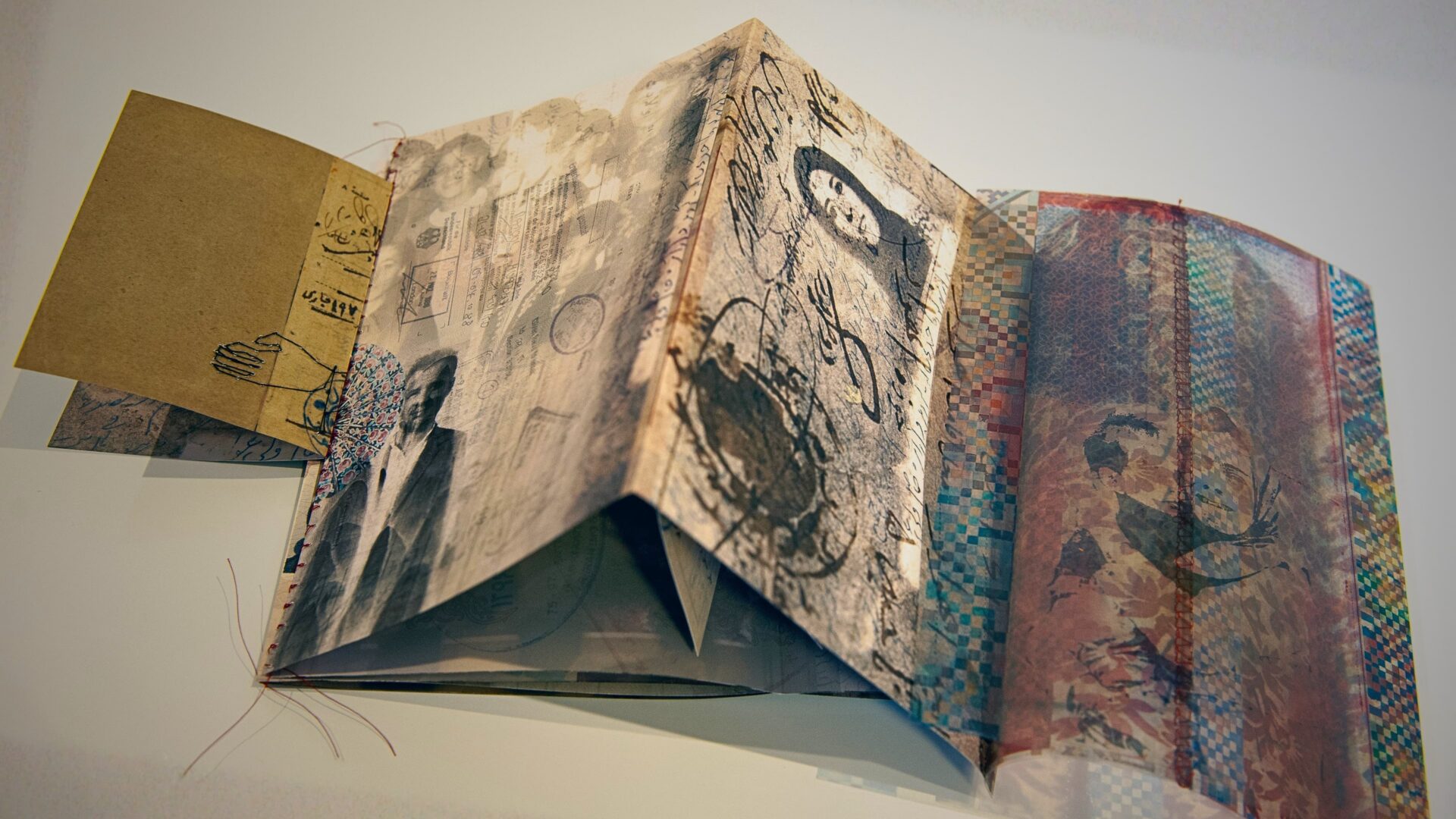
A Visual Reflection on Displacement is a good example of that technique. It was based on my family’s experiences in the war in the 1980s, and I used their pictures and documents in the book. The smaller inserted chapters represent the people who are now displaced and reflect their need to start a new life in another country or place.
What types of paper and other materials do you prefer?
I mostly use Epson archival matte paper, but I also experiment with textured papers.
Many viewers comment on how they enjoy seeing the backside of my artist books. They come across as simple drawings against the white paper.
There’s a lot happening on the main pages, so some of the stitching can be lost or not properly seen. Each page’s white backing isolates those images and shows off the delicate stitching.
For fabrics, I normally use silk or thin cotton cloth. I buy them from fairs such as Knit & Stitch, but I also look at charity shops. Friends who are textile artists will also give me their unwanted pieces.
Tell us about how present your artist books…
The covers of my artist books are very important. For me, it’s an extension of the book. The inside cover is also important. Some books are inserted into a cover sleeve.
My book covers have to be practical and creative while at the same time add to the overall meaning of the book. We can’t separate the cover from the pages. It’s all related and connected.
The size of a book can add to its meaning, so I use a variety of sizes. Some are over two metres long! Some have a square or rectangular format, and I’ve made small books too.
Once I’ve planned a design and brought the materials together, I’ll decide on the size of the book. It all depends upon the narrative I’m trying to tell.
Gathering photos & artifacts
Do you plan ahead or work more intuitively?
All of my illustrations are carefully planned. It may take a year or at least a few months for a new book to be born. Much of that time is spent collecting materials, including old photographs, patterns taken from tiles or textiles, and copies of documents.
I start by using Adobe Photoshop to layer some images or photographs to create the layout of the book. Then I add to that design in the studio. I might use paint, textile and stitching as well as writing on them. Sometimes, I take photographs of a mixed media piece that I have done on canvas and then turn it into a book.
For my bigger works on canvas, I work on the layout first because coordinating the colour palette and composition is very important. Of course, some changes are inevitable during the creative process by adding or subtracting certain elements.
Your work often includes text written in Farsi. What kind of messages do those inscriptions bear?
All of my art has a theme, and the titles are chosen very carefully to give a hint. I start with a key issue, such as a women’s uprising or immigrants. Then I often write a poem or narrative about that issue.
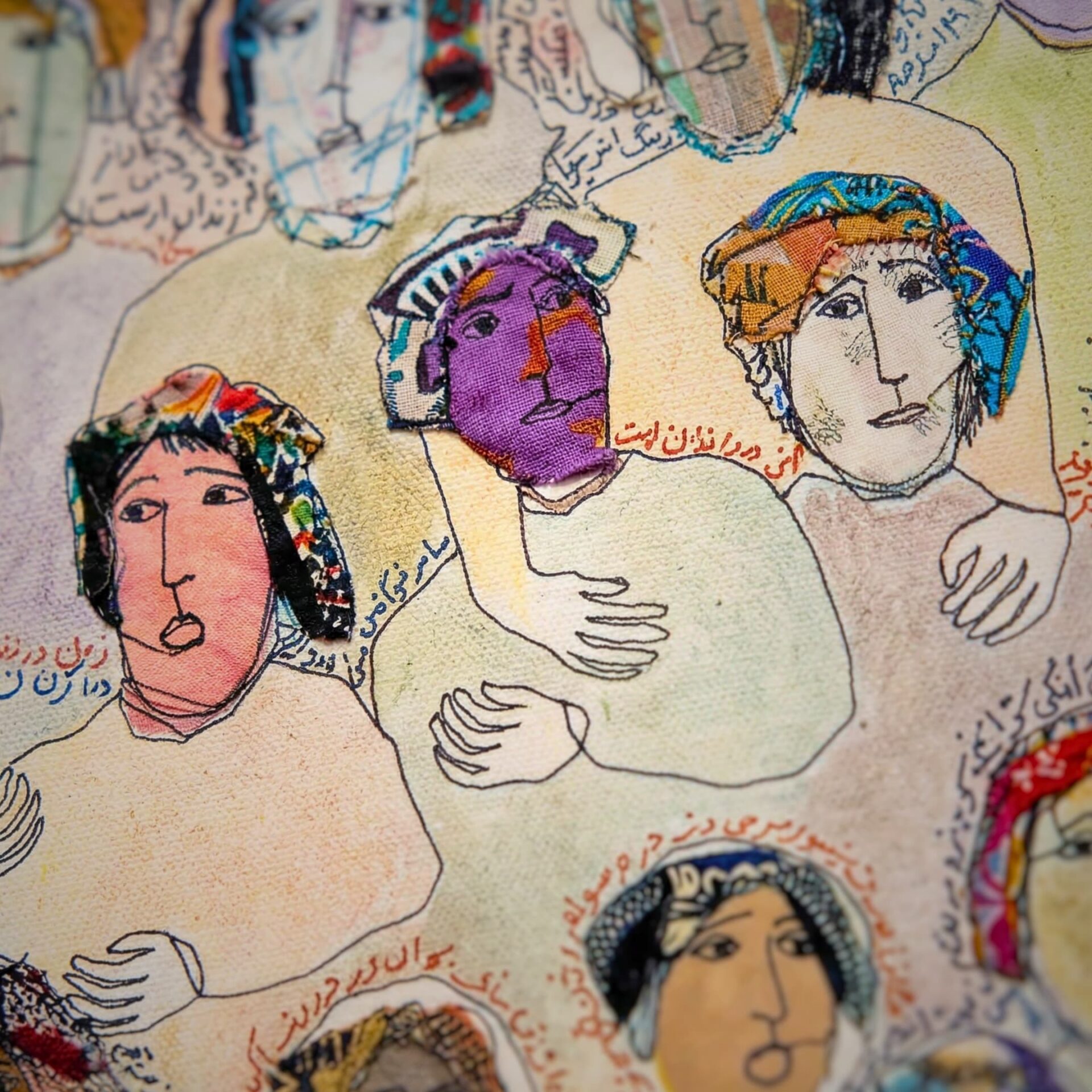
I take lines from what I’ve written and rewrite them in Farsi on my art works. I use permanent felt-tipped marker pens. I also post an English translation for each piece.
You pack a lot of visual imagery in, so how do you know when a work is complete?
Before I consider a work finished, I need to live with it and constantly look for any further improvements it might need. I also want to see what type of impression it makes on me. I usually decide after a few days if the work is finished.
Resilience & upheaval
What inspired the ethereal imagery in Visual Reflection on Displacement?
This work was made in response to a book art project called Enfolded Journeys that examined issues of migration, travel and borders. It took me a while to decide on the format of the book, and I explored a new way of presenting the book.
I usually don’t print on both sides, but I decided to do so for this book. One side has fading colours, while the other has more sombre colours. There’s a lot to see and tell in this piece because the displacement of people creates a lot of disturbance and is a life-changing experience. I wanted to show that upheaval through my layered photographs and documents.
Why did you use intricate cutout shapes in your Portraits of Resilience in the Land of Ruins?
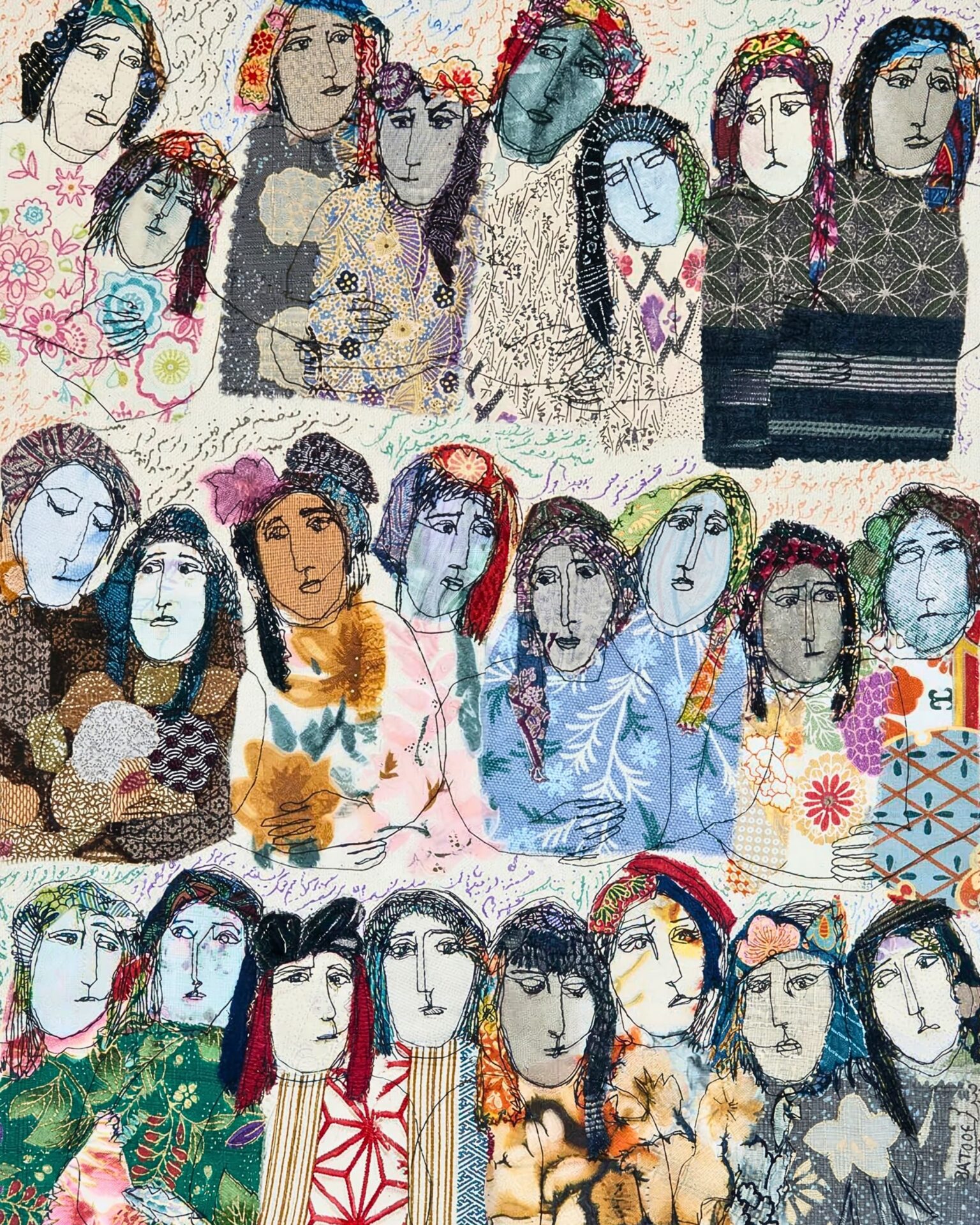
This art book was in response to the war in Palestine. I was struck by how the women had to remake their homes over and over in different camps with so many difficulties.
I’m inspired by iconography and the way religious icons are displayed. So, the book opens like a screen that stands and confronts the viewer with the women’s strength and togetherness.
In a world fractured by loss and amid shattered homes and desolate landscapes, the textile portraits celebrate the enduring spirit of the women whose strength blooms amid destruction.
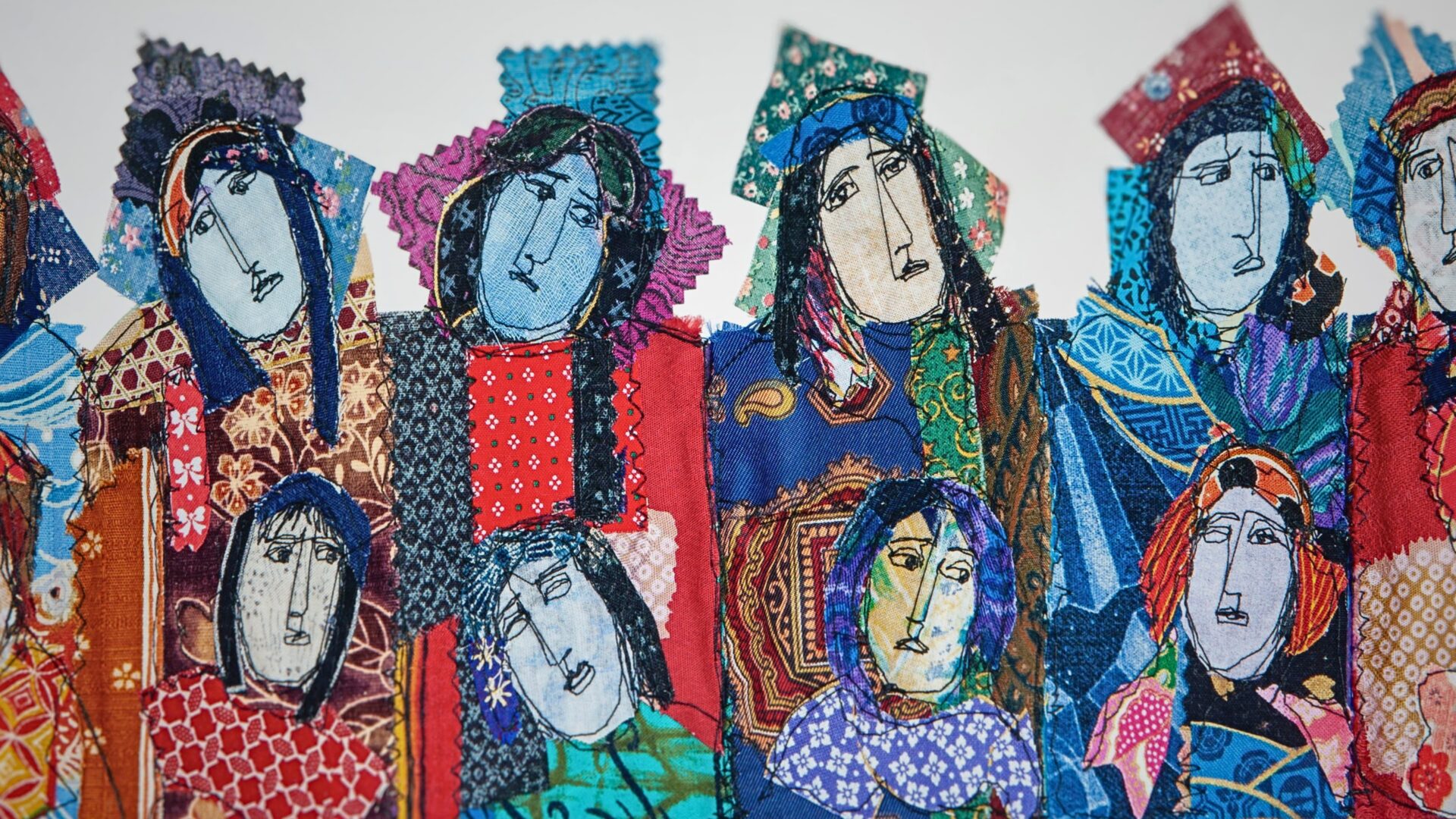
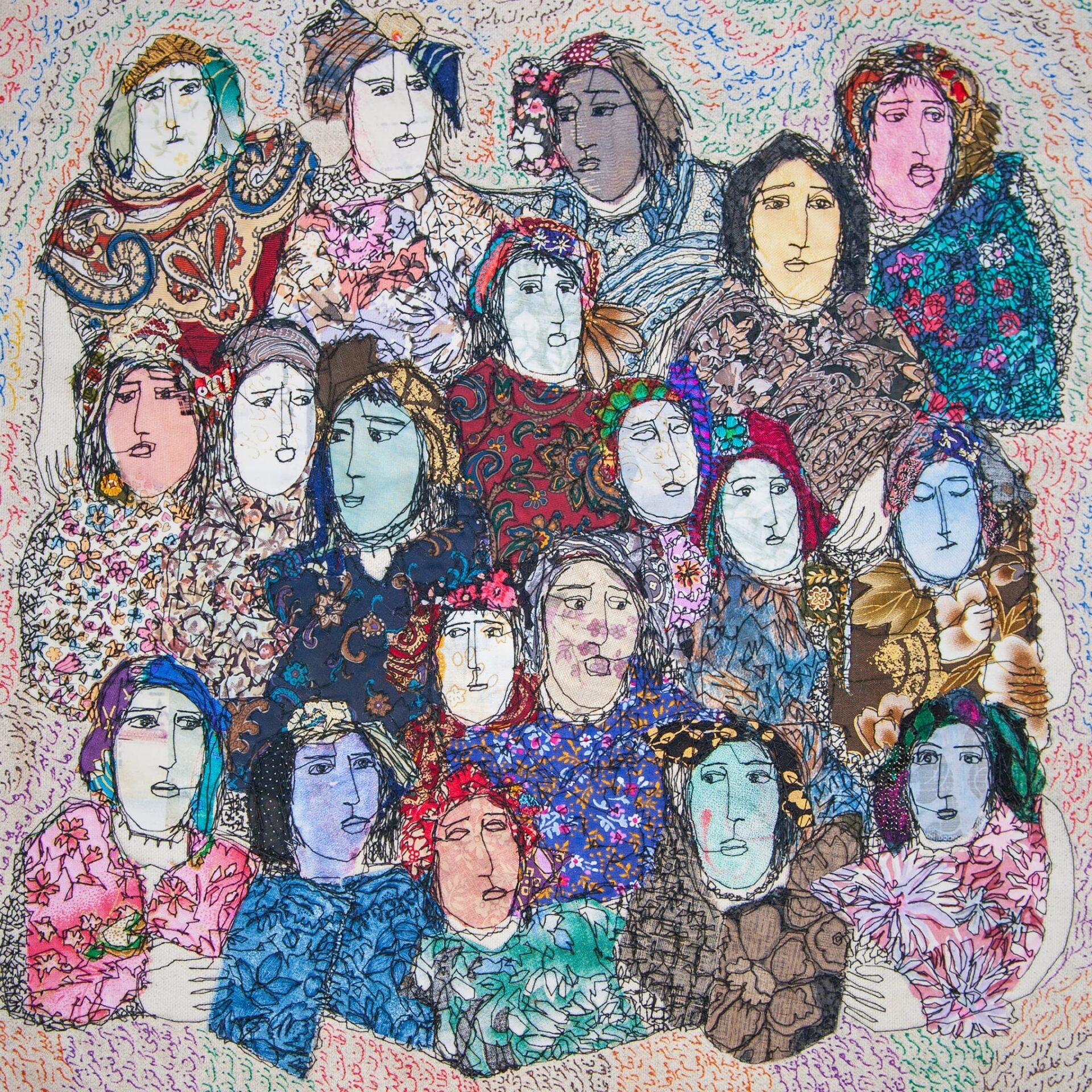
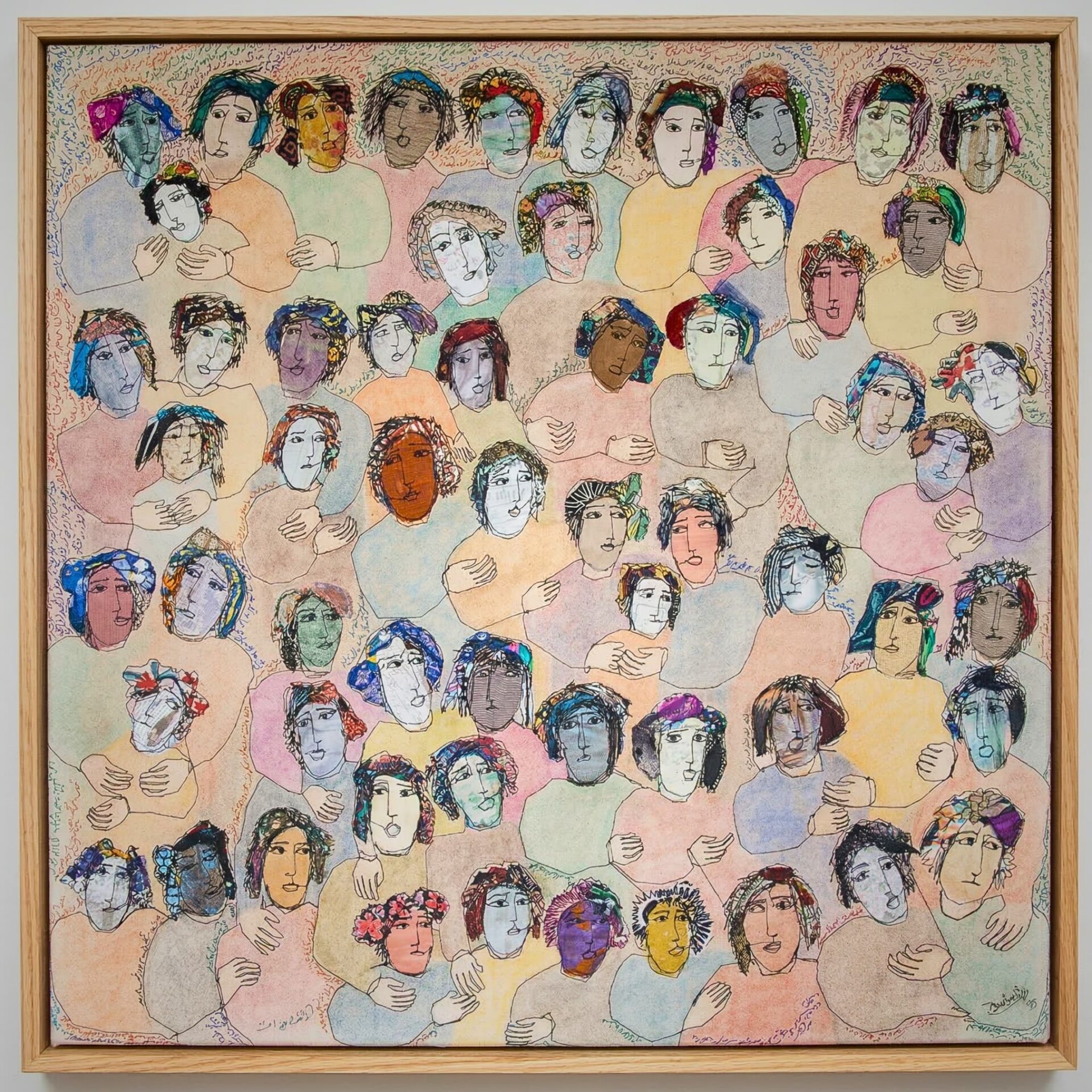
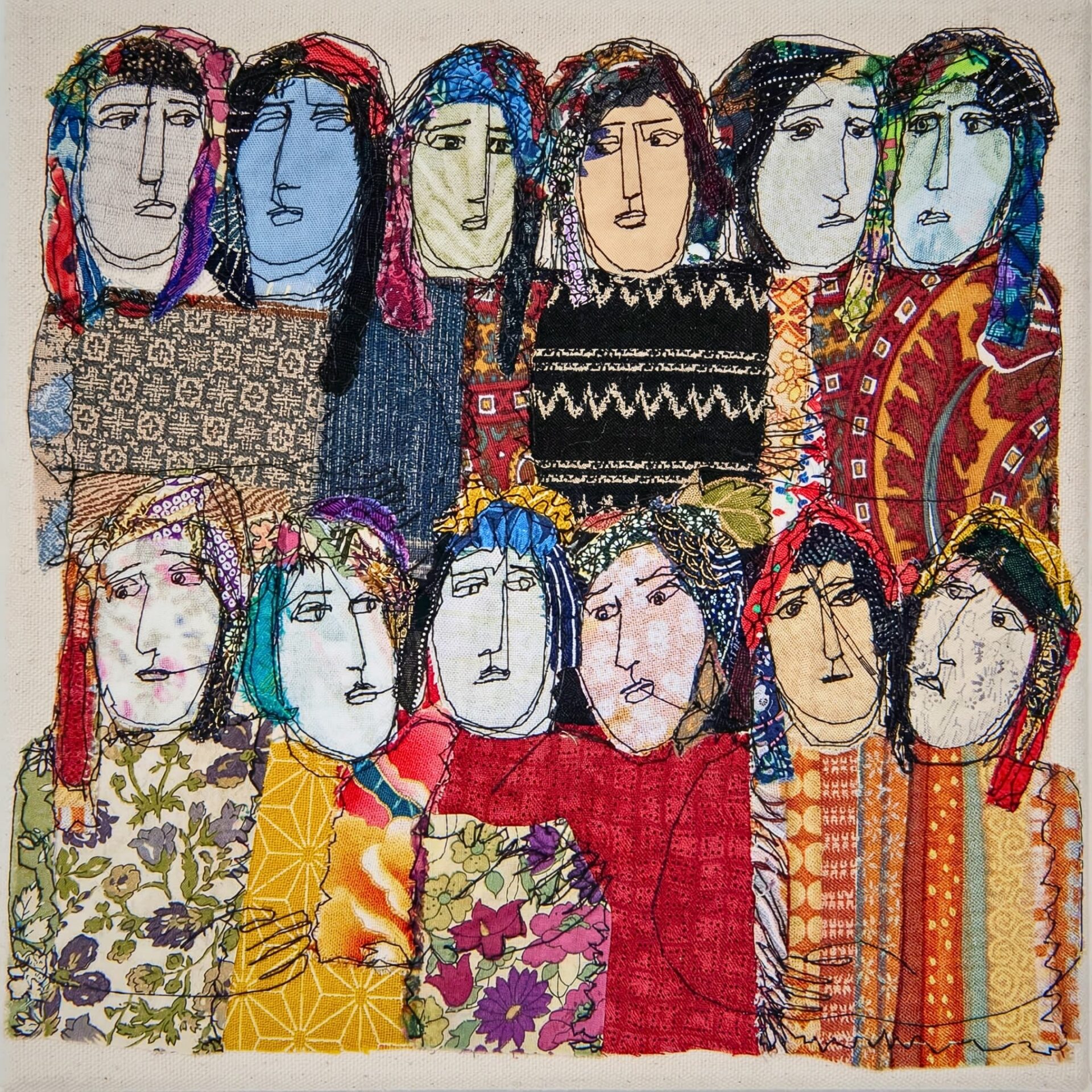
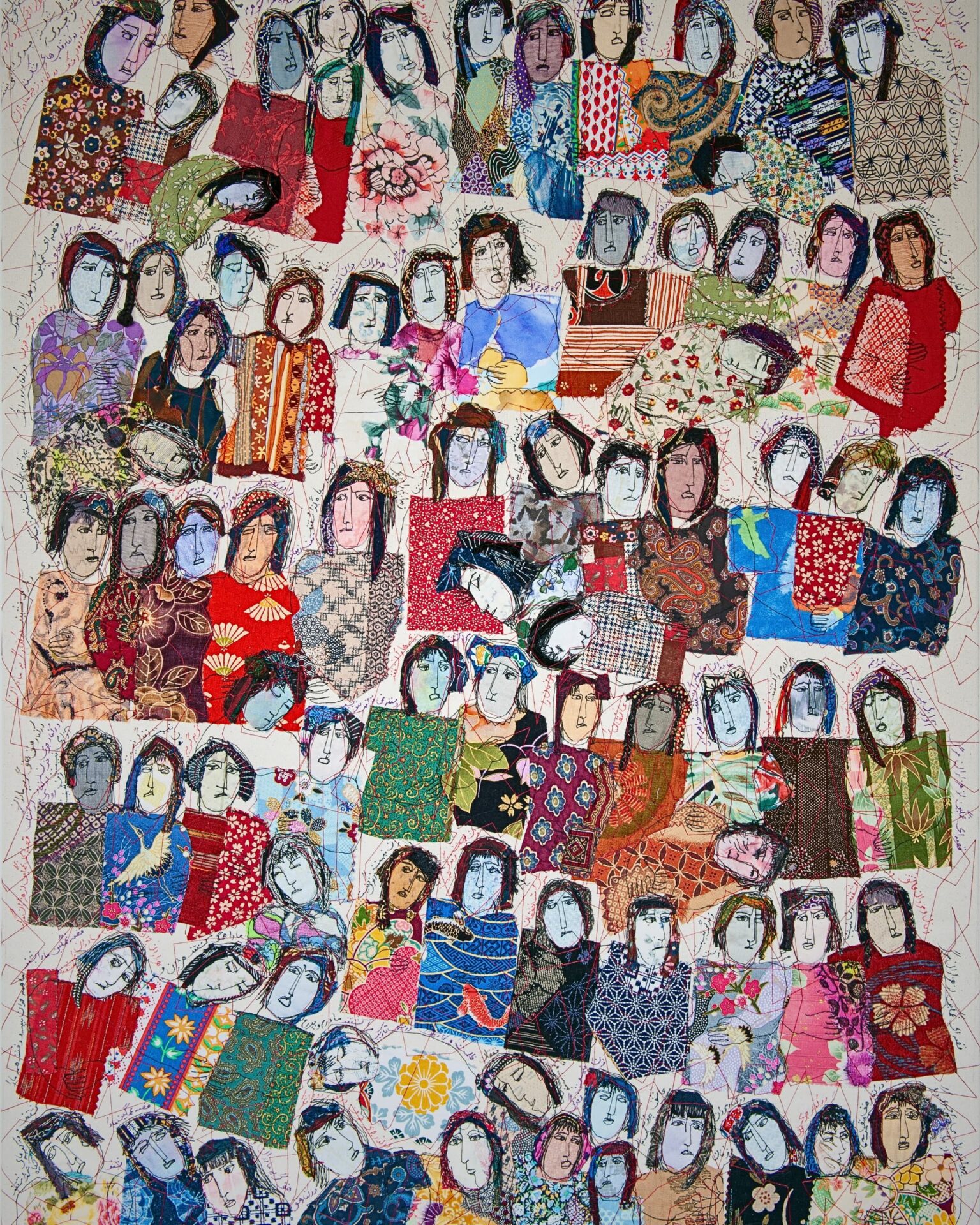
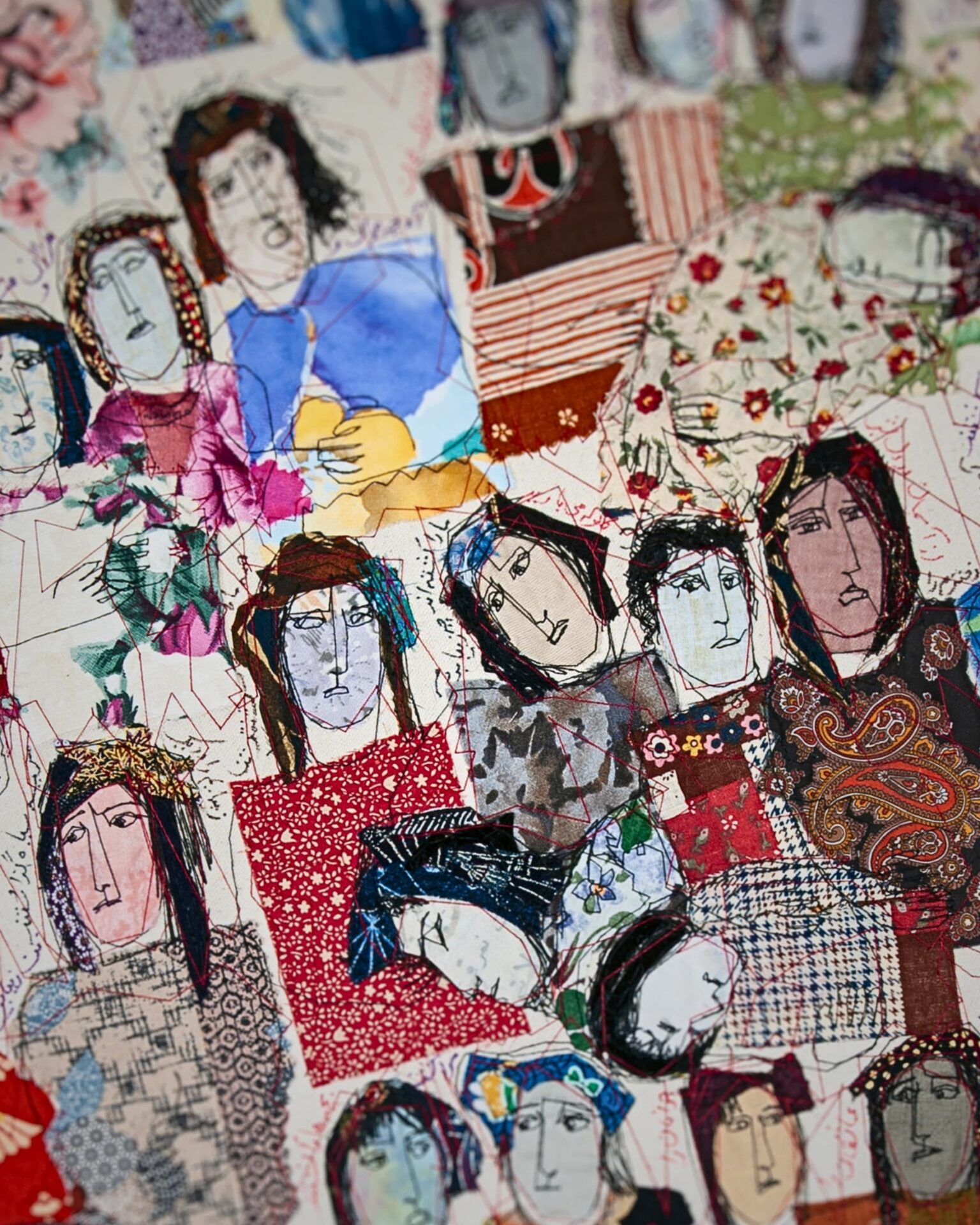
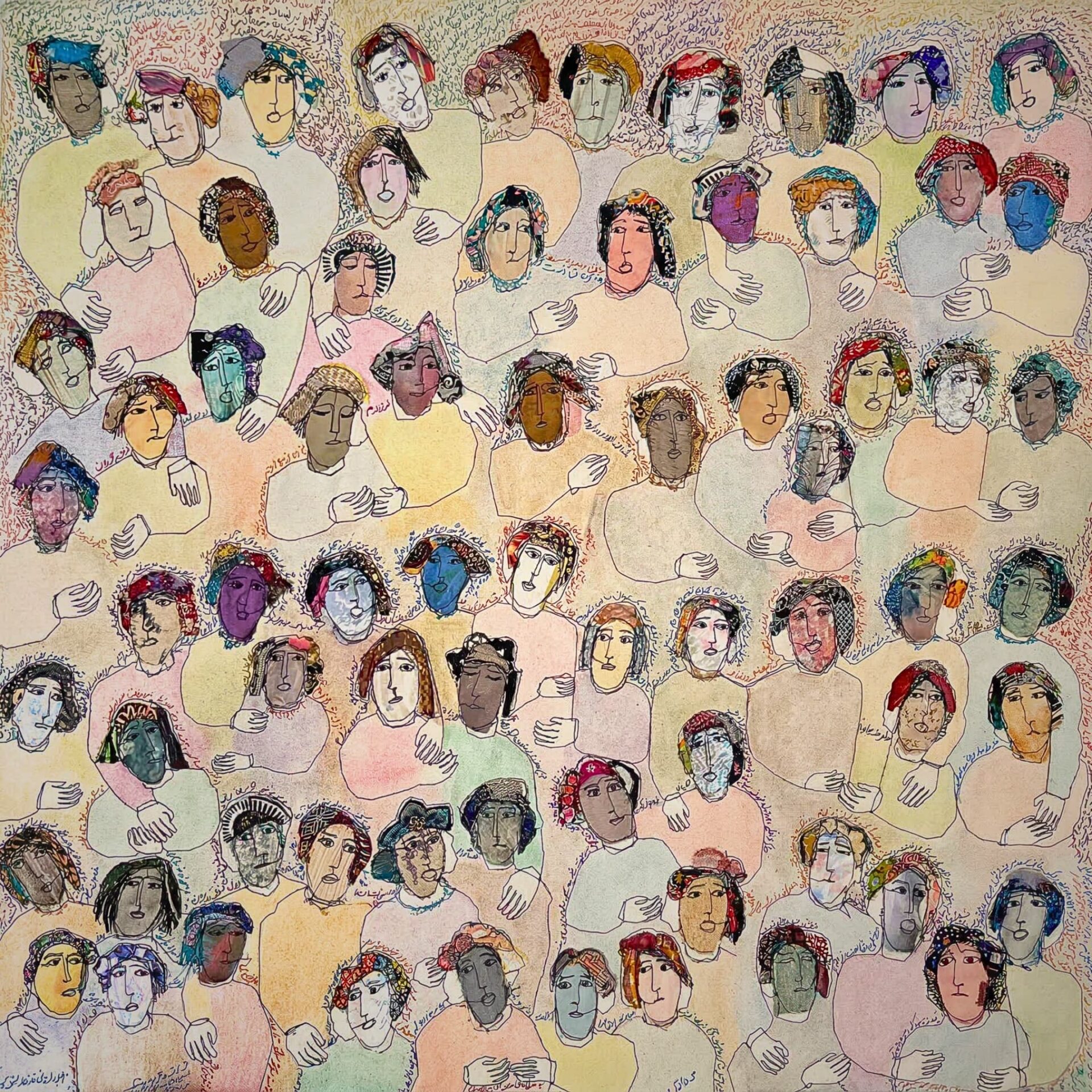
Who are the women in Here I Am No More No. 1, which has an incredible mashup of colour, pattern and personality?
In December 2025 and January 2026, I had to make some pieces for the Collect Art Fair. During those months, there were demonstrations happening in Iran. The Iranian people across many towns were critical about the state of affairs and economic hardships.
They were demonstrating peacefully, but on the 7th and 8th of January, it was reported over 30,000 families were massacred at night! It was the worst killing in the history of any country, let alone Iran.
Like any other Iranian, I was so devastated, and I had to somehow respond to it. I put all my sadness into this piece. It shows the many desperate women who cannot believe what has happened.
I included a poem written in Farsi that talks about the love and hope between those men and women, their dead bodies and the immense sorrow befalling them all.
What is your maker space like?
I work in a studio that was built for me, which is situated in our garden. I have a view of our pond and the fish, birds and some trees. I’m happy I don’t have to travel far and can work until late at night.
In terms of my tools, my computer and sewing machine are most important. For my materials, my must-have items would be textiles and different papers.
What can Stitch Club members look forward to in your workshop?
Members will create a concertina style book made from their experiments with lots of media and materials. Hand and machine stitching options can both be used.
It’s a very open workshop with respect to the subject they choose; I’ll share the construction process and then members can choose a theme that’s important to them and tell their story using this creative and surprising format.
I’m hoping they’ll push the boundaries of what an artist book can be, while having fun in the process!
4 comments
Ali Taylor
Batool’s work is moving, tragic, and brave. The suppression of womans’ rights is sadly all too common in countries with strict interpretations of religious documents, and male dominance in decision making. Thank you for bringing Batool’s art and experiences to our attention, and I’m looking forward to her workshop.
Siân Goff
You are very welcome, Ali. I’m so glad that you enjoyed learning more about Batool and her work. We can’t wait to have her with us in Stitch Club!
Avril Warren
So inspiring, I have been looking at the history of fans with a view to making a book, this article will be very useful. Thank you
Siân Goff
That’s wonderful to hear, Avril. Happy making!