
Ana Buzzalino describes herself as a creator and maker, working as a fibre and mixed media artist and surface designer.
Her creative foundations are deeply ingrained. Raised within an extended family of artists and makers, Ana was immersed in texture, colour, pattern, paint and stitch from an early age. Therefore, it’s no surprise that her practice embraces a wide range of mixed media. She selects techniques and materials that best express the narrative at the heart of each work.
Curiosity and experimentation are central to Ana’s practice. Working with layered images, textures and stitching, she embraces learning through making.
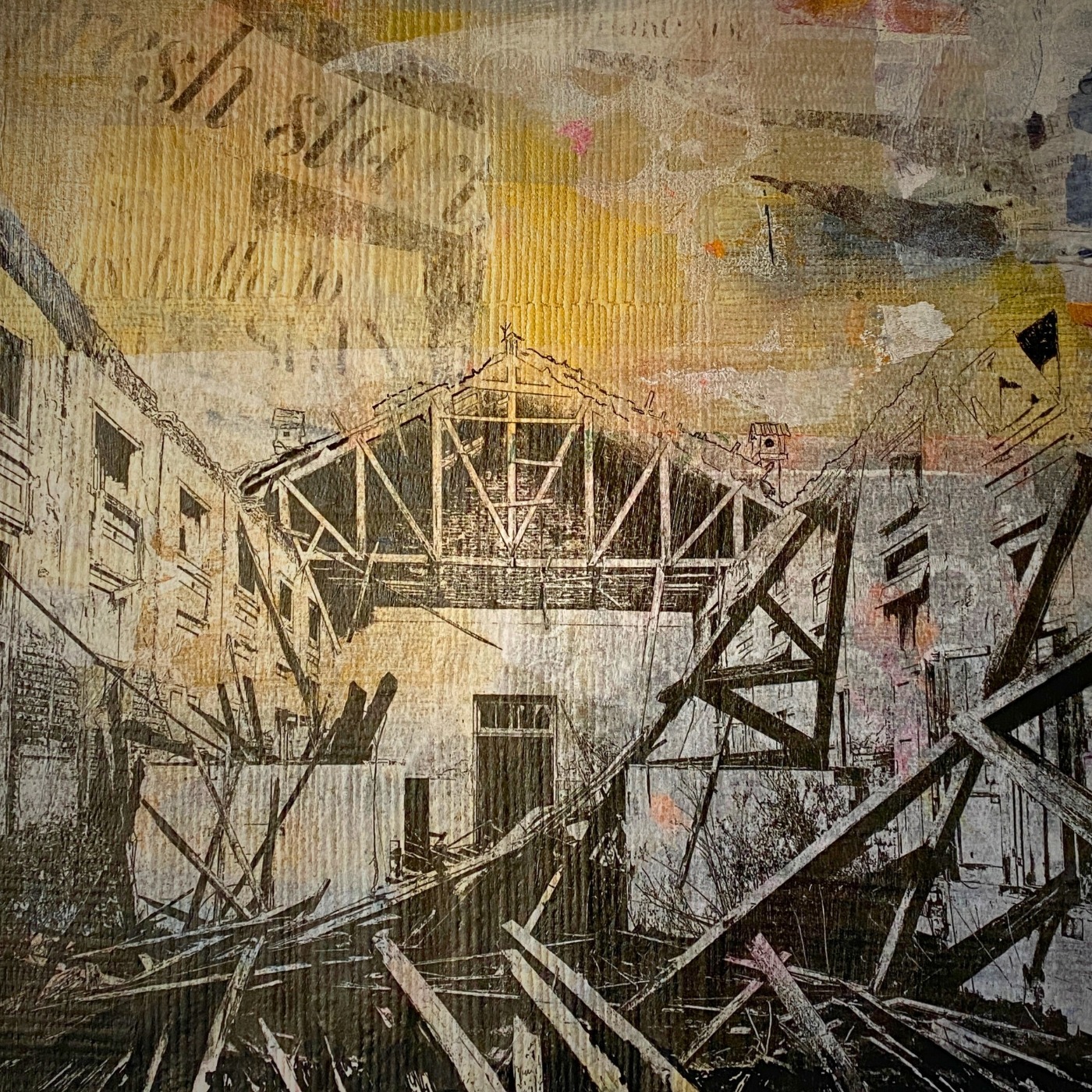
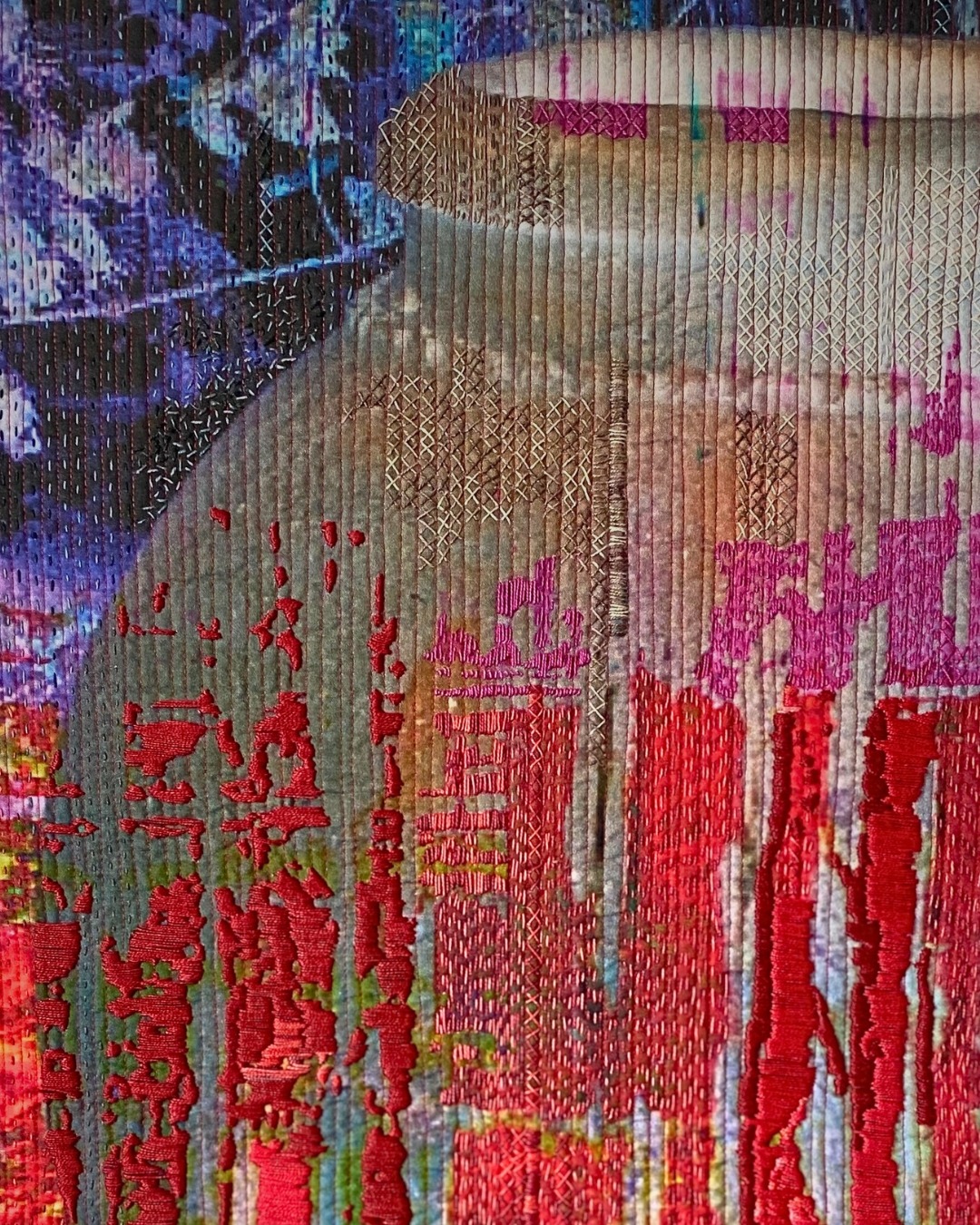
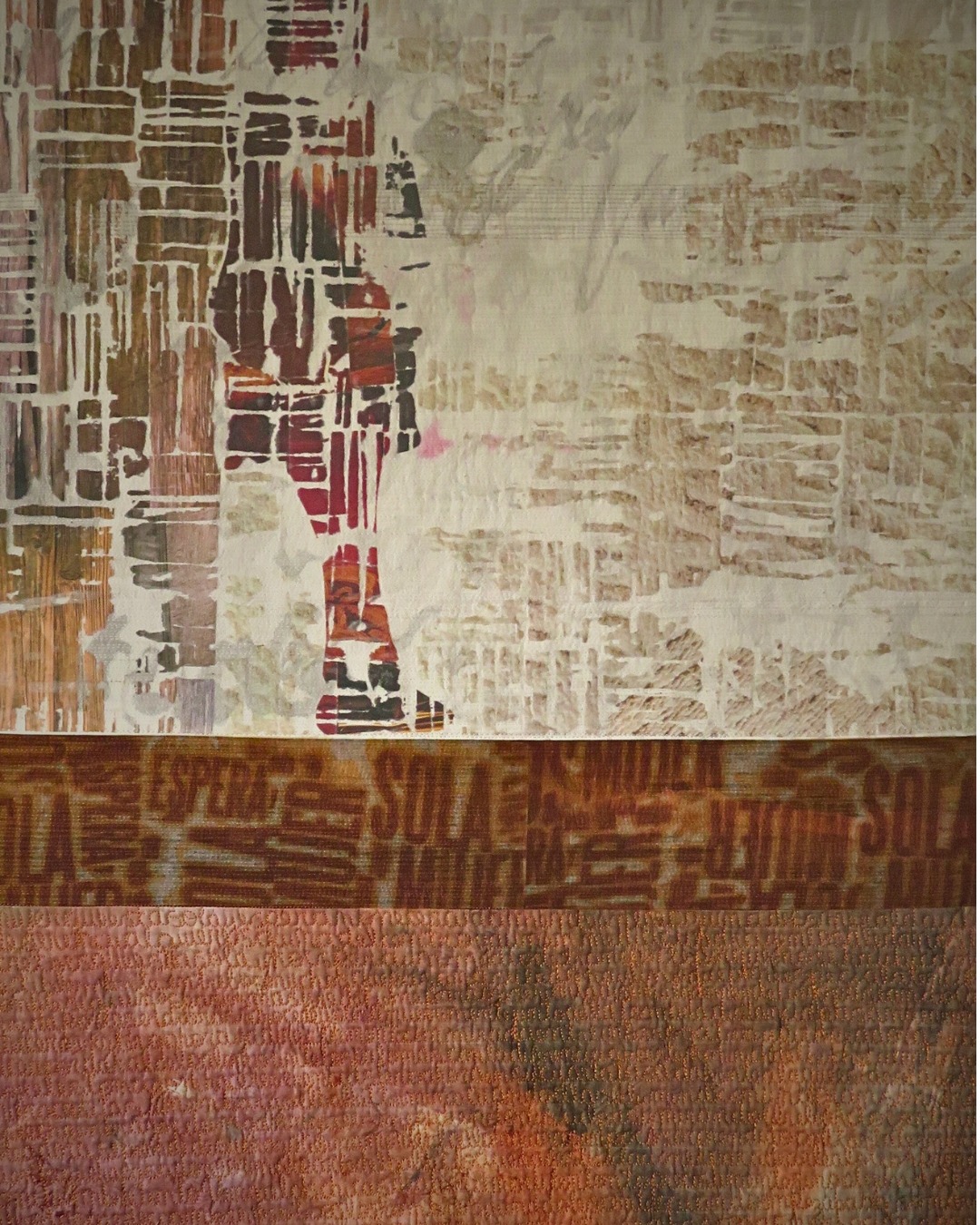
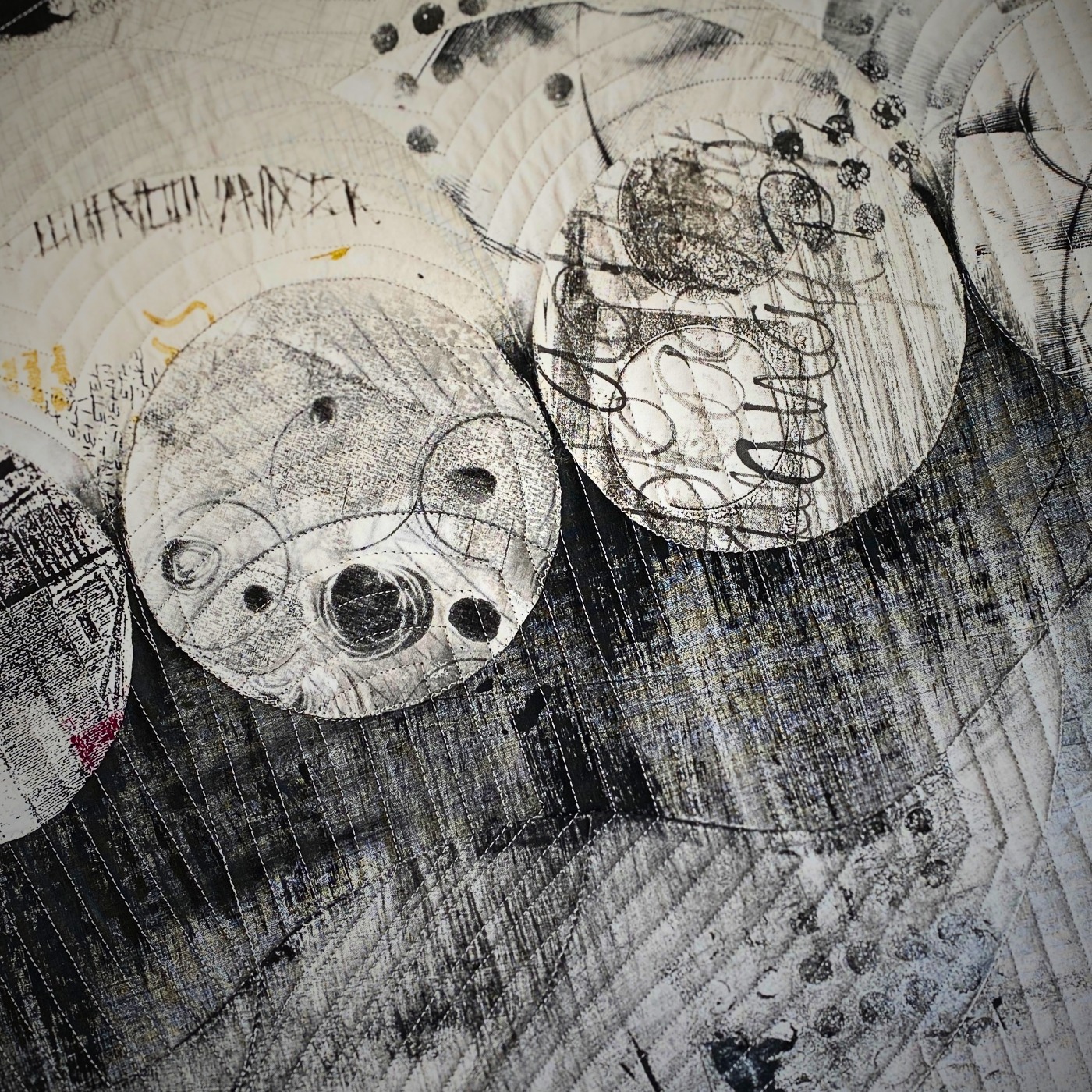
Ana Buzzalino: My work is defined by layers and texture. I build these using a combination of surface design techniques such as painting, monoprinting, screen printing, collage and, of course, stitching. I love the discovery that comes from working in layers and allowing different processes to interact in unexpected ways.
In recent years, my work has increasingly explored the impact of history on our culture today. In a world where everything feels fast, new and polished, I am drawn to the quiet persistence of the past.
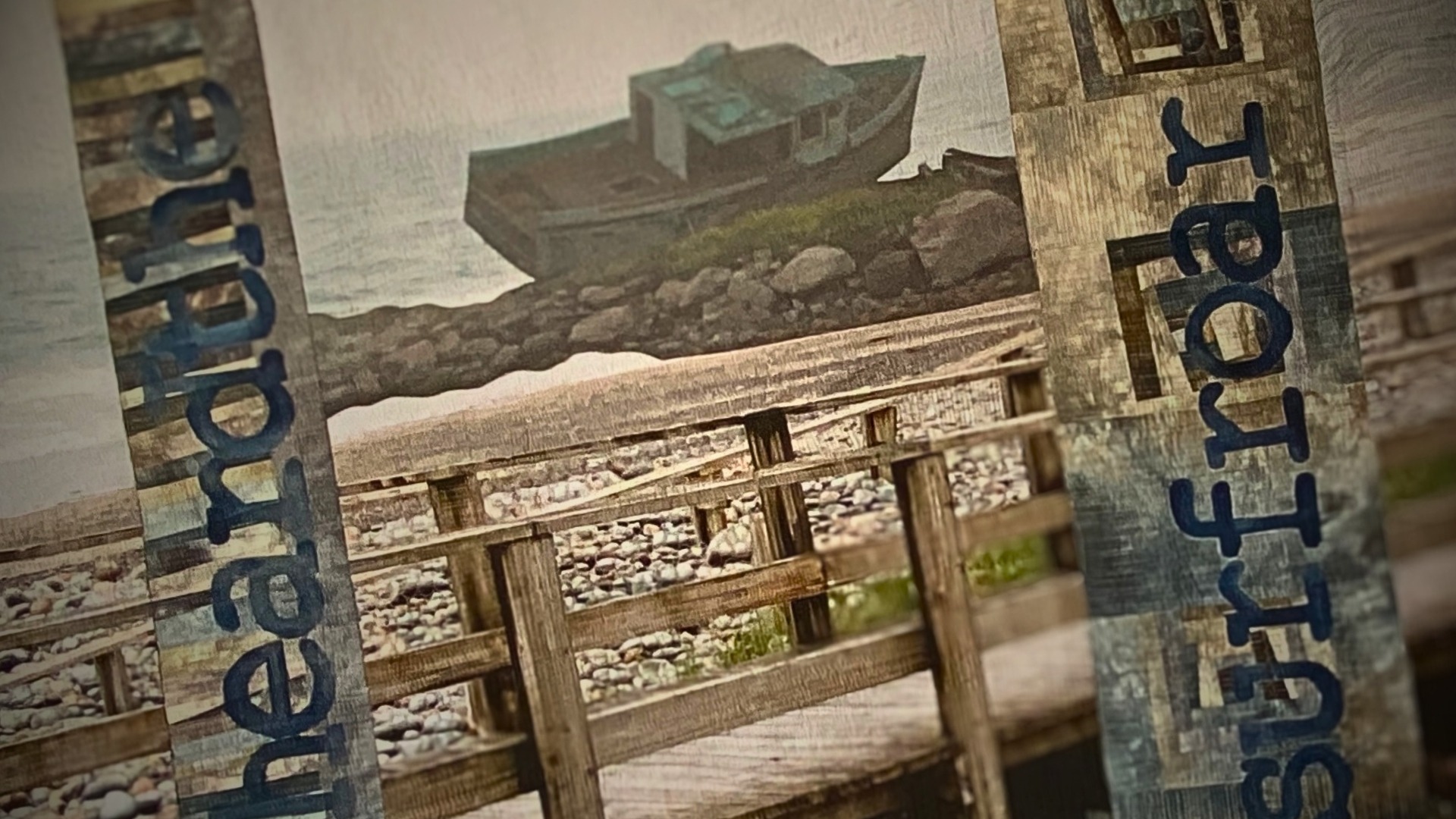
Old buildings, weathered walls, peeling paint and rusting metal all carry the marks of passing time – marks that modern surfaces rarely hold. These traces of history have a soul, and I return to them often for inspiration.
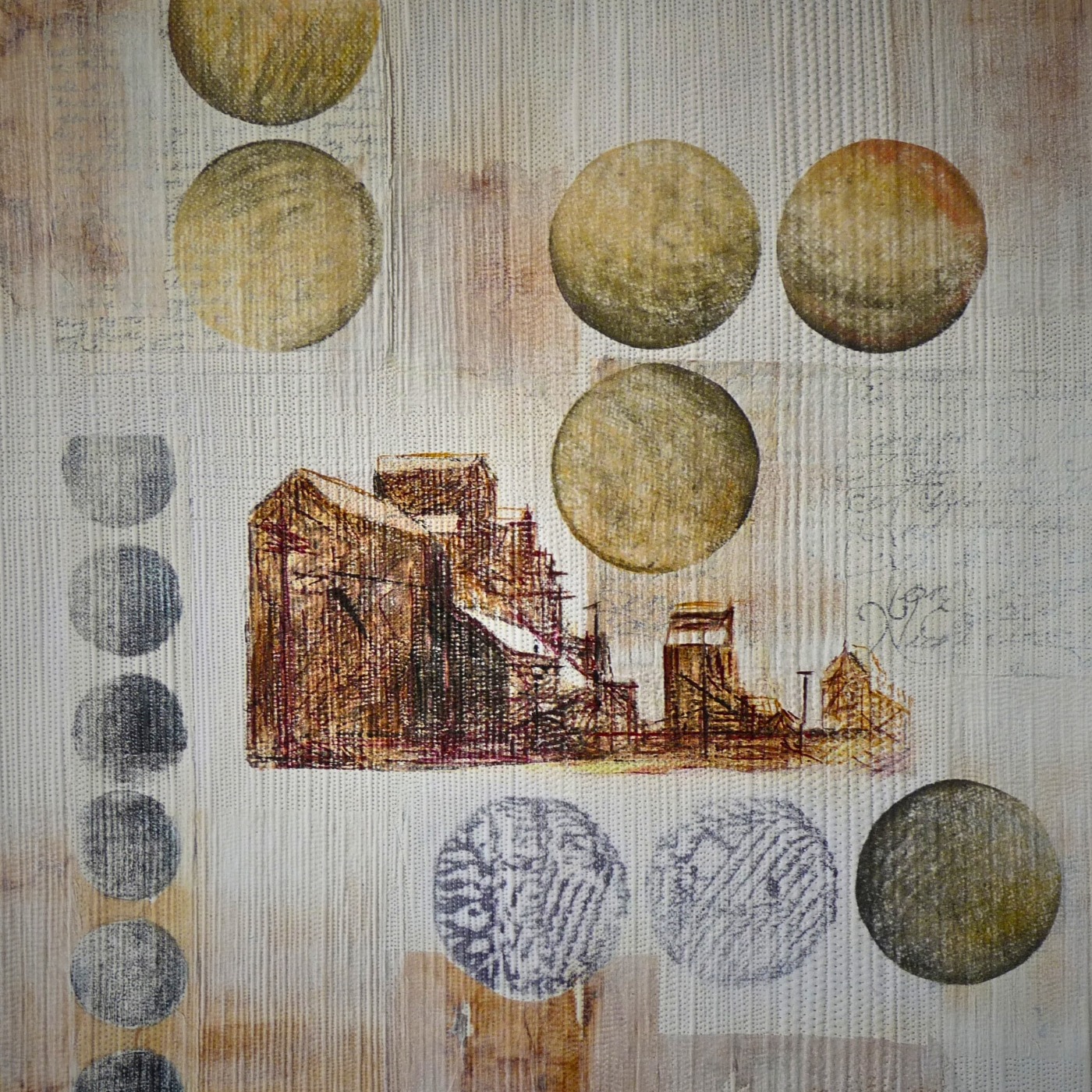
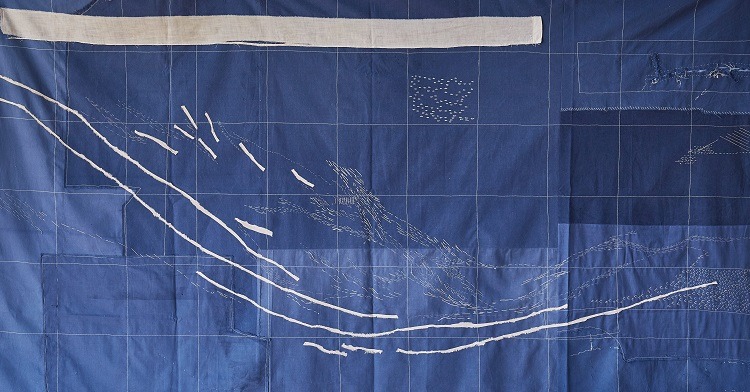
This interest led me to work on a series about grain elevators. The tall, imposing structures once dominated the North American prairie landscape. Many of them are disappearing now, and documenting that visual and cultural shift felt important to me.
Their vertical forms, their textures and their gradual loss provided both visual material and conceptual grounding for the series. They exemplify the themes I return to often: memory, change and the traces left behind.
Look & look again
I aim to create pieces that invite the viewer to pause and look, then look again. I want people to slow down, to notice details, textures and layers that might not be immediately apparent.
While I often work with elements of realism, I am equally interested in capturing the atmosphere of a place or an image – the feeling, the light, the mood and the quiet stories embedded within it.
Storytelling is always at the heart of my work, even if the narrative is not immediately obvious. Each piece has a story in my mind. Whether it’s about a building, a landscape or an object, I try to convey its essence through texture, colour and composition.
I enjoy the tension between what is visible and what is suggested, allowing the viewer to explore and form their own interpretations.
Ultimately, I hope my work offers a moment of reflection. In our fast-moving world, I want to create art that encourages people to consider the passage of time, the traces left behind and the quiet beauty in the ordinary.
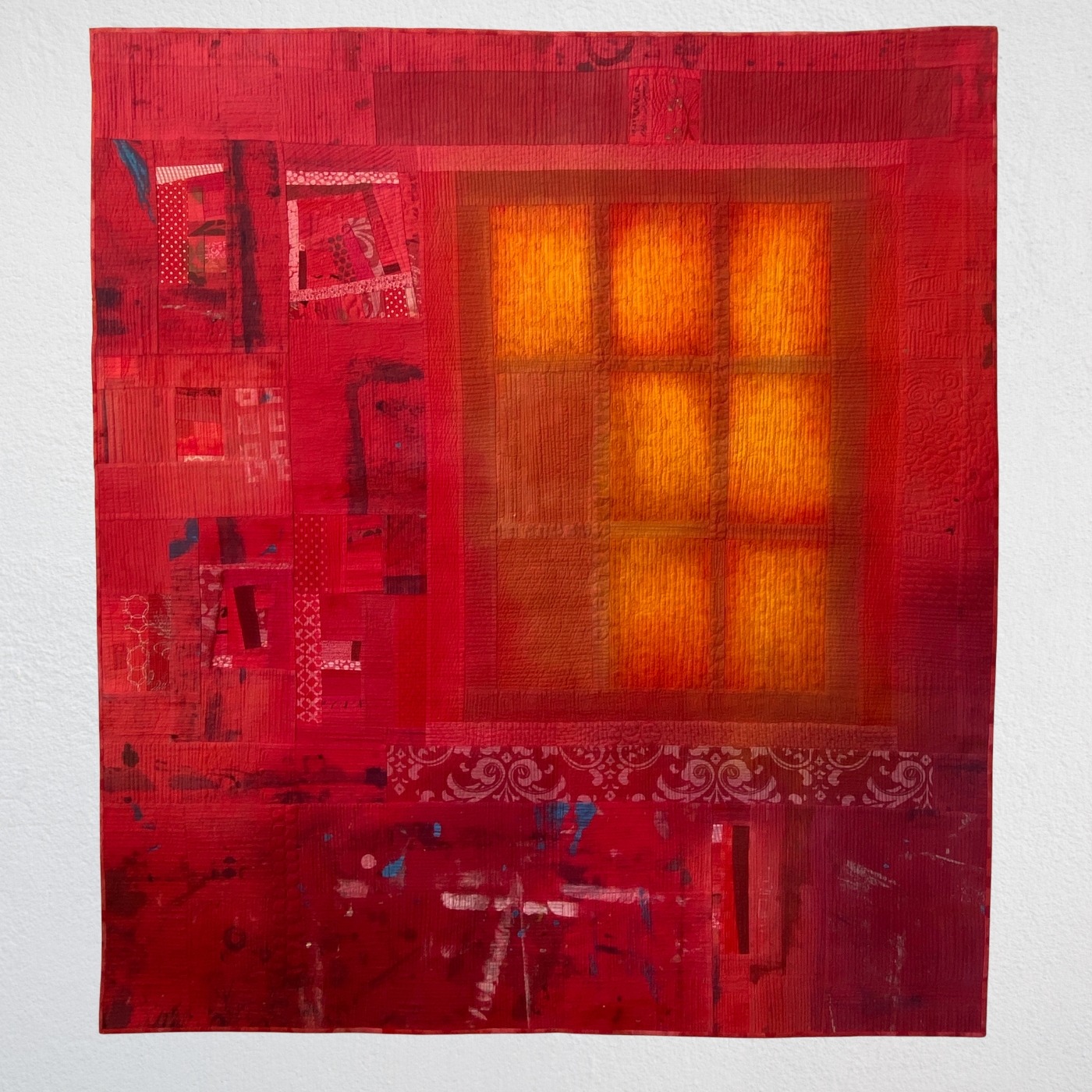
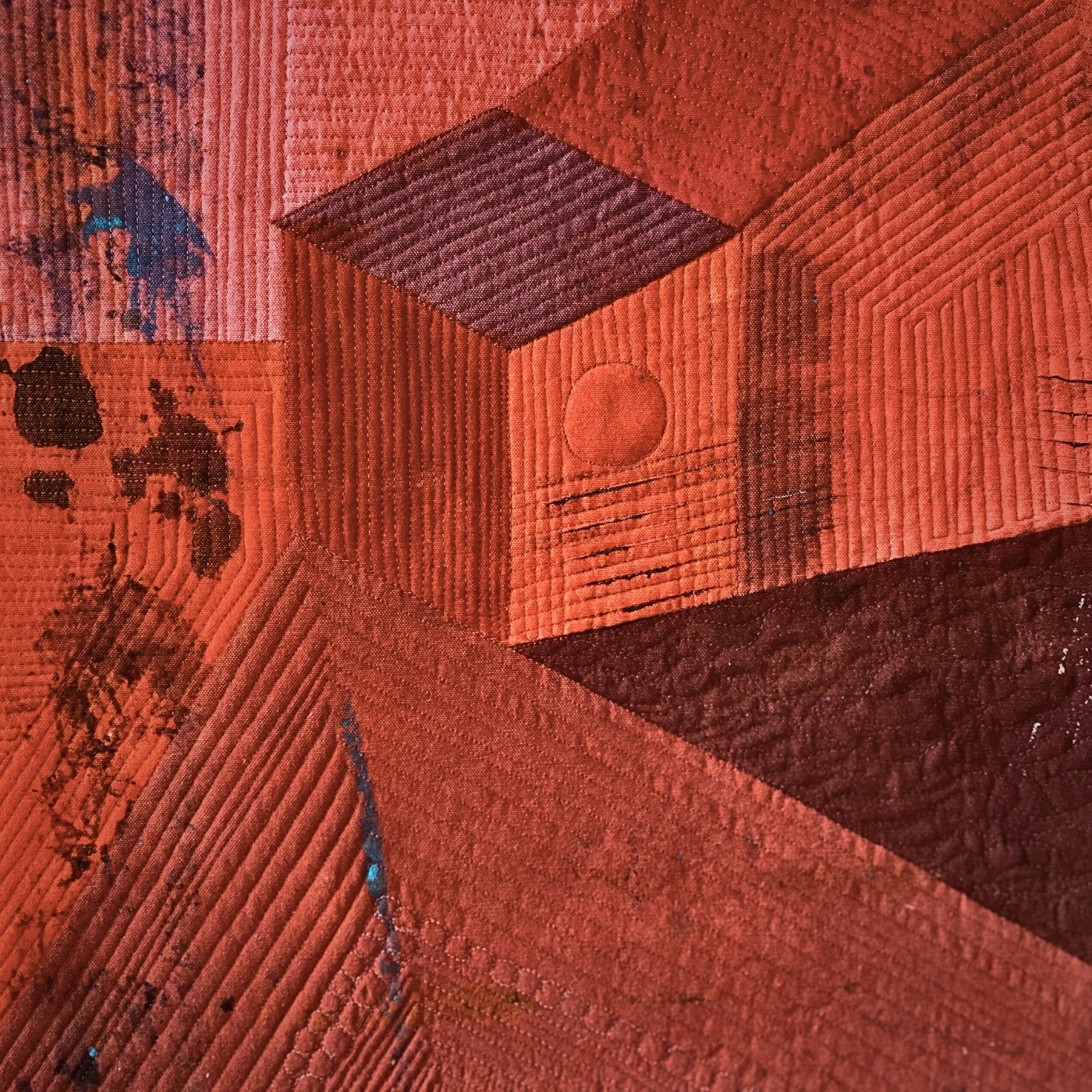
In the beginning
Every piece starts with an idea. Sometimes it comes from an image I’ve taken on a trip or from a texture that catches my eye. It might even be something as simple as a rock I’ve picked up.
Researching and exploring new ideas is an important part of my process. I collect images, textures and colours. I cut papers and paste them into my sketchbook.
I’ll take multiple photos of a place or object, exploring different views and angles. I’ll draw thumbnails or create small collages to test compositions and colour combinations.
“Research helps me understand my subject more deeply and informs the choices I make in materials, composition and stitching.”
Ana Buzzalino, Creator and maker
Making choices
After time spent exploring an idea, I consider how best to bring it to life. I decide which techniques and materials will suit the concept and help me convey the atmosphere, texture or story I have in mind.
This often means creating my own fabrics through monoprinting, painting or other surface design methods, so the materials themselves carry the textures and colours I want to explore.
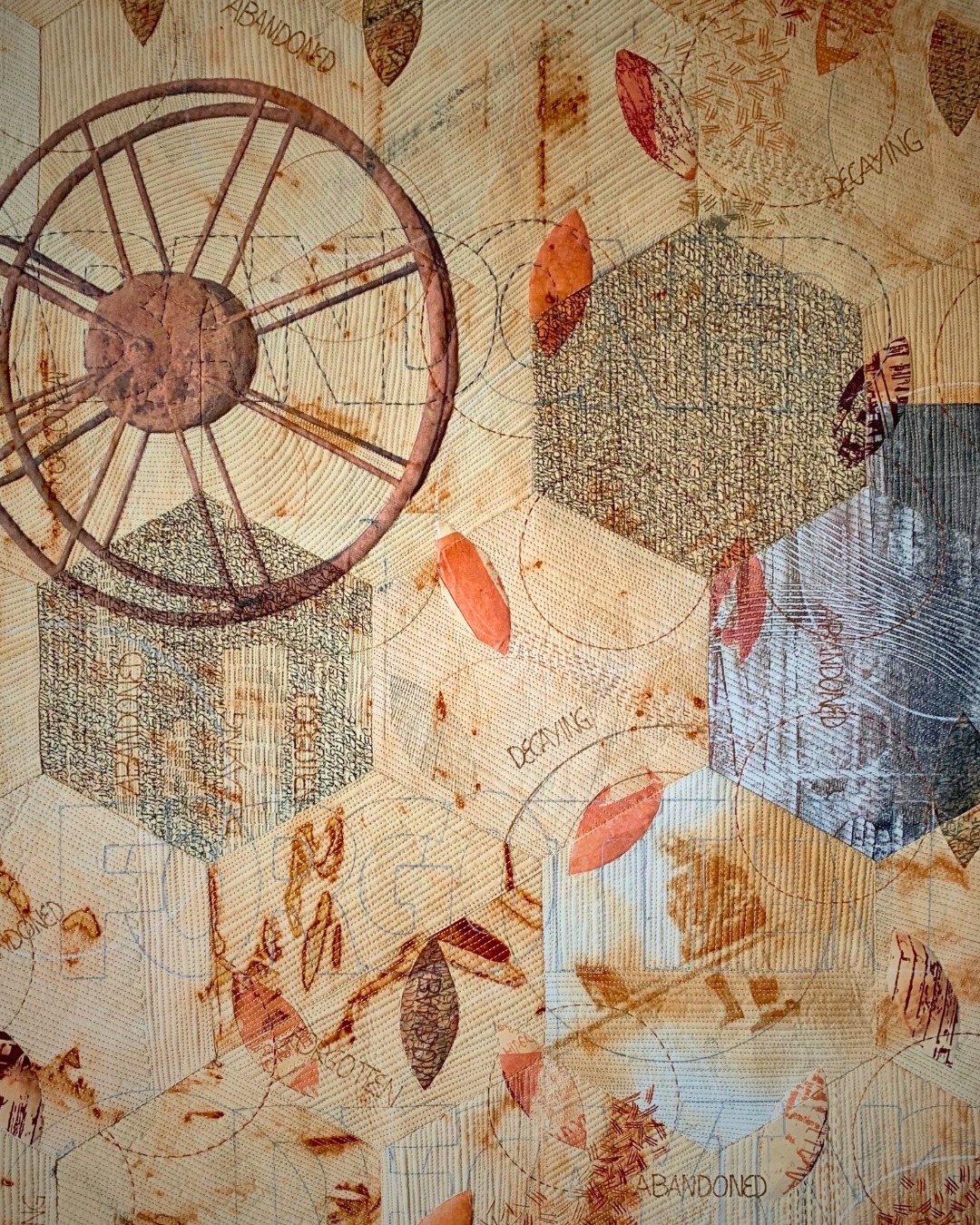
I may do this by literally bringing in the landscape. For example, in Abandoned, I rusted fabric by wrapping it around old metal pieces in a disused sugar mill factory in Kauai, Hawaii.
Creating layers
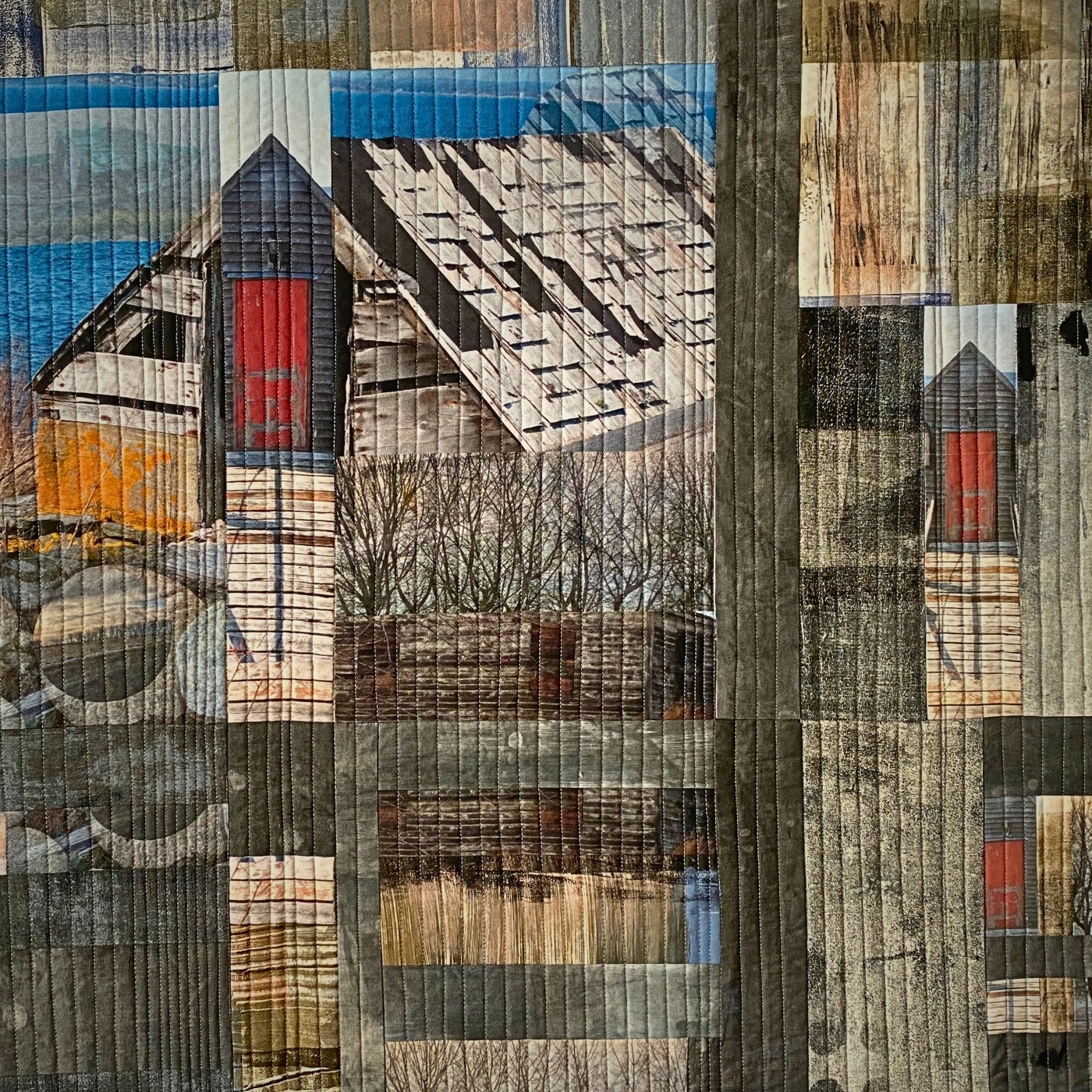
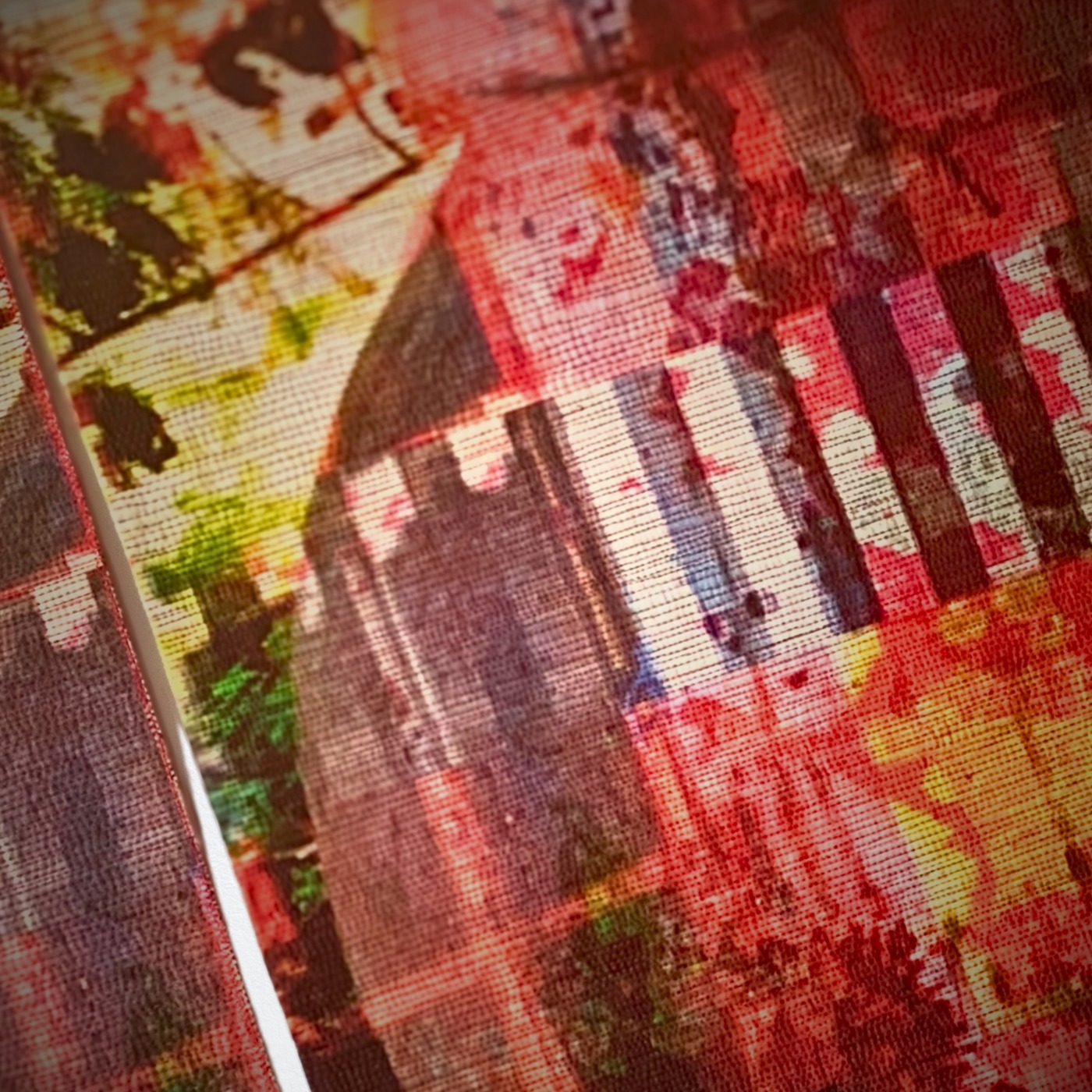
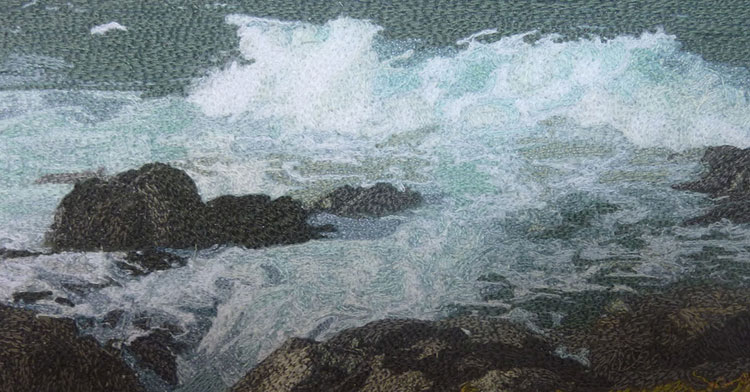
Imagery plays a huge role, and I use it in different ways. For example, I often merge multiple images in PowerPoint. In Where the Oceans Sing, I merged 17 images to get what I wanted. I made the final image into a digital file and had it printed by the company Spoonflower – I’ll often do this when working at a large scale.
Another method I use is image transfer. I print my own images onto transfer paper using my inkjet printer, then I use a hot iron to transfer the image onto the fabric.
Stitching decisions
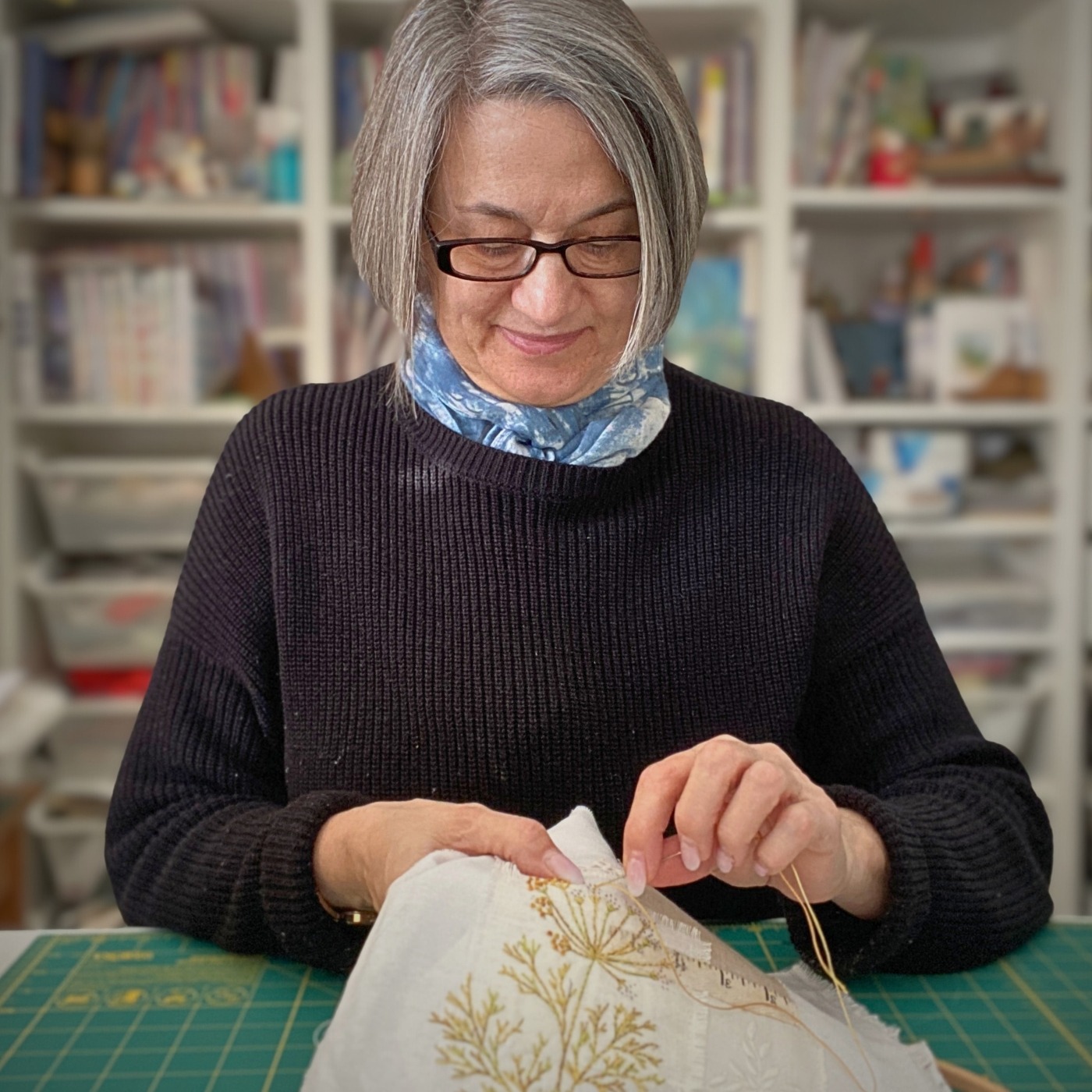
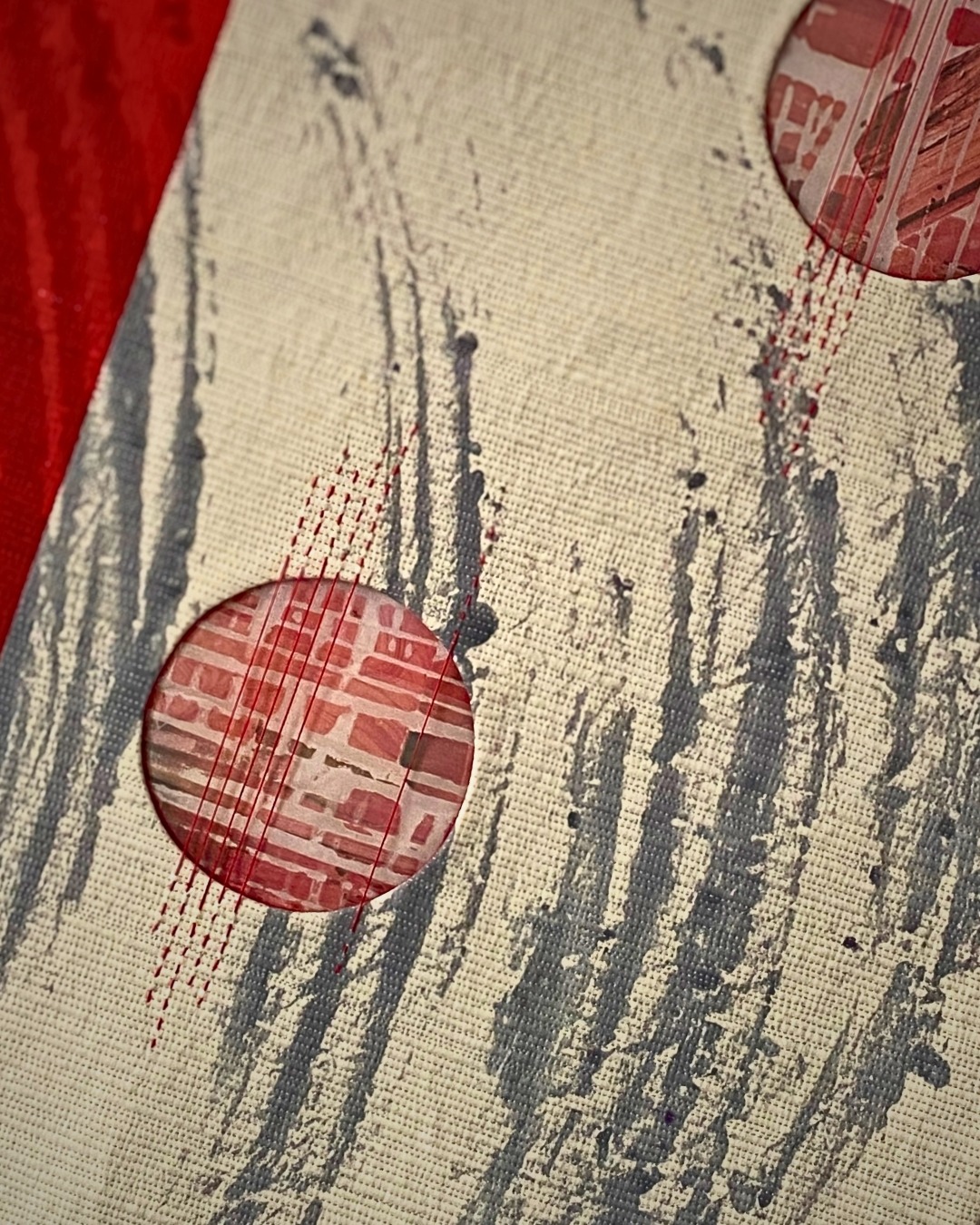
When I feel the concept is clear, I move on to stitching. This can take different forms depending on the piece. For example, if I’m working with a digital image, I often begin with machine stitching to build structure and definition. I leave hand-stitching for the final layers to add texture, depth and subtle detail.
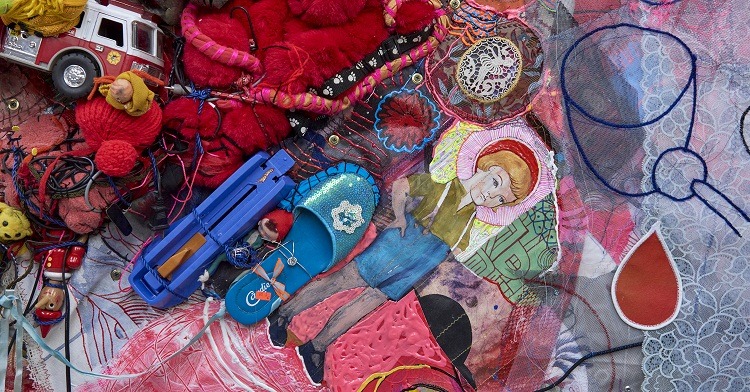
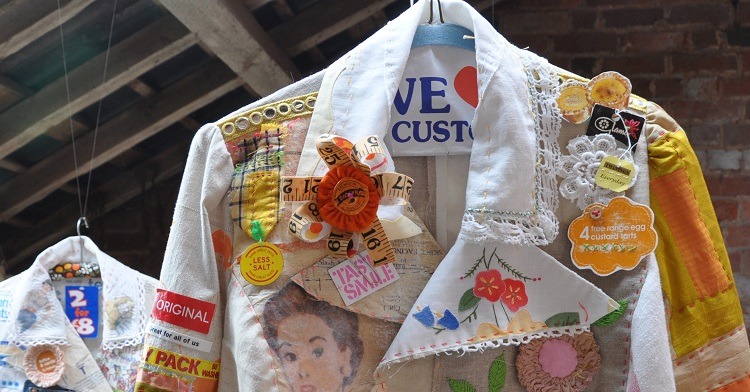
In other works, all the stitching is done by hand, carefully layering vintage textiles, lace, ribbons and other materials to create rich, tactile surfaces.
Each decision, from the choice of fabric to the type of stitch, helps shape the story I want to tell and the experience I hope to give the viewer.
“I’m always thinking about layers, textures and how the materials interact.”
Ana Buzzalino, Creater and maker
Learning through making
One of the most important things I’ve learned is to trust the process and not make everything about perfection.
Not everything you make has to be for show. Every piece teaches you something, whether it’s about materials, techniques or even about yourself.
I also don’t feel the need to finish everything I start. If a piece isn’t going the way I intended, I put it aside. I’ve learned that there’s value in knowing what doesn’t work.
I’m not too precious about materials either. Some pieces are meant for the ‘wood pile’. Discarding materials that aren’t working keeps the mind uncluttered and allows you to start fresh. I like to begin each new project with a clean studio, so I can focus fully on the materials at hand, without distraction.
“Allow yourself to make mistakes – or, better yet, treat them as learning opportunities.”
Ana Buzzalino, Creater and maker
Creative roots
Creativity has always been at the heart of my family. I was born in the small seaside town of Necochea in Buenos Aires, Argentina, and my love of fabric began at a very young age. My mother, new to a small town and often sewing to pass the time, would let me sit beside her while she worked.
My mother used to give me fabric scraps to play with. I would cut them into shapes, slit the centre, and magically have a poncho or skirt for my teddy bears. During those hours beside her, I learned how to handle fabric and thread.
Visits to my grandfather’s cashmere and suiting business in Buenos Aires added another layer of inspiration. I was given fabric samples to explore. This sparked a fascination with texture, colour and the possibilities of textiles that has stayed with me ever since.
My grandmother was a milliner and an excellent seamstress, and my great-grandmother made wedding dresses for a living. I still have some of their pieces. Those treasures connect me to their skill and creativity.
Art was also a part of my life through my extended family. My tía Mimi, who lived in Santiago, Chile, was an internationally celebrated artist and etcher.
My aunt Yente and uncle Juan del Prete were both artists. I remember visiting their small apartment in Buenos Aires, with the smell of paint and turpentine, every surface covered with paintings, and my uncle’s sculptures everywhere.
My favourite uncle, Eugenio, was a draftsman who made signs for local businesses. He would let me into his studio under supervision. I was amazed by the papers, rulers, pencils, scissors and colours all around – everything was done by hand then. Those visits filled me with delight and curiosity. They planted an early love of experimenting with materials.
My parents encouraged creativity in all its forms. They supported me in taking classes with a wide variety of materials and techniques. They fostered a curiosity and confidence that still drives my work today.
Growing up surrounded by talented, creative family members taught me to value craft, experimentation, and storytelling through materials – a foundation that continues to influence my textiles and mixed media art.
Discovering fibre art
After marrying young, I moved to Canada. This was a huge change for someone from such a close-knit family. Money was tight, but I managed to buy a sewing machine and began making clothes, which kept my creativity alive.
One day on a lunchtime walk, I stumbled into a quilt store. The work that caught my eye wasn’t for sale, but the owner offered to teach me to make my own. That class changed everything. Within a year, I was teaching at the store, and my passion for quilting and fibre art had truly begun.
Since then, my work has grown and evolved, blending fibre and mixed media, surface design and stitching.
I work from a studio in my home in Calgary. There I can immerse myself in the layers, textures and stories that inspire my art every day.

Advice on offer
If I could sit down with my younger self, the one just starting out, elbows deep in fabric and ideas, I’d have a few things to say. Not about techniques or tools (though those matter), but about the mindset, patience and joy this path requires.
Back then, I often looked outward for permission, compared my beginnings to someone else’s middle, and rushed toward finished pieces instead of enjoying the process.
With time, stitches and many creative detours, I’ve learned to listen more closely to my materials, my intuition and the quiet voice that says, ‘this might be something’.
Here are a few things I’d whisper, gently and often:
Start before you’re ready. Waiting until you’ve learned more, cleaned your studio or ‘figured out your style’ can keep you stuck forever. Begin with what you have, and where you are. Confidence comes after the doing.
Try everything, but keep what resonates. It’s tempting to chase every new technique, but over time you’ll notice a few that feel like home. Keep your curiosity but honour your own preferences.
It’s okay to make ugly work. Really! The pieces you cringe at now are part of your growth. Often, they’re necessary detours that help you develop your voice.
Every stitch, every experiment, and even every discarded piece teaches you something, whether its about your materials, your techniques or, most importantly, yourself.
“I’ve learned to trust the journey, embrace mistakes as learning opportunities and allow curiosity to be the guide.”
Ana Buzzalino, Creator and maker
Fostering connections
Sharing ideas, learning from others, and seeing how artists around the world approach their work is both inspiring and motivating.
I am a member of SAQA (Studio Art Quilt Associates), an international organisation dedicated to promoting art quilts as art and supporting the education of artists. I also serve on the SAQA Board of Directors, which allows me to contribute directly to the organisation’s mission and support other artists in the global art quilt community.
Being part of SAQA connects me with a network of like-minded artists from around the world who share my passion for pushing the boundaries of fibre art. It provides opportunities to exhibit my work in international shows, participate in educational programmes and engage in meaningful conversations about art and process.
For me, this connection is invaluable. It reinforces that there is a place for experimentation and creativity in textile art, and it reminds me that even when a composition is unusual, unconventional and ‘out there’, there is an audience who will understand and appreciate it.
The passage of time
I began my journey as a traditional quilter, learning the techniques and structure of quilting early on. In 1993, my family and I moved back to Argentina as expats. Over the nine years we spent there, I began teaching quilting to the international community.
While in Buenos Aires, I also took extensive painting lessons with two wonderful teachers, which opened my eyes to new ways of seeing colour, texture and composition.
By the time we returned to Canada, my work had started to evolve. The quilting world itself was changing. Artists were experimenting with all kinds of techniques and pushing the boundaries of fabric.
I began exploring ways to incorporate painting into my textile work, which led to a period of experimentation. Some pieces were challenging or ‘ugly’, but each one taught me something.
During this time, I also connected with well-known international teachers, whose guidance and feedback helped me refine my techniques and develop my own artistic voice.
Over the years, my work has grown to combine quilting, painting, surface design and stitching in layered, textured and narrative-rich pieces.
Sharing my passion
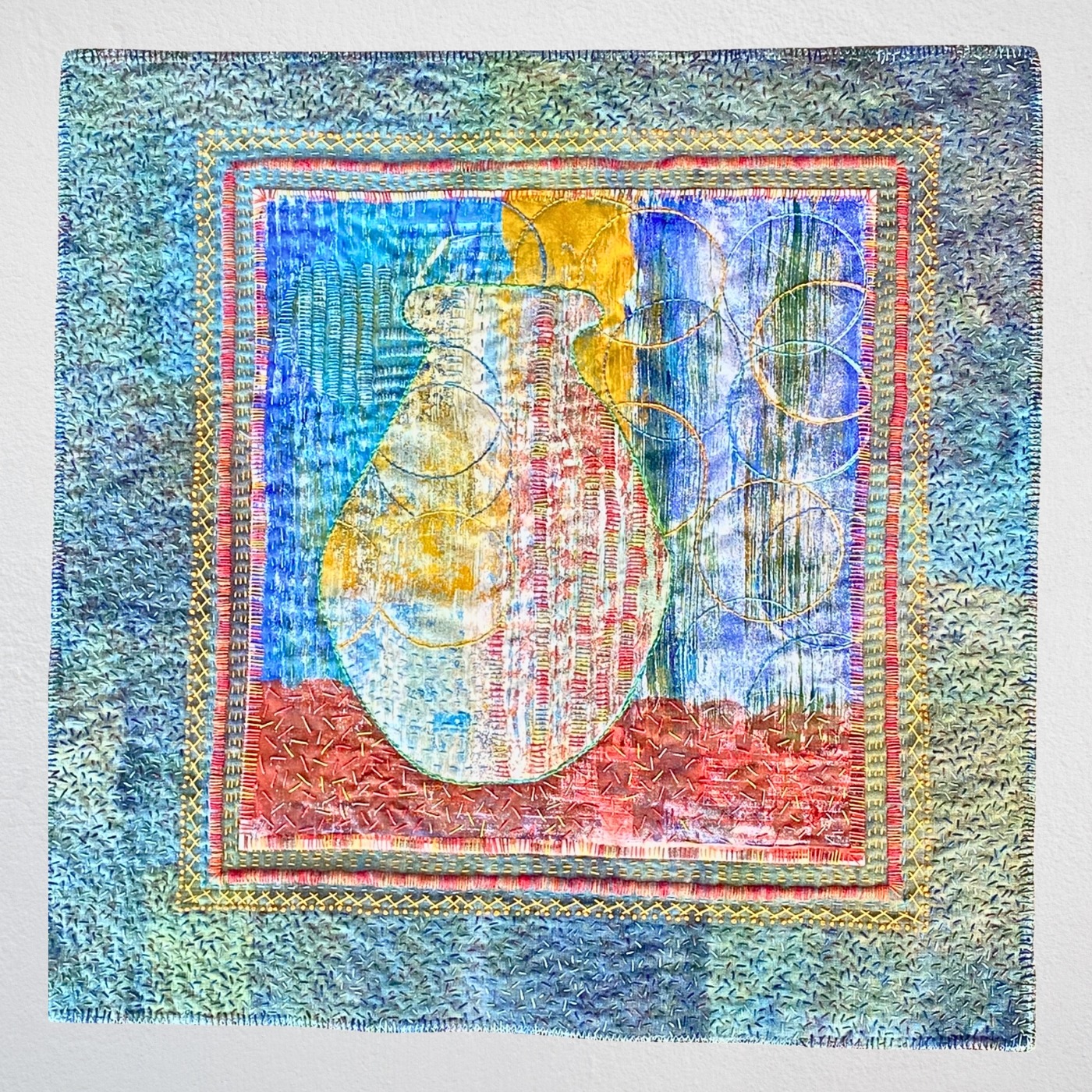
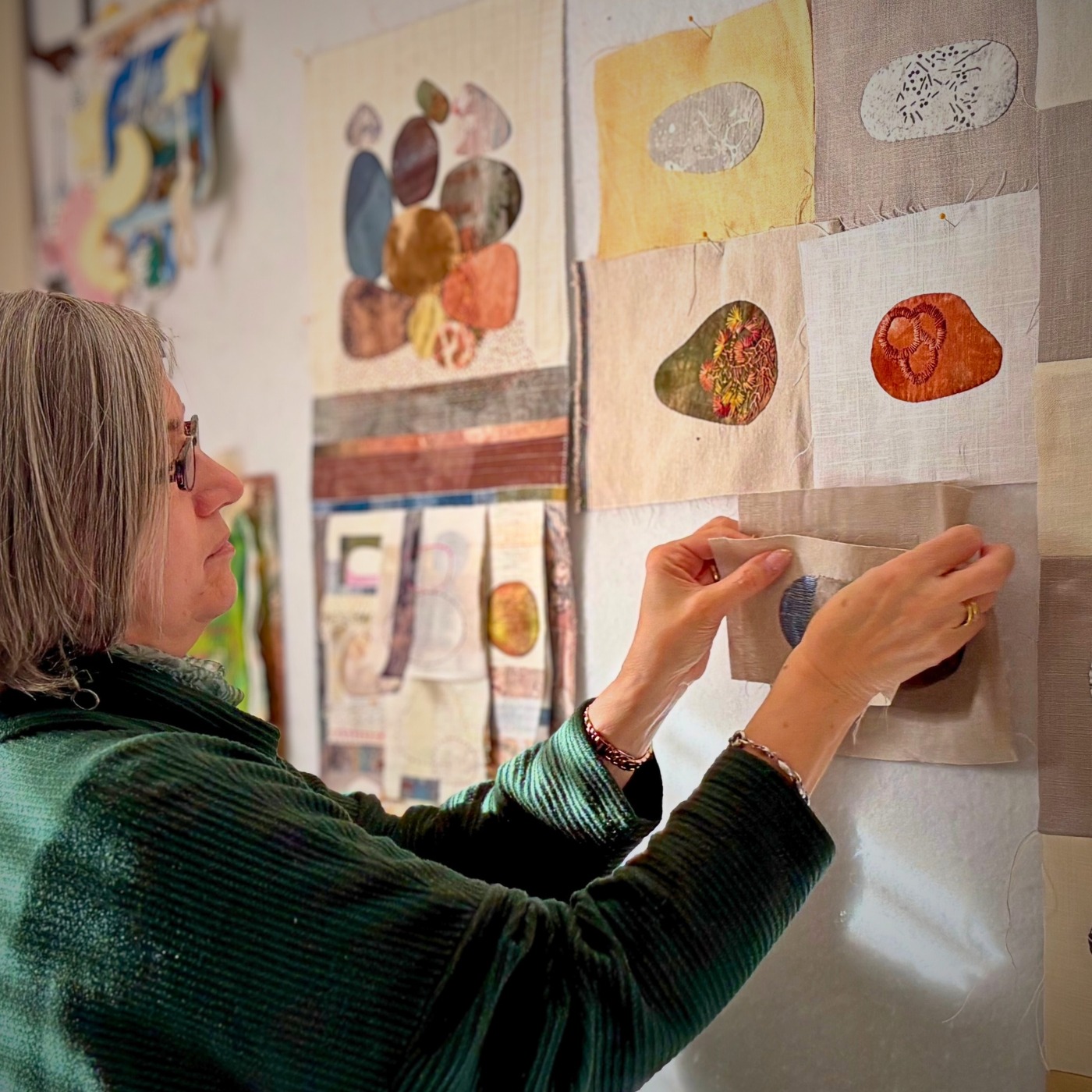
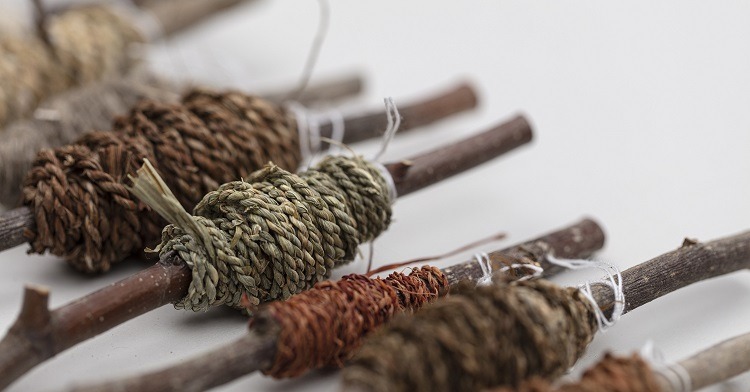
Creating my Stitch Club workshop was such a learning curve. I picked up so much about videos, timing and all the technical details of filming. However, what I loved most was sharing my love of textiles with a wide audience, and especially my fascination with rocks, pebbles and stones.
That passion started when I was very young, walking along the beach with my dad. He would joke that it was impossible to take a walk with me because I’d keep stopping to pick something up, examine it carefully and if it passed muster, tuck it into my pocket to bring home.
Thinking about those walks while filming kept me present and connected. It helped me bring that personal story – and my lifelong love of texture and detail – into the workshop.
1 comment
nanette
From painting to quilting to knitting …what’s next???