
Myra Stimson’s work is the result of more than five decades of making, reflecting and responding to the world around her.
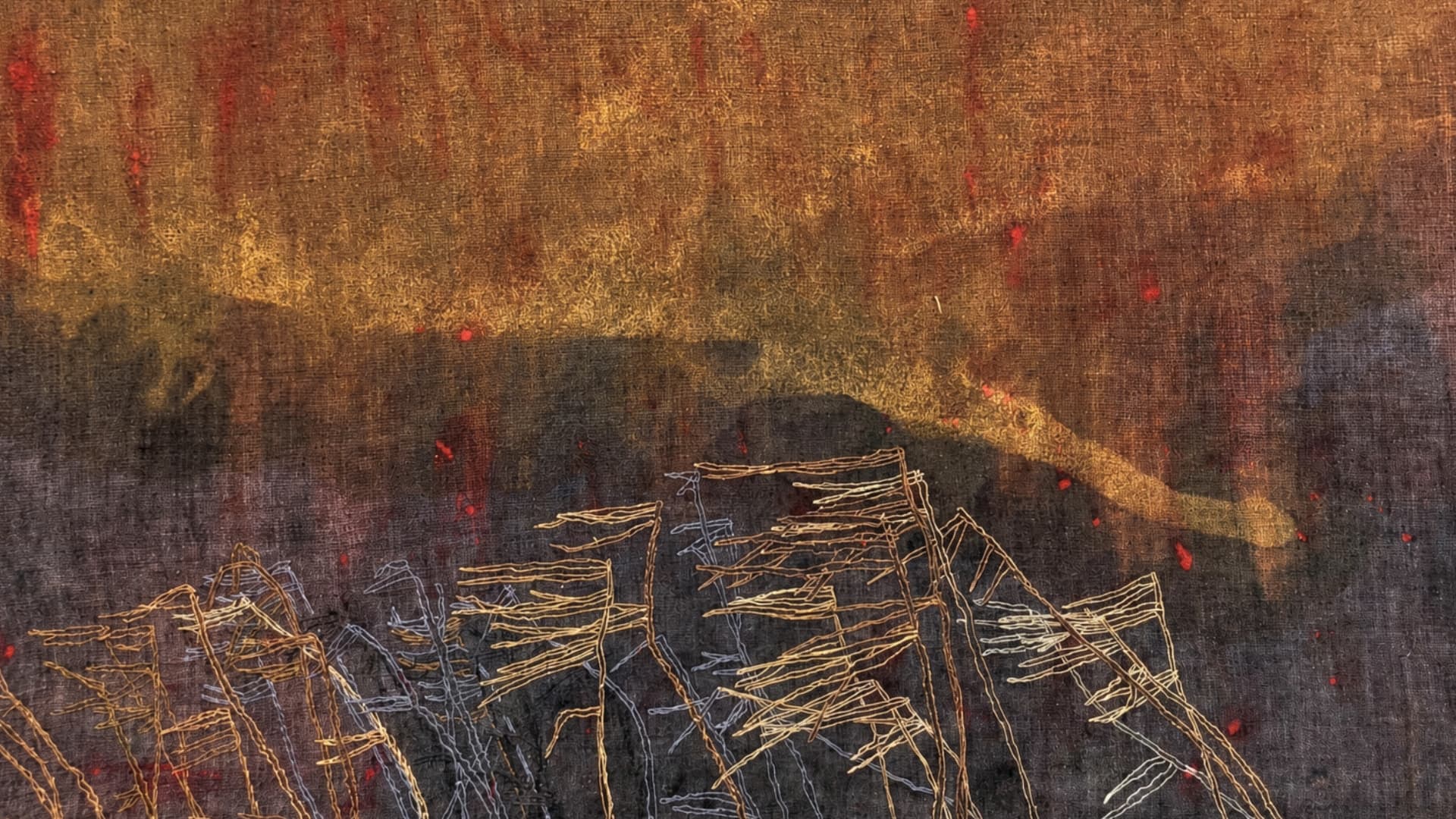
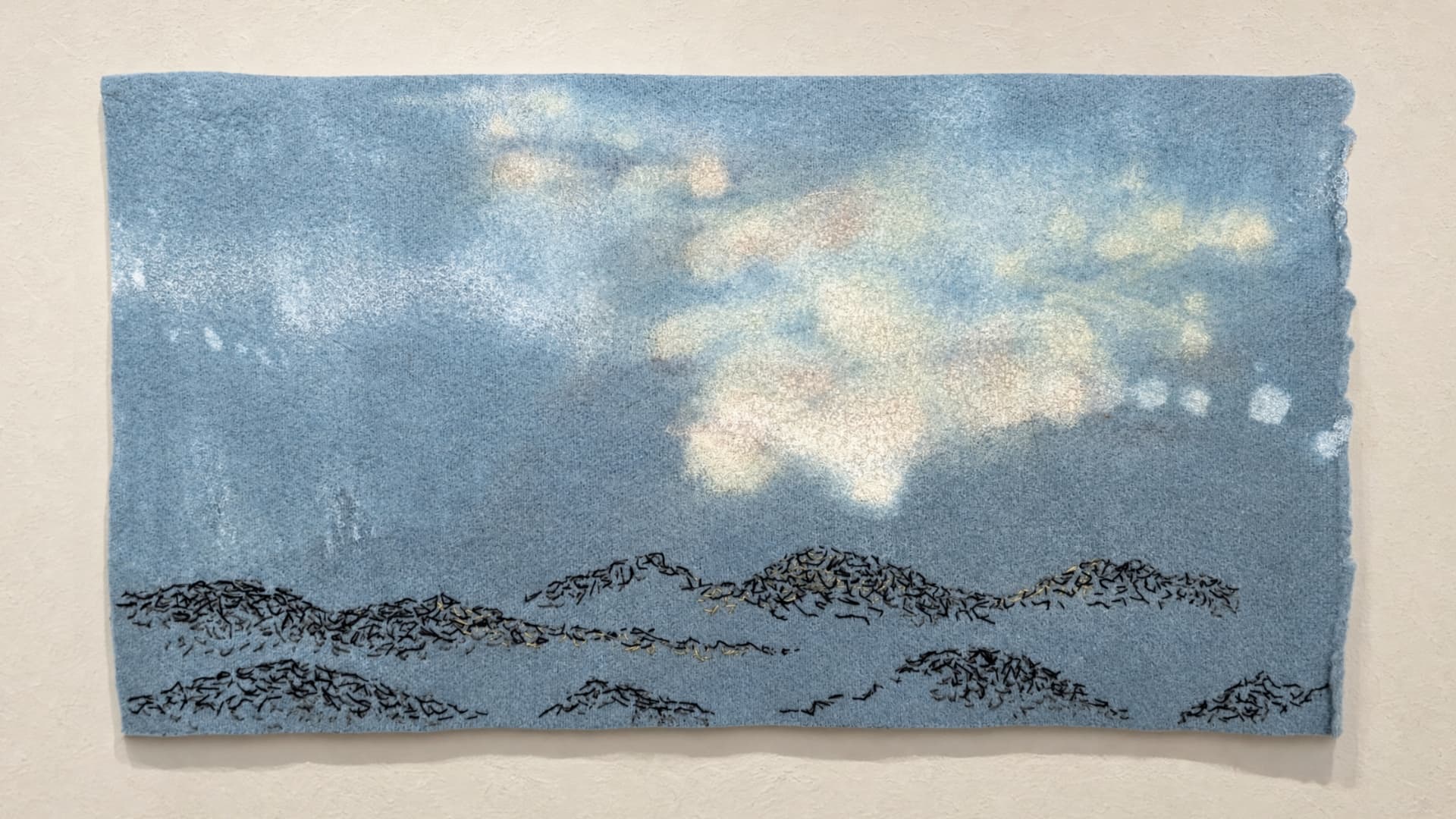
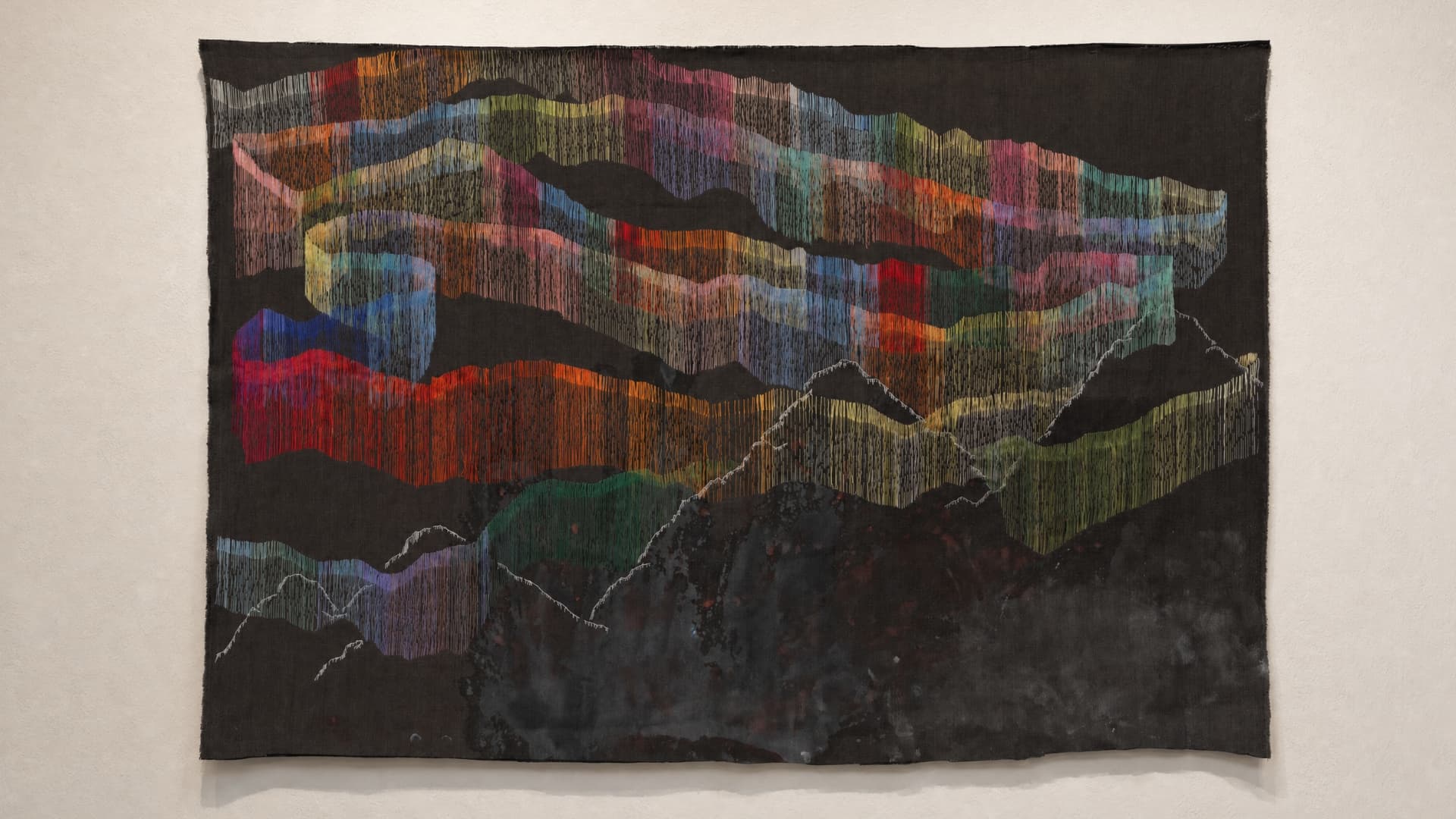
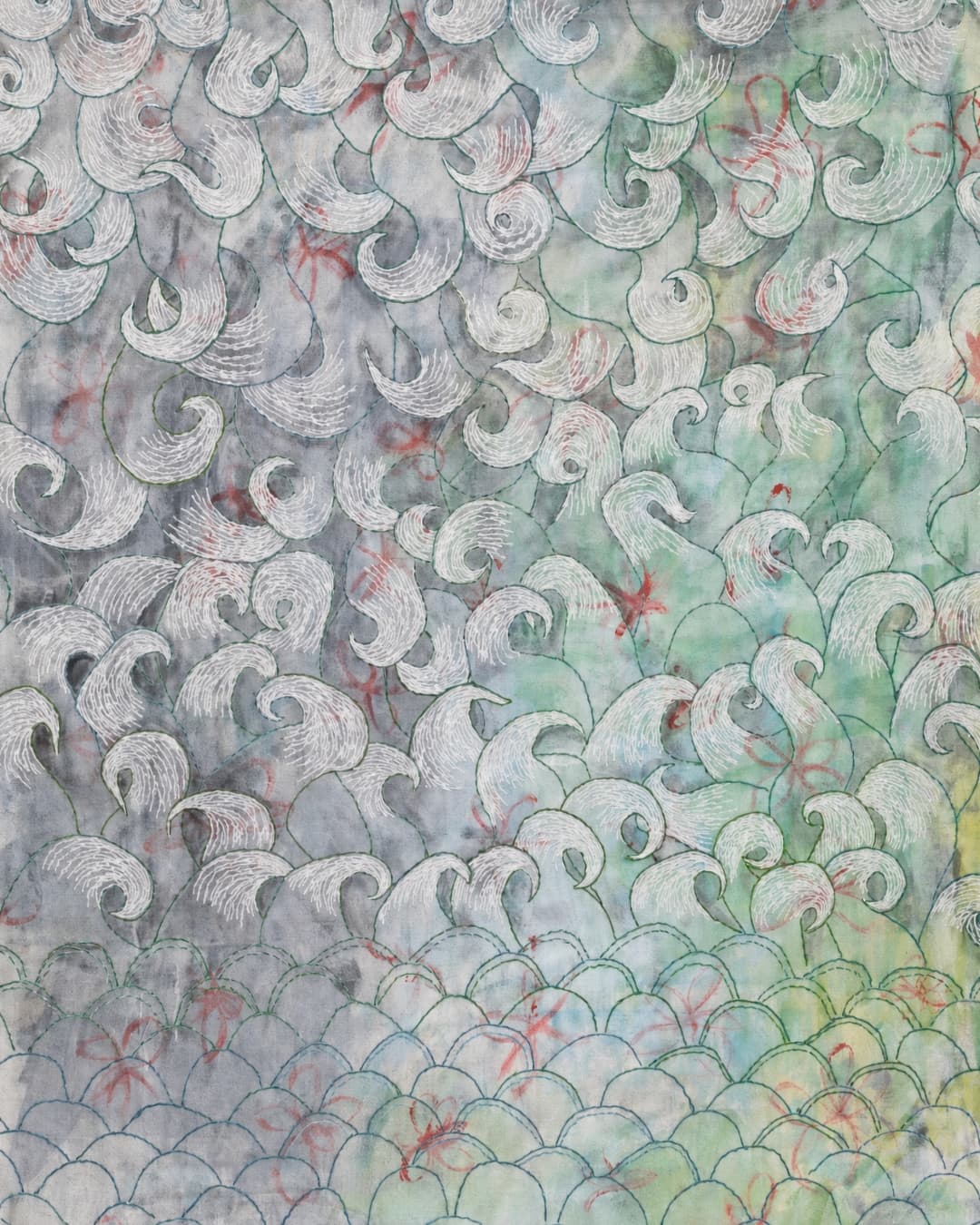
Working with paint and hand stitching, she creates evocative images of the natural world that serve as metaphors for her ongoing exploration of the human experience.
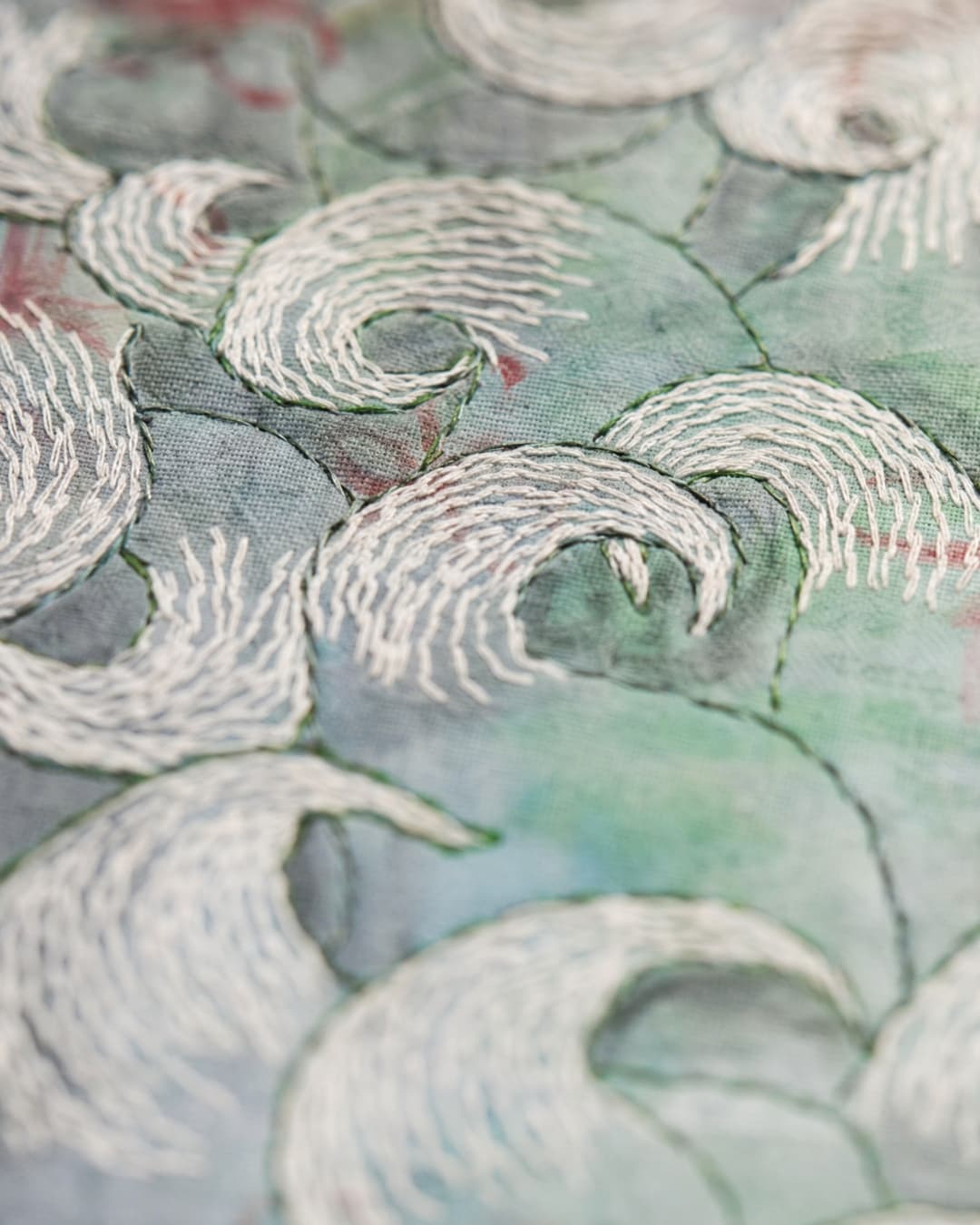
She often describes stitching as drawing in slow motion. The careful, repetitive process gives space for ideas, memories and emotions to surface and take shape in cloth. For Myra, making art is also a way of thinking.
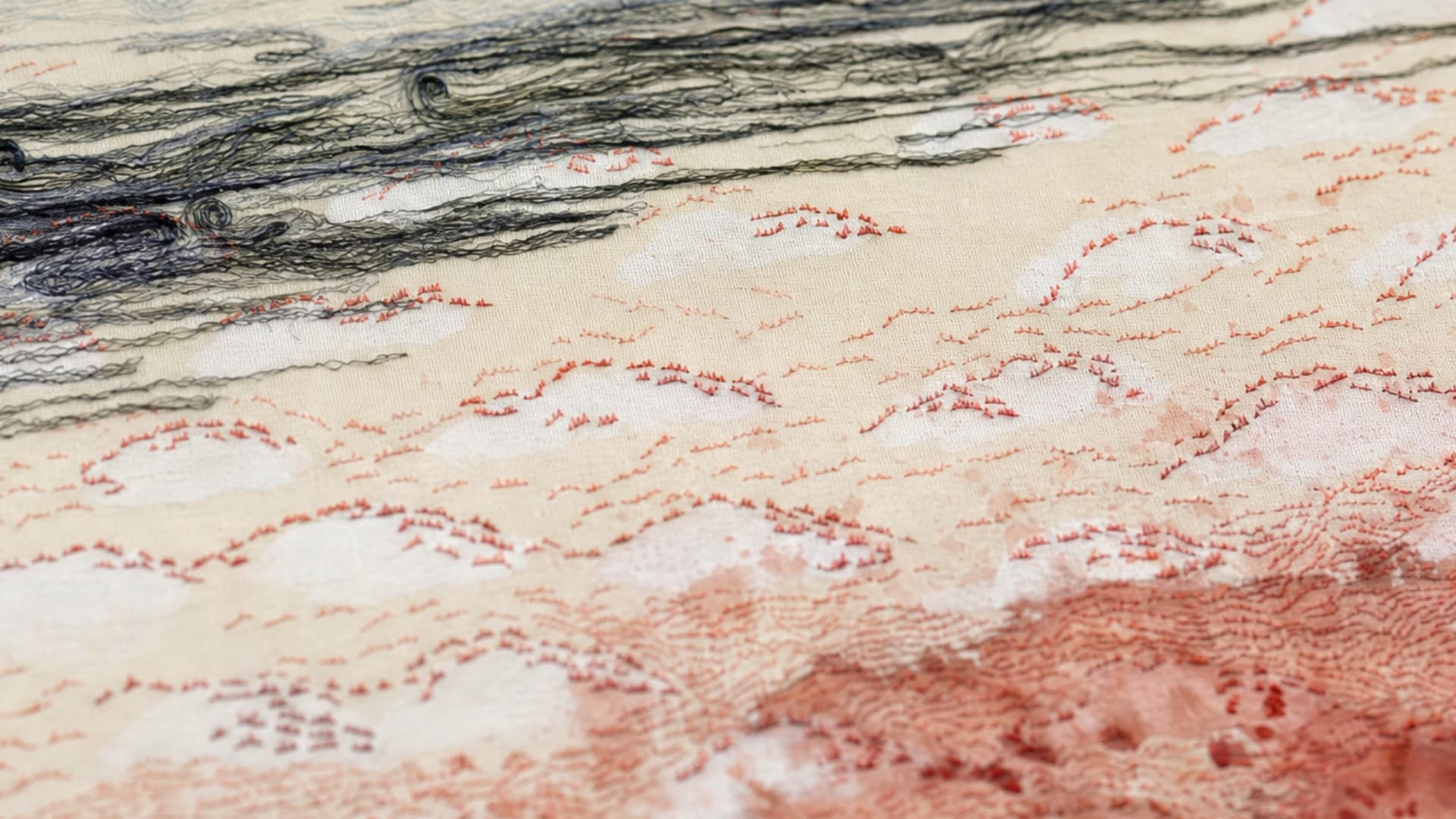
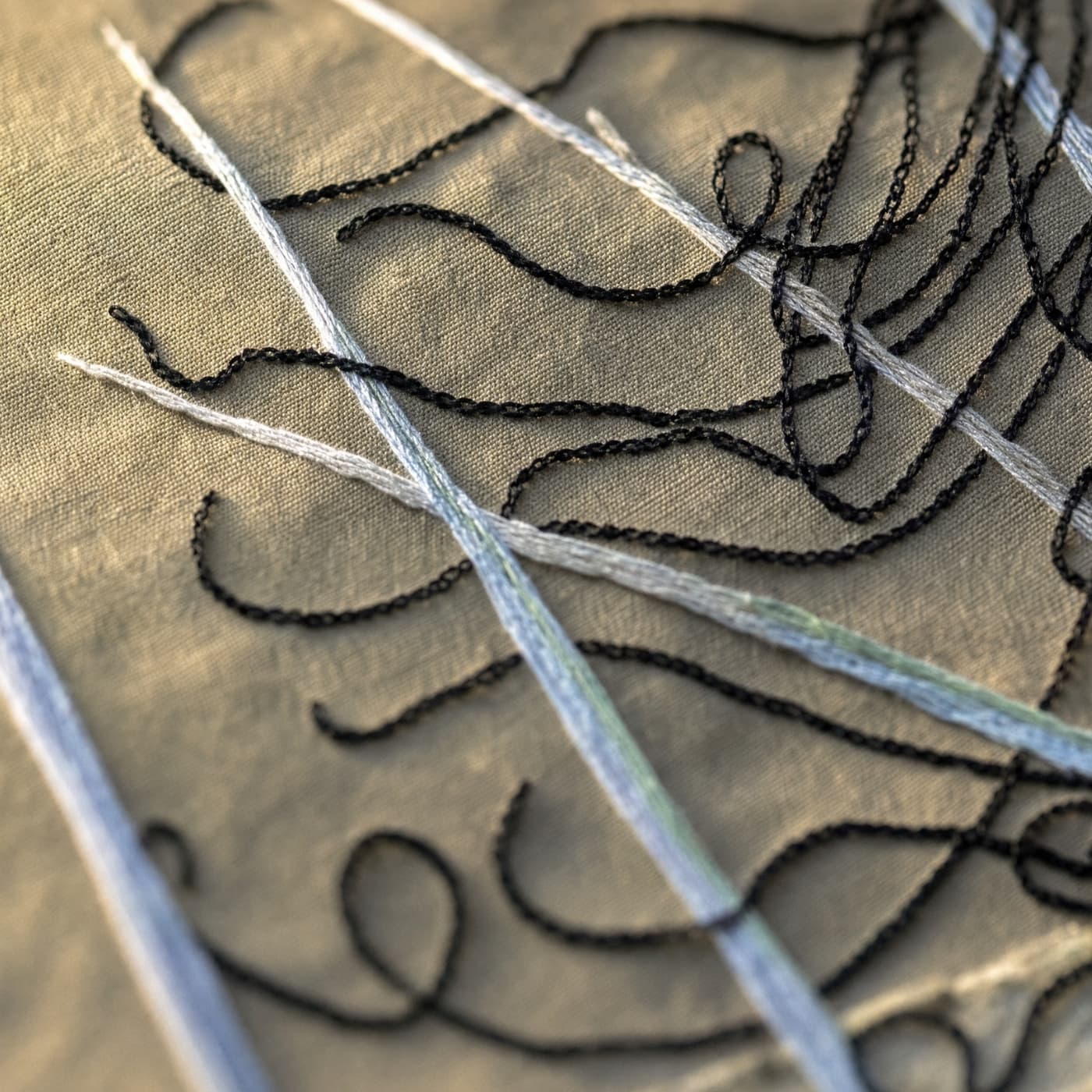
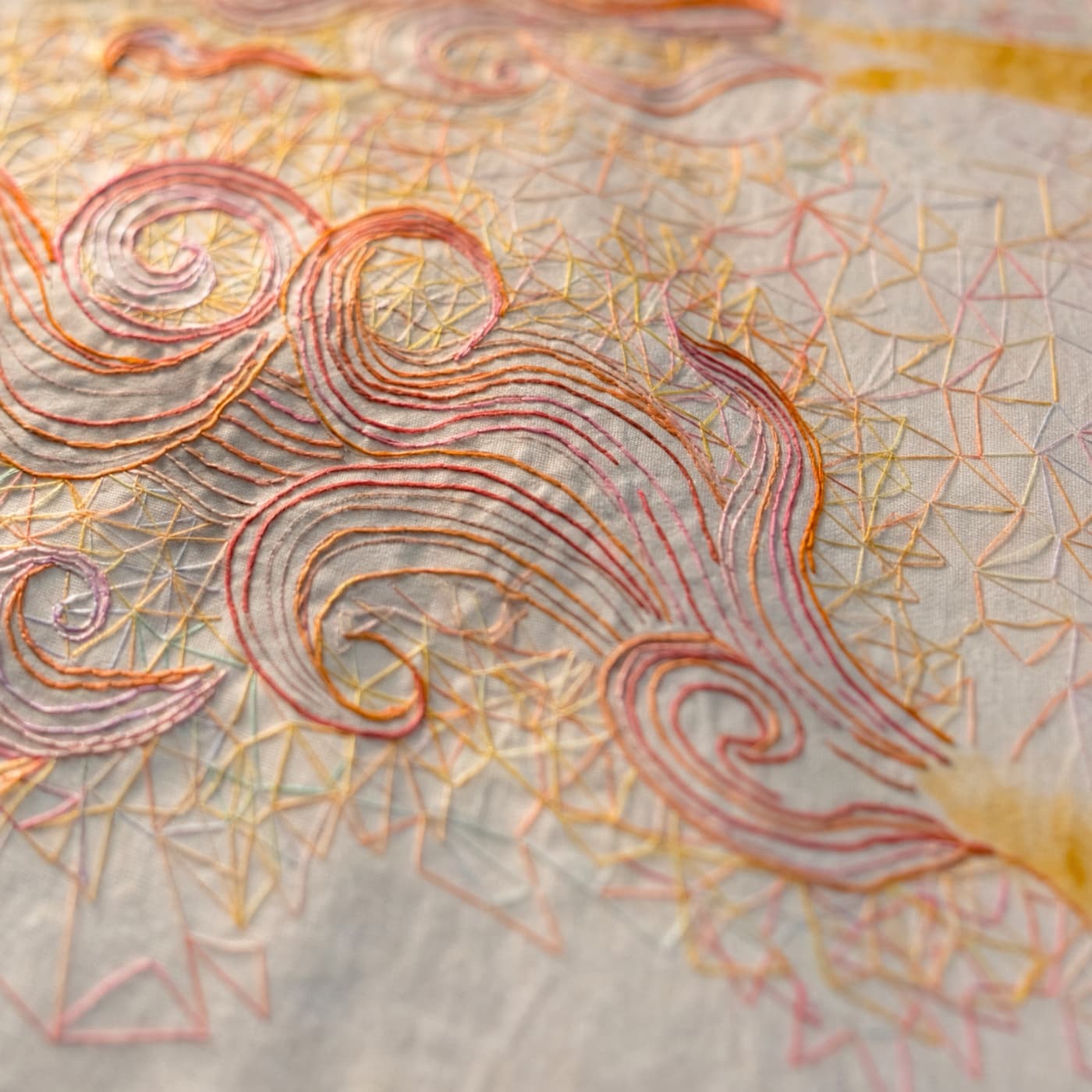
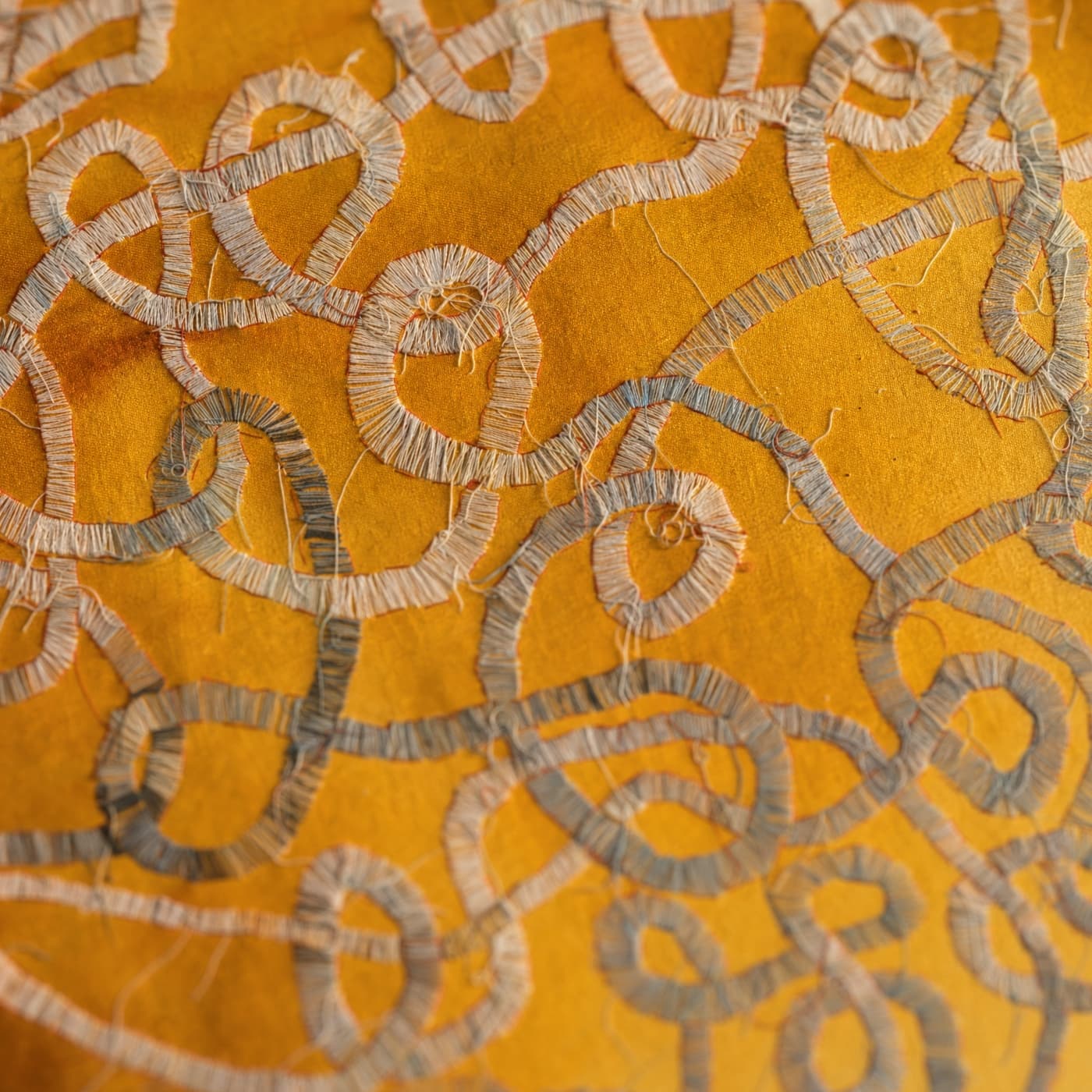
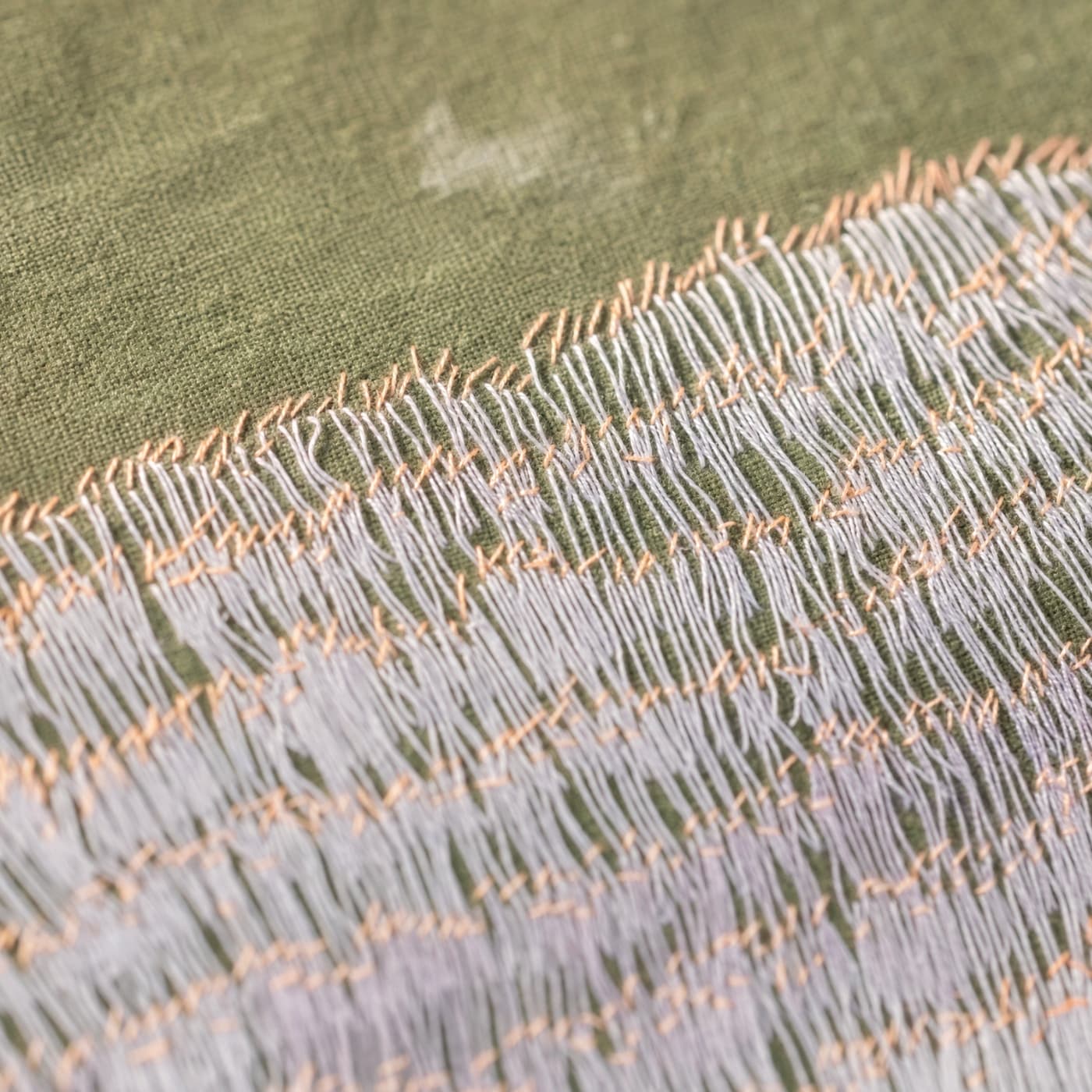
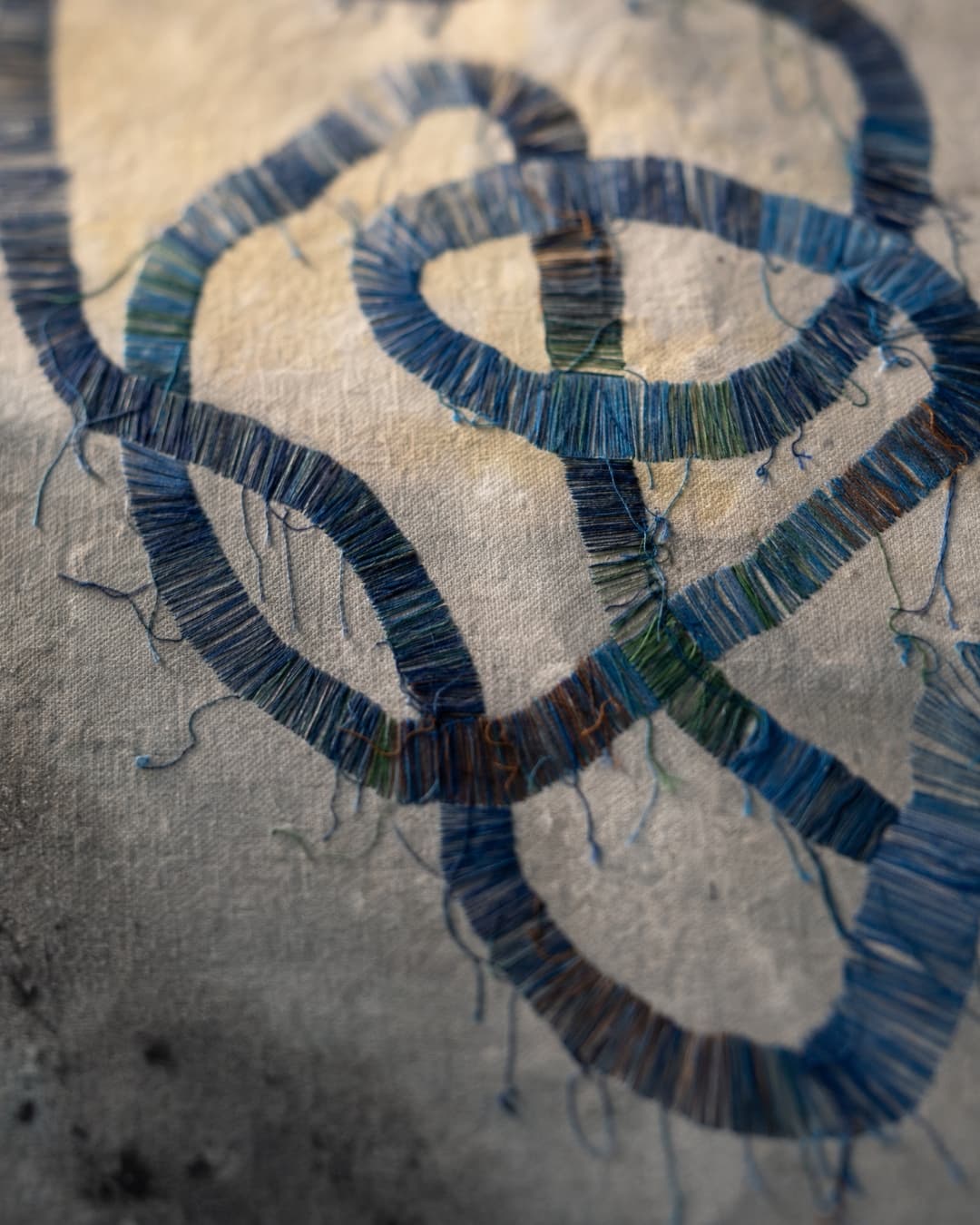
As her life changes, so too does her work. Every experience becomes part of her creative process. Myra’s early interest in sculpture can still be seen in the richly layered surfaces of her pieces, where dense networks of thread create intricate marks that reward close attention.
At its heart, Myra’s practice is driven by observation, reflection and a deep curiosity about the world and our place within it.
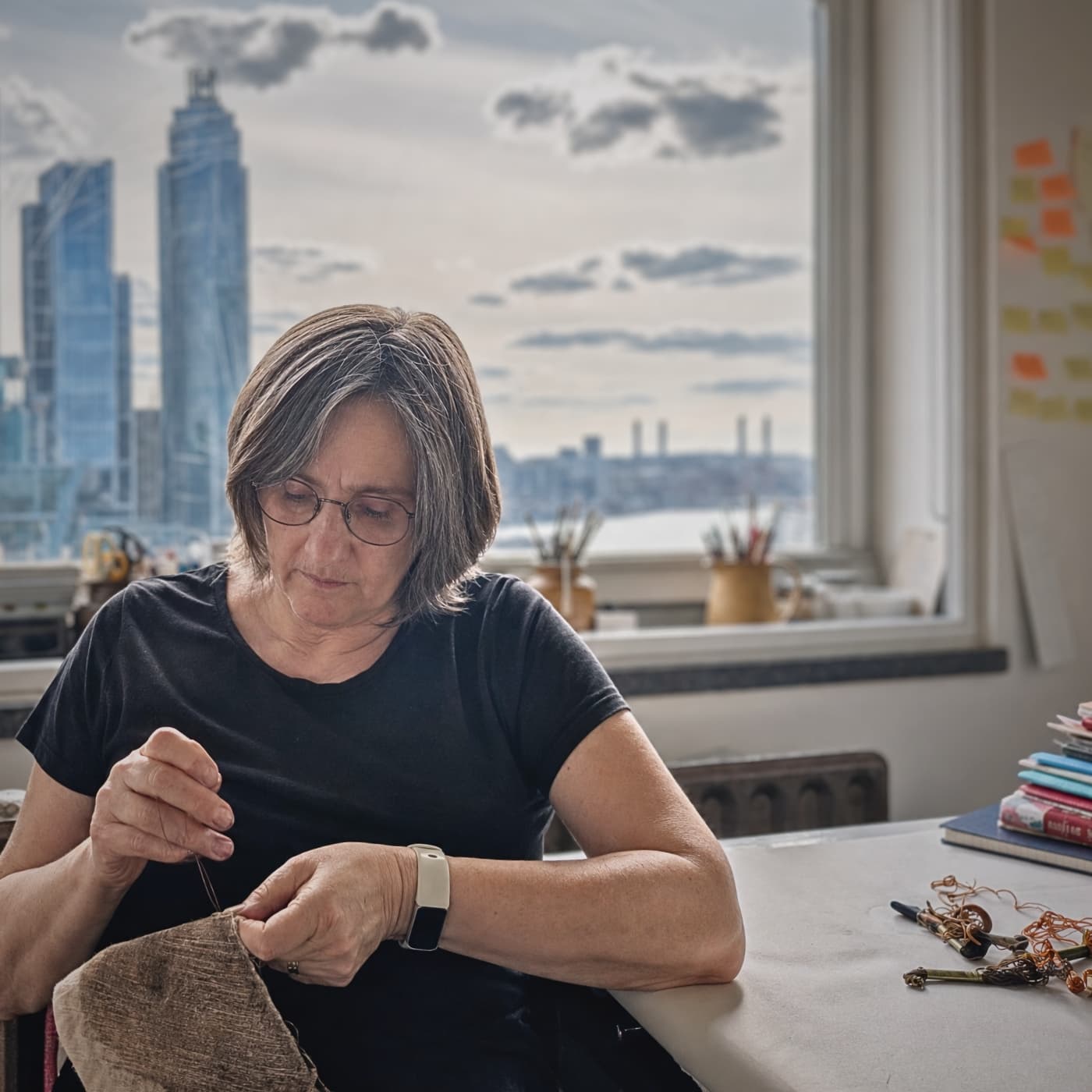
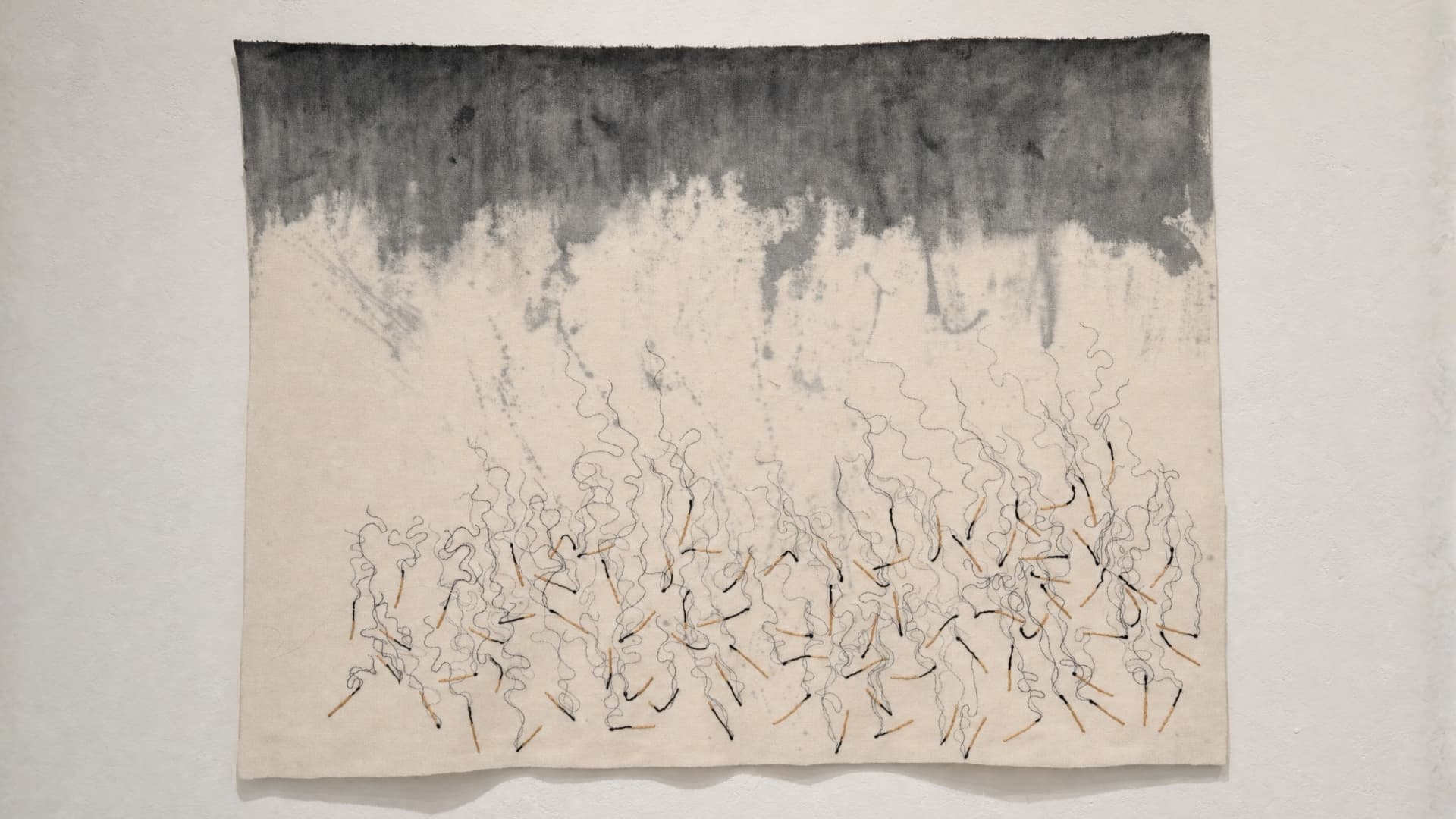
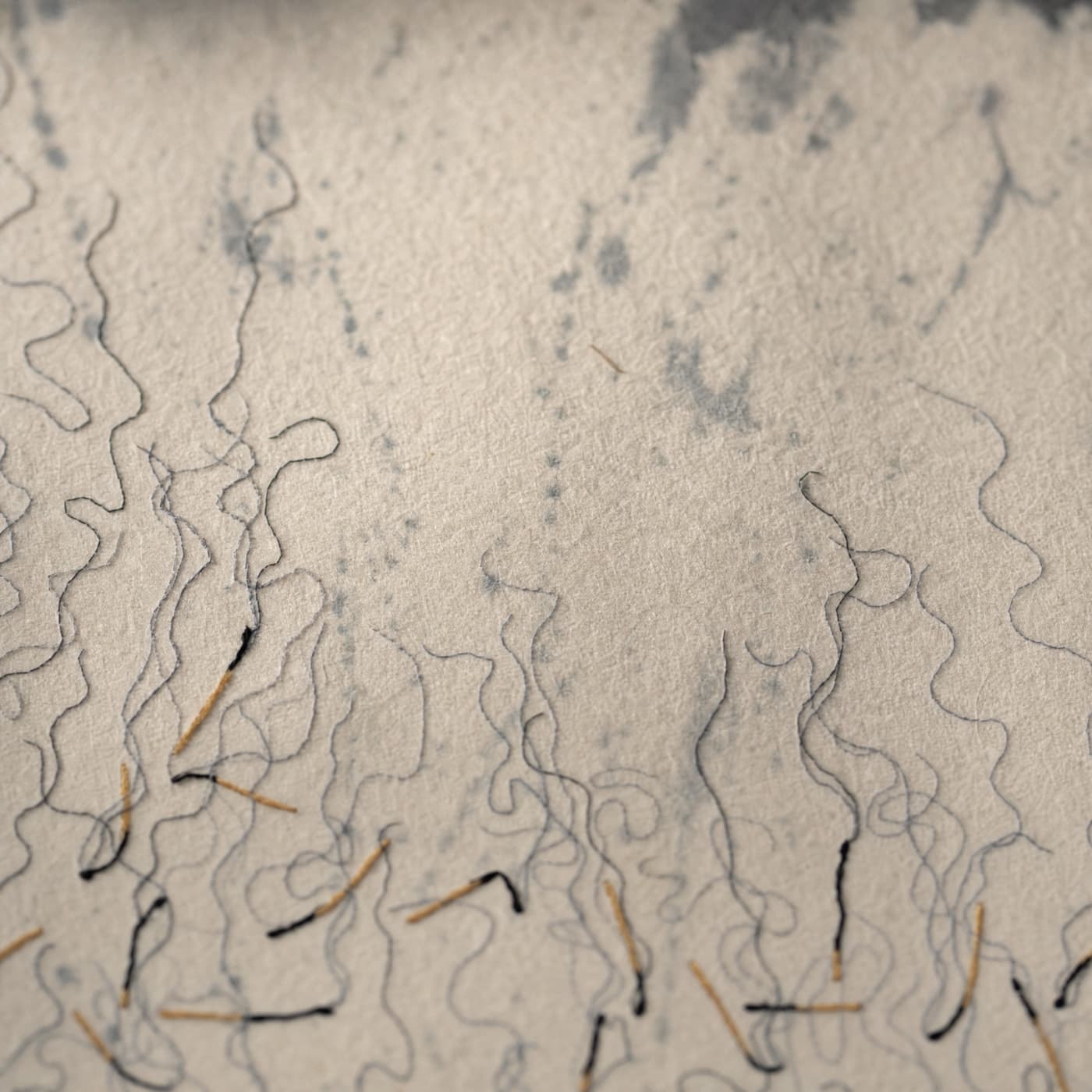
Myra Stimson My work is metaphorical, mostly using interpretations of the natural world to speak for me. I also make images of basic objects such as matches, knots, fire, smoke.
I am drawn to simple processes and the technologically primitive. The images I make are straightforward and direct. The artworks are quiet, introspective, enigmatic.
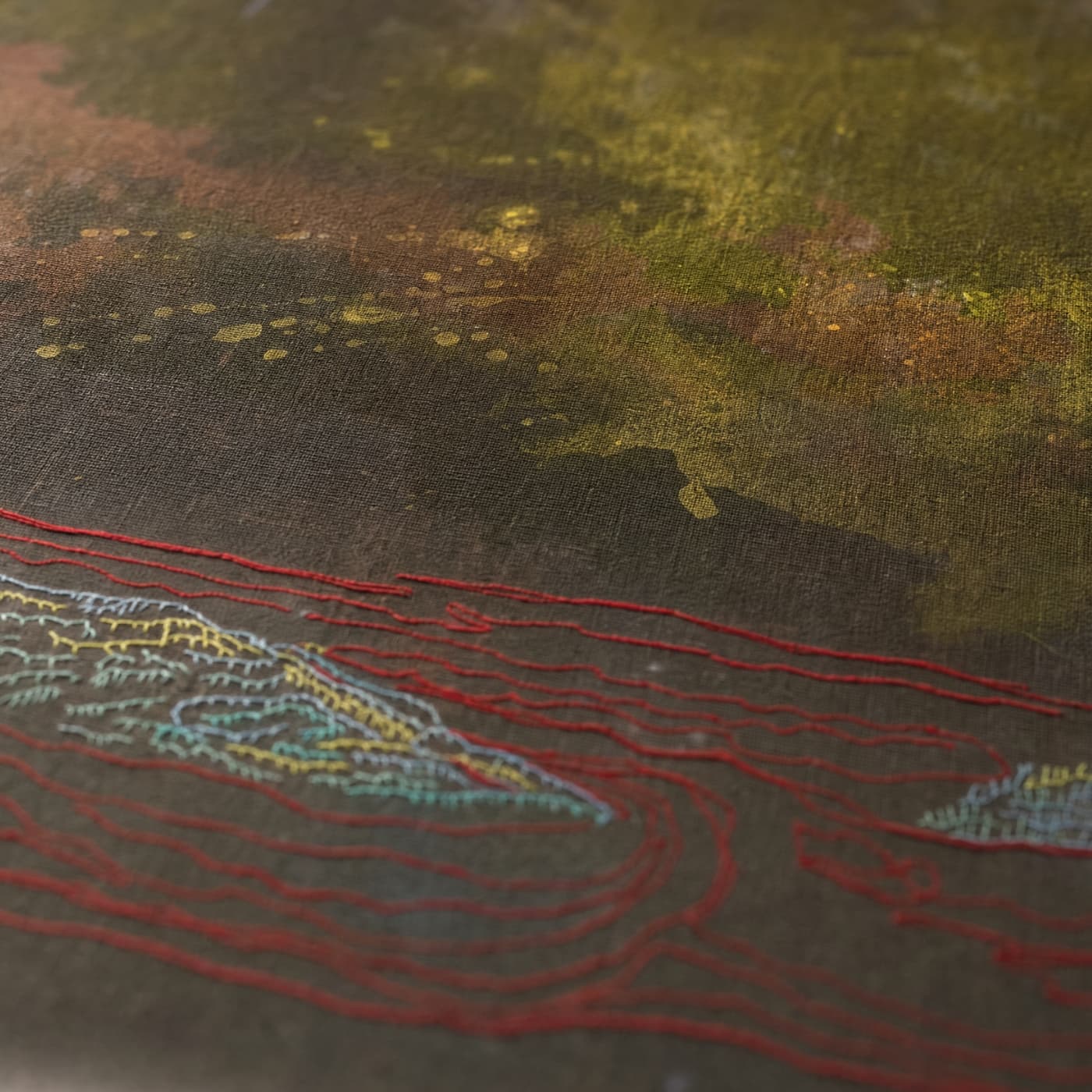
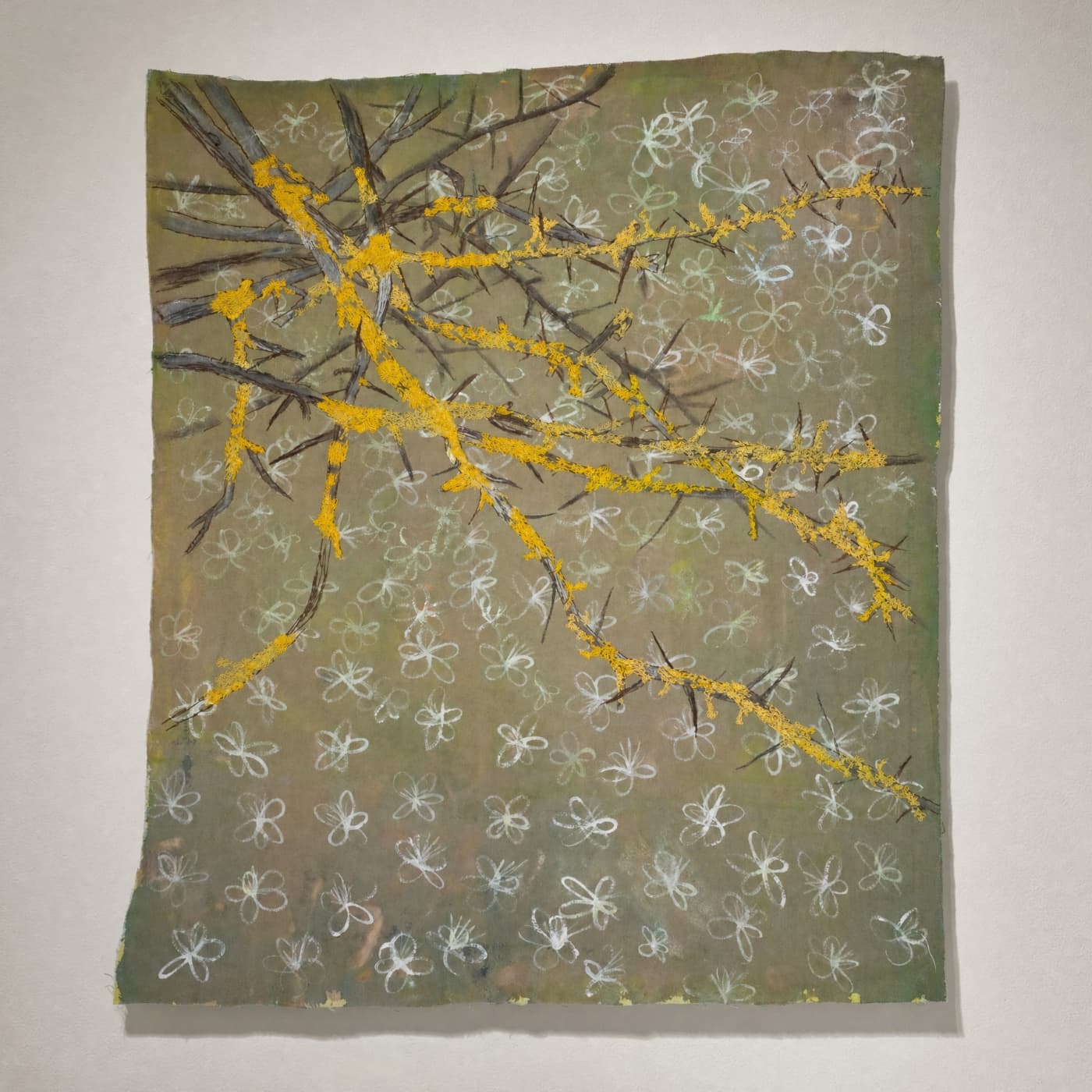
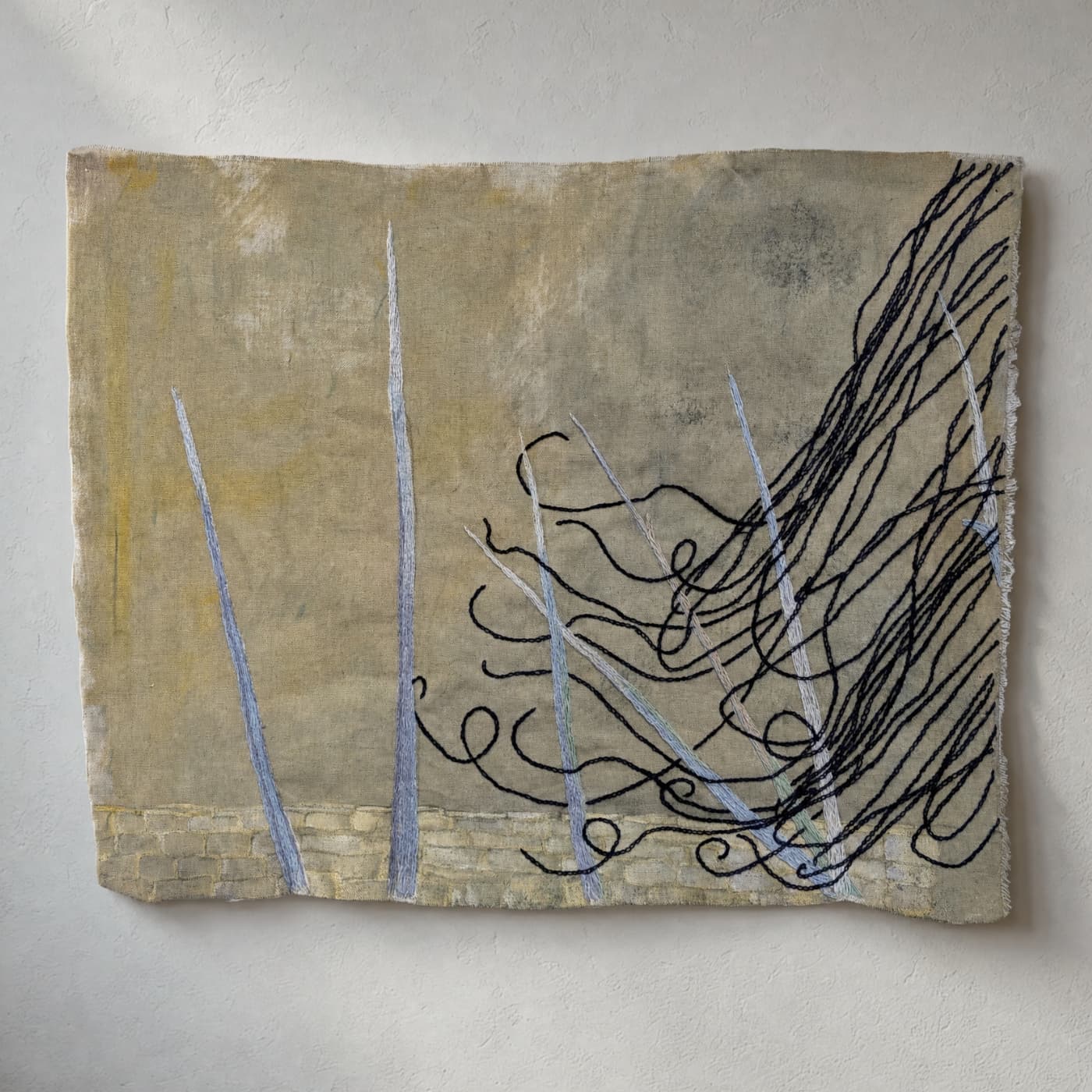
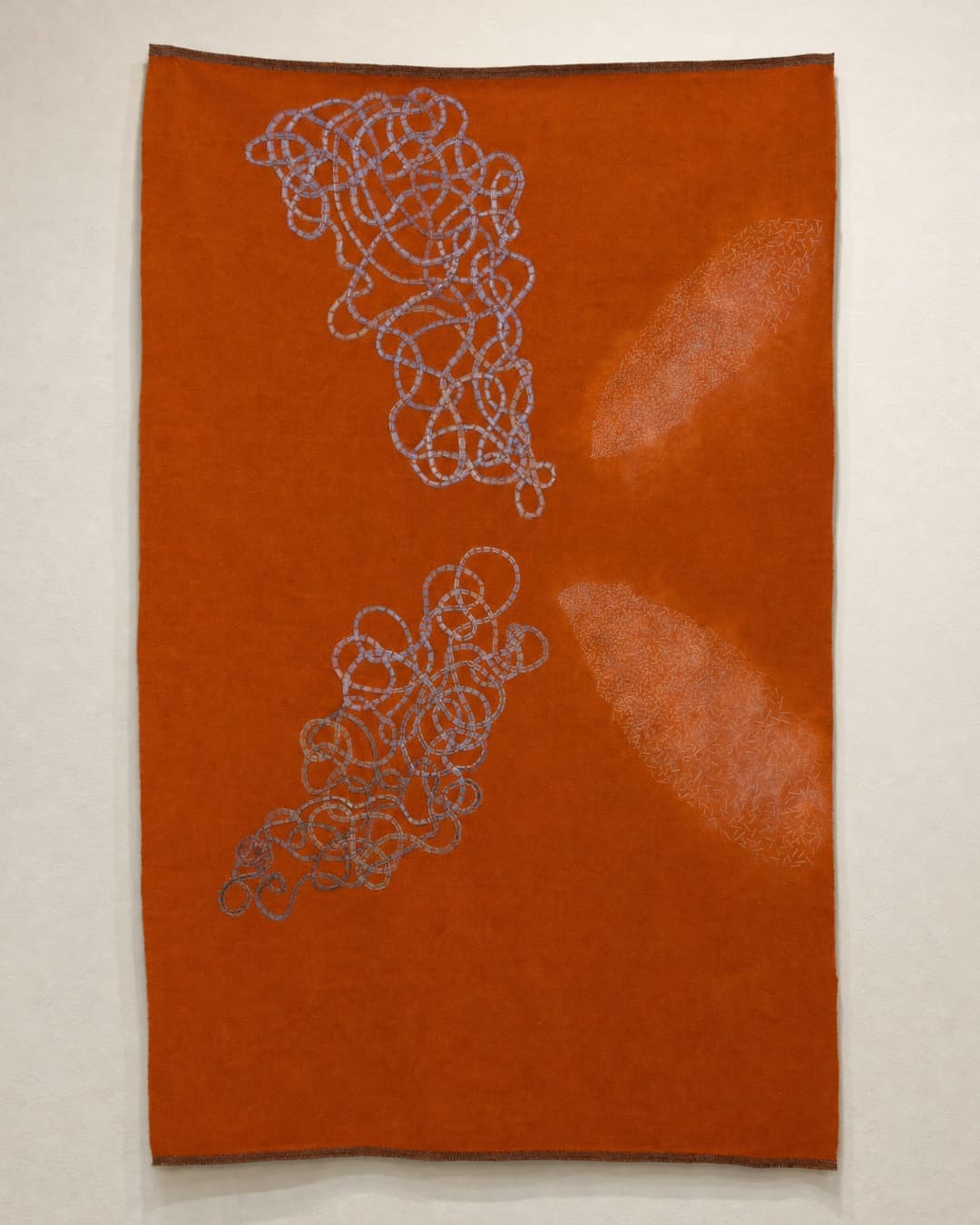
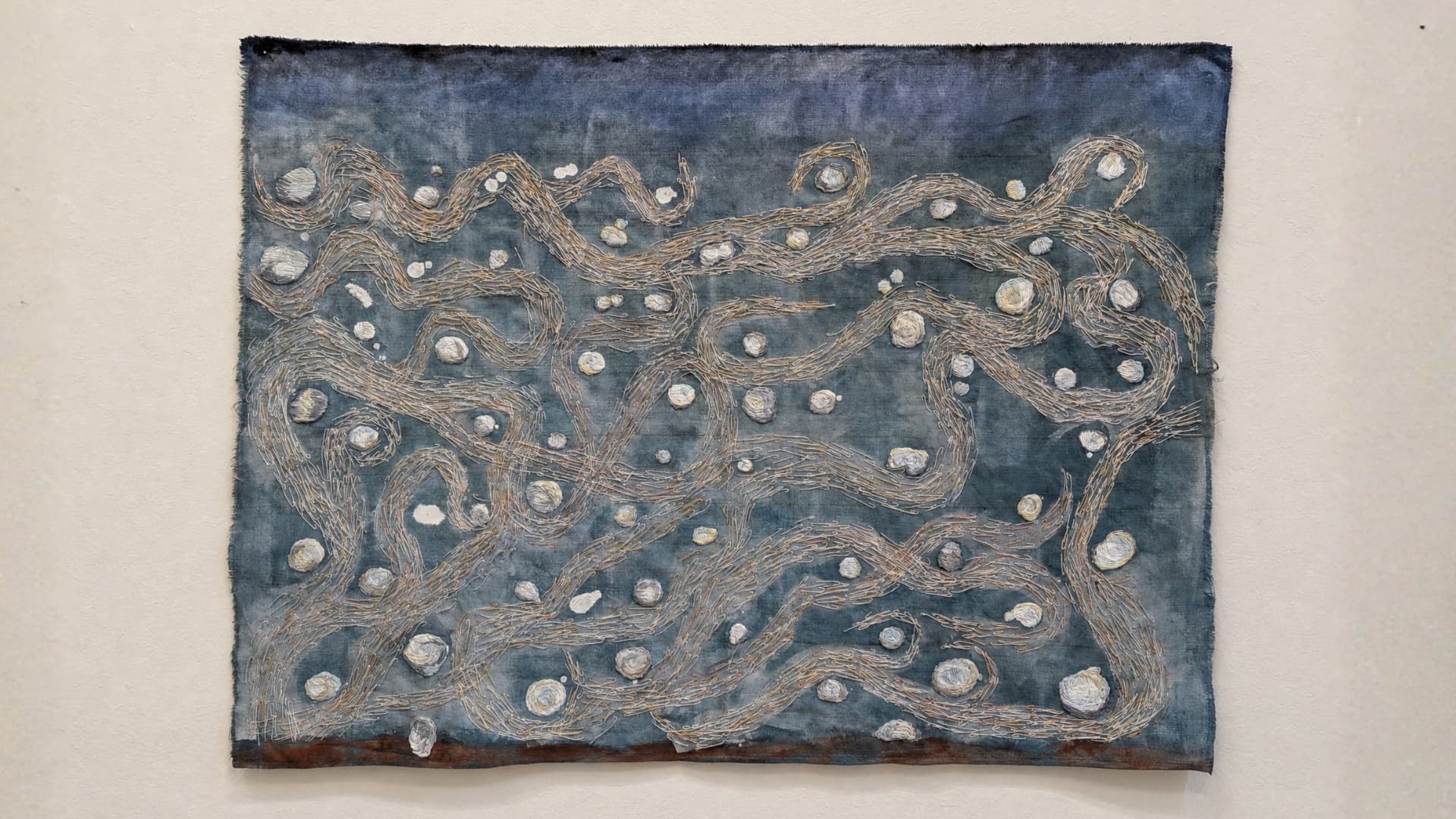
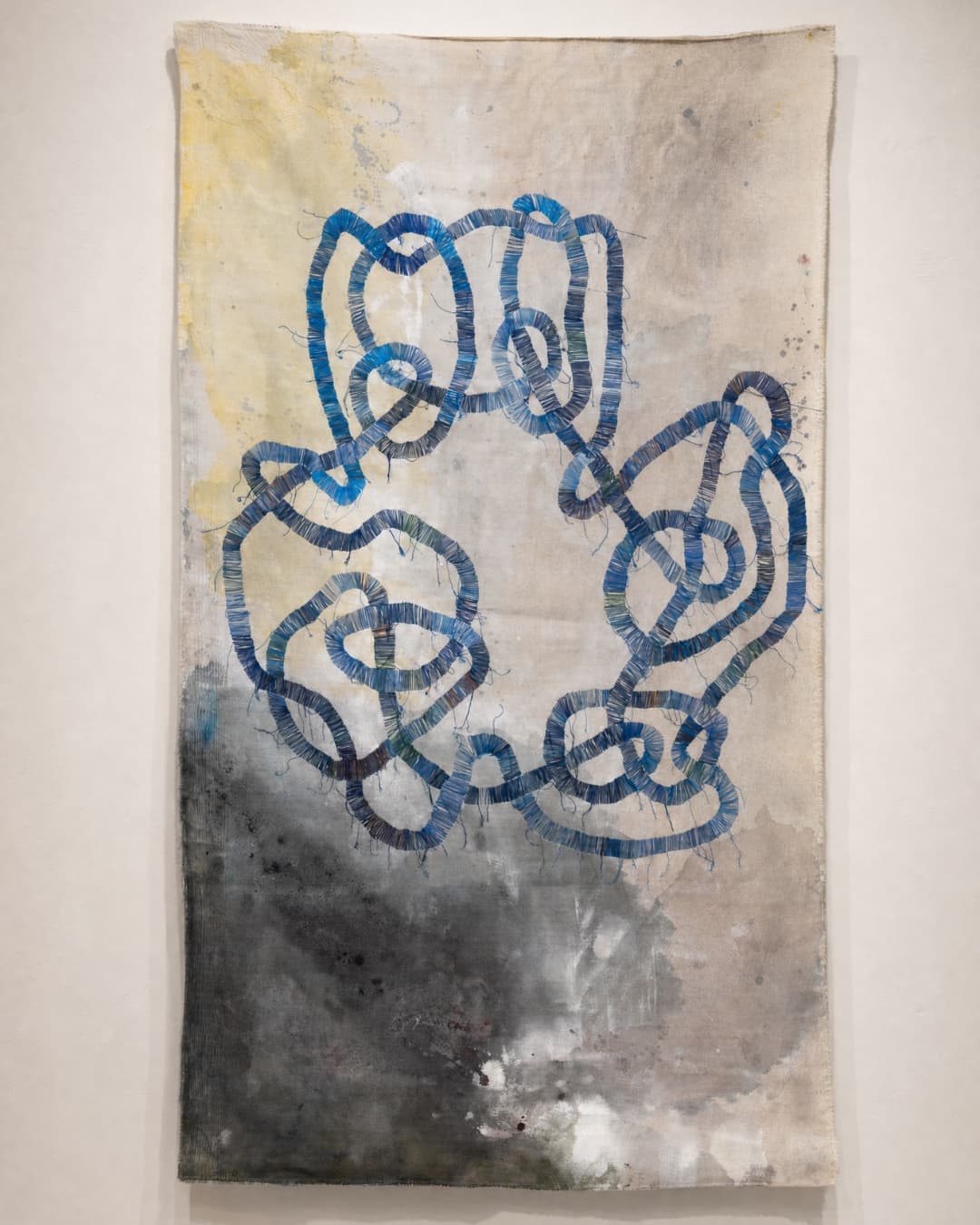
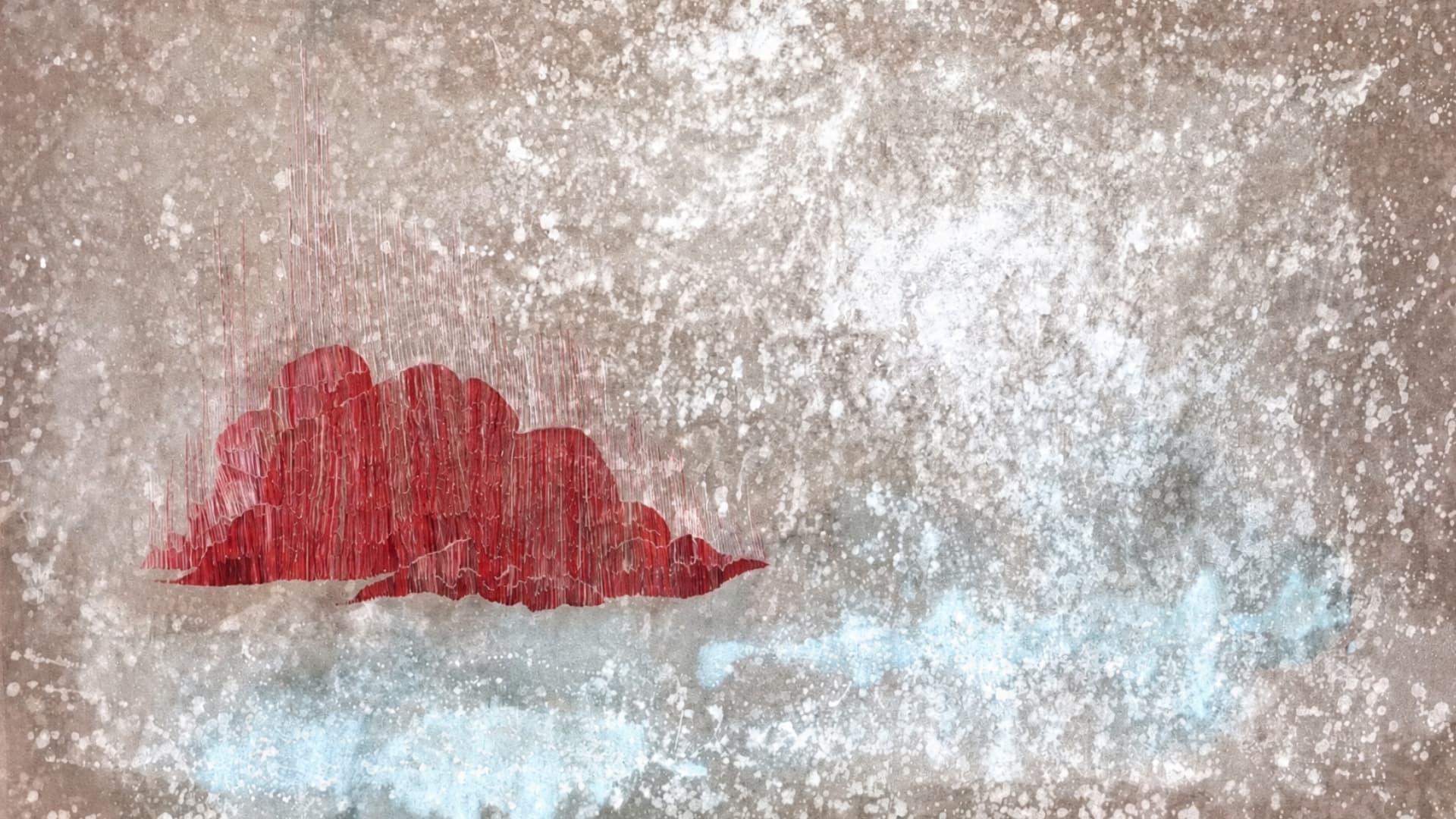
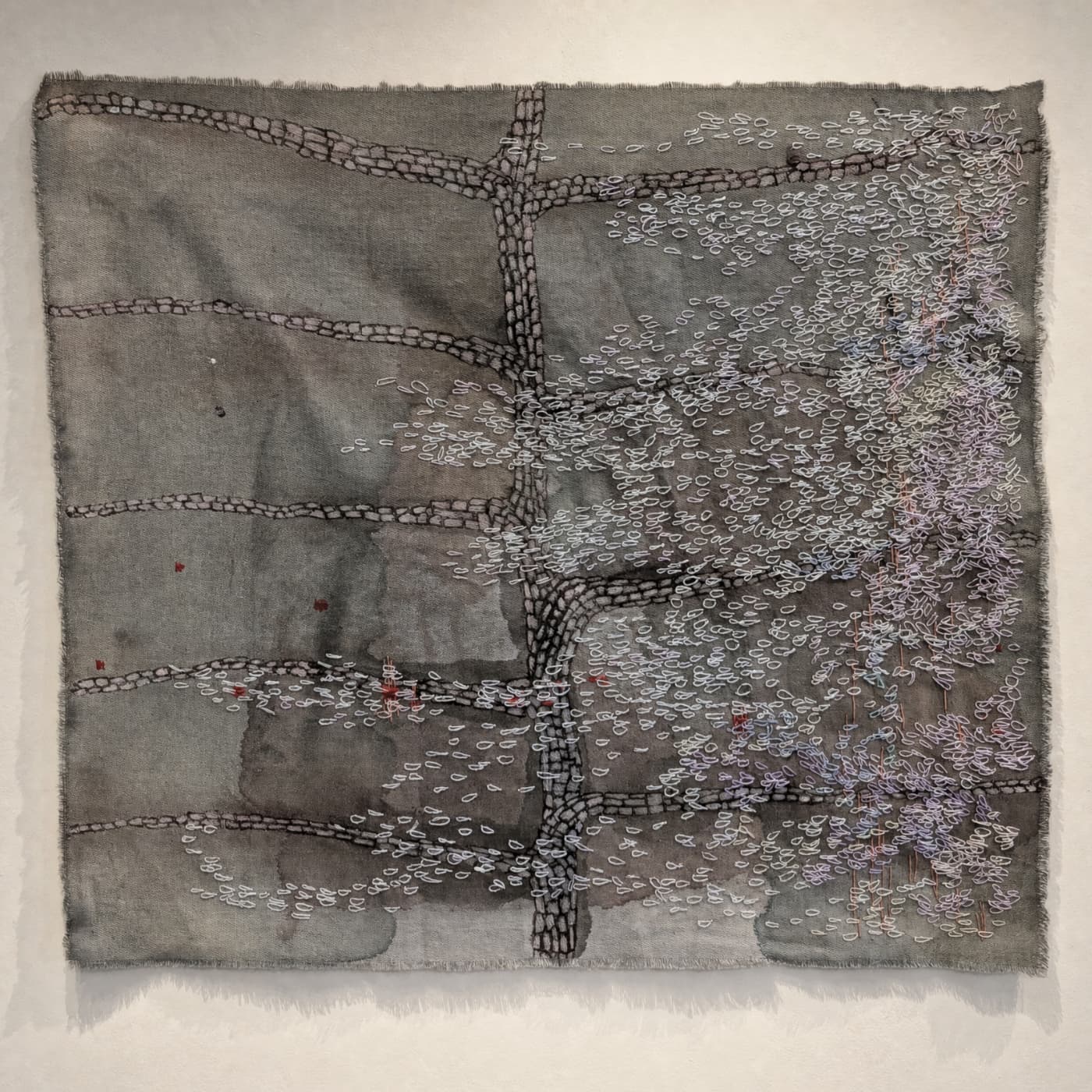
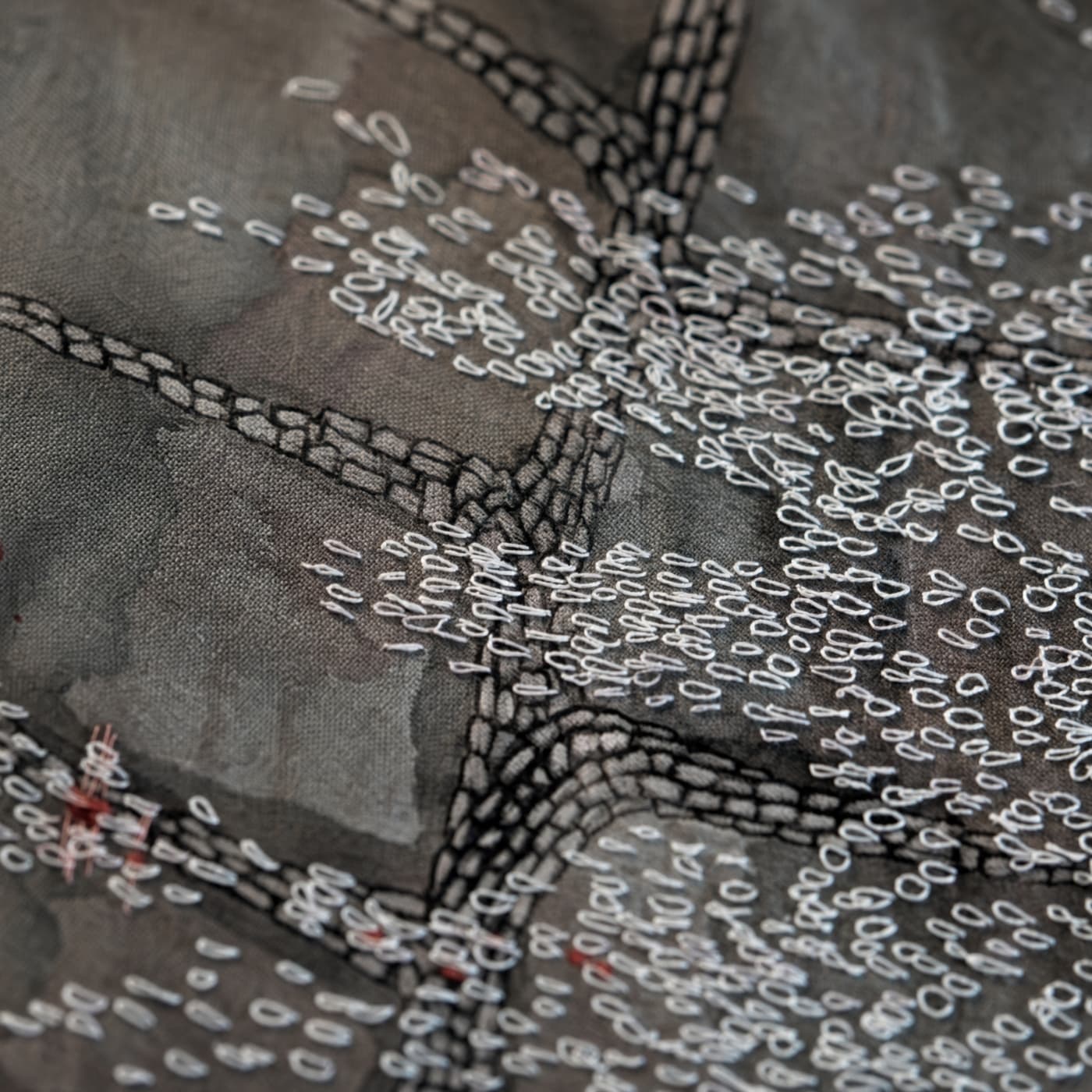
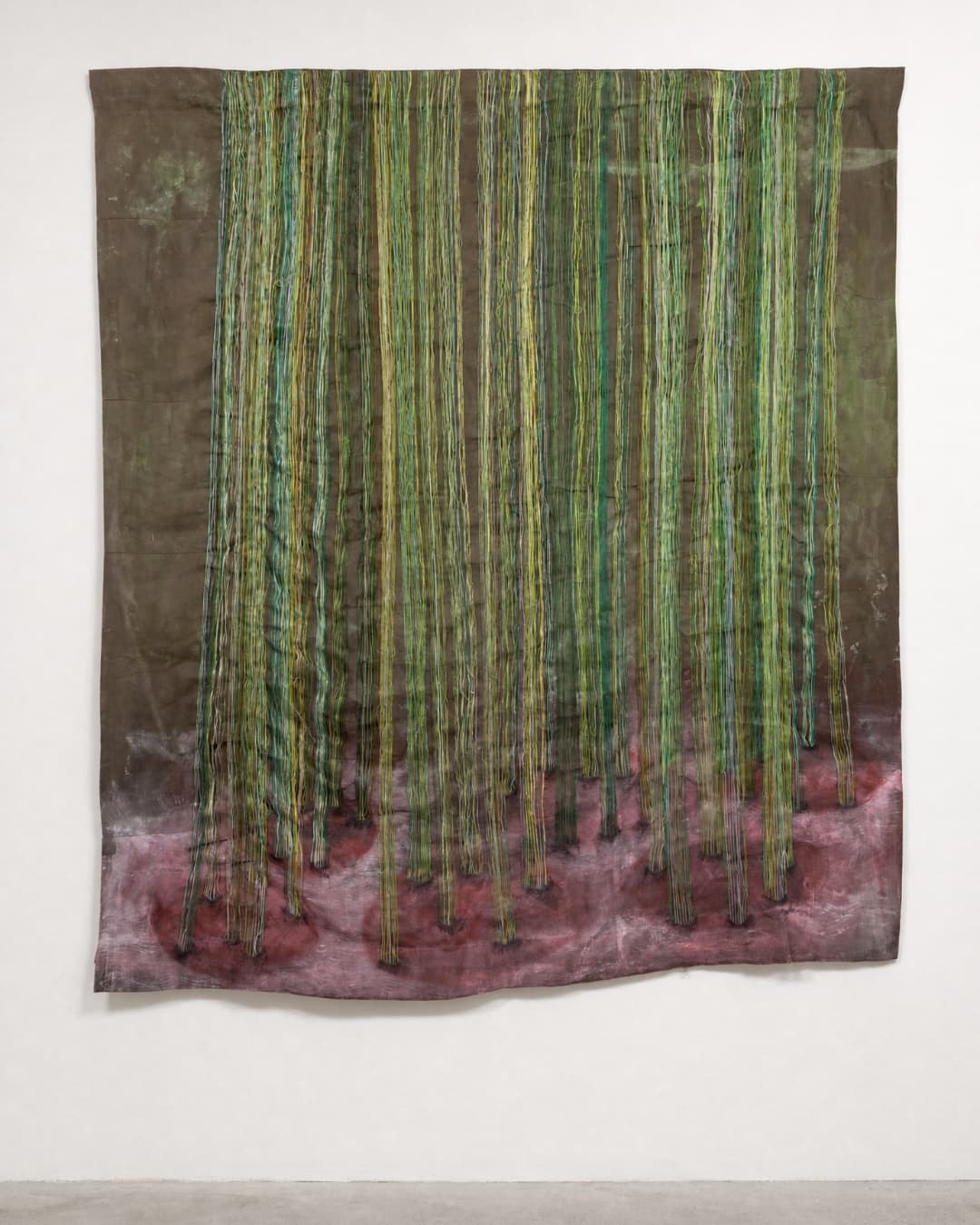
I use paint and hand stitching – balancing these two opposing techniques to make a single language. Images come to me and I work them directly into unstretched cloth. I use paint to stain and mark the cloth; dripping, pouring and overlapping washes and marks to create space.
Then, I pick up the cloth and a needle and start. The cloth is scrunched in my hands, so I don’t really see the whole image as I’m working. Works range in scale from something the size of a hand to several metres.
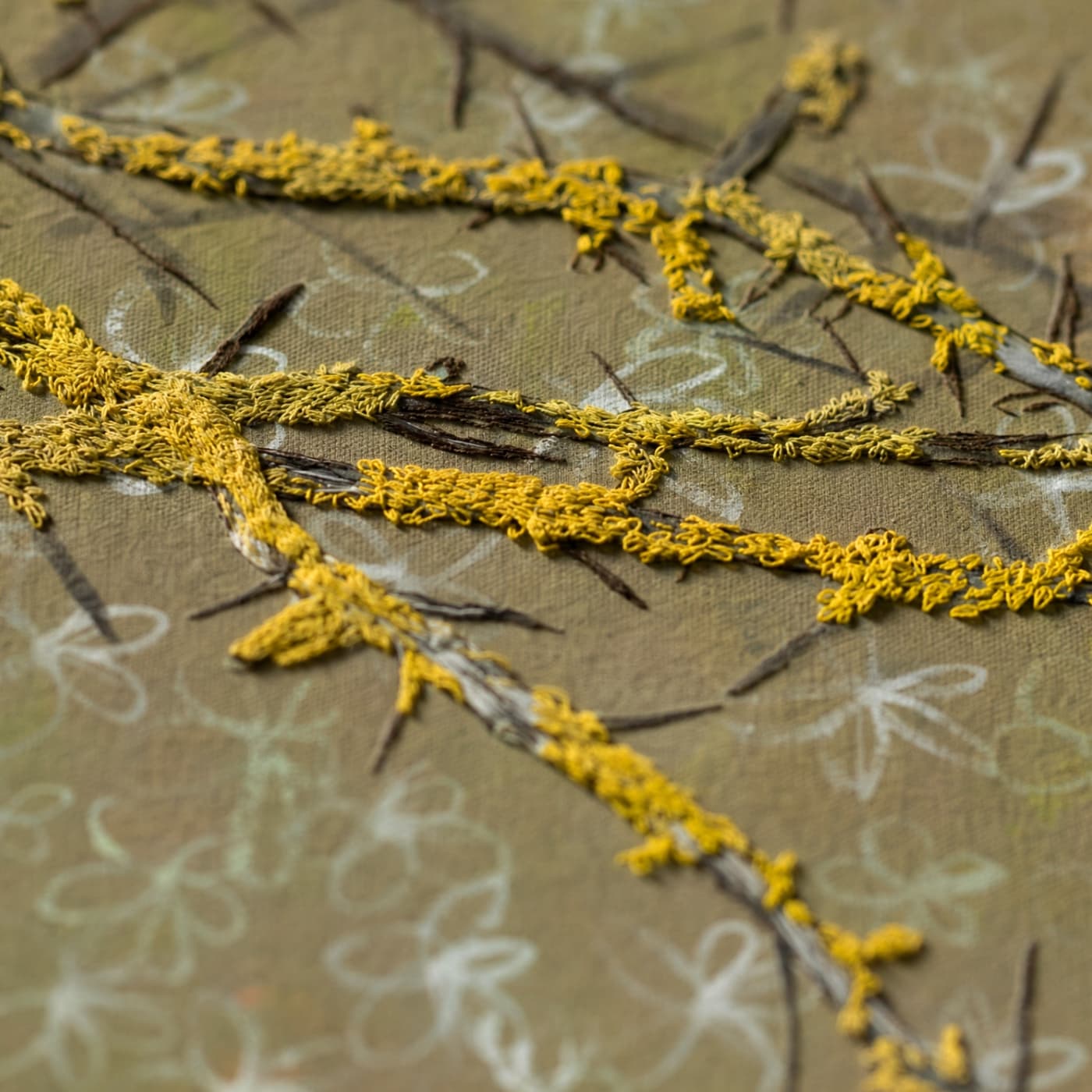
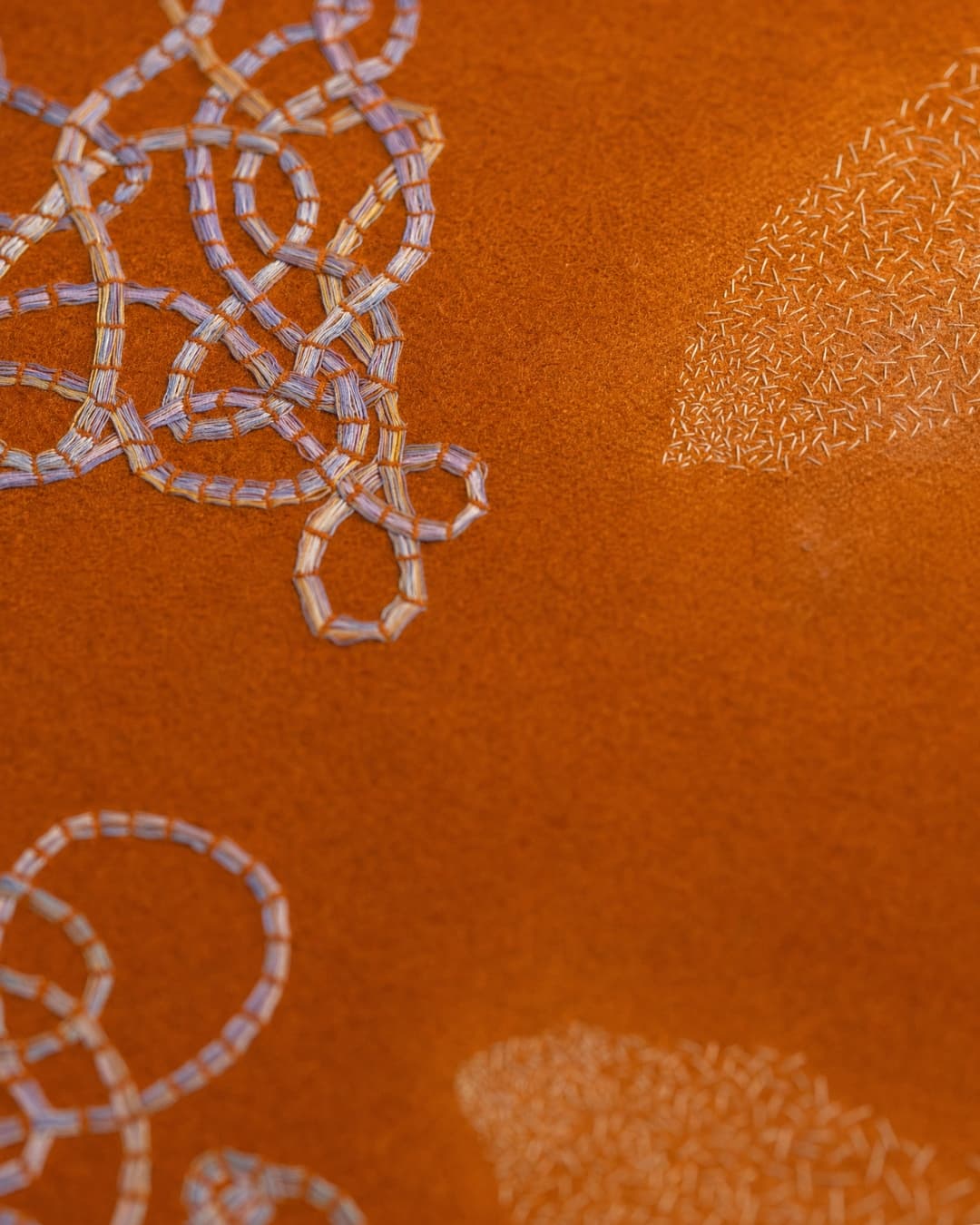
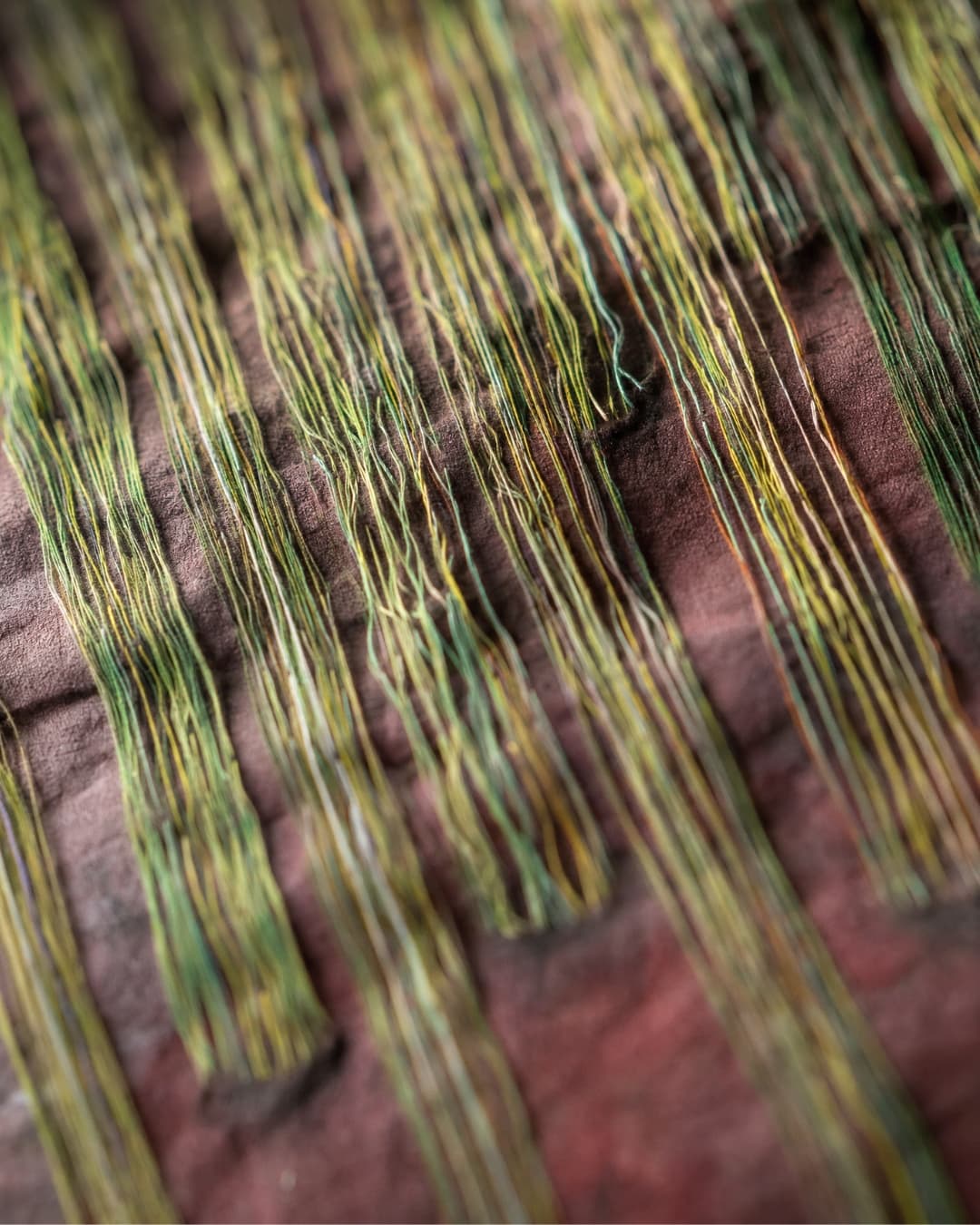
I build the work slowly, stitch by stitch. I hold the image in my head and feel my way through the stitching to the larger image. The stitching is literal, physical – the thread width doesn’t change. This creates an equilibrium within the image – no part is more important than another. But the paint tips the balance. It adds depth.
I don’t find thinking easy. Thoughts and feelings slip away before I can identify them. For me, making art is a vehicle for thinking. My work attempts to capture deep elusive snatches of thought that occur as I stitch. The process, the image and the thoughts come together in the finished piece.
“The image comes first, but the process underpins the thoughts, and the thoughts influence the image.”
Myra Stimson, Mixed media artist
Everything is interesting
I don’t plan my work as such. I have four or five little A6 notebooks on the go. I use them to record 30 second sketches of anything that pops into my head, plus words, sentences, phrases I hear or read. I go to a lot of exhibitions and museums and take many photographs.
I am alive to the world all the time. I think that’s the curse of being an artist. It’s almost impossible to switch off. Everything is interesting and potentially usable.
I let the back of my brain do all the heavy lifting and trust that anything I really find interesting will find its way to the front where I can use it to make art. It’s like a filtration process. Everything gets mixed up, then filtered and then an image or an idea will begin to form. This might result in a series or a one-off piece of work.
Everything that’s happening around me or passing through my thoughts somehow gets put into the work. I rarely take an image directly from what I have seen or experienced around me. Usually there is an amalgamation of imagery and ideas.
The making process always influences how the work develops. By that I mean not only the physical act of making and responding, but also the thinking and responding.
Drawing in slow motion
I don’t like using complicated images or techniques. Most of my work will have two or three elements that are simply constructed.
I always know what I’m going to make before I start, but I never know what it will look like. I know that sounds contradictory but my initial idea is about what’s going to be included in a piece, not how it will be made.
Usually, I start by choosing a piece of cloth. The size will be dictated by whatever I’ve been doing previously. The type of cloth is chosen instinctively – it just seems right.
For instance, I’ve recently been making smaller works because I’d just made 12 very large pieces one after the other and felt the need to work smaller. Now I’m about to scale up again as I want the viewer to feel like they can step into the space in the work.
Then, I lay the fabric on the floor and apply paint. If I have an idea what colour threads I’ll use, that’ll dictate the colour I paint the cloth – as will the colour of the cloth itself. The thread and backcloth need to be tonally different otherwise the thread can’t be seen.
I like washes, drips and splashes so I use really watered down fabric paint. Generally, it’s the thread that holds the image and I don’t want this fighting with thick passages of paint.
I never draw the image first. I only ever hand stitch. I just pick up the cloth and start. It’s like drawing in slow motion.
I use simple stitching techniques which I sometimes adapt. I don’t think of myself as an embroiderer so I don’t mind if the stitches are uneven or I’m doing something to them that I shouldn’t.
“The stitches are just a mark-making technique.”
Myra Stimson, Mixed media artist
Why stitch?
I like the solidity of stitching. Stitching feels real in a way that painting doesn’t. What I mean is when you stitch something you make an actual thing, whereas when you paint an image of something it’s more of an illusion.
I also love the fact that when you make a mark with stitch it’s the same at the beginning and the end, because the thread is the same width along its length. Whereas, if you make a mark with a pencil, pen or brush the weight of your hand will change the mark as you move it across the canvas or paper.
This makes the stitched plane of the image flat and to some extent float in front of the painted parts. This also means that no one part of the stitched imagery is more important than any other. There is no hierarchy in the stitched imagery. Also, I find stitching quite sculptural.
I find stitching immensely calming and pleasurable. It gives me the perfect environment to let my thoughts wander freely. I’m interested in the world and everything in it, there’s so much to explore and try to understand.
In a way, making helps me know what I think and believe and this process enriches my making. It’s like a loop.
“The act of making gives me space to process my experiences and understand my thoughts.”
Myra Stimson, Mixed media artist
Making art possible
I left college convinced I was a sculptor. After selling a work to the Arts Council of Great Britain I found myself a gallery in my late twenties. Gradually my work changed.
Painting became more interesting to me than making sculpture. This coincided with my moving to a smaller studio and having children. I had less time and less space available. In order to make the making possible, an artist’s work often changes with the circumstances of their life.
Around this time, I found myself a new gallery. They represented me for about five or six years until working as an artist became impossible and I ‘retired’ in my mid-forties.
This had been a successful period in my career as an artist. My work was sold to lots of corporate collections and big collectors. I was shortlisted for The Jerwood Drawing Prize and a drawing was sold to The British Museum. This drawing has been exhibited twice since it was bought, including in a large touring survey show called Pushing Paper, which travelled around Britain.
‘Retiring’ from being an artist is probably the hardest thing I’ve ever done. It genuinely felt like I was divorcing myself. However, I couldn’t pursue a more-than-full-time career as an artist along with all the family responsibilities I had at the time. Being an artist wasn’t something I felt I could do by half measures.
I found myself working in a primary school as a learning support assistant and gradually retrained as an early years’ teacher, which I loved. A lot of what I had learned in art school came in very useful. Not in terms of techniques, but in the way I looked at the world and the way I felt about independence and resourcefulness.
I eventually ran a large early years’ department in an inner London primary school. Through these years I made clothes (badly), curtains and cushions (a little better), mended clothes, knitted jumpers but didn’t make any art using textile techniques.
Textile epiphany
One morning in my late fifties I woke up with an overwhelming urge to make something. There were no pens or paper available, so I found a little bit of old cloth and made a small appliquéd head about 30cm (12″) square. I shoved it in a drawer and tried to forget about it. However, I couldn’t stop thinking about it and images kept appearing in my head of other things I could make.
I soon moved away from appliqué and started hand stitching. I worked solidly and privately for about three years. It was only then I felt I could call myself an artist again – and be brave enough to start an Instagram account.
I’ve now retired from teaching and I’m now working as an artist full time once more. It took a long while to establish a network of other artists and to start exhibiting and selling work, as well as get a studio outside of my home.
It’s been an exciting journey, I haven’t always known which direction to take in terms of my career, but I’ve always known what I want to make and I’ve always got something to make on the go. Stitching has become my constant companion.
Becoming an artist
I did both my foundation year and my BA in Fine Art at Goldsmiths, London. It was a time of extraordinary freedom when you could make a film one day and a painting the next. It left me with the knowledge that I can try anything.
I was discouraged by some tutors from using textile techniques in my work – I was knitting with copper wire and making shirts for a sculpture – but I wasn’t discouraged enough to stop me. At the time Goldsmiths liked students who didn’t do as they were advised. It was a wonderful experience and I’m very grateful for it.
I didn’t learn any textile techniques at college. My rudimentary skills are those I learned at school or I’ve taught myself.
However, I did learn to be an artist at Goldsmiths. I learned to think, I learned to look, I learned to question myself and I learned to be adaptable, resourceful and open to the world.
I made friends at college that I’ve had for nearly 50 years. Almost all of us are still working as artists in some capacity and most have had parallel careers to supplement our income. I value the opinions of these people above all else as they have known me and my work for so long.
“The worst thing that can happen is that it’ll go wrong, in which case I’ll chuck it in the bin.”
Myra Stimson, Mixed media artist
Freedom to be
Both my husband and I come from working-class families. Our parents worked hard at jobs they didn’t necessarily enjoy but did so to support their families. They wanted us to be happy and do well in our lives but didn’t pressure us to achieve academically or push us into careers.
We were born at a time when we had huge amounts of freedom as children and teenagers. We were also able to go to college for free and get full grants to live on – all without worrying about what came next. I think we were extraordinarily lucky to have had this level of freedom. I wish this was available for young people who come from families like mine now.
My husband and I met, aged 18, when we started our Foundation course at Goldsmiths. We have grown up together and supported each other. Of course it hasn’t always been easy, but any difficulties just made us more resourceful and resilient.
I was asked once why I became an artist, and my answer was because no one stopped me. That’s still true.
Teaching confidence
One of the things I enjoyed most – and found most difficult – about making my Stitch Club workshop has been breaking down my everyday processes into steps in order to teach them to others.
When in flow, most artists make hundreds of micro decisions every day without realising it. What shall I make? What composition do I want? Where shall I make a mark? How shall I cut the cloth? What size of stitch? And so it goes on.
If there are long gaps between making sessions it can be hard to get started again. This is because the speed of decision making slows down and becomes clunky and uncomfortable. However, I hope I’ve given participants a technique they can use to get started and quickly tap into their creative flow.
Once their decision-making starts to happen in the background of their thinking, participants can begin to respond to their own work. They begin to notice their own likes and dislikes without fretting over each step or worrying about getting something wrong.
The beauty and power of the piece exists in its strength of character not in its technical perfection – unless of course that is the character. I really hope participants gain the confidence to trust their instincts and allow their artistic personalities to show in their finished pieces.
I’ve demonstrated a few rudimentary painting and stitching techniques, but I’ll consider the workshop successful if participants invent their own. I’ll be truly delighted if someone employs a technique they love that I don’t personally use.
“For me, a good piece of work becomes good in the making, not in the planning stage.”
Myra Stimson, Mixed media artist
Learning from experience
I’ve gone from being someone who creates sculptures to paintings to textiles. Most recently I’ve reintroduced paint – and I’m trying out printing too.
I’ve learned a lot on the way. The key things are:
Keep your eyes open – anything and everything is interesting and can be incorporated into your work.
Trust your instincts – your brain will do the work for you and there’s no need to overthink it.
Be willing to try new techniques – but maybe not all at once.
Connect with others – I really value feedback from other artists. I’ve worked hard to build a network of supportive people around me who’ll talk about my work with me. They’re not all textile artists but they’re all creative people.
I think artists need to adapt what they do to suit their circumstances. As I’ve aged, I’ve come to accept what I’m like as a person including all my talents and shortcomings. My work will reflect that regardless so now I don’t strive to improve as such.
I trust myself more. This is very freeing for a creative person. It allows the work to develop, because it’s not something you can force. Rather, you must make the environment right for it to happen.
“I’ve got much better at getting the environment right and allowing the work to make itself.”
Myra Stimson, Mixed media artist
6 comments
Janitha Dias Bandaranayake
Truly extraordinary and inspiring
Siân Goff
Thank you so much, Anitha. I’m delighted that you found Myra’s work so inspiring. There’s something truly captivating about the patience and observation behind her approach.
Linda
I find Myra’s creative journey really inspiring. It sparks lots of ideas and jumping off points.
Siân Goff
Thank you, Linda! It’s wonderful to hear that Myra’s creative journey has sparked so many ideas for you. We love how seeing another artist’s process can open up all sorts of new possibilities. Happy creating!
Katharine Griffiths
Thank you for the post, I love Myra’s work, it’s extraordinary and inspiring. Thank you for sharing.
Siân Goff
Thank you so much, Katharine! We completely agree – Myra’s work is extraordinary. So glad you found her approach as inspiring as we do, and thank you for taking the time to leave such a lovely comment.