

Livia Papiernik’s early childhood and family influences inspired her to be creative, experimental and to take risks. So it’s no surprise that she doesn’t limit herself to one technique when illustrating her colourful narratives.
Working in a variety of media, Livia chooses whatever is appropriate for the scale and the story she wants to tell – whether it’s an exploration of her subconscious or something that resonates from the worldwide stage. She has no hesitation in boldly exposing her own vulnerabilities in her work, in order to encourage conversations about mental health and well-being.
Exploring mental well-being
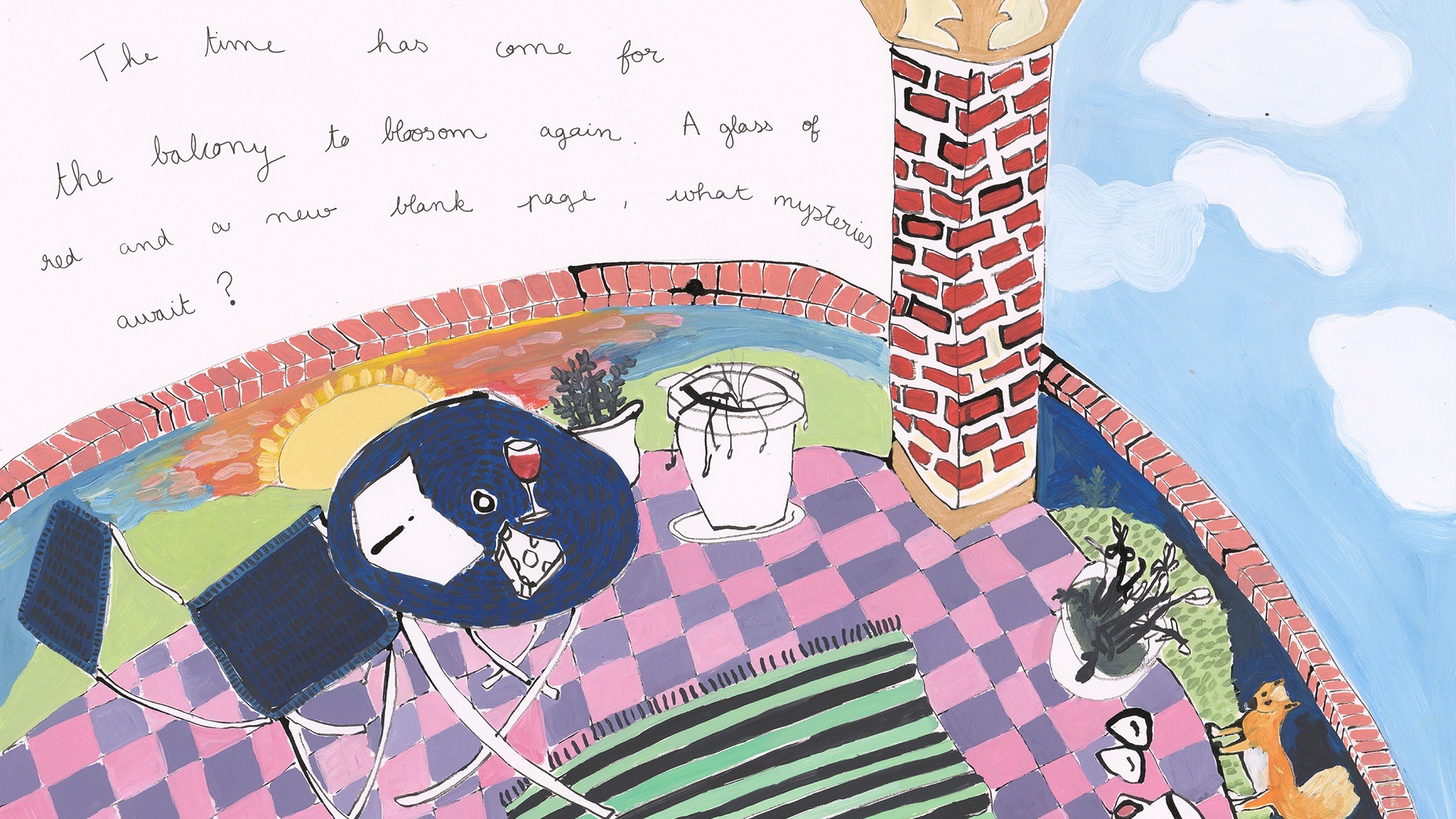
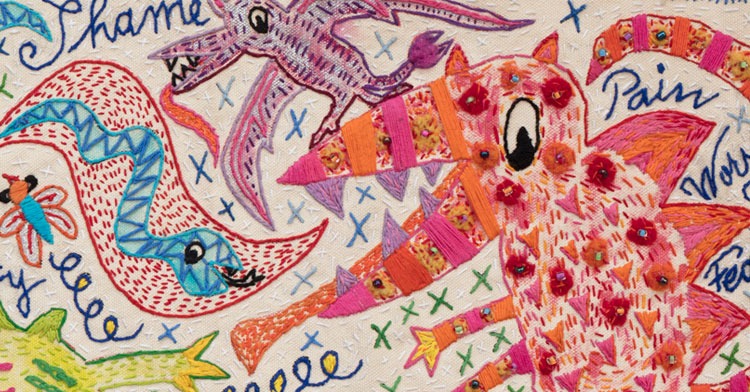
Livia Papiernik: An important part of my process is giving myself the time and space to draw and write about my mental well-being and my surroundings. Every few weeks I usually take a day to reconnect with myself. I use this time to explore and illustrate how I’m feeling physically and emotionally. These written and visual ‘diary entries’ in my work are an honest reflection of my emotions.
By exposing my vulnerabilities, I give the viewer permission to connect with their own feelings about mental health and encourage conversations around subjects that are often hard to discuss.
To get to that space yourself, I recommend that you find a place that allows you to connect with yourself and your mental well-being. This could be somewhere you feel nostalgic, happy, relaxed or emotionally connected to. For me, that’s often an area surrounded by nature or items that have stories or connections to loved ones.
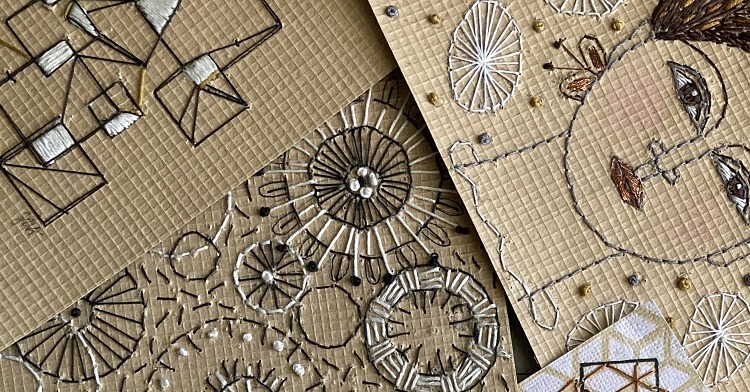
Using a thin black ink pen, I draw the objects or the view and write a sentence about it. If like me you struggle with writing – I’m dyslexic – then try not to overthink it. Simply write words that resonate with how you’re feeling.
I find that these exercises help me visualise my thoughts and create art that directly responds to, and supports, my mental wellbeing. Once I have expressed these feelings in my work I feel a sense of relief and understanding which allows me to compartmentalise my emotions.
Through my work and teaching, I hope to help others find and explore their own subconscious ‘safe place’ where they are comfortable enough to engage honestly with themselves.
I hope that my work breaks down barriers and encourages conversations about mental health.
Livia Papiernik, Textile artist
Developing my ideas
I do a lot of daily sketches during my commute. This is usually where my ideas are generated.
I like to have all my drawings on the studio walls around me and I’ll choose one to develop. I keep all the other sketches up there so over time I can see which ones I still feel drawn to. I go through several design development stages, from initial drawings to finished artwork.
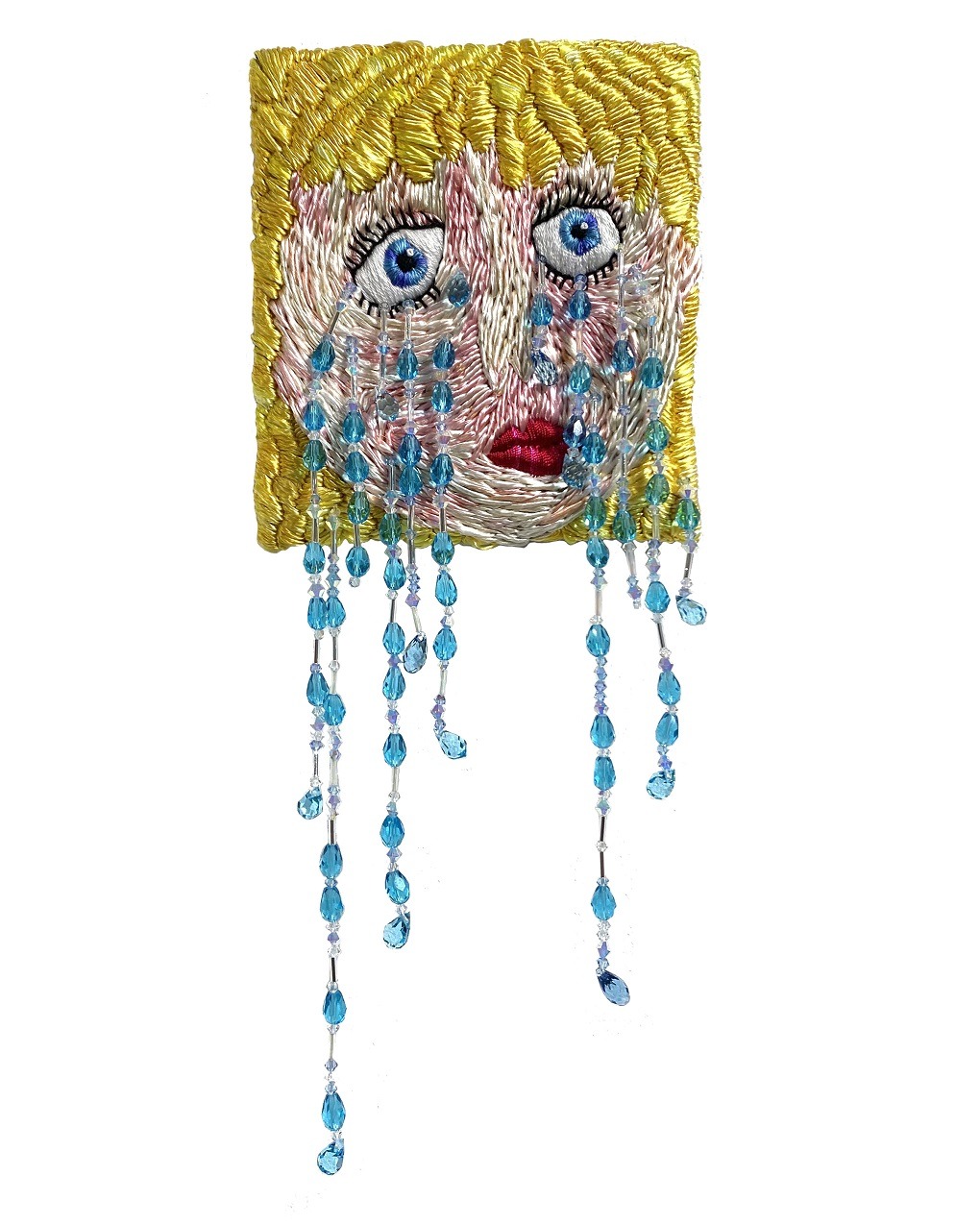
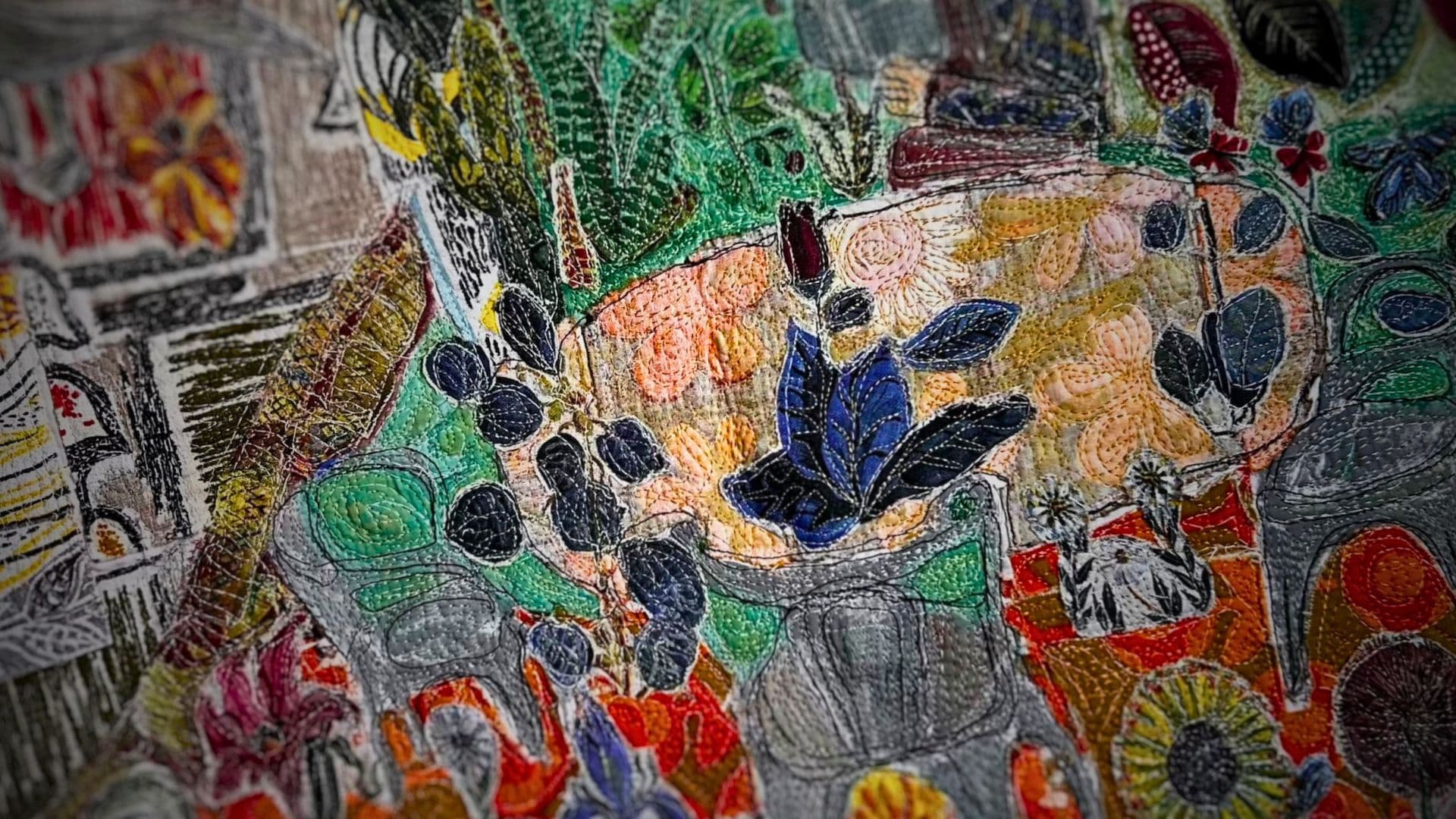
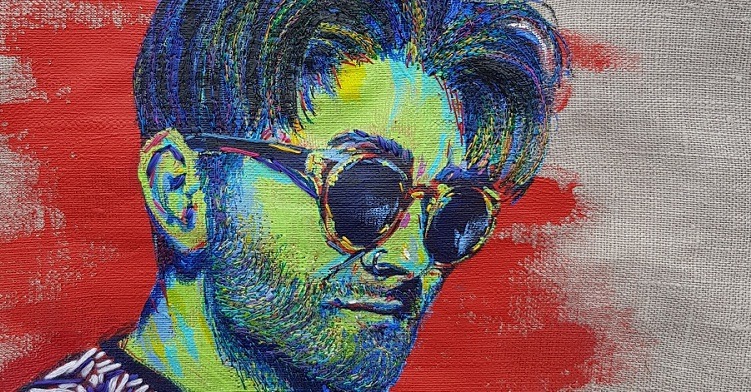
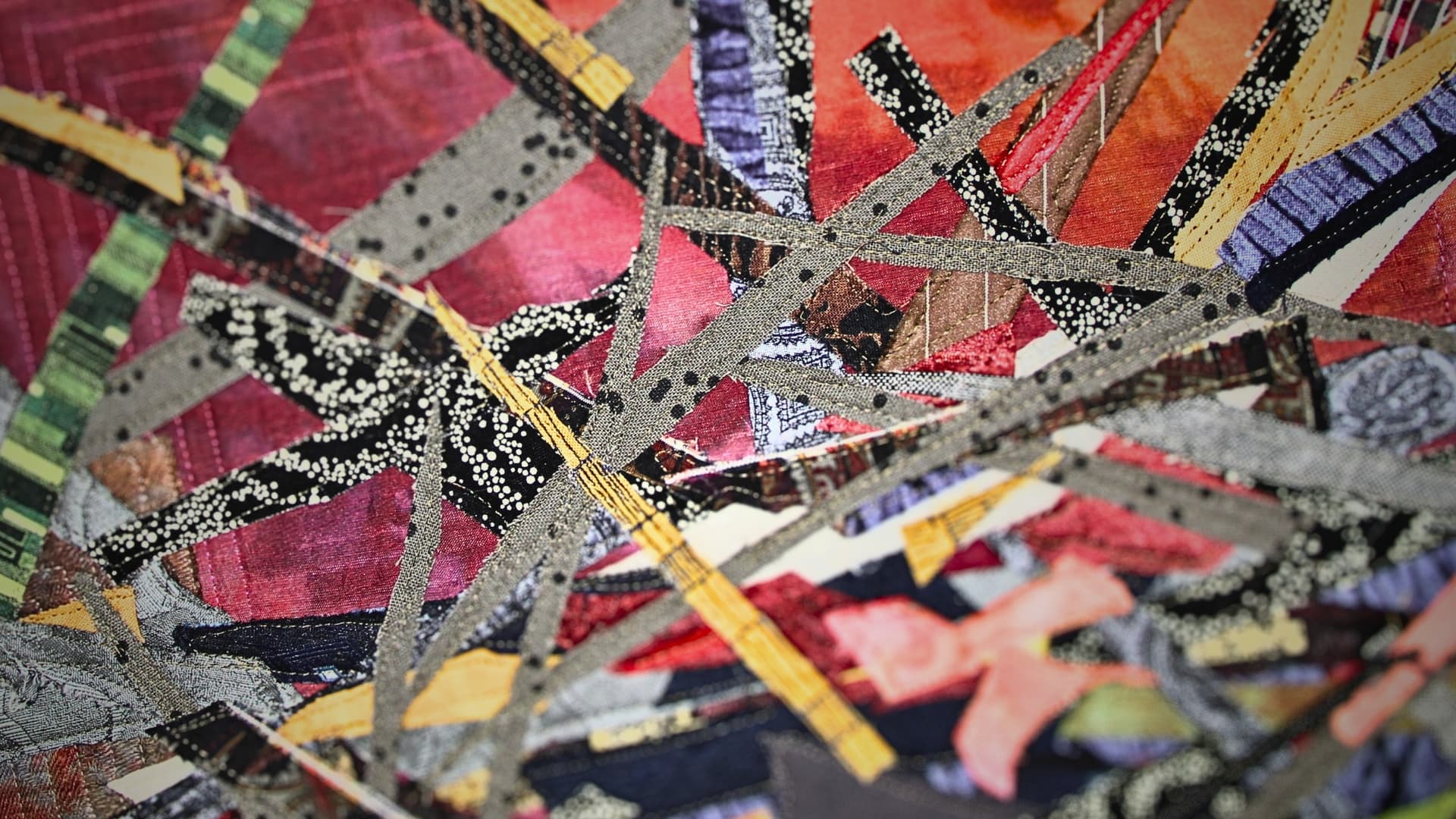
If it’s an installation, I might look at using patchwork, felting or painting. If it is an illustrative wall piece, I’ll focus more heavily on the type of threads and embellishments I want to incorporate.
My first big decision is to decide the scale of work I want to do.
Livia Papiernik, Textile artist
Finding freedom
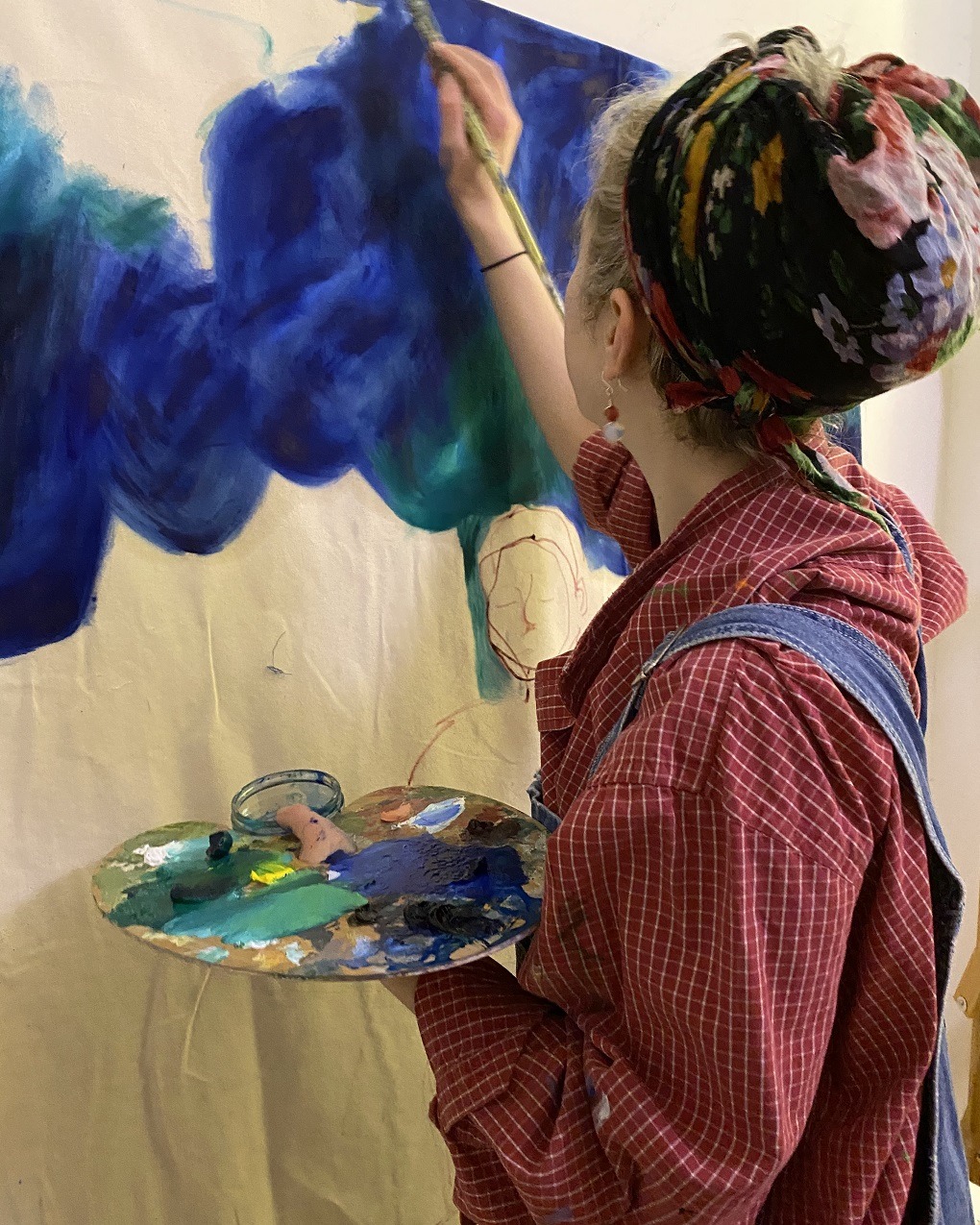
My passion for textile and mixed media was ignited while at school. When I started using textiles I felt much freer than when I was drawing and painting. I felt that if my drawing wasn’t perfect then I couldn’t do art, whereas I adored the freedom and spontaneity that using textiles and mixed media gave me.
I love the sense of nostalgia that I feel when handling textiles – the childhood memories, playfulness and naivety. It reminds me of when I was a child and the sense of comfort and safety I got from caressing fabric toys and blankets. I still get that feeling today.
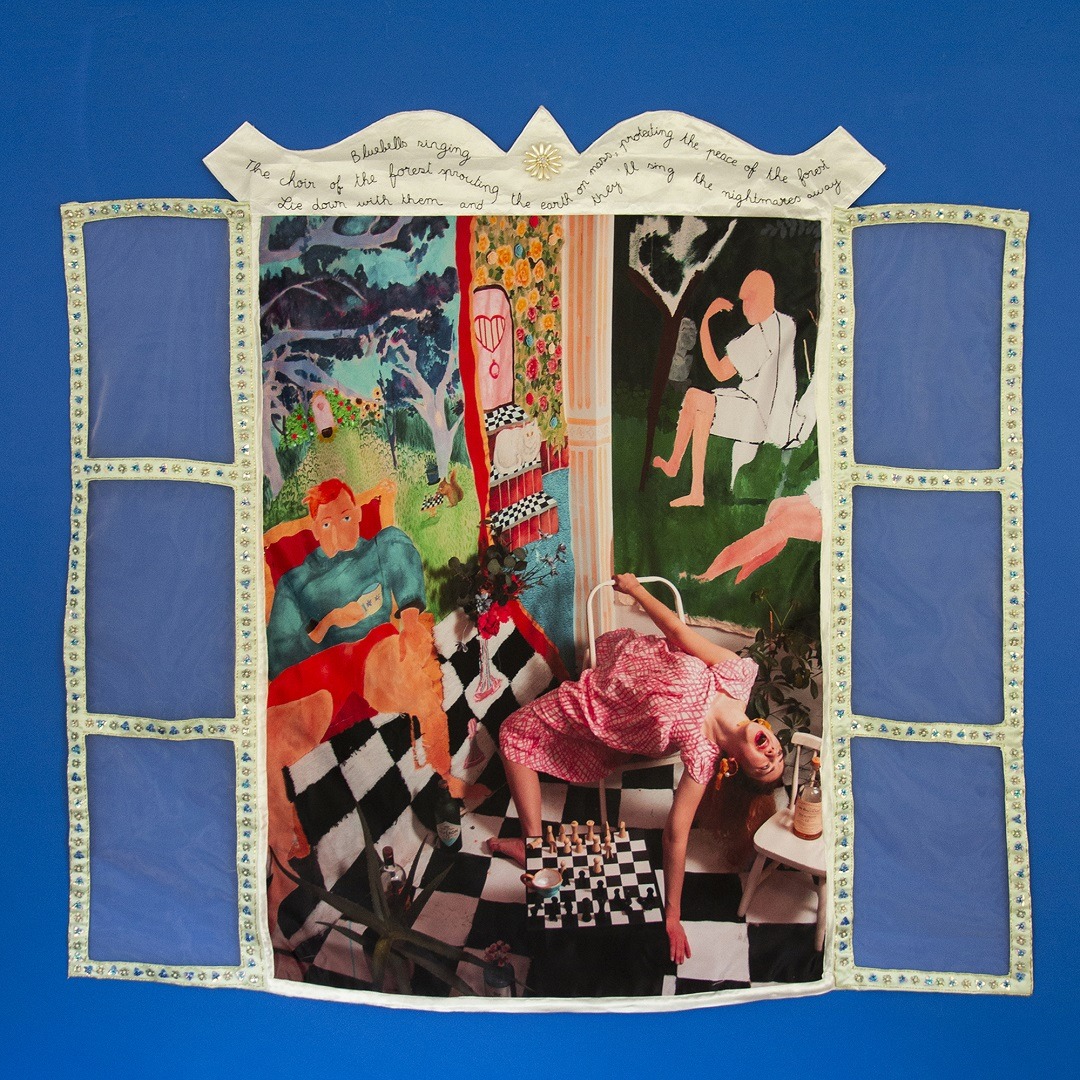
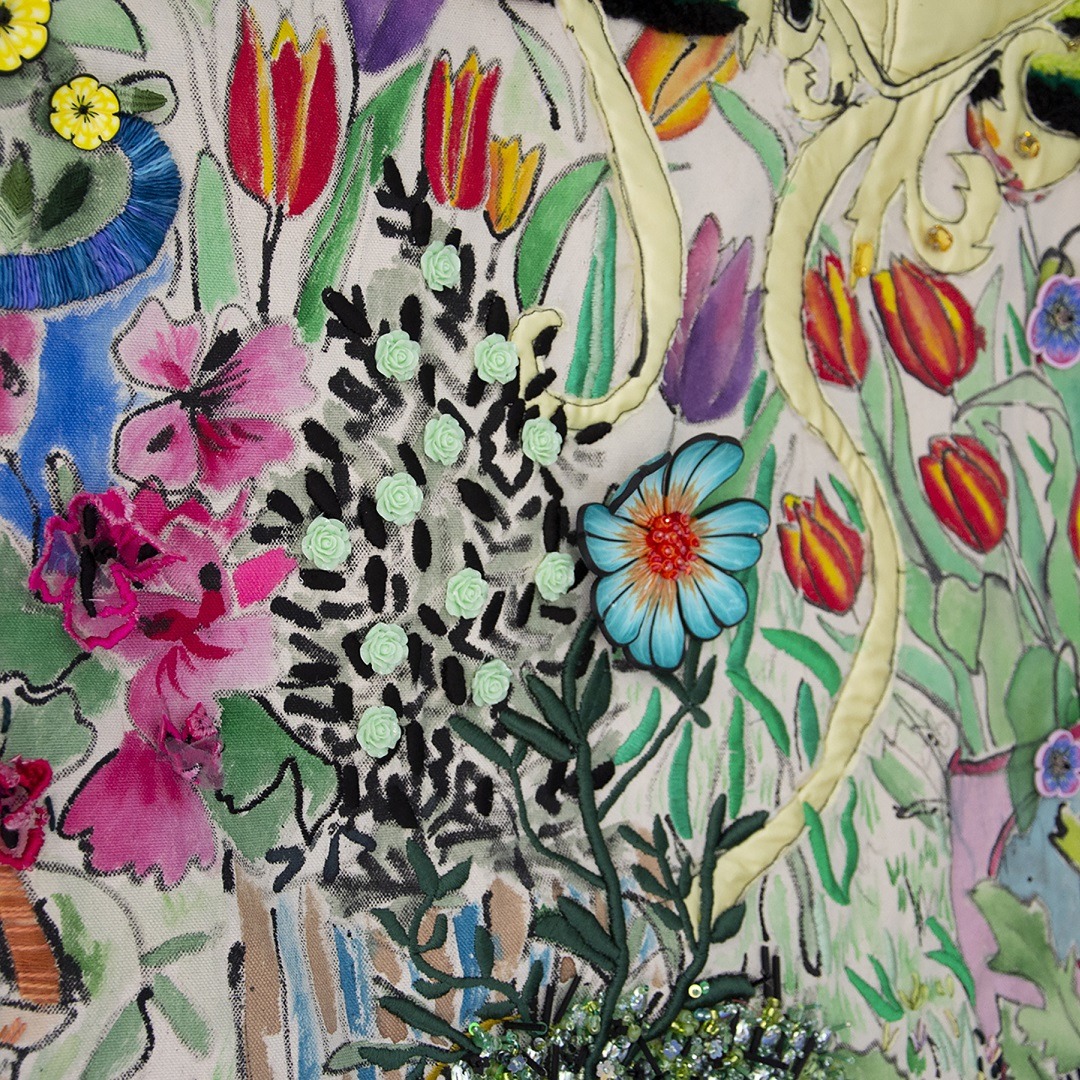
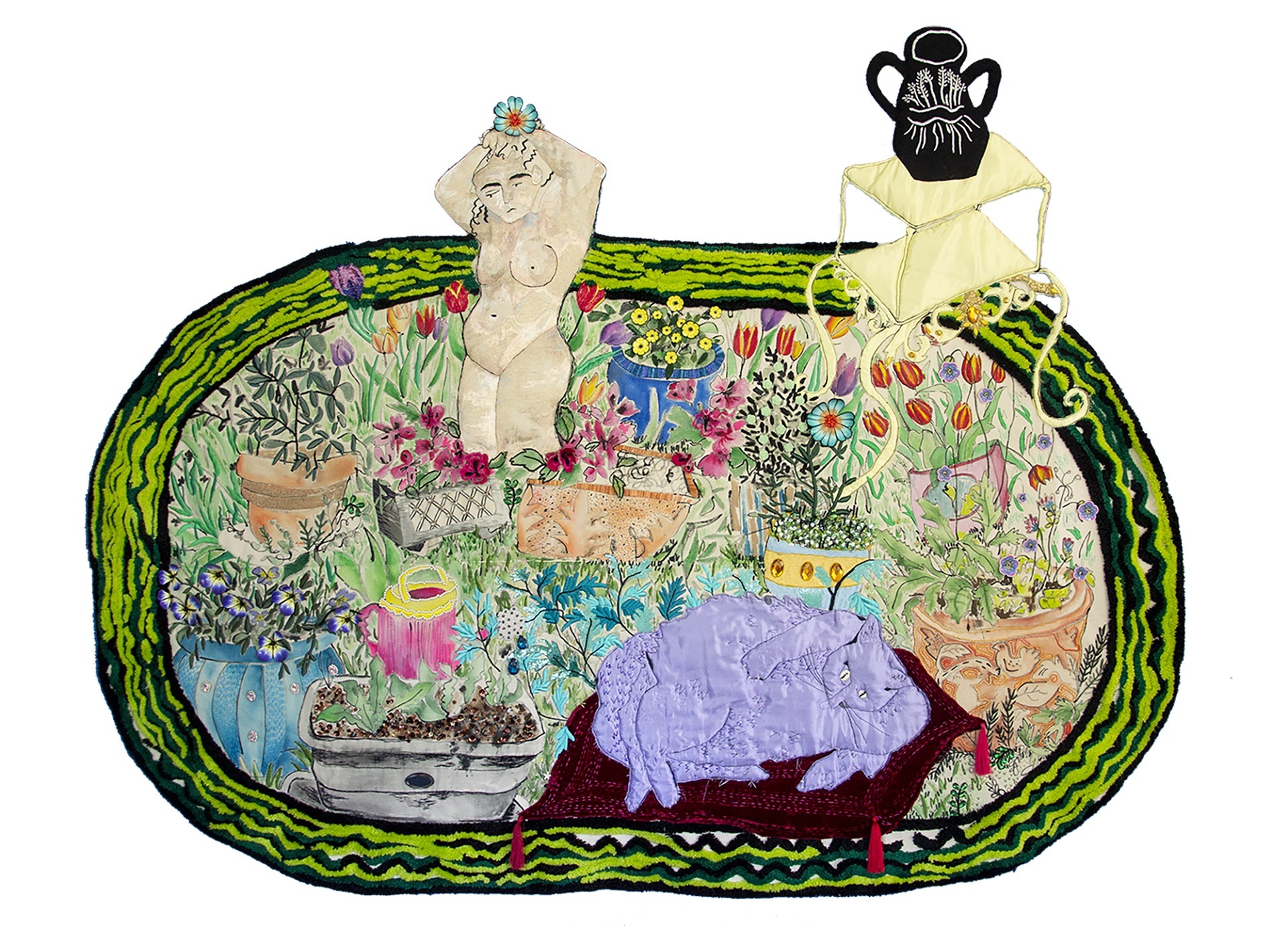
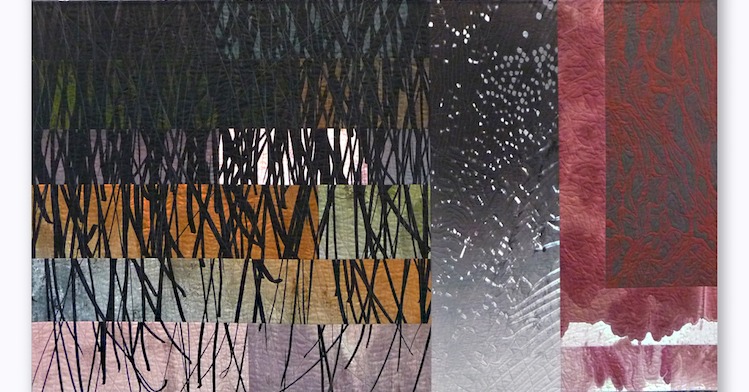
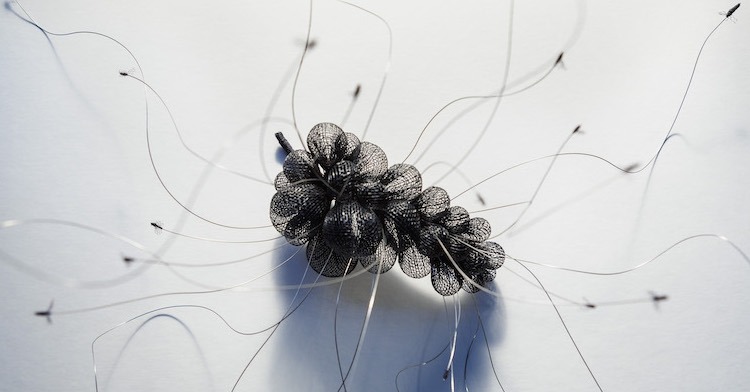
As the scale of my work increased, I’ve shifted more towards mixed media. I enjoy creating large installations and often embroidery isn’t the right tool or process for the type of stories or environments I want to depict. That’s when I’ll bring in elements such as patchwork, painting or felting. Also there are so many beautiful textures and materials in the world – why limit myself to one?
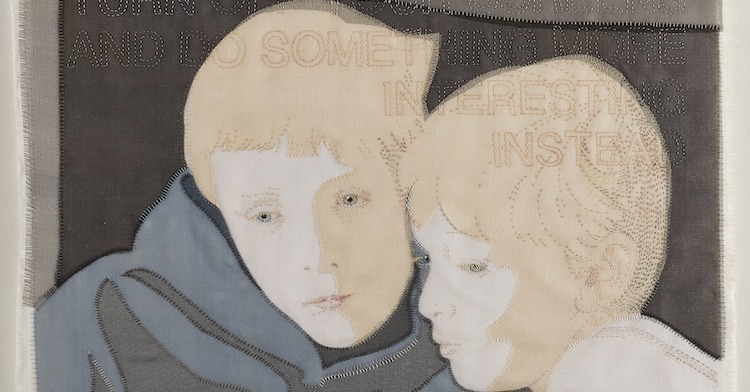
I love working across different contexts such as fashion, interiors and art. I’ve worked on various commissions and collaborations over the years, including creating a bespoke shawl for the French rabbi, Delphine Horvilleur, and freelance embroidery work with Alexander McQueen. I’ve collaborated with Huntsman & Sons of Savile Row, London, creating bespoke embroidered lapels for their ‘Women of Tomorrow’ collection.
I hope that by incorporating traditional embroidery techniques into other contemporary art processes I can challenge how we experience embroidery and society’s view on what was originally considered ‘women’s home craft‘.
Challenging myself
It’s easy to feel overwhelmed by ideas or possibilities while working with a process that takes a long time. Therefore, I like to work on a few artworks at a time. This lets me vary the type of work I’m doing from day to day, and not get stuck on one style or technique for too long.
There are so many possibilities when working in mixed media. I like to challenge myself to try new things. I’m always intrigued by new and different techniques, but that can easily lead you into attempting to do too much.
Over the years I’ve experimented with printing, patchwork, painting, felting, knitting, crochet, quilting, and a lot more; if it has a connection to textiles, I’ve tried it. However, over time I’ve come to understand what it is I really want to achieve in my work, and the methods best suited to that goal. This has helped me to filter down the techniques I use.
Occasionally I’ll pick up a technique I haven’t worked with in a while. For example, my large-scale work incorporates a lot more felt than it had done in the previous years. When I returned to it now, I fell in love again with the texture and colour I can achieve. In essence, the techniques I use depend on what my current project is.
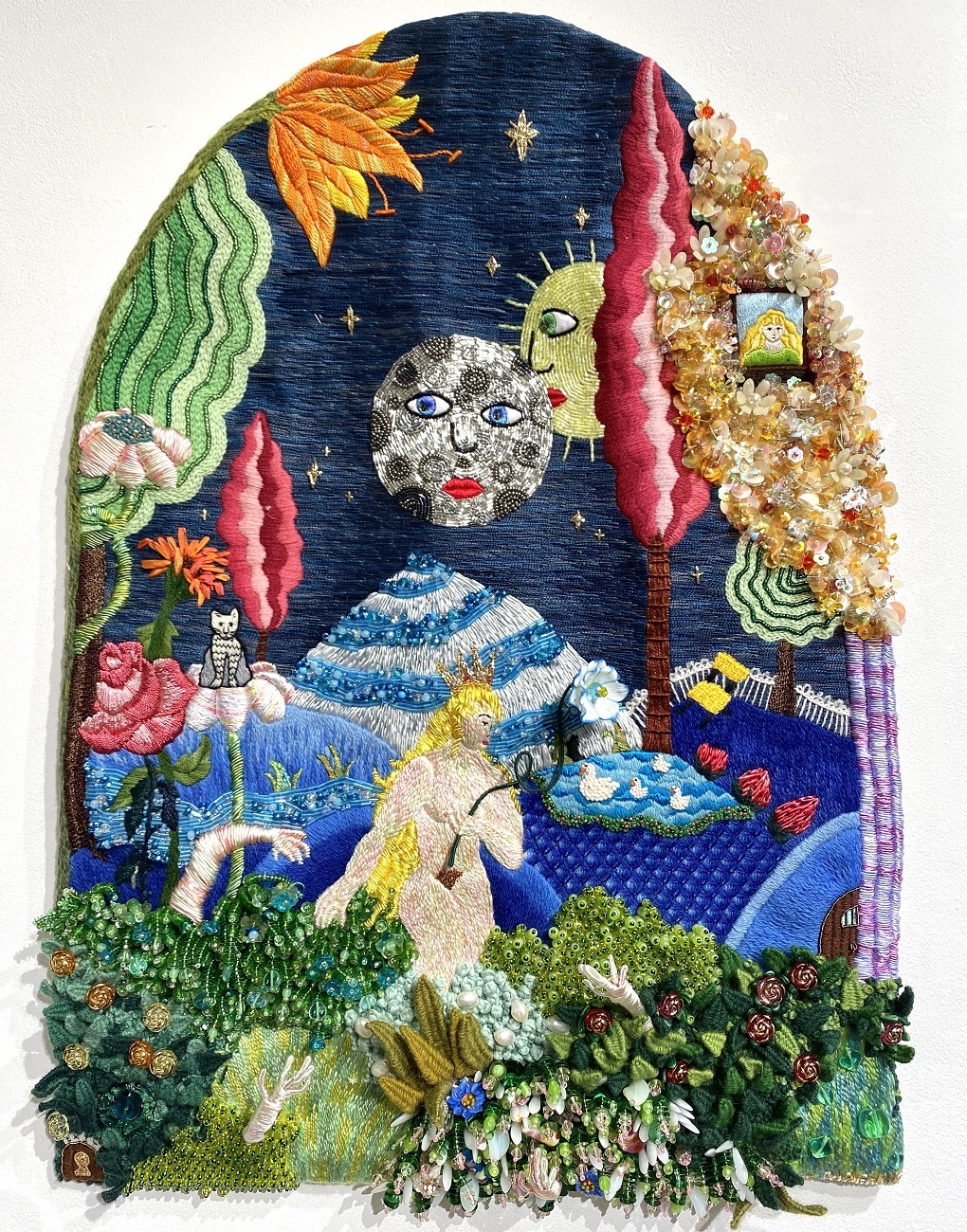
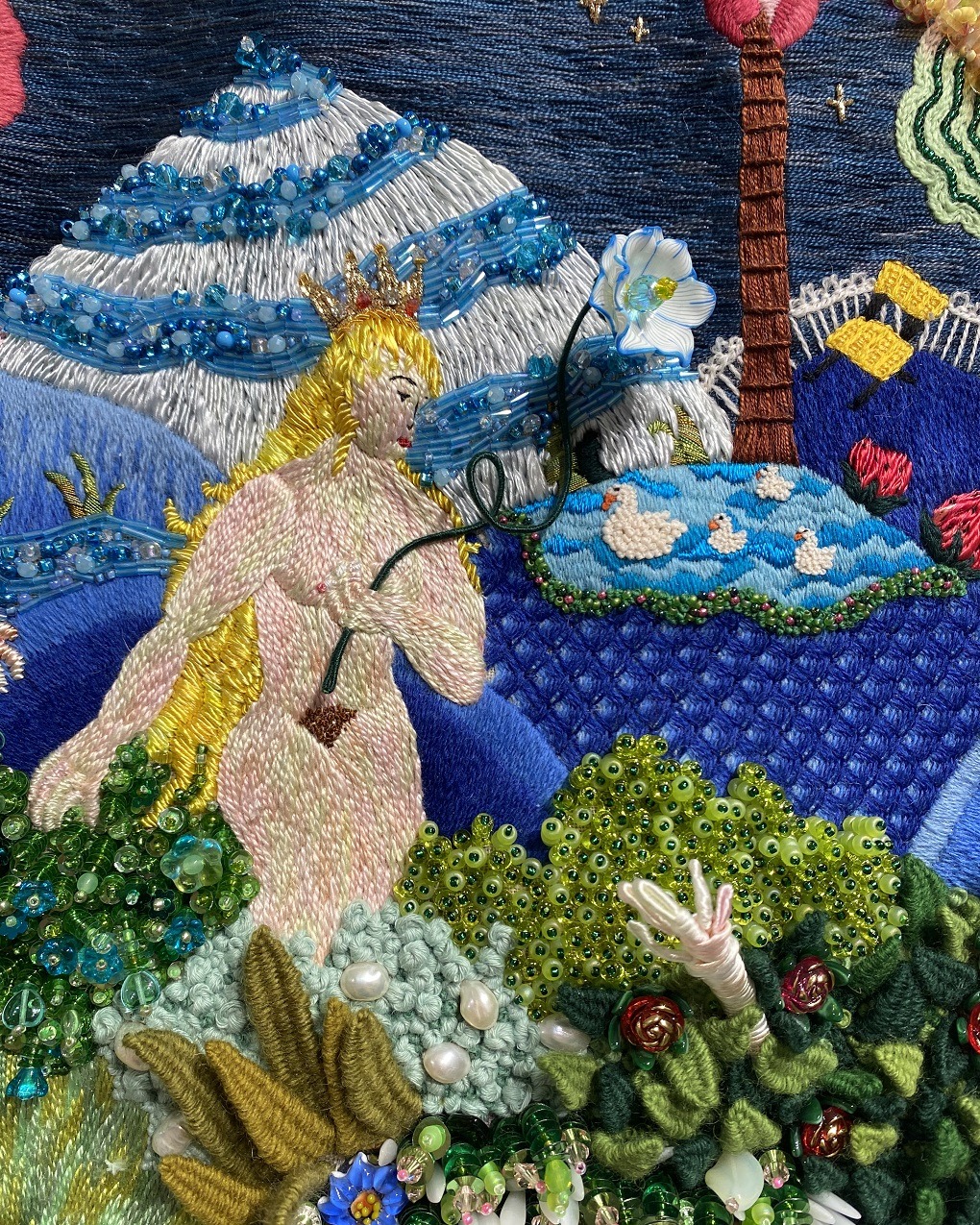
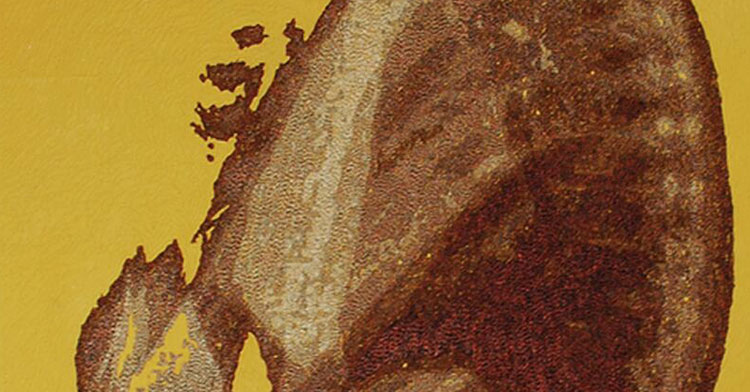
I have an illustrative style and I focus on processes that allow lots of texture.
Livia Papiernik, Textile artist
Learning to take risks
I can’t remember a time when I didn’t know I would be an artist or didn’t think I could be, and that’s thanks to the way my parents raised me. They have always been dreamers and art lovers, and they gave me the tools I needed to make art. That paved the way for the art career I’m so grateful to have now.
My mother has always been an artist, whatever she did. Her creative and artistic energy is infectious. She went to dance school aged 16 and became a professional dancer, attended art school in her late twenties, move from the UK to Prague with my father, became a mother, a martial arts teacher and now a jeweller.
My mother’s mother was also a big influence on me. She was constantly creating, from textile quilts, knitting, painting and poetry to DIY cardboard castles, toys and objects. My grandmother taught me so much. I have fond memories of her coming with me to my interview at the Royal School of Needlework, and walking around the flower gardens in awe. Sadly she died just before I started the course.
My mother taught me to the value of taking risks and, ultimately, to do what makes you happy.
Livia Papiernik, Textile artist
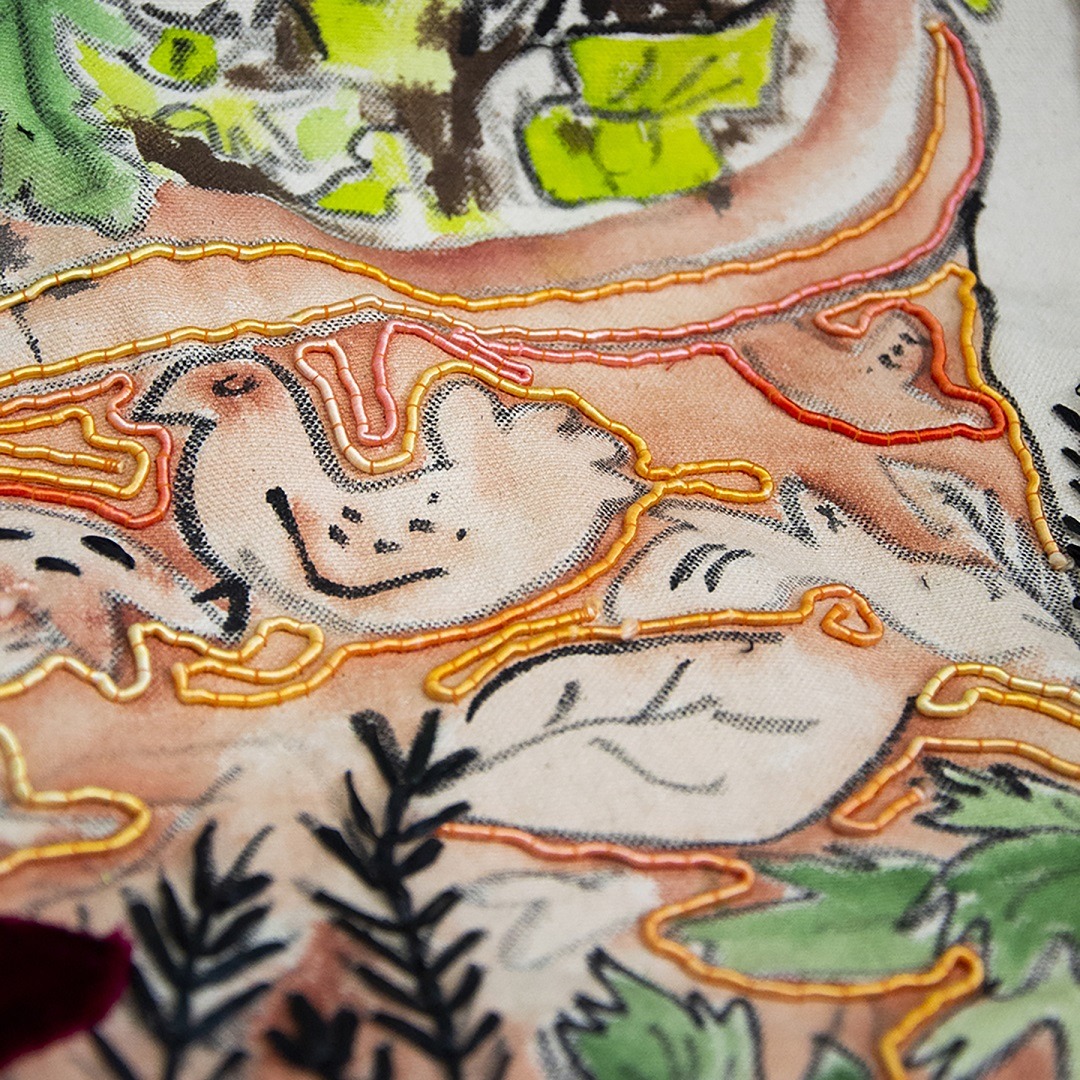
Finding inspiration
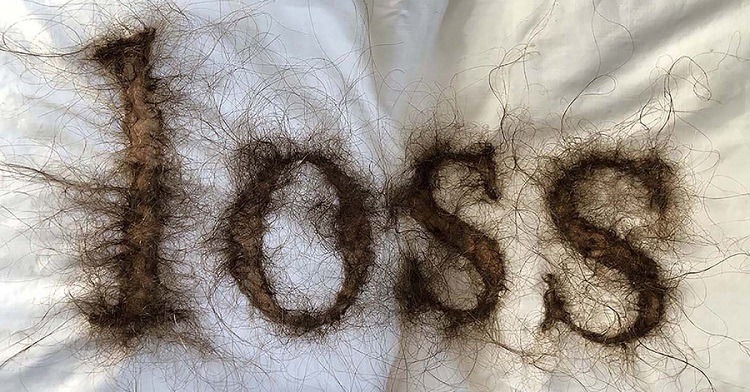
I think the loss of my grandmother is ultimately what pushed my work into becoming an act of self-care. It started with me sharing her poetry in my embroideries, as a way to honour her and keep a part of her alive. In the years following her death, I continued to explore stories from both the French and English sides of my family. It helped me appreciate who I was, and where I came from.
Over time, my focus naturally turned to a more autobiographical reflection, but family always remains at the heart of my inspiration and who I am.
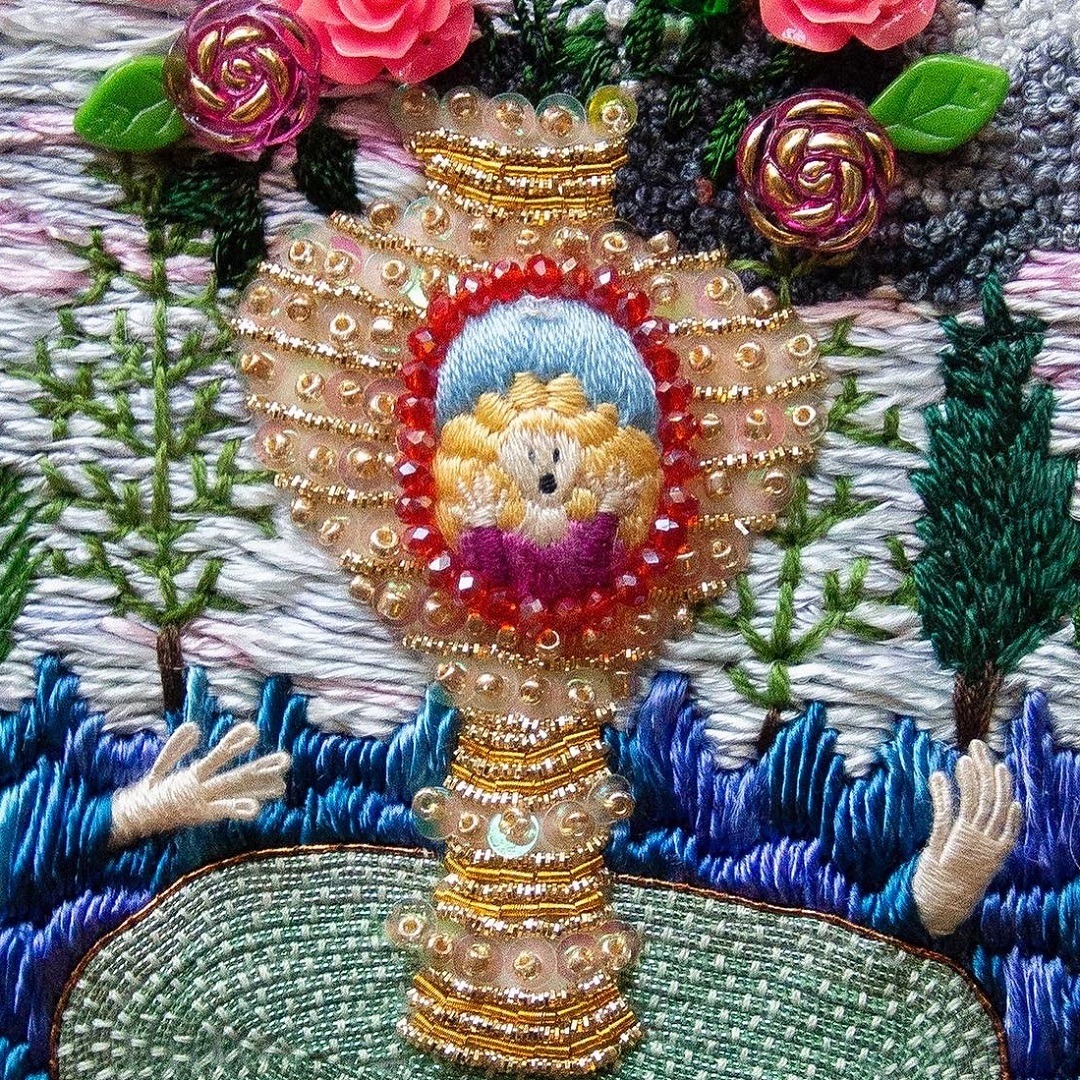
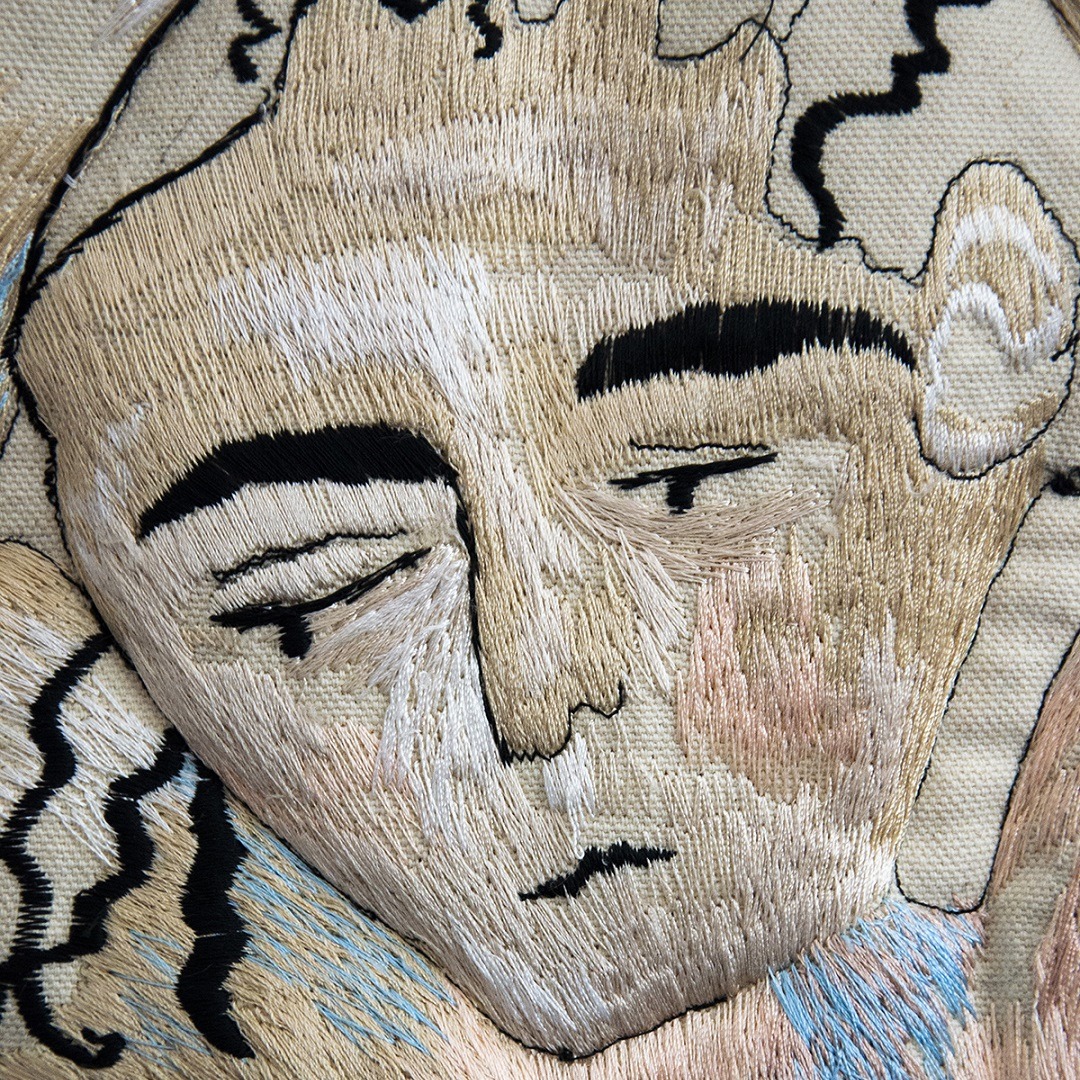
Nature & autobiography
Nature has been another major inspiration for me, especially gardens, plants and flowers. The pre-Raphaelites and the Arts and Craft movement are my favourite periods. I love the beautiful and glamorous characters painted in these idyllic, romantic gardens.
I like to explore the hidden emotions and tragedies behind these paintings. The contrast between beauty and tragedy and how one changes the appearance of the other fascinates me. This duality is also found in many fairy tales, especially those by the Brothers Grimm.
My work has always been autobiographical, whether I’m telling stories about my family or from history that I feel connected to, or sharing my own personal experiences.
I’m always looking at the places that I am in, the places I wish I was in, and the people I’m surrounded by for inspiration. These places of beauty, mixed with emotions of grief, happiness, naivety and love, create enchanted worlds full of storytelling.
Using colour and humour is a helpful way to tackle difficult topics like mental wellbeing.
Livia Papiernik, Textile artist
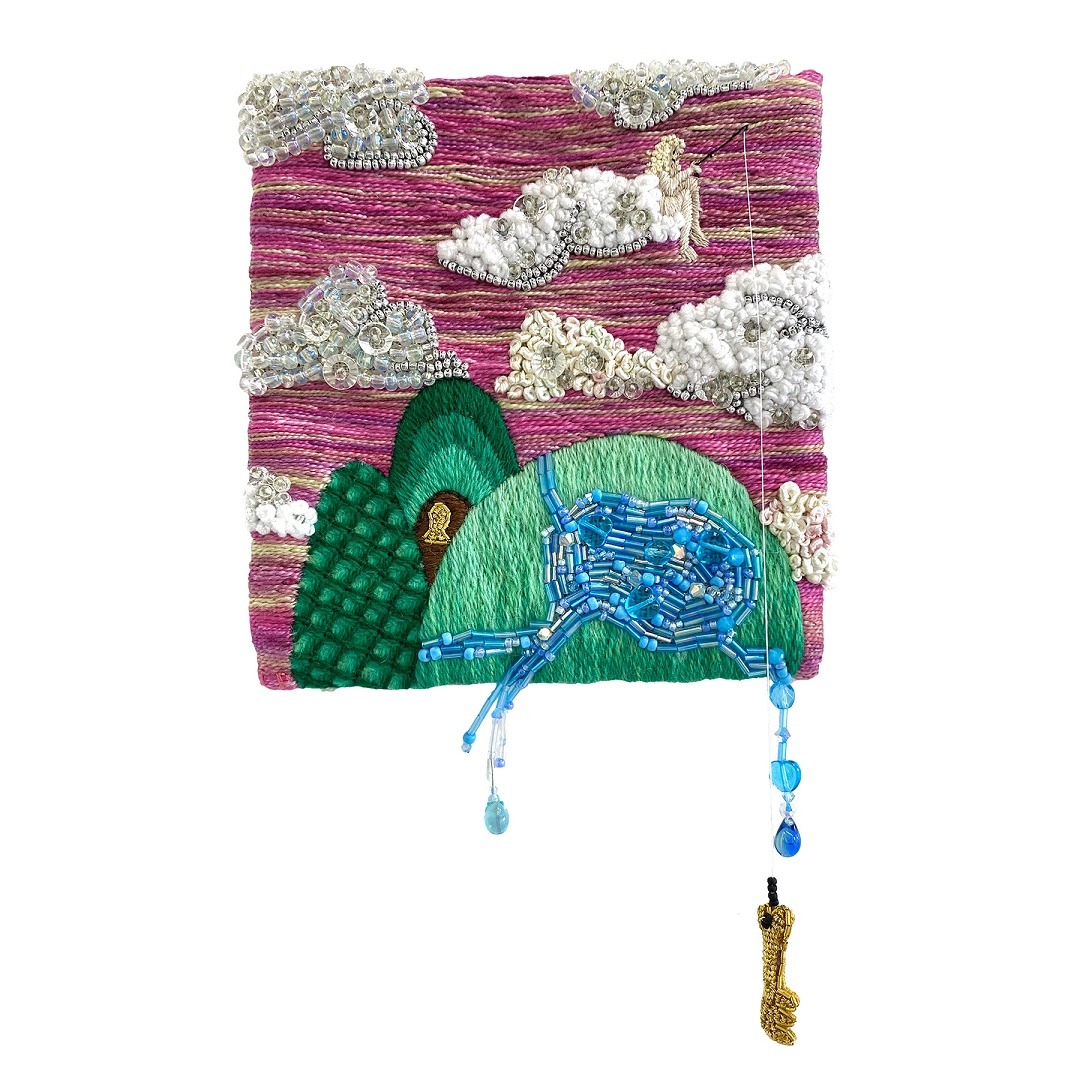
My creative space
When I’m creating, I love to have lots and lots of beads and embellishments around me. Although I plan a large part of my designs in advance, there is always an element of spontaneity when it comes to creating the beaded sections. I spread all the beads out on the table to help me make my final choices.
Other ‘must haves’ are a good range of quality threads, a nice linen fabric and of course, needles and a hoop!
I used to work at home alone, so a big part of my residency at Anderson Contemporary was the community of other artists around me. It’s so easy to feel isolated when breaking into the art world, but with the gallery downstairs, I met so many new artists putting on shows every month.
My practice is often inspired by my surroundings. The location of my Anderson Contemporary residency was beside the canal overlooking Queen Elizabeth Olympic Park. The terrace and the view were extremely calming and inspirational. I grew up by the river, so having the canal right there helped me reconnect with my home and my thoughts.
It’s no surprise that water in the form of rivers and lakes feature a lot in my work. For me, they represent a feeling of freedom and endless possibilities that I find very symbolic.
Making new connections with other artists going through similar experiences is a great way to keep the motivation going.
Livia Papiernik, Textile artist
3 comments
Anna Jacobs
Love this article wish she was available for hands one in Australia
Dee Jenkins
I loved this article and found it most encouraging! Thank you for sharing! <3
Joëlle Percq
Ce que vous créez est vraiment superbe ! Mais aussi Grâce à vous on ne se sent plus inférieure aux autres… On est ce qu’on est et on accepte ce qu’on est … et ce qu’on créée … On relativise…. Merci pour tous ces partages et belles journées à toutes et tous….