

Mixed media artist Letitia Thompson loves a good story. As an only child with a fistful of pencils, her imagination once carried her to the far edges of the universe. Today, her ideas come from much closer to home.
Letitia finds inspiration in the local landscape, changing seasons, wildlife and found photos and ephemera that spark what she affectionately calls the ‘daft stories’ behind her work.
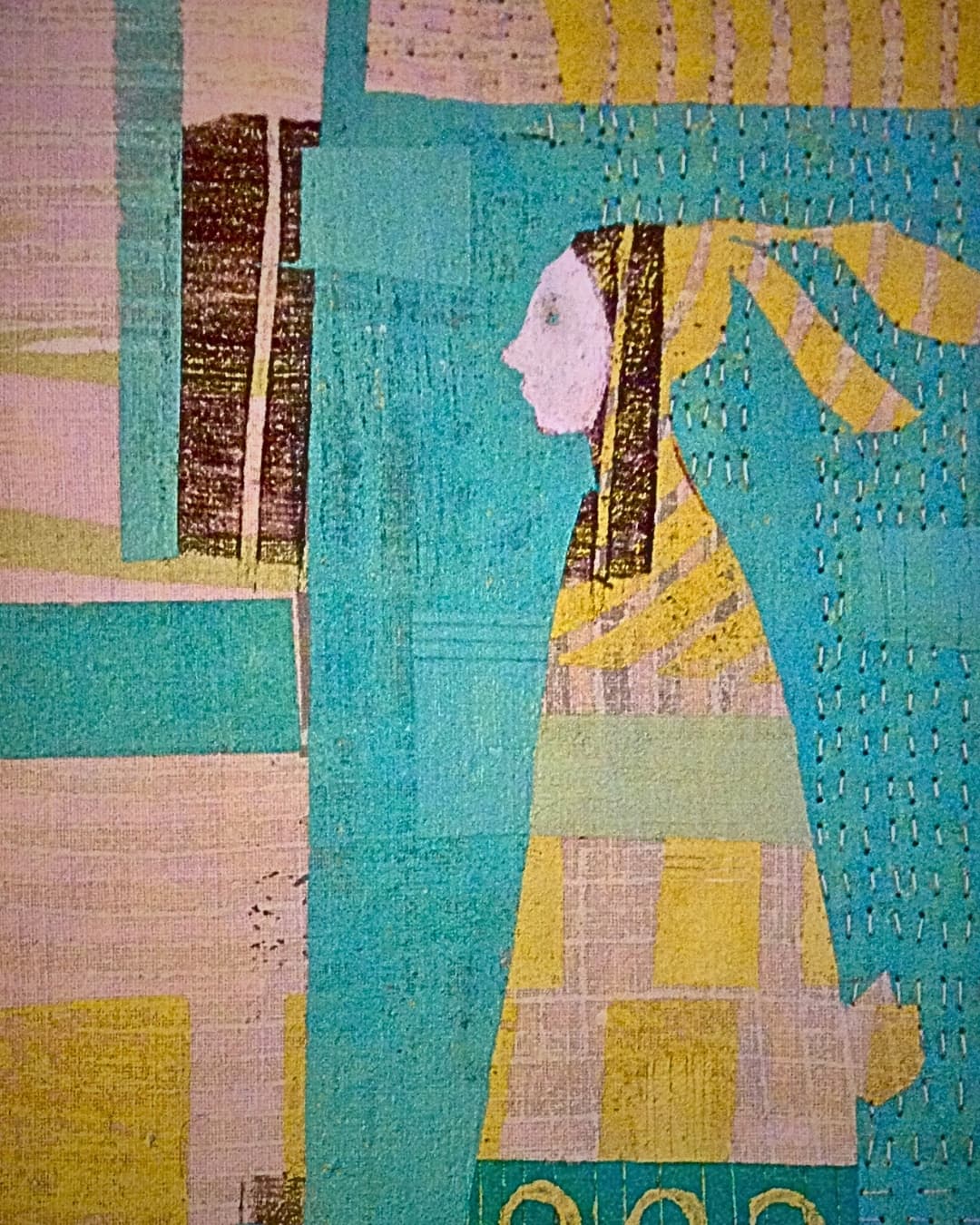
Letitia has discovered that creative freedom comes from bravely following wherever her hands and imagination take her. Whether she’s working with paper or fabric, pencil or stitch, paint, print or collage, she responds intuitively to marks, shapes and colours. Her work grows in layers, inviting viewers to linger and discover.
A lifelong educator, Letitia delights in sharing her experience, helping emerging artists embrace curiosity, spontaneity, and the simple joy of making.
Treasures & folklore
Letitia Thompson: I’m inspired by the big skies and changing seasons of my local landscape, as well as the characters and creatures that surround me.
I live in a small village in Lincolnshire, and the comforting rhythms of village life, with its folklore interwoven into the landscape, are integral to my work.
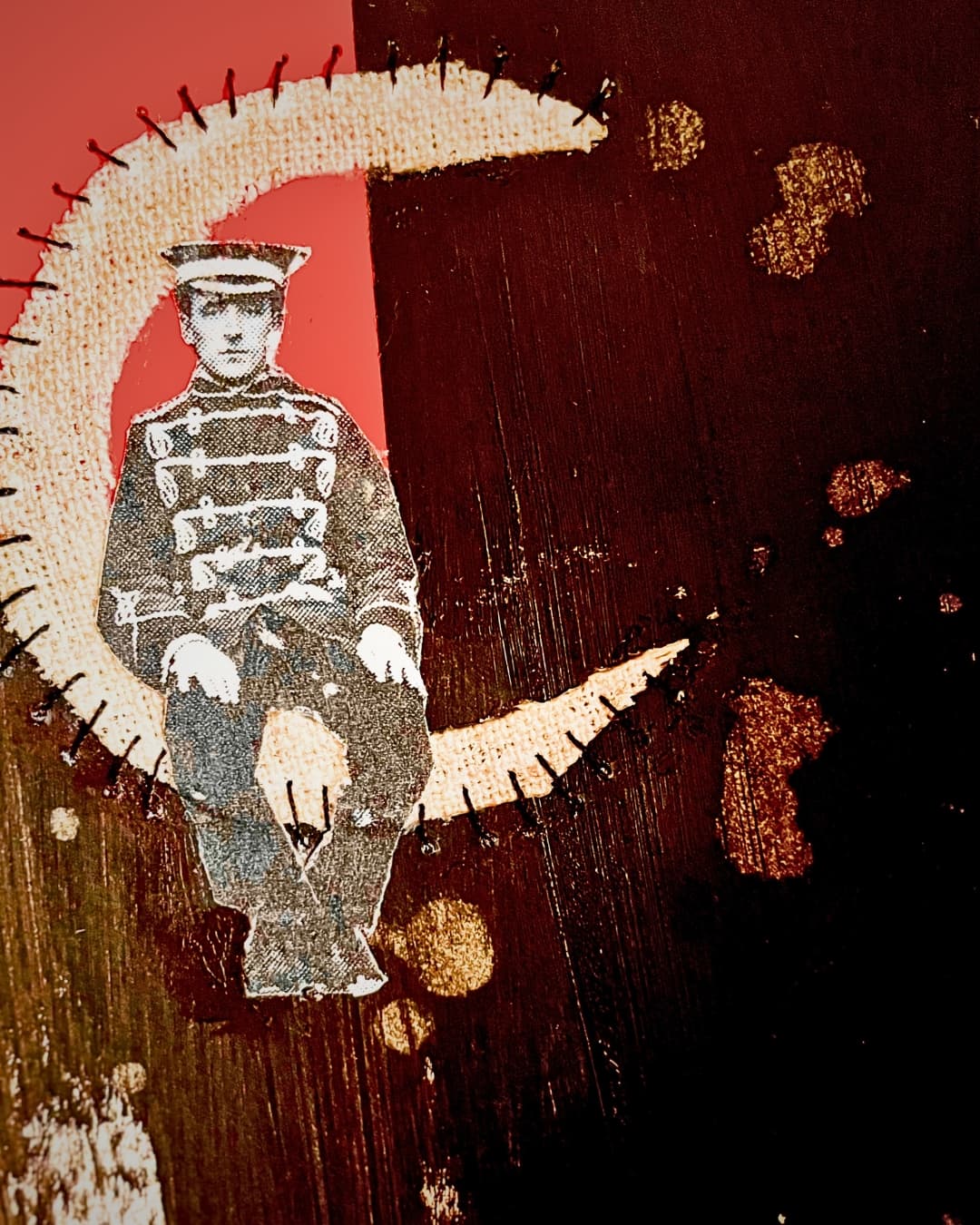
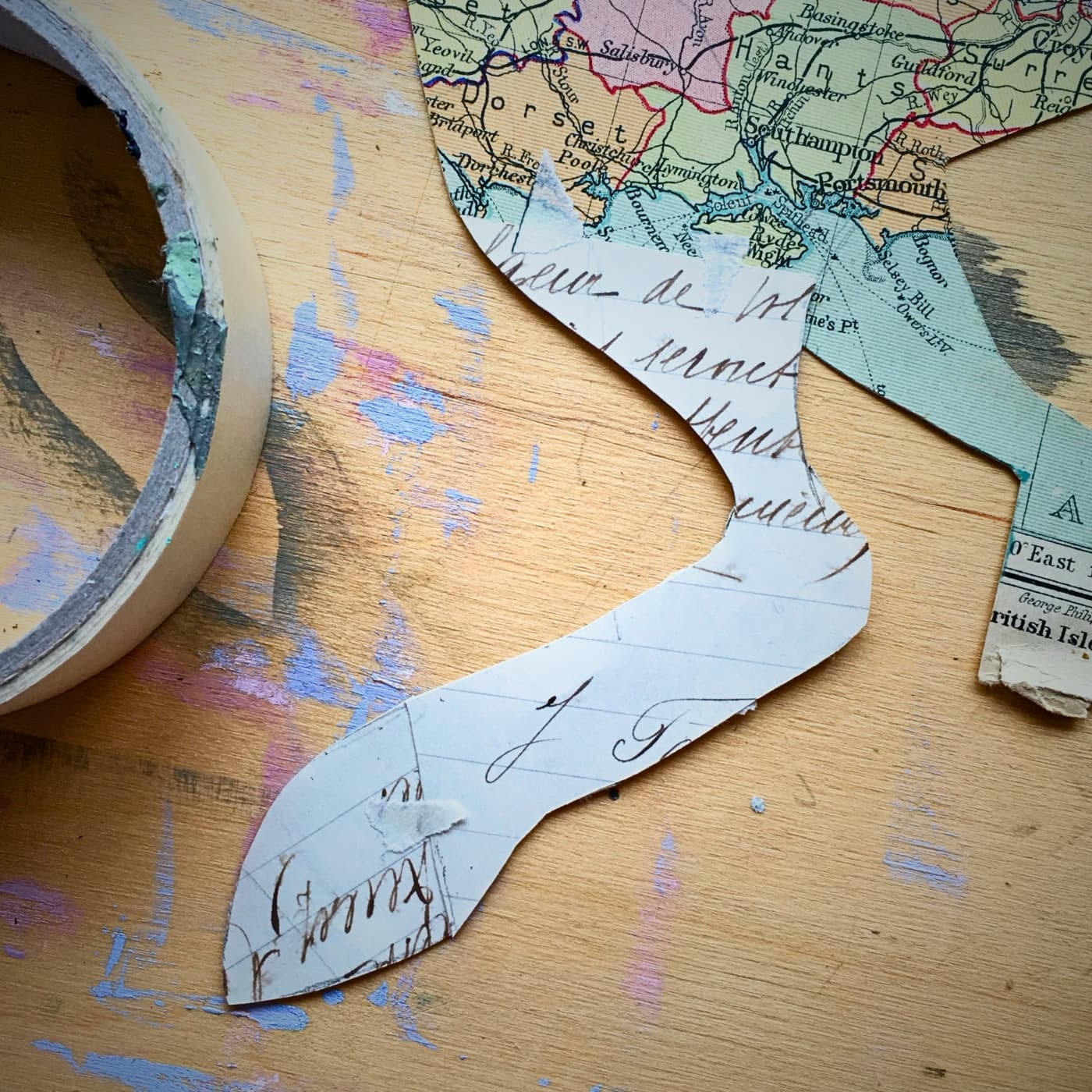
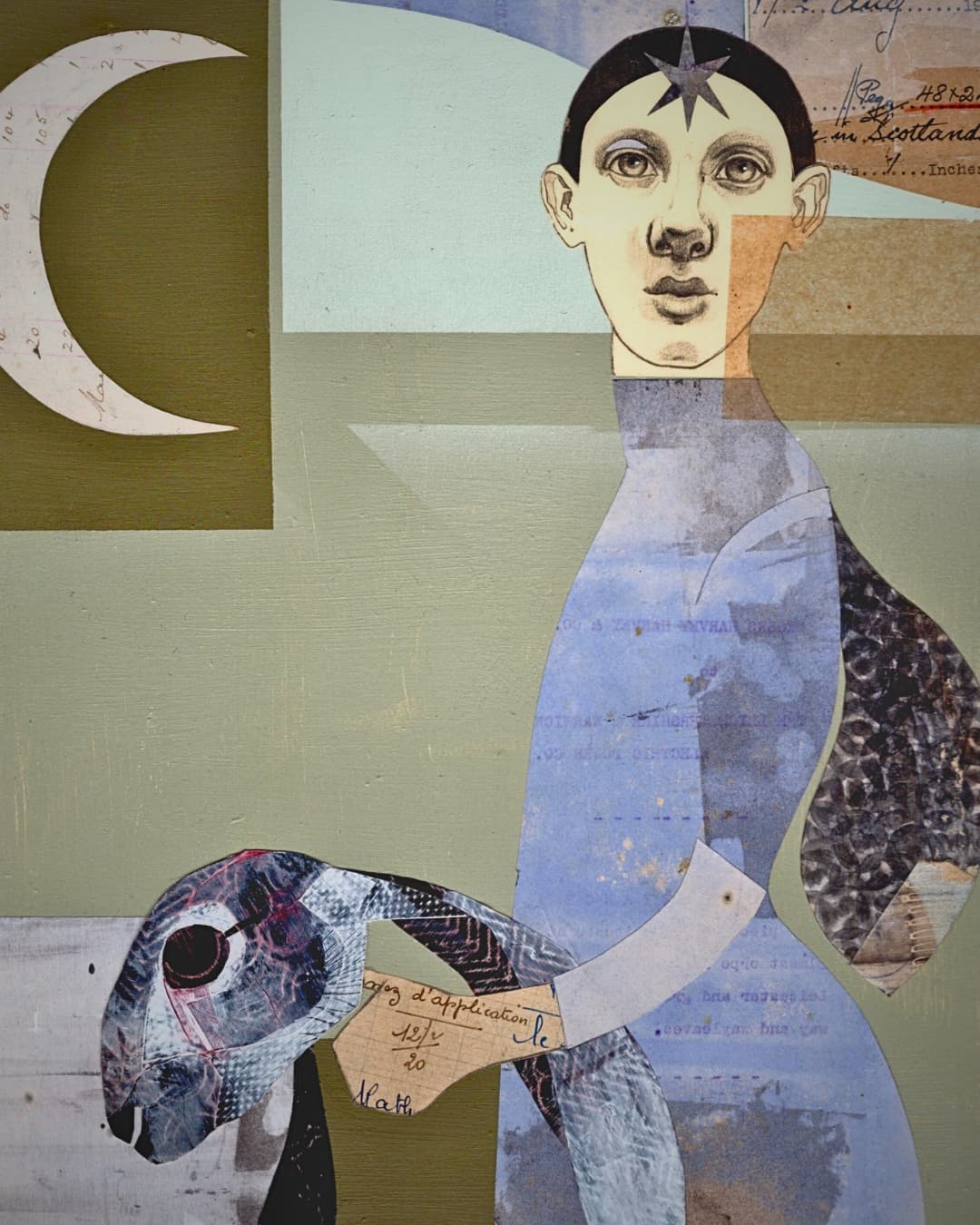
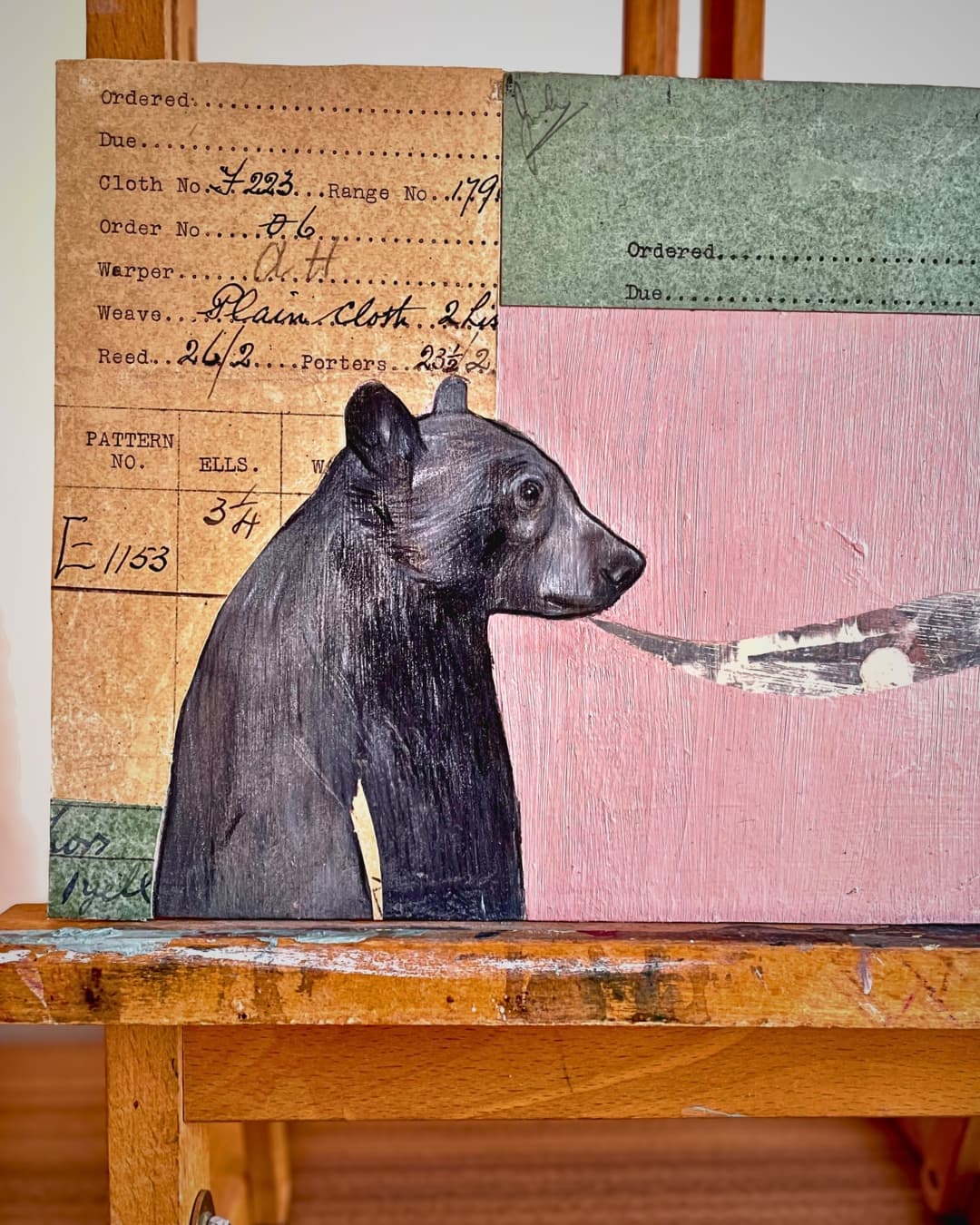
I love finding mysterious treasures at charity shops and car boot sales. Old letters, anonymous photographs and discarded keepsakes often kickstart the beginnings of a narrative or a character.
“I learned from a very young age that stories are powerful and full of magic.”
Letitia Thompson, Mixed media artist
Fragments & patchworks
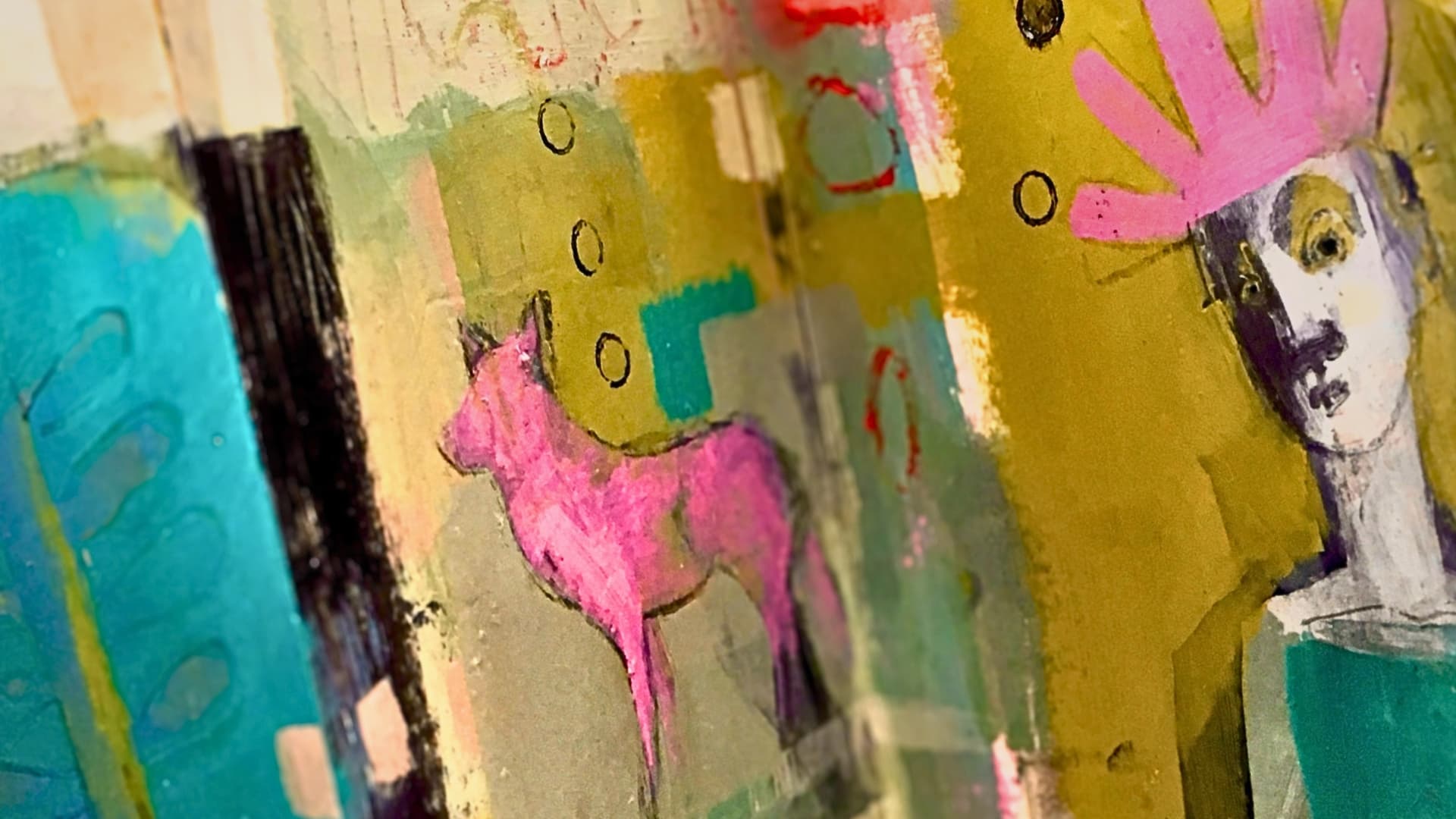
Mixing collage, drawing, painting and stitch in my practice allows a great sense of freedom and possibility. If part of a composition isn’t working, then you can simply paint or patch over it.
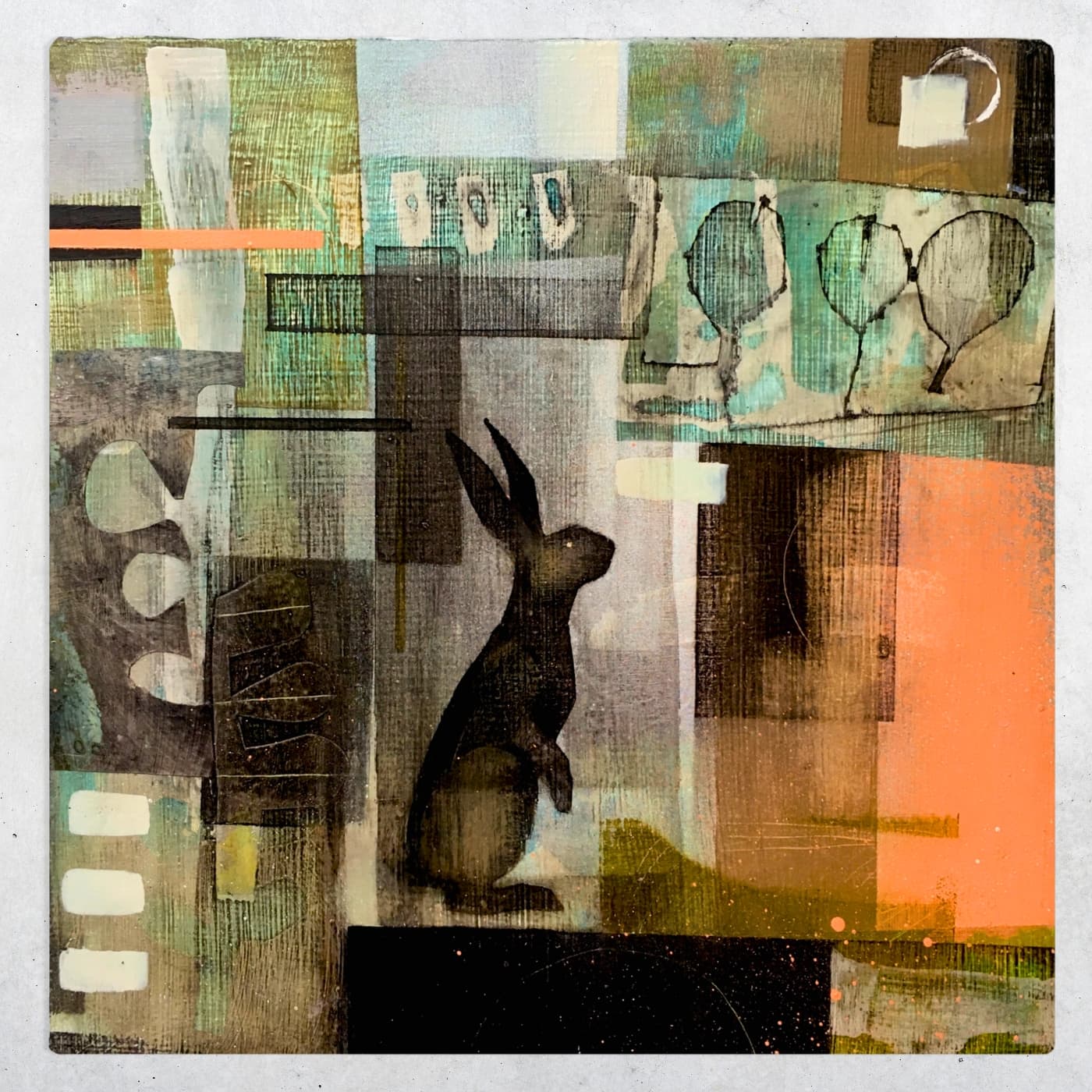
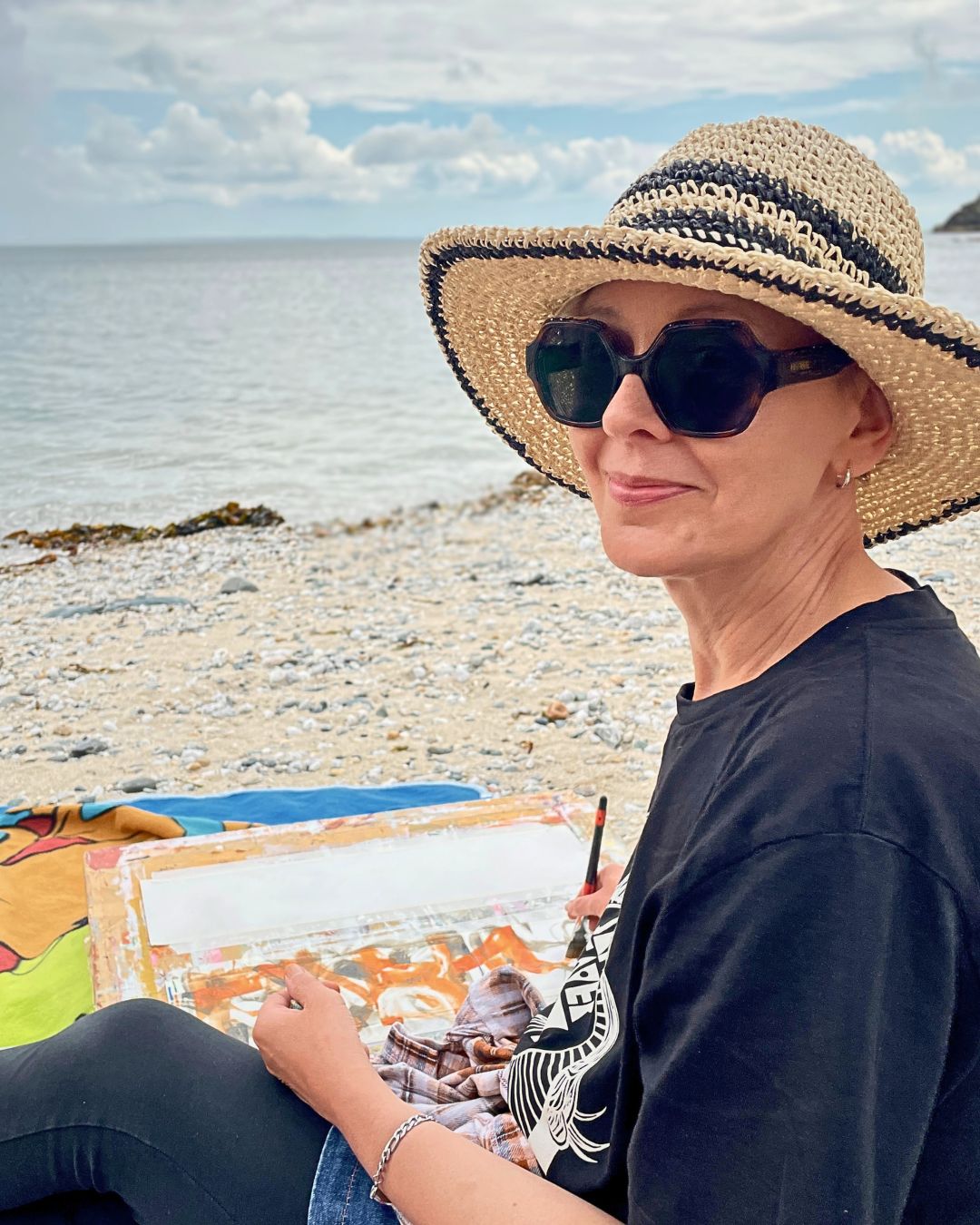
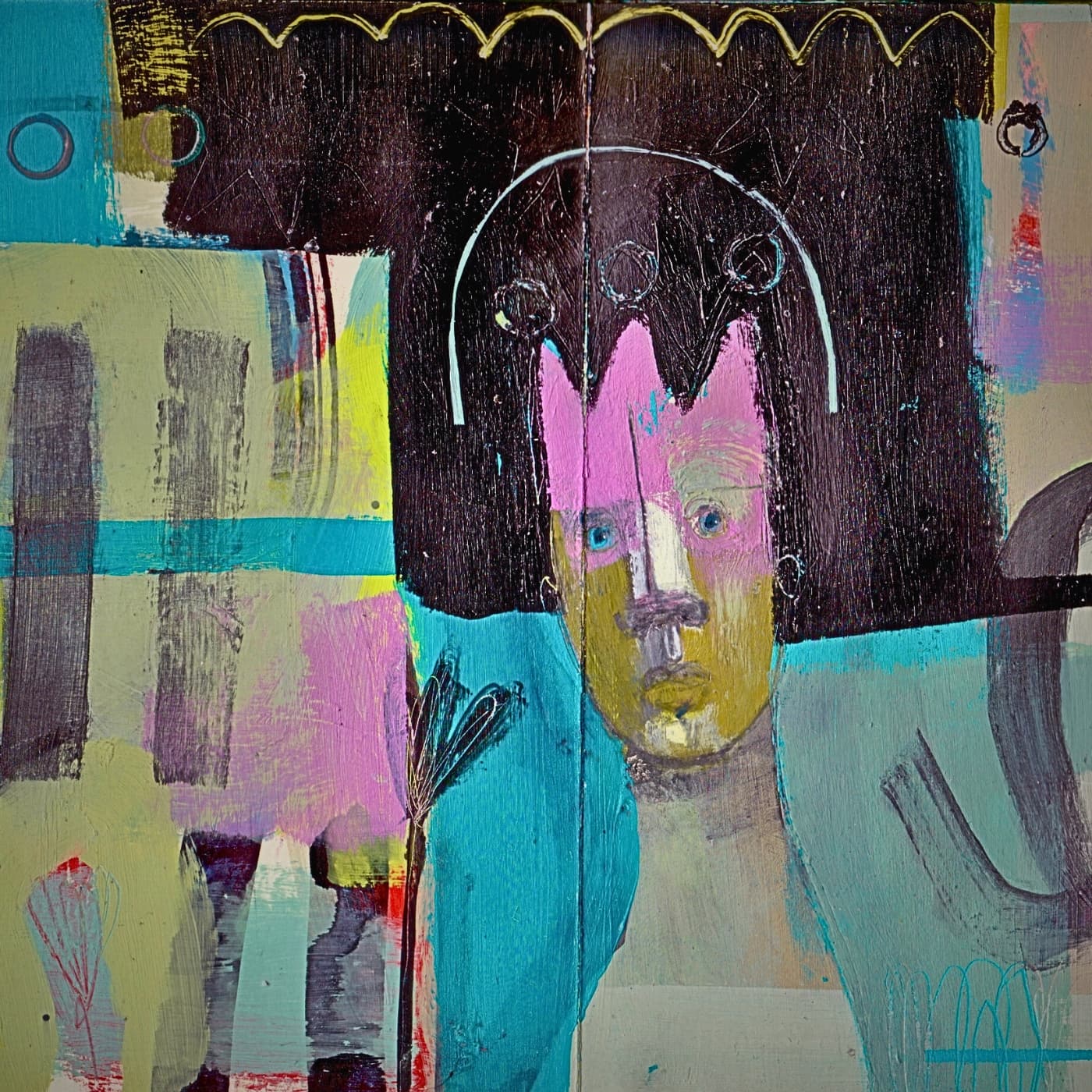
I prefer not to pre-plan my work. When painting, I’ll spontaneously make marks and see where that leads. Sometimes it might suggest a particular mood, or I might see the shape of a squirrel’s ear or a fairy’s shoe!
Folklore, fragments of memories and the stories shared around my nanna and grandad’s big kitchen table often pop up in unexpected ways.
There is often a ‘patchwork’ quality in the backgrounds. I hope that my work feels richly layered, as though there are parts of the story that haven’t yet been told.
I don’t want to be confined by the rules of perspective. This allows my compositions to evolve and change through the creative process.
Knowing how forgiving mixed media is makes me more confident in trying out new approaches.
Letitia Thompson, Mixed media artist
Stitching choices
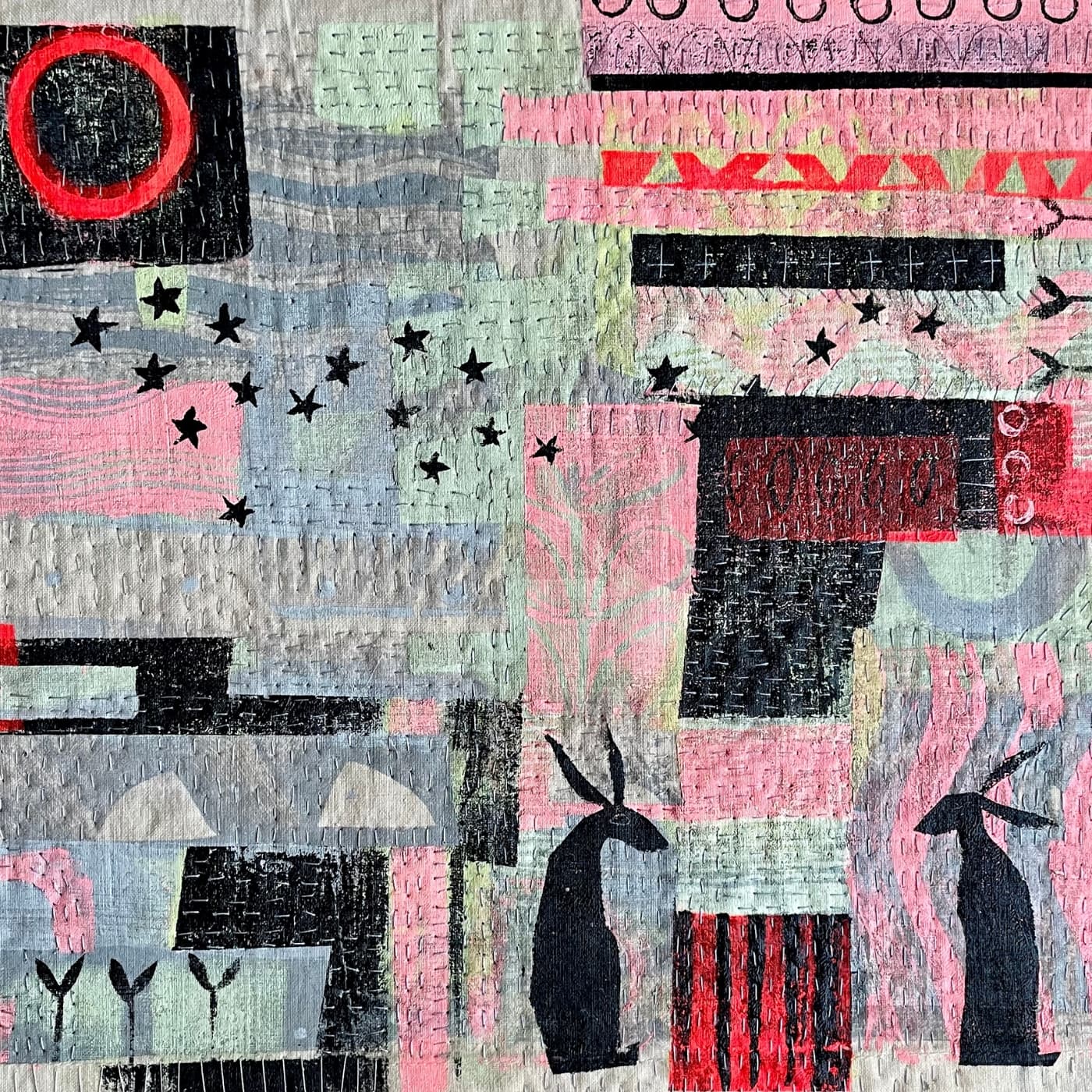
If I’m creating a freestyle, fabric-collaged embroidery, I enjoy using the sewing machine to draw as I love the scribbly, graphic quality of the line.
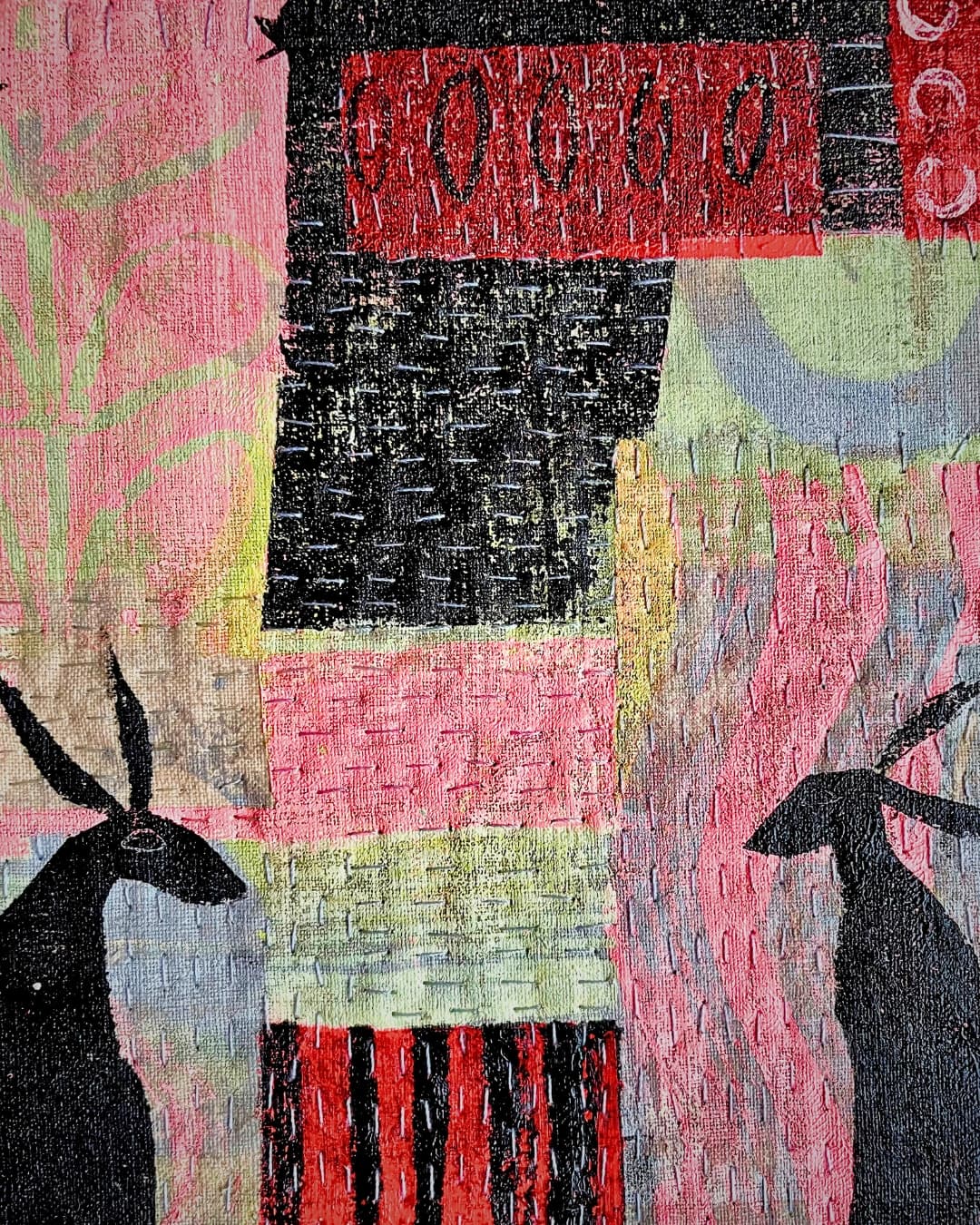
For my mixed media work on paper, I appreciate the textural quality of hand stitch. A simple running stitch can be useful as a unifying element that pulls a composition together.
I love the slightly haphazard quilted effect that hand stitching can create. I find that it contrasts effectively against the graphic quality of my gel printing.
Stitching over printed areas can help break up the surface and using different stitch directions can create a subtle layer of surface interest.
When I feel that my work on paper needs more depth, the three-dimensional quality of hand stitching adds another dimension.
Trusting the process
I’m motivated by the challenge of creating something with one’s hands and purely from imagination. It’s a kind of magic.
I’m also addicted to starting a piece without any idea of the final outcome. It’s always a surprise, and sometimes the results are quite insightful. A few months – or even years – later, I’ll think ‘Ah! That’s what that one was all about!’
I’ve noticed that as soon as I finish a piece of work, I’ll start to wonder whether I can do it again. It’s like a challenge – a bit scary but also exhilarating.
Creating through play
I grew up in a family where painting, stitching and making were part of everyday life. My parents always encouraged my love of art.
I think that creating art allows me to escape into my own world. It takes me back to being an only child in the 1970s, when a handful of pencils and the back of a cereal packet were my ticket to anywhere in the universe.
I originally studied Fashion & Textiles at St. Martin’s School of Art, London (now Central Saint Martins, University of the Arts London). It was such a culture shock moving from a small northern steel town to the big city.
What I loved most about my time at St. Martin’s was how we were encouraged to think outside the box. You could be as experimental and playful as you wanted.
It was obvious very early on that I wasn’t going to design clothes that were actually wearable, but that really didn’t matter. It was no surprise that the garment I made from stitching mini marshmallows into American tan tights never caught on.
“I love experimenting with unusual materials.”
Letitia Thompson, Mixed media artist

Cultivating curiosity
It’s this attitude of experimentation that I want to bring to Stitch Club. I hope that after taking part, members will feel more confident to just dive in without overthinking and work in a joyful, spontaneous way.
In my workshop, we explore a range of techniques and processes, including painting, printing, collage and designing stencils and masks.
I find that often I like the piece more if I’ve had to think of a way to rectify a mistake. That’s the most enjoyable part of the whole creative process.
Layering and collaging processes are so forgiving that you can be courageous and curious when creating – if you don’t like it, just cover it up.
Letitia Thompson, Mixed media artist

Overcoming challenges
I taught art for thirty years, including on an Art & Design foundation course. I absolutely loved helping students find their creative voice and preparing them for degree-level study.
When you work as an artist, it’s often your mindset that can be most challenging. I still struggle to say that I’m an artist when asked what I do.
A particular hurdle for me was that I felt as though I should be either a fine artist or a textile artist. This created that hideously stifling feeling of imposter syndrome, which is familiar to so many of us.
However, over time, I’ve allowed myself the freedom to move between mixed media, textiles and painting. Now, I don’t worry about where my work fits in.

Finding kindred spirits
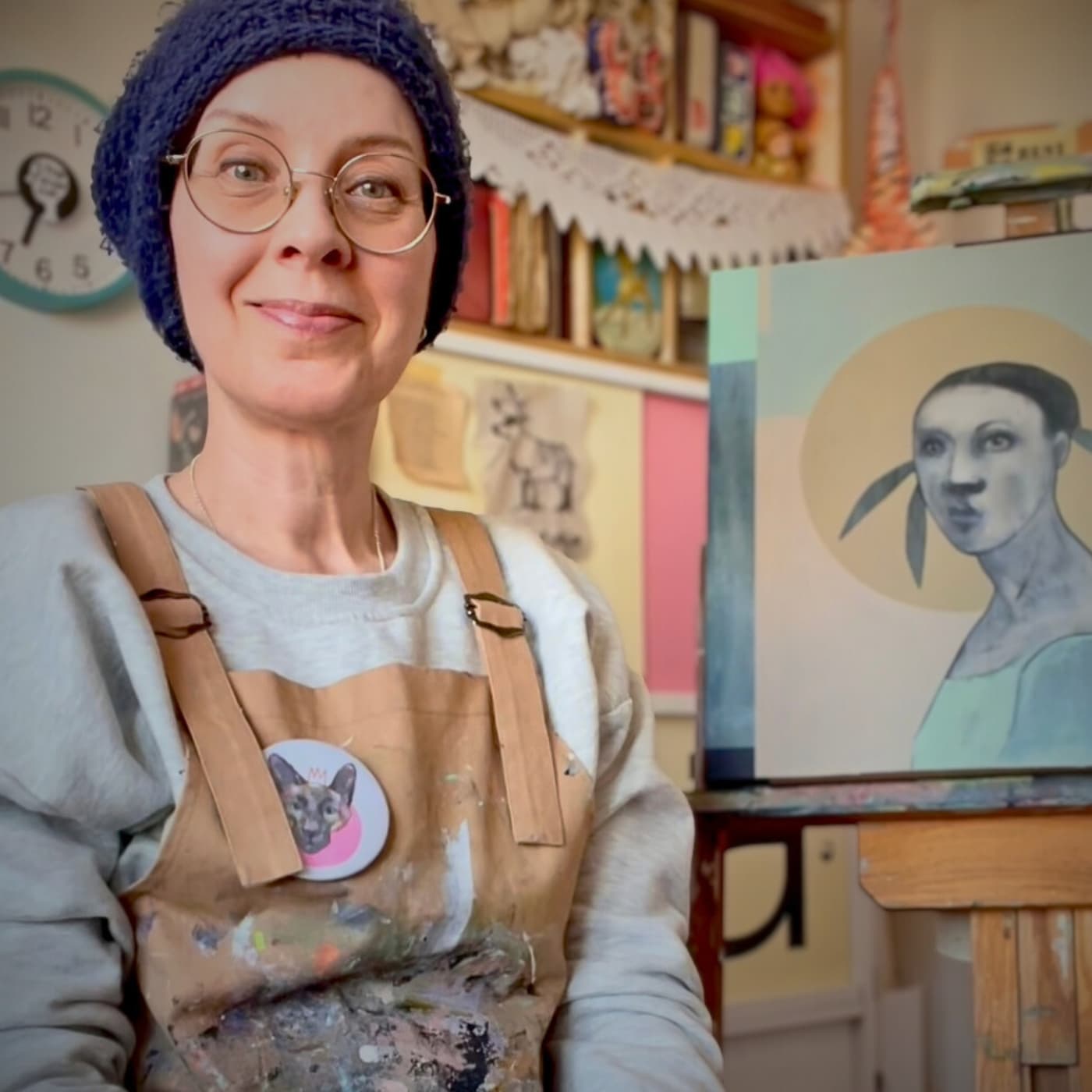
I work in a small studio at home, and at times I’ve rented a studio space, which allows me to work on larger pieces. Working away from home really helps me. I can live ‘inside my head’ a little too much, so it’s important that I meet like-minded souls and feel that I’m part of a community.
I also enjoy sharing the daft stories that sometimes emerge as I work. I used to feel a bit embarrassed about the characters and narratives, but sharing them has helped to find the people who connect with my work or my process.
I think making and sharing art is such an important part of life. I love meeting kindred spirits in my painting, mixed media and textiles workshops.
Digital surprises
Technology and the digital world have become an essential part of my practice. This has really surprised me because I was terrified of it at first. Luckily, I have some very talented and patient friends – including my daughter.
Now I couldn’t imagine my creative practice without my iPad and my beloved Procreate app. As well as using it to create products for my small business, I enjoy combining scans of my original artwork with digital collage and Procreate layers.
I find the software is very intuitive. I enjoy using the Select tool to cut out particular parts of the scanned artwork and combine them with opaque and transparent digital layers. It mimics the way that I paint, and I can create countless versions from one artwork. I share my process in a YouTube video, Procreate for Traditional Artists: Easy Steps for Digital Art.
A practice for life
One of the most valuable things any creative person can work on is to be mindful and aware of their creative process.
Everyone’s way of working is unique. Learning to understand your own methods for creative problem-solving will help you tackle any future blocks or issues that may arise. This applies to both the practical and mindset aspects of your process.
I think it’s important to understand that this is a lifelong practice which constantly evolves. That’s why being a creative is never boring.
3 comments
Embroidered Patches
You’re doing a fantastic process, Keep it up.
Sandra
I love mixed media and adding hand stitch into my mark making exercises. I use what I did with Sue Stone during lockdown
Siân Goff
That’s so great to hear, Sandra. I’m sure Sue would be thrilled to know that you’re still using techniques you learned from her during lockdown. It’s so wonderful to share the joy of making.