
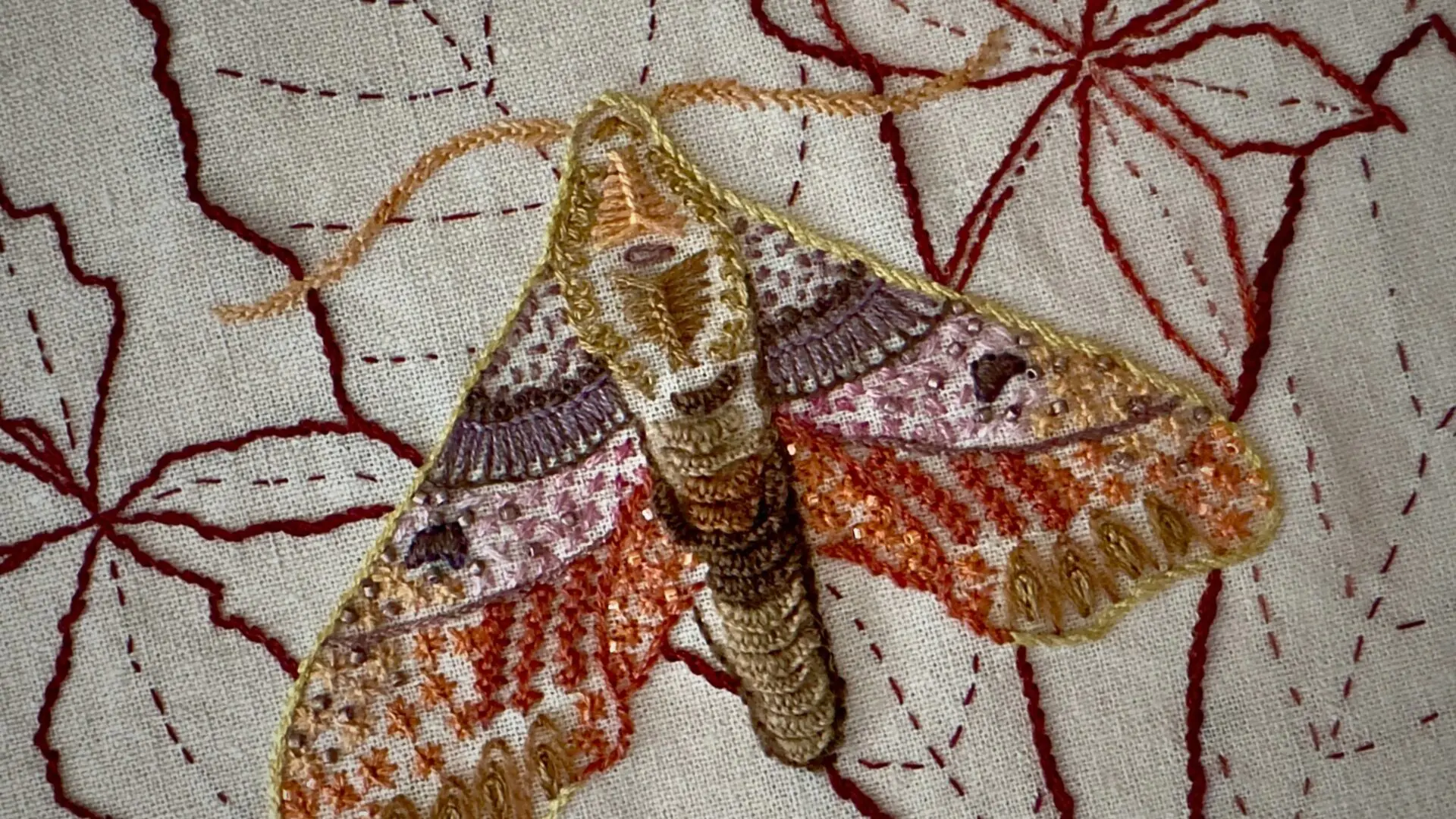
Heather Kerley treats embroidery as a space to question and explore. She blends embroidery with mixed media, letting the materials and process shape each piece.
Nature sits at the centre of her work. She looks closely at how we currently relate to the natural world and how that relationship may shift over time. Her work holds both beauty and unease, inviting us to notice what we value and what could be lost.
She’s an experimenter at heart, believing real breakthroughs happen through play. She also views embroidery as a kind of ‘punk’ practice that intentionally steps outside the daily pull of speed, consumption and constant digital noise.
Be sure to check out Heather’s prayer flags and seed bank quilts. They’re further proof of how fabric and stitch can deepen our connection to the natural world.
A tangle of textile memories
Heather Kerley: I have a tangle of childhood memories about textiles: my maternal grandmother giving me a knitting lesson, and my mother and grandmother always sewing and doing embroidery projects.
From a young age, I loved to work with my hands. For a while, it was pot holders, and then I got a little quilting kit. Of course, in the 80s, I went through a friendship bracelet phase, and I also dabbled in cross stitching.
I was lucky to have a good high school art program and a very supportive teacher who introduced me to batik-making. I became obsessed. I made batik designs and then embroidered them. My series landed me a scholarship to Columbus College of Art and Design in Ohio.
Unfortunately, the programme didn’t really focus on textiles at the time, so I got away from it for many years. Then about 10 years ago, I picked up embroidery again and fell in love with it. I’m mostly self-taught from books and occasional YouTube videos.
I had also always wanted to learn quilting and got my chance during the pandemic. I reached out to quilter Lauren Kingsland, who agreed to mentor me, and one of my last trips out of the house before lockdown was picking up a sewing machine.
Nature calls
The wonder of nature is my greatest inspiration, and I thank my father for instilling that in me. He took our family camping, canoeing and hiking. Everywhere we went, he encouraged us to look closely at everything, whether it was stones on Lake Superior’s shores or spring beauties coming up in the Appalachian foothills.
Because of those experiences, when I now walk into the woods, I don’t just admire the trees. I imagine everything underground as well: the soil, the microbes, the mycorrhizal networks, the roots and the water. All of that is in my body too, and all that I create reflects my desire to deepen my integration with the world around me.
Rewilding & kinship
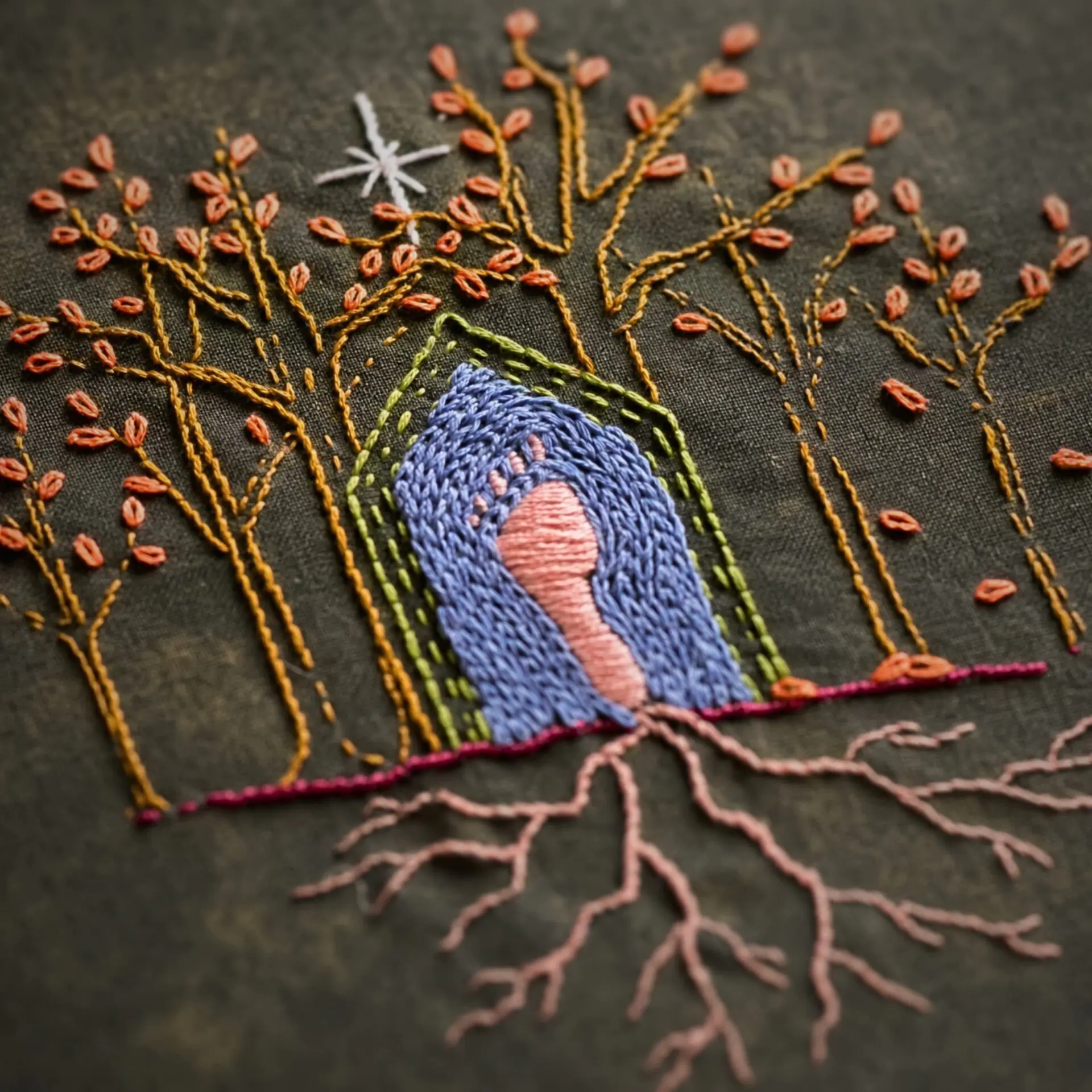
My textile art and paintings explore regeneration, co-creation, and the process of re-kinning ourselves with the natural world. As I watched climate disasters unfold during the pandemic, I realised we risked losing parts of the planet’s diversity each day.
I was overcome by grief, but it also gave me a sense of urgency.
Writers Robin Wall Kimmerer and Doug Tallamy helped shape my response. Kimmerer’s Braiding Sweetgrass emphasises kinship and reciprocity with the natural world, while Tallamy’s Nature’s Best Hope shows how even small spaces can support ecosystems. Their ideas led me to focus on the land right outside my door.
I planted native species in my yard and then moved towards a process of rewilding, in which I let certain plants grow and allowed natural processes to unfold. It gave me permission to live more freely and to not fight battles I can’t win – though I do sometimes need to remove invasives, poison ivy or saplings growing in unrealistic places!
My Maryland home is on the ancestral land of the Piscataway people, who were forcibly displaced. It’s also a land where many people came from other places, some against their will.
For me, the process of land acknowledgement is key to the idea of re-kinning, because it creates an opportunity for reciprocity, healing and understanding.
“I realised that to truly honour and heal the land, I had to acknowledge its suffering and history.”
Heather Kerley, Textile artist
Experimental approaches
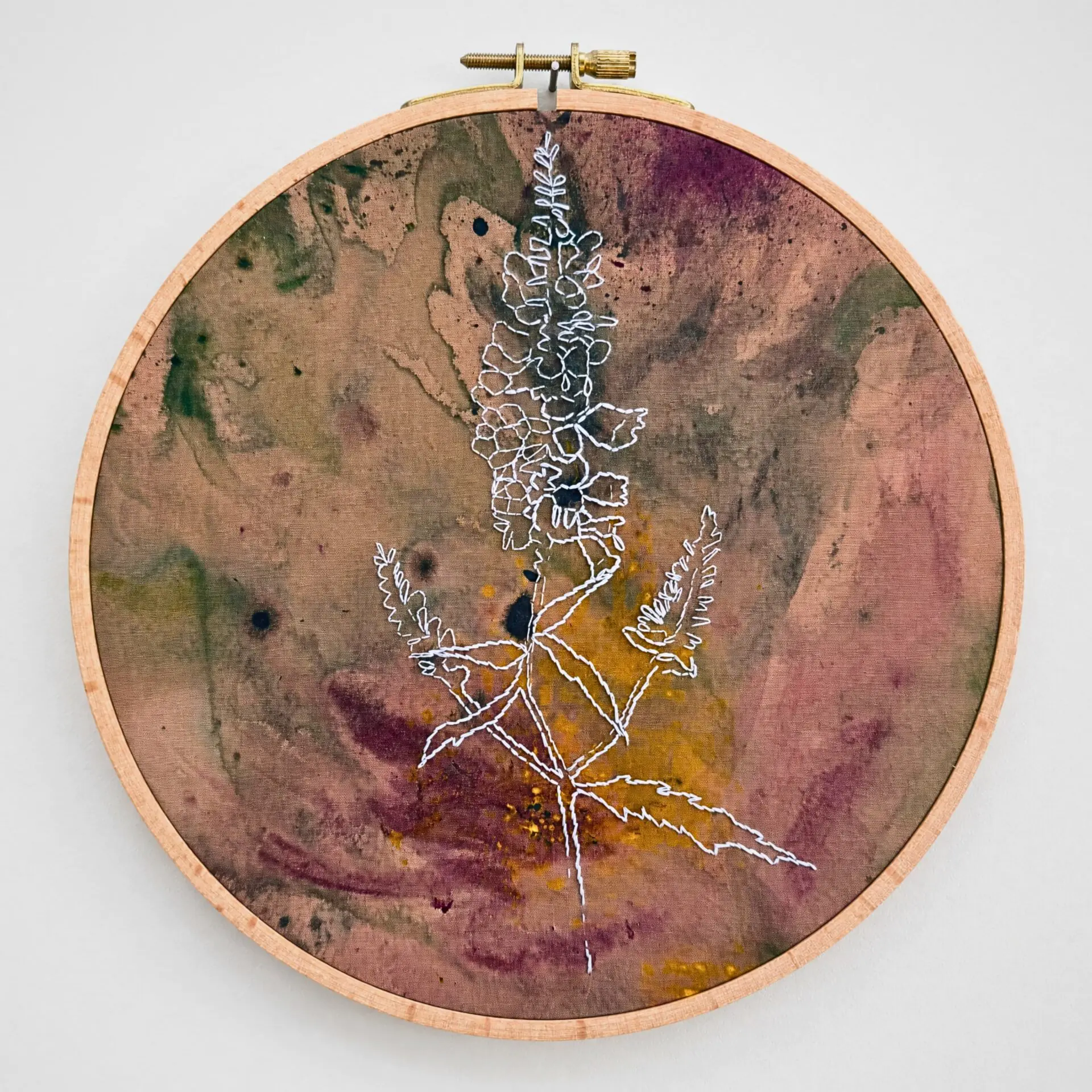
I am someone who relies on intuition and improvisation. Of course, some projects require planning, and for that, I’m grateful for my art school education. It taught me that there’s always a way to create whatever vision I have, but I might need to work it out in steps and acquire new skills along the way.
I’ve had so many fits and starts in my artistic journey, and I have come to view experimentation as part of the process. William Kentridge said, ‘It’s always been in between the things I thought I was doing that the real work has happened.’
When I consistently show up for the experimentation and play aspects of creating, I gain ideas for more focused projects while making lots of discoveries. I also gain important skills and experience.
I’ve also found ways to turn provisional experimentation into projects that embrace that mode of working. That includes my paper collages, for which I recycle other artworks, and my prayer flag project.
Everything I make builds on everything that came before and lays the groundwork for what’s to come.
“Time spent messing around when the stakes are low is the time that’s most creatively fruitful.”
Heather Kerley, Textile artist
Multiple artistic styles
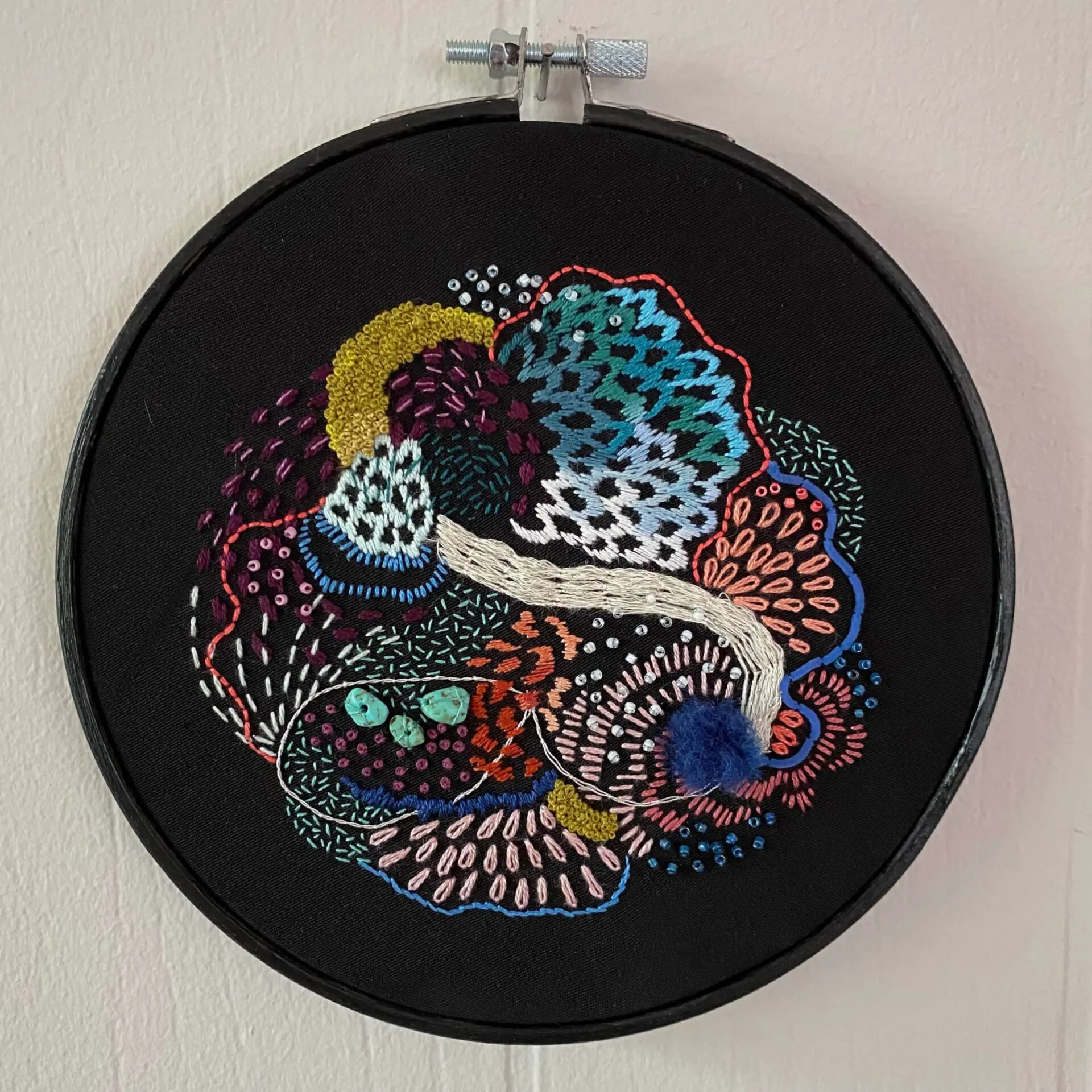
Early in my career, I used to agonise over not having a particular look or steady style in my work. Now I bounce between three or four different consistent modalities and lines of inquiry.
There are many ways to be an artist. Some artists find one way of working, while others are endlessly exploring.
We should create the things that spark our passion and feed our curiosity. And if you follow a spiritual tradition that touches your work, it becomes part of your point of view that is inseparable from your art.
“I think it’s important we artists view everything that we do as part of our art.”
Heather Kerley, Textile artist
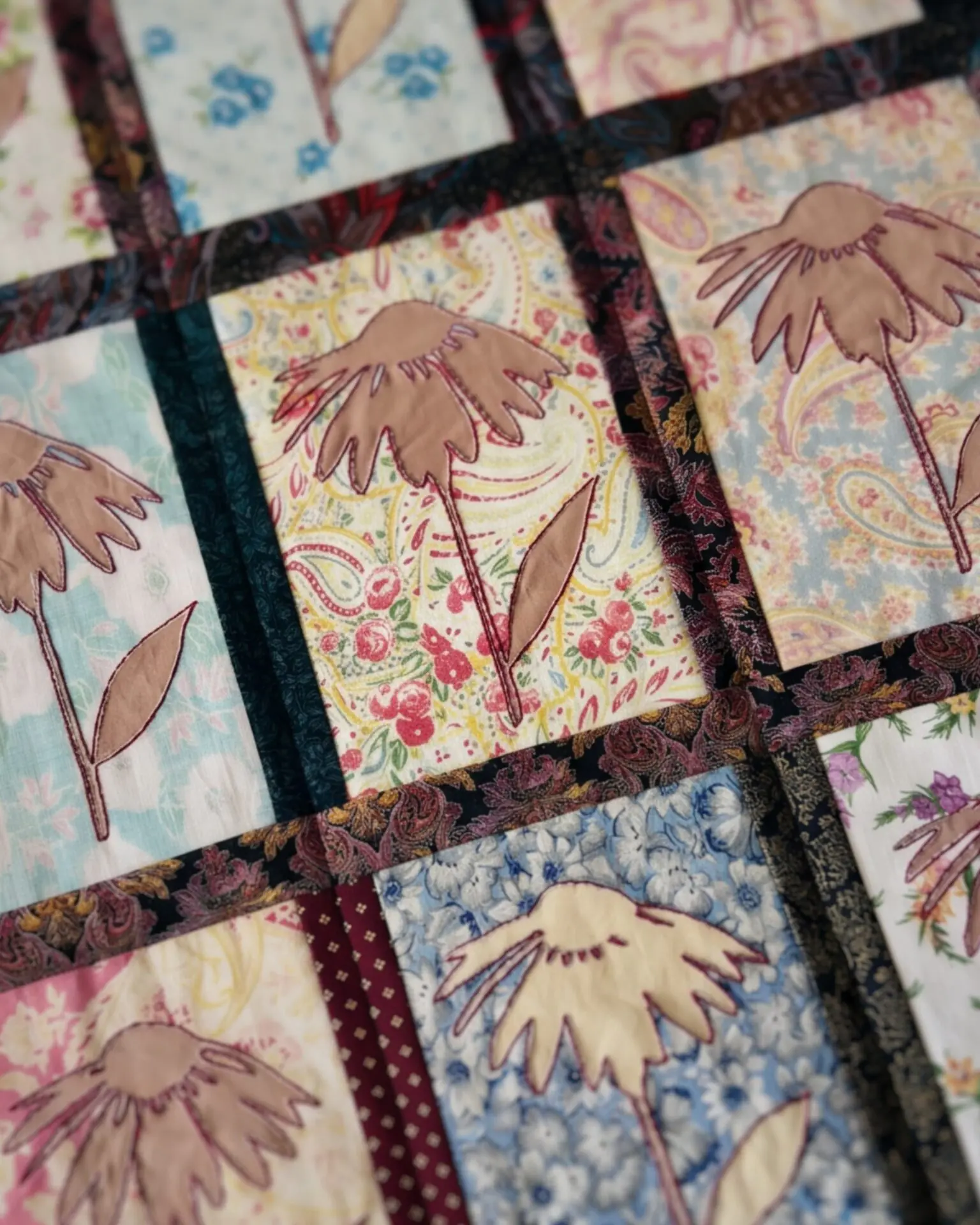
The power of embroidery
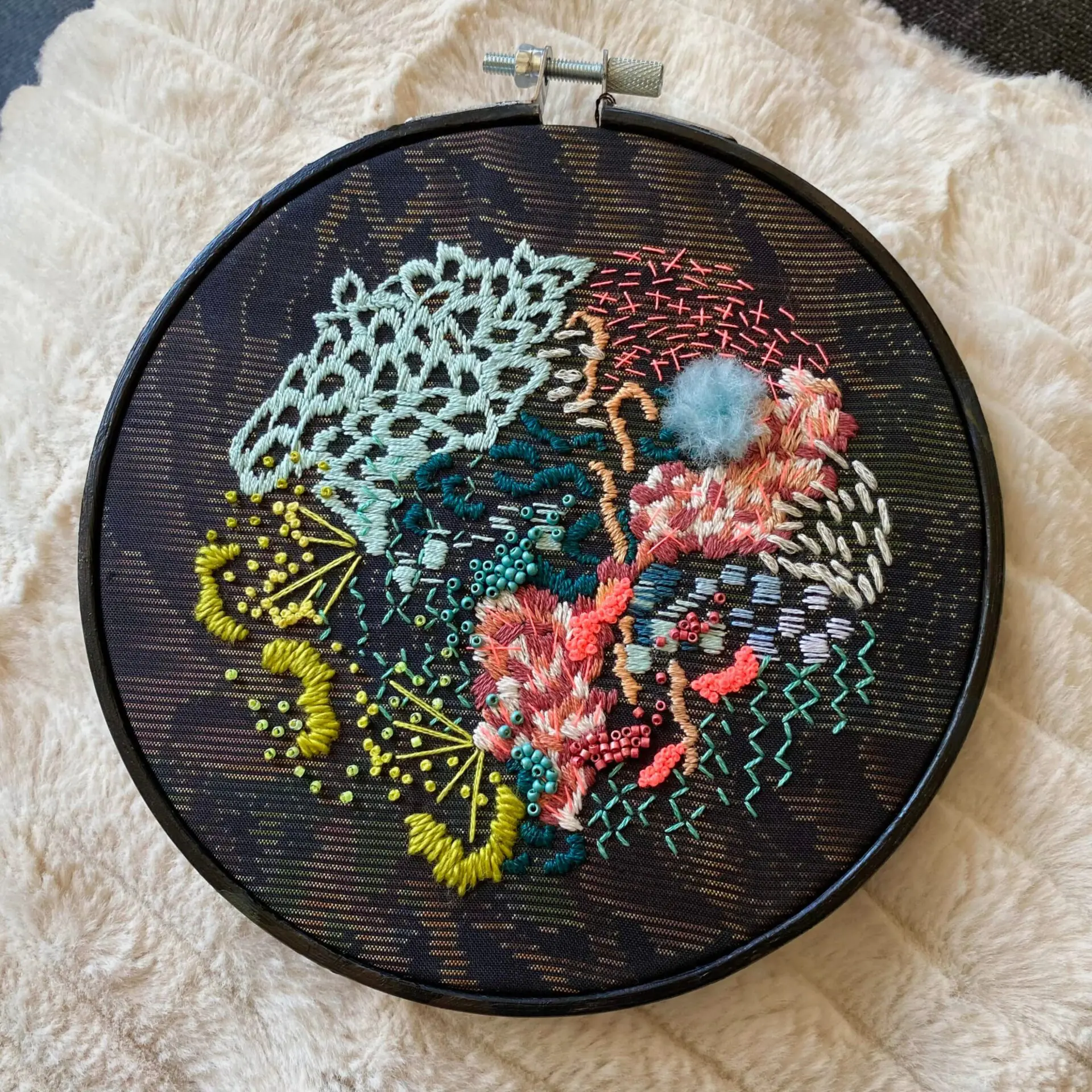
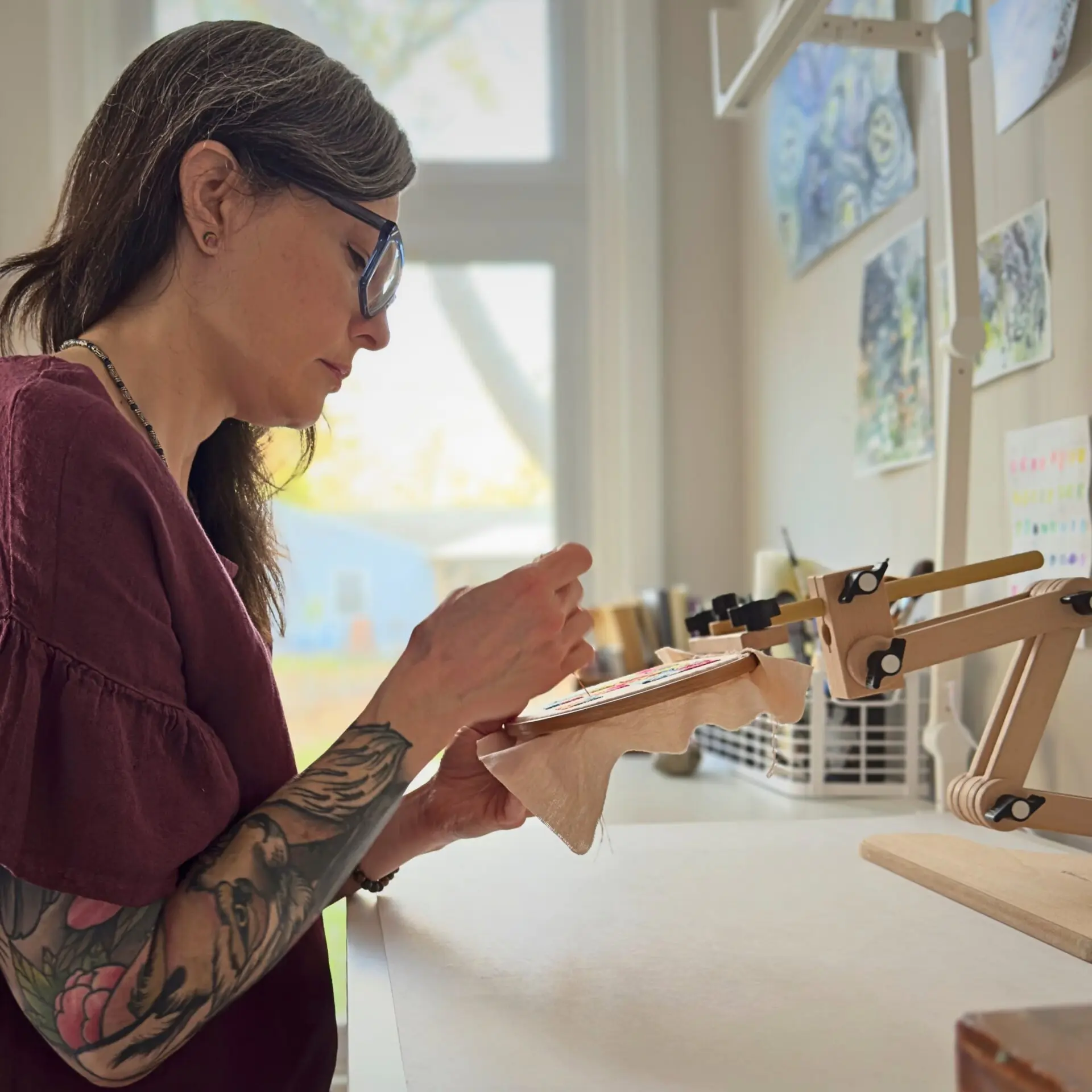
Hand stitching has a wonderful tactility, and it slows down my racing thoughts. I enjoy the creative arc of working intuitively and improvisationally, watching the creation evolve, change and then come together.
Embroidery is also endlessly varied. I love how there’s always a new stitch to learn.
I think textile art is very ‘punk’. It exists in a space out of reach of algorithms, surveillance and consumerism, especially when I use found materials in my pieces.
“Stitching is an antidote to all the ways that society and corporations try to capitalise on every waking moment of our lives.”
Heather Kerley, Textile artist
Favourite stitches
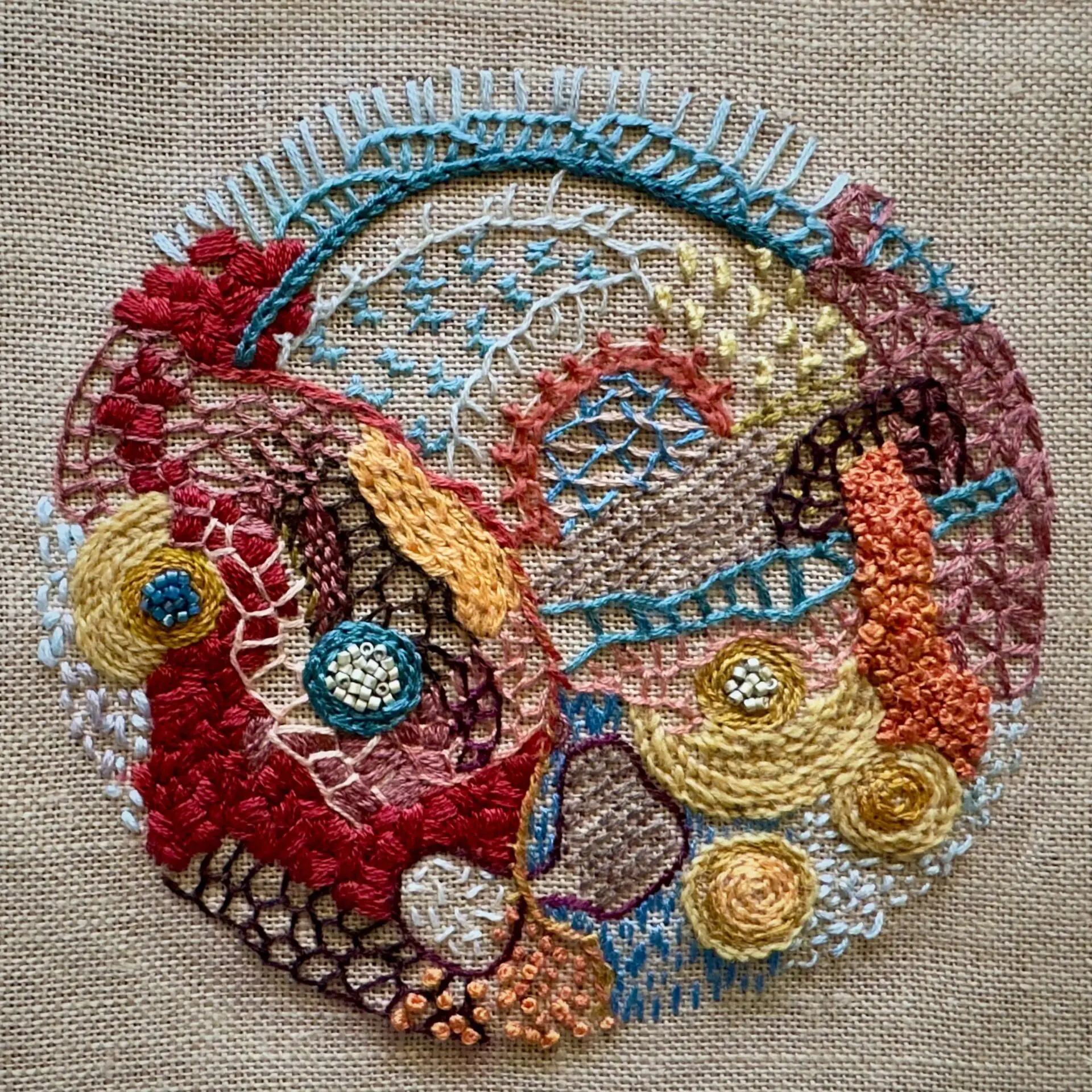
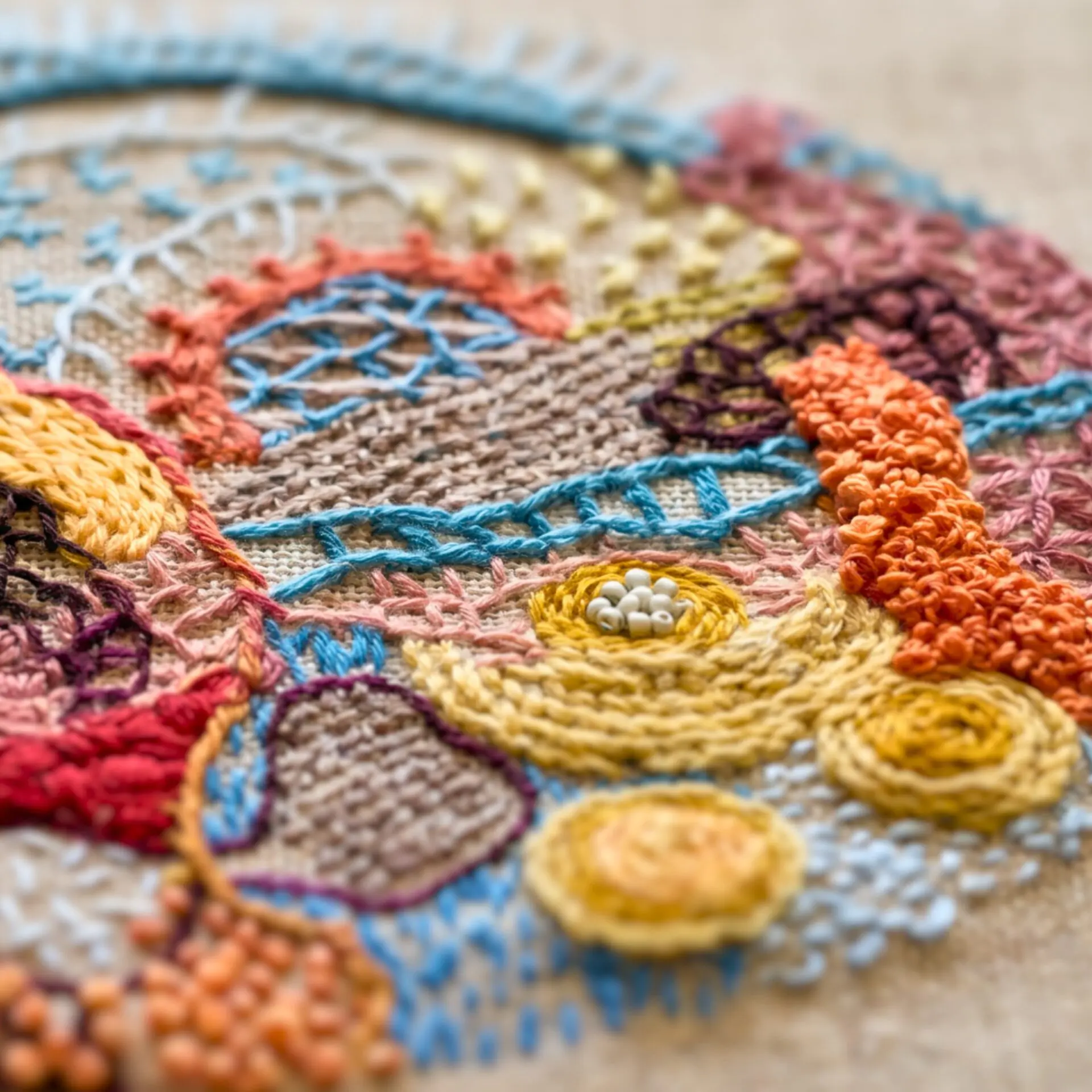
My favourite stitches are like my favourite colours: they keep changing.
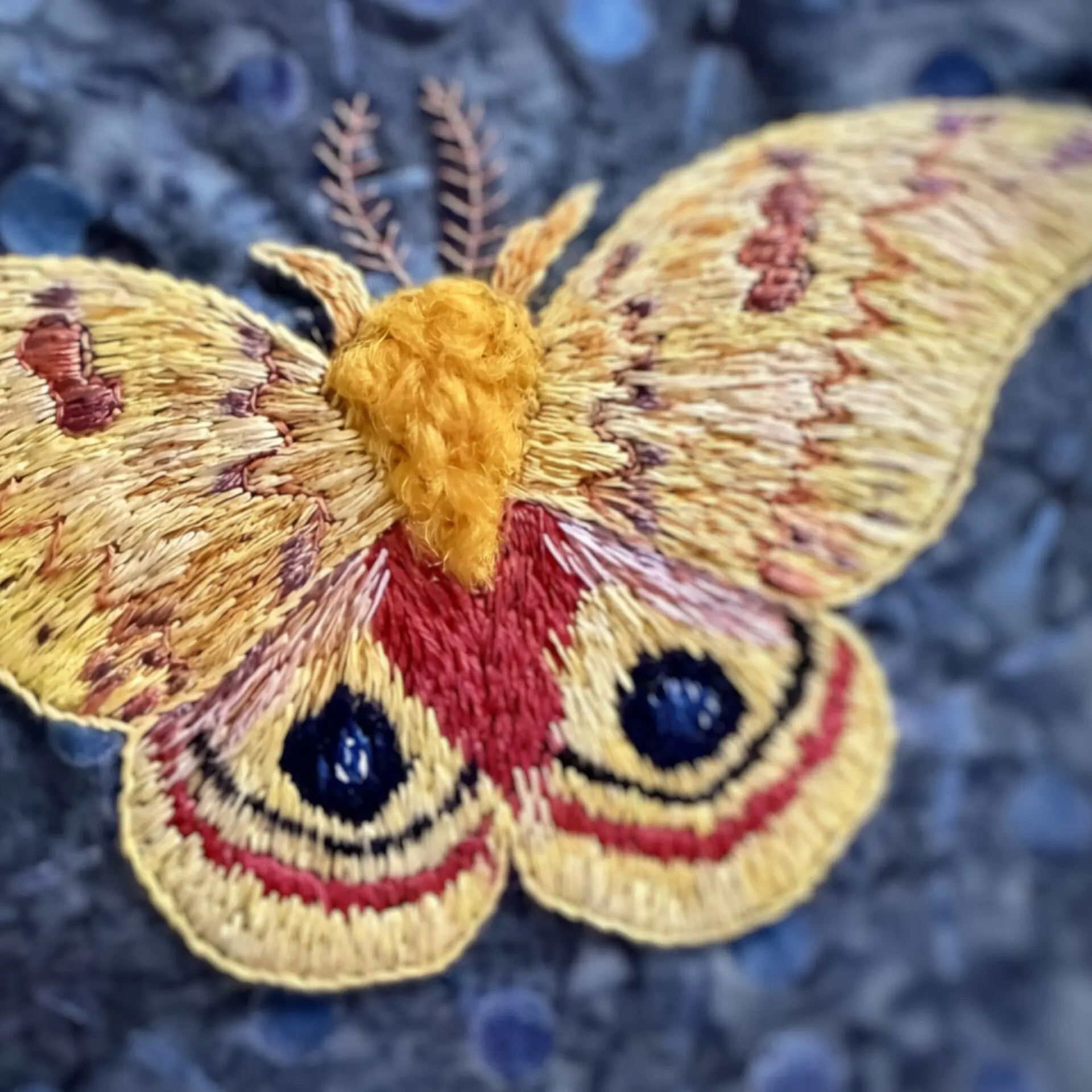
I’ve been expanding my repertoire a lot lately to challenge myself. In particular, the entire family of chain stitches is fascinating. I also enjoy hunting through my books for the best stitch for a particular detail or use.
I work with all kinds of threads. Recently, I’ve been doing more traditional crewel work, so I’ve been using Appleton’s wool. I also enjoy Threadworx thread, but I use DMC and Splendor too.
Upcycled materials are my fabrics of choice, usually cotton, muslin and linen. I use linen for my traditional embroidery.
I’m excited about sharing some of my techniques in a Stitch Club workshop. Members will create a nature-based design that will evolve rather than following a fixed plan. After simplifying and transferring their image, they’ll experiment with a range of embroidery stitches combined in intuitive, unexpected ways.
I’m hoping they’ll embrace their creative flow as they create a unique interpretation using a more relaxed approach to stitching.
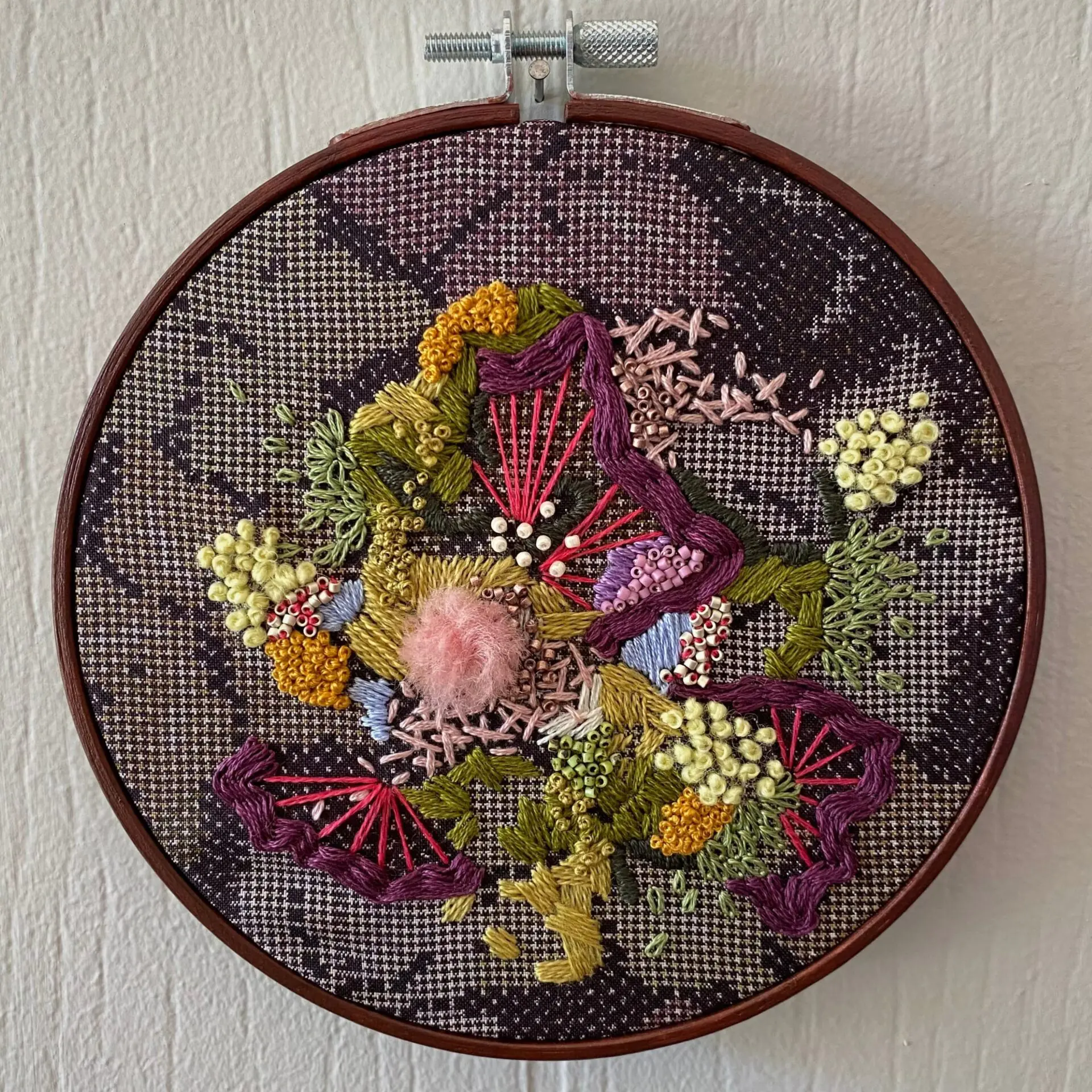

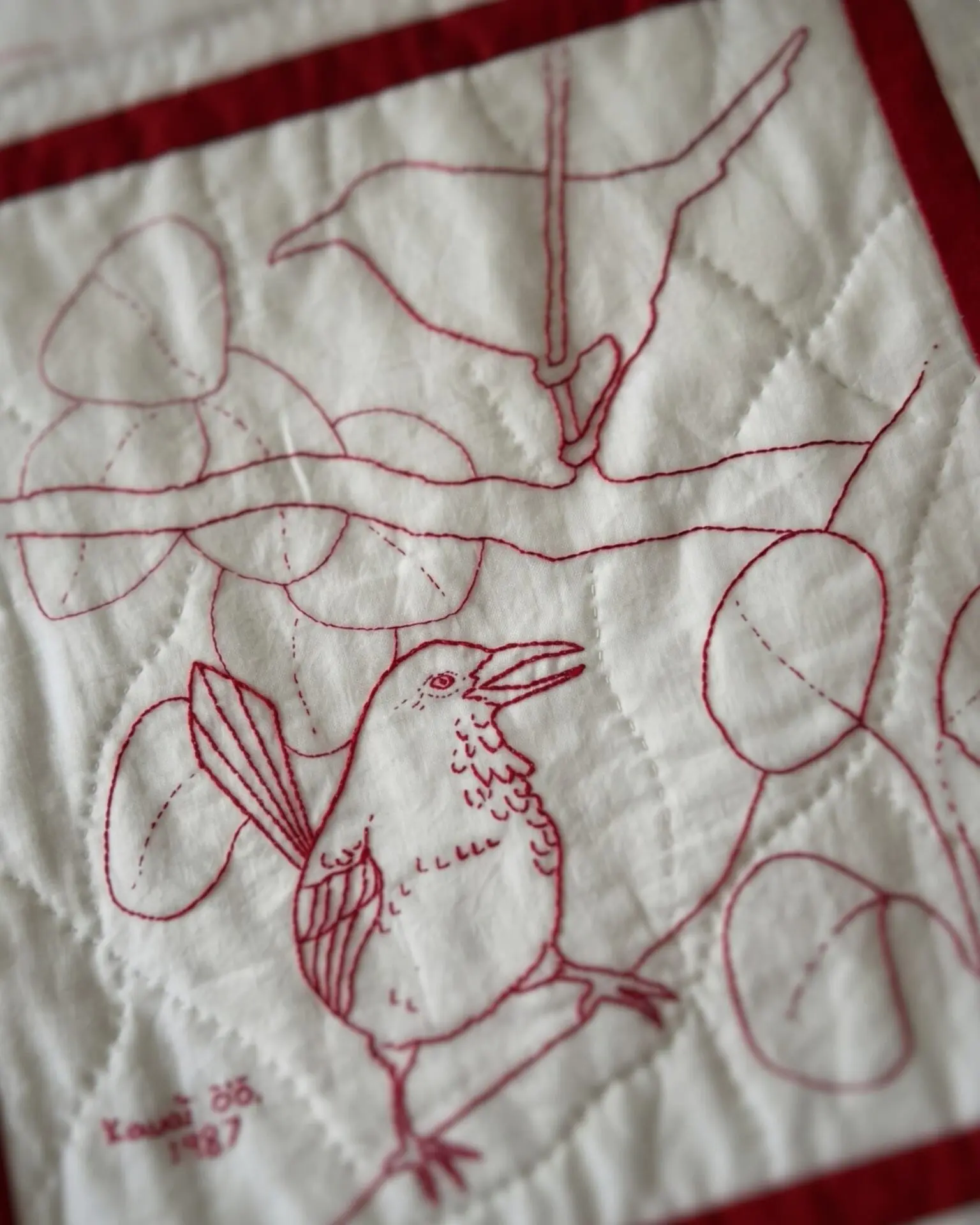
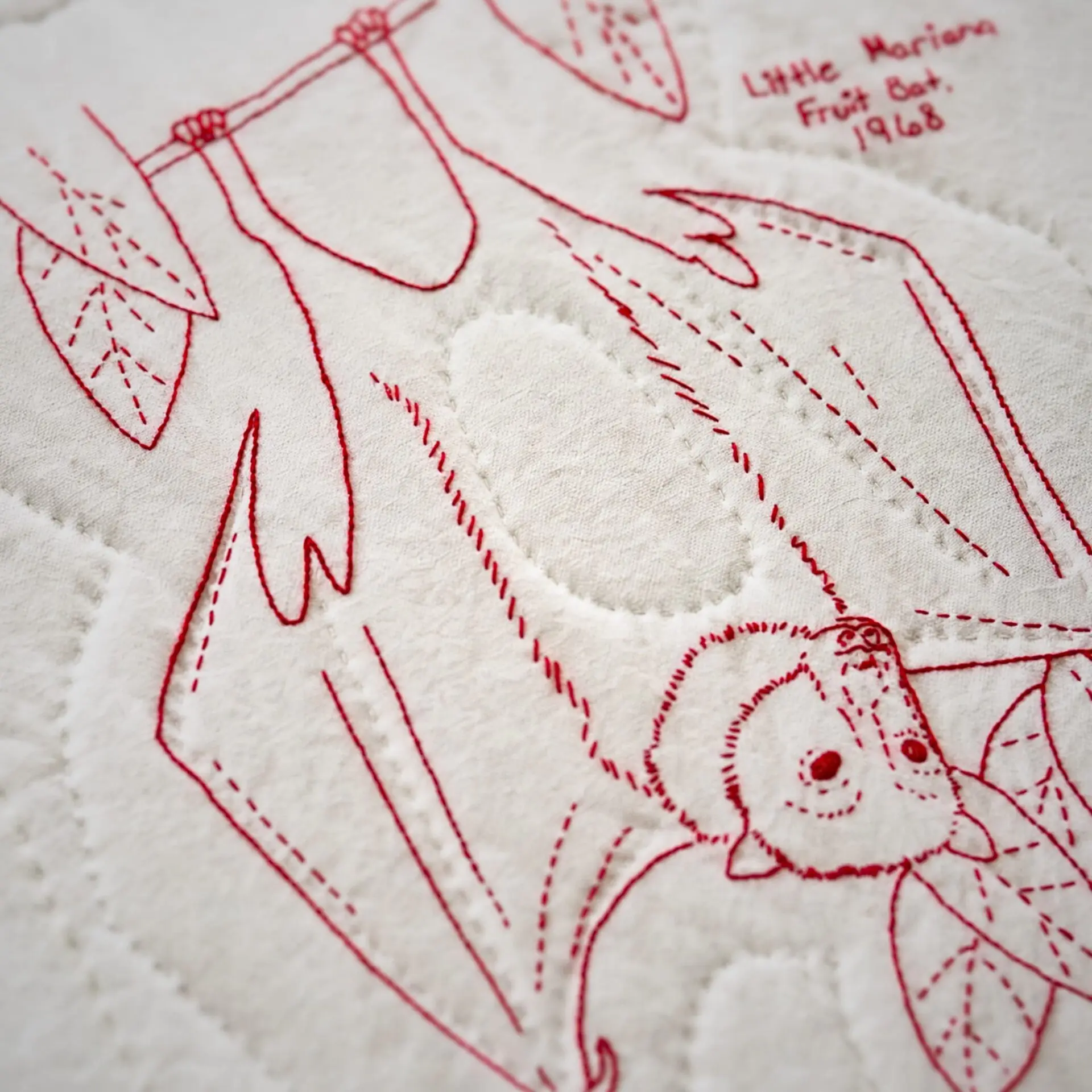
Mourning our kin
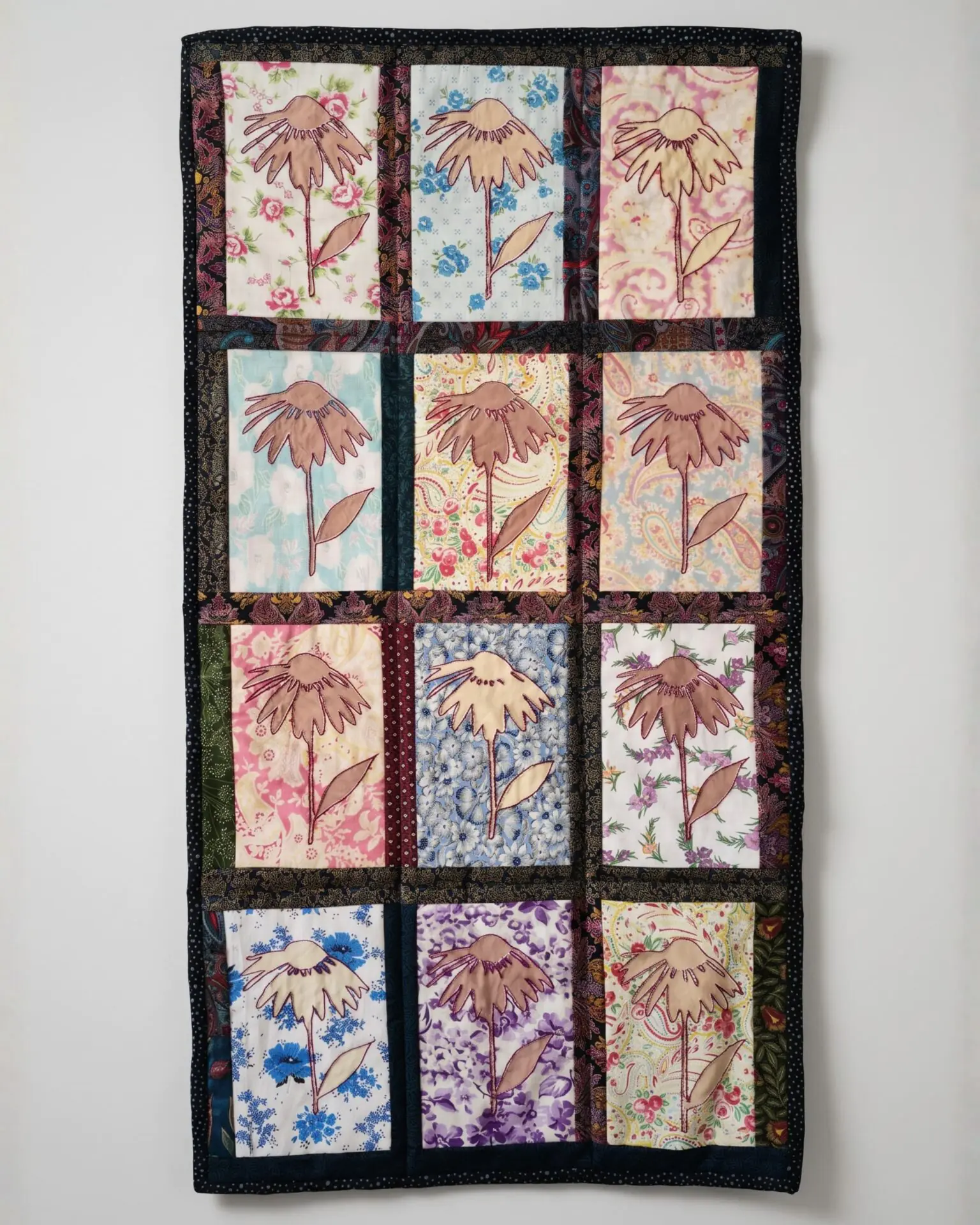
In 2021, the United States Fish and Wildlife Service proposed 23 species for delisting from the Endangered Species Act due to extinction. That meant no more resources would be used to find or study those species.
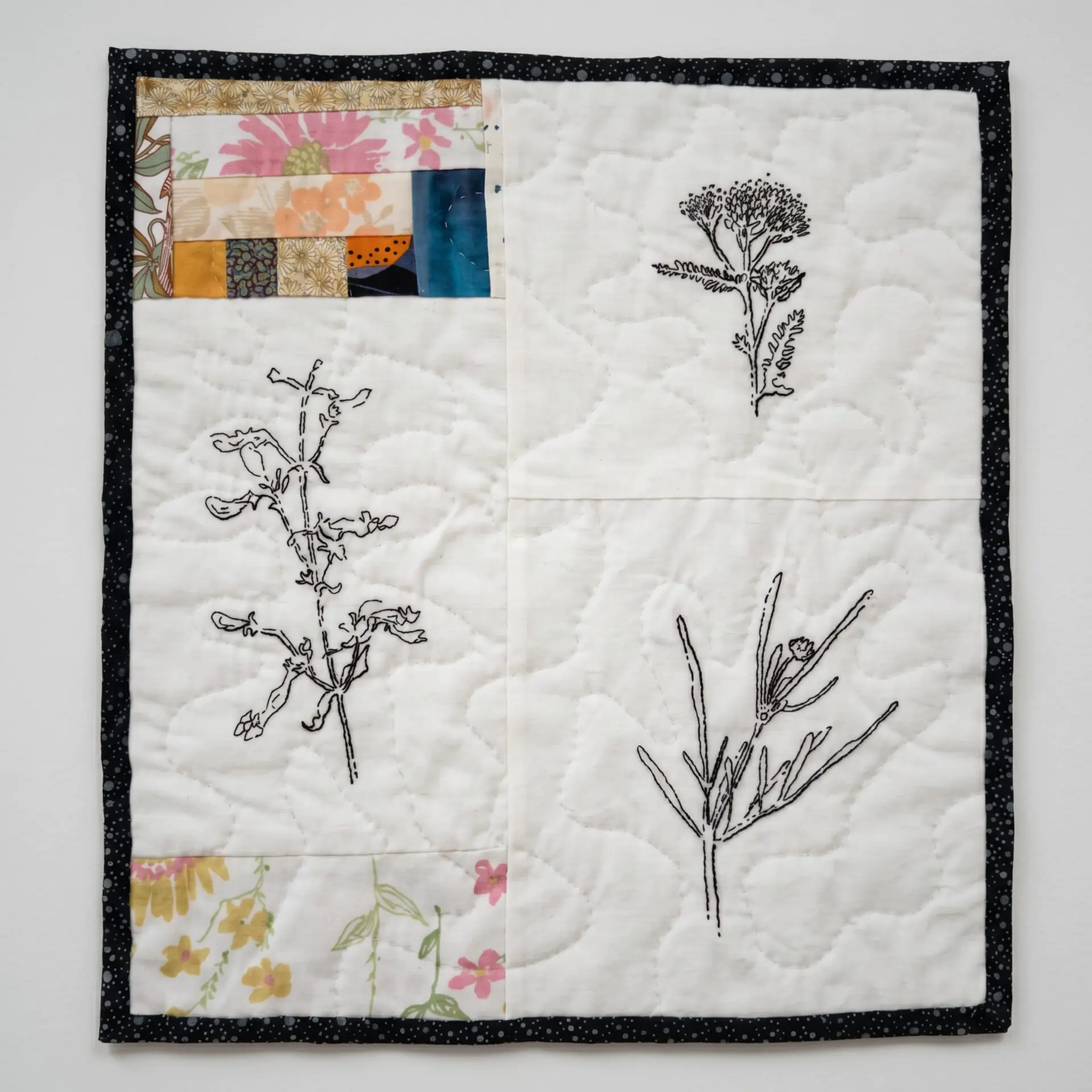
The quilt Mourning Our Kin honours each of those species. I chose Redwork embroidery because the outlines denote absence, while the red suggests the violence involved in species destruction.
At the time they were being de-listed, I happened to come across a historical picture of a Redwork quilt featuring beautiful botanical imagery. Most American Redwork is on the cutesy side, but this work had a seriousness that I thought would be a perfect container for the project.
I also learned Redwork embroidery was very popular at the time when many North American species were being pushed to extinction, including the staggering near-eradication of the American Bison that had numbered in the millions at one time. Our modern conservation movement began as a result, as well as the notion of ‘last animal’ imagery.
Redwork involves just a few easy stitches: outline, backstitch and running stitch. The stitching was fairly easy, but constructing the quilt was a challenge. I was not an experienced quilter!

Quilted prayers
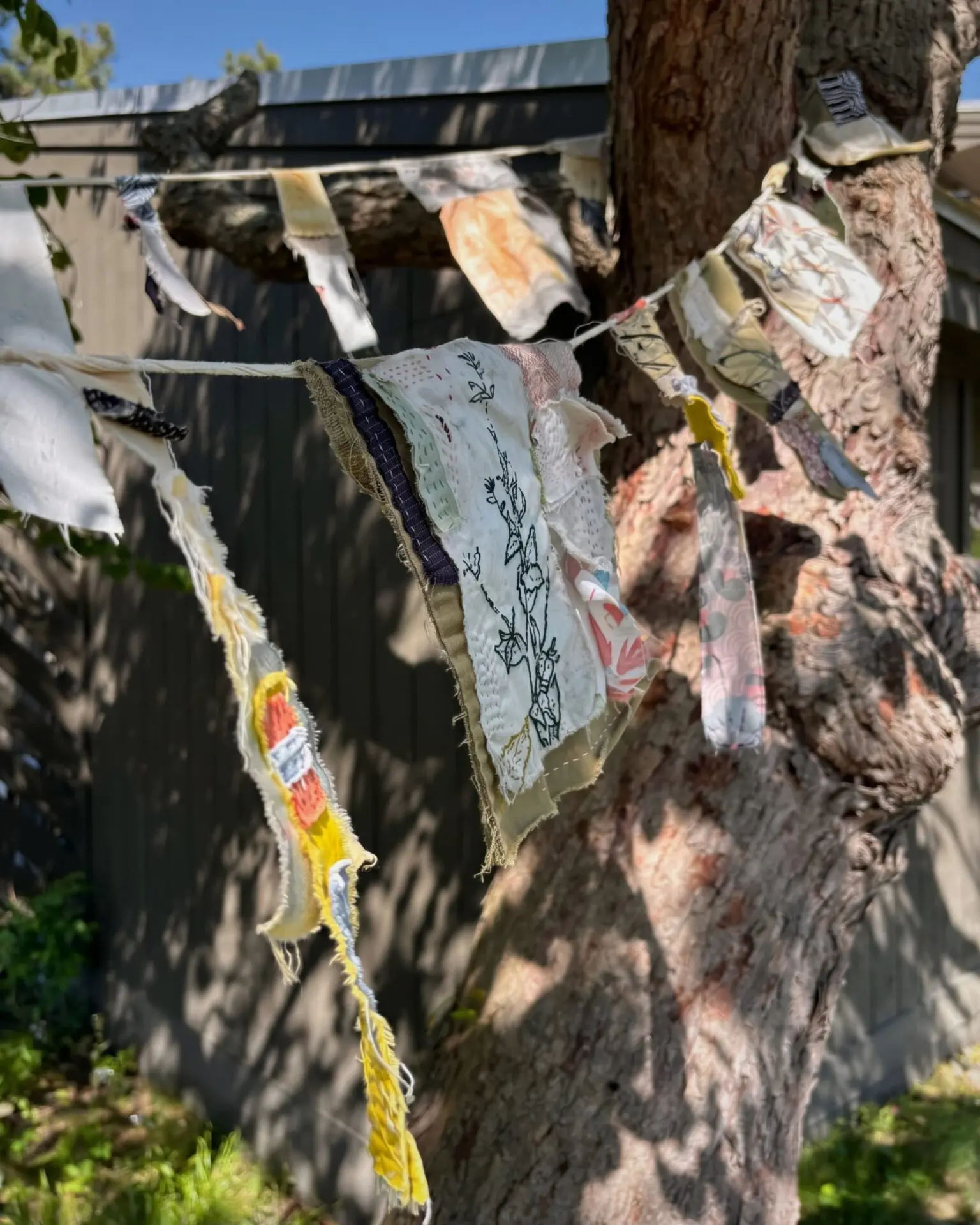
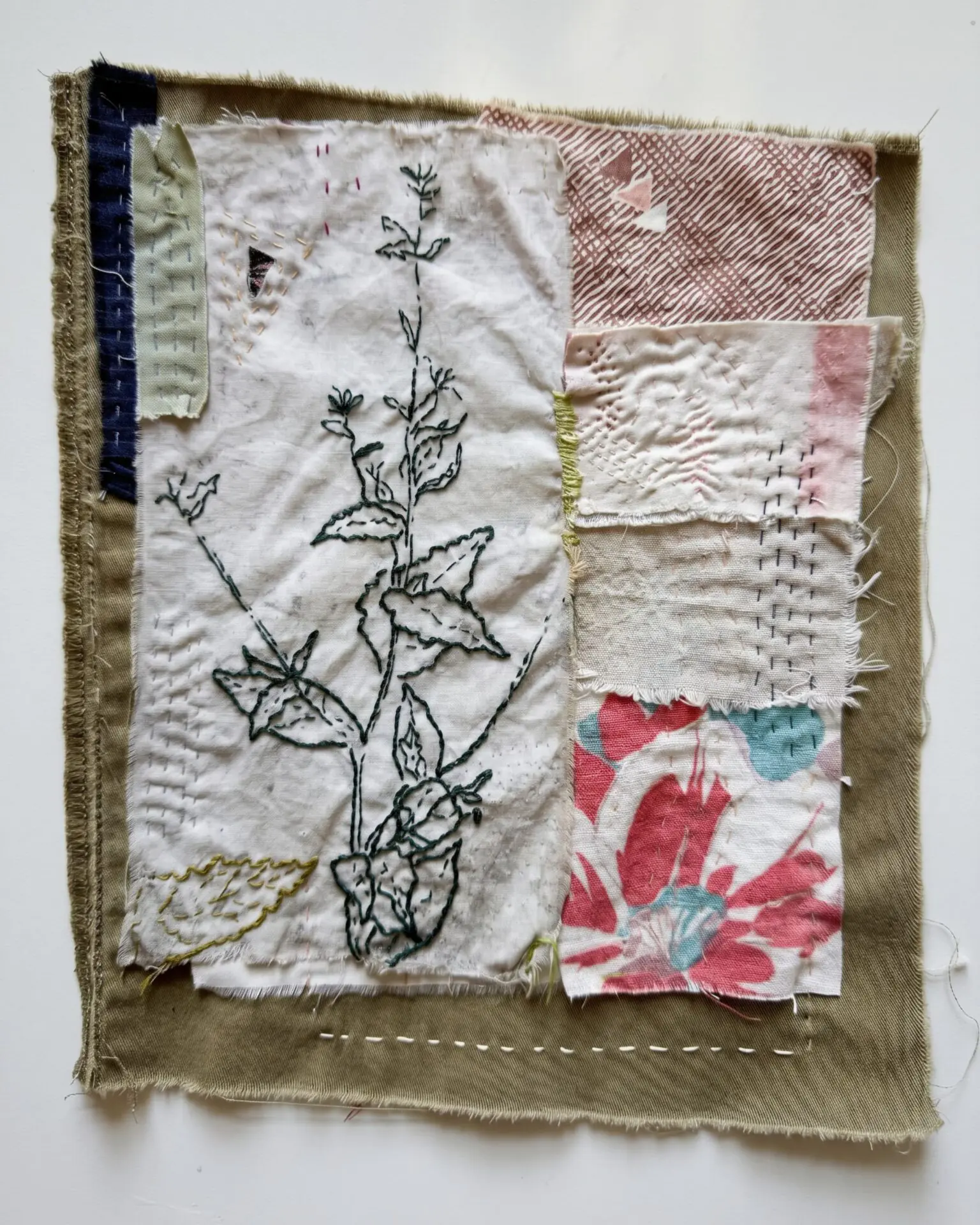
In the tradition of Tibetan prayer flags, I created my own versions to offer healing prayers for lands scarred by centuries of exploitation, colonialism and environmental degradation.
My first little banner hung in the elements all winter in 2023. I then took it apart and added other found elements. These continued to commune with each other and the elements as they hung from the crab apple tree outside my studio window.
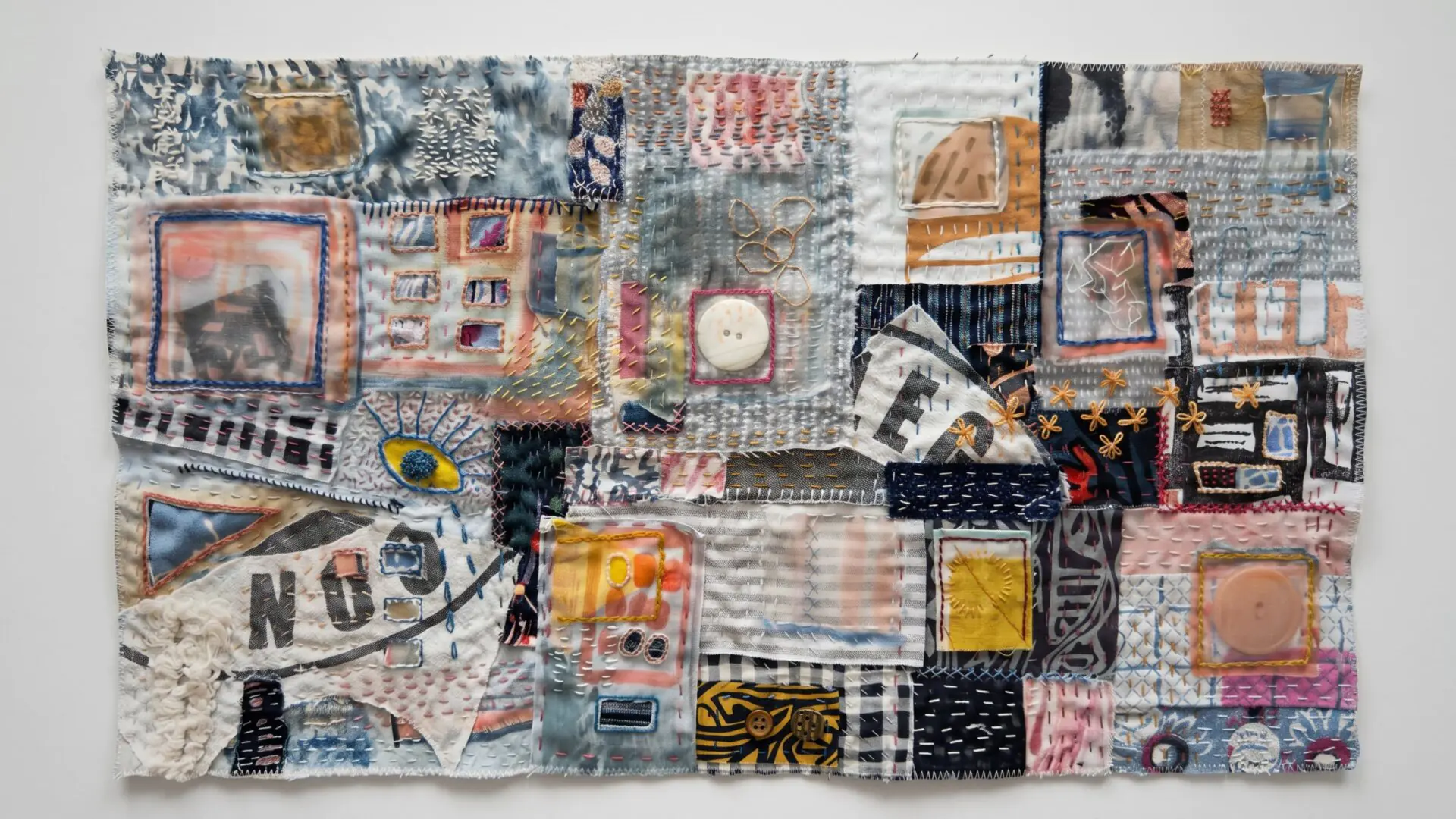
I used cotton twill binding tape to string the flags the second time around. The flags themselves are made from all kinds of odds and ends stitched together with running stitch and few other embroidery stitches. Some of the fabric incorporates mixed media, including nature printing using leaves from my yard.
I’m now in the process of taking the prayer flags apart and reconfiguring them into finished pieces. Sacred Connection is one of those new finished works.
I’m also taking a few pieces from the original prayer flag to include in a new flag with new material. It’s kind of like a sourdough starter!

Seed bank quilts
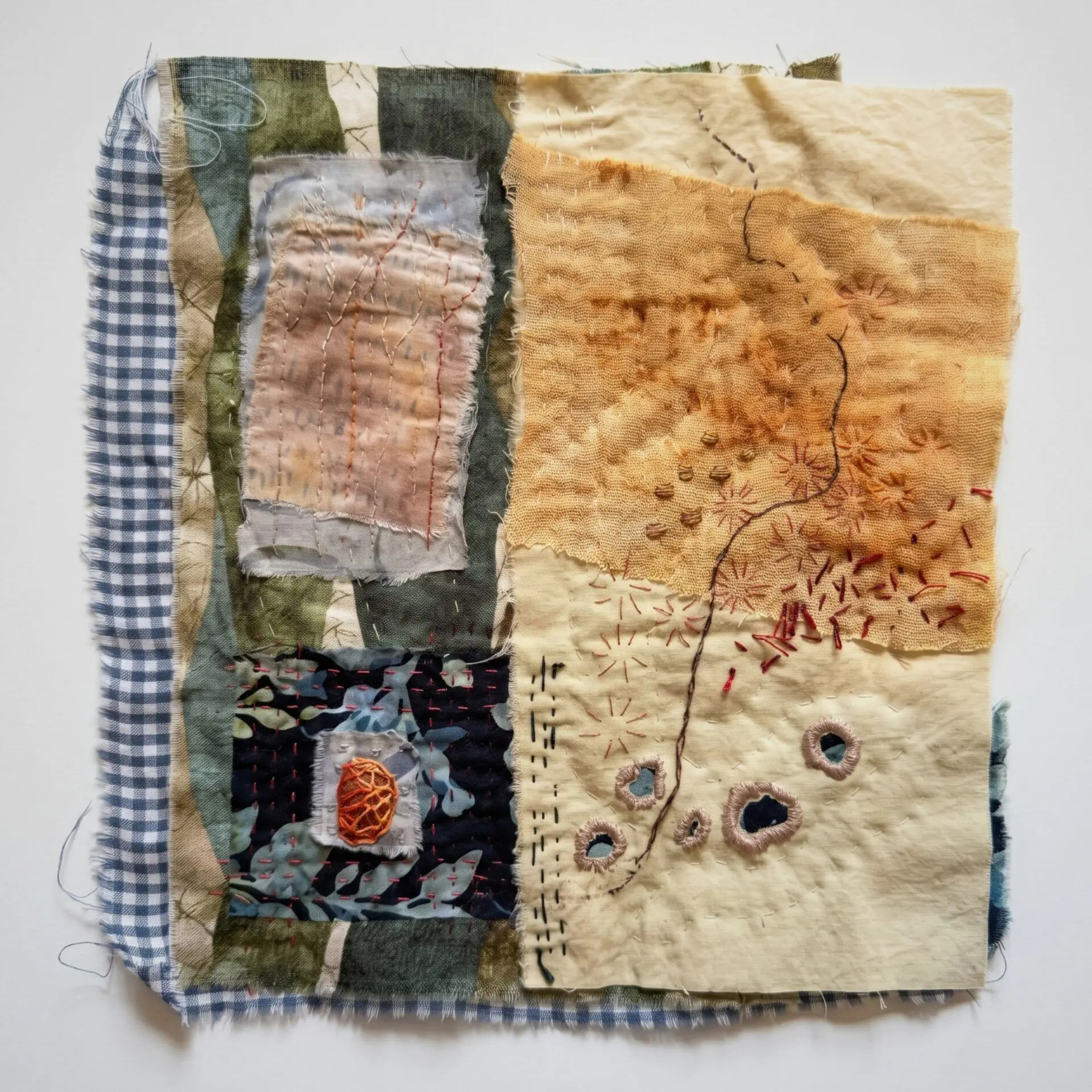
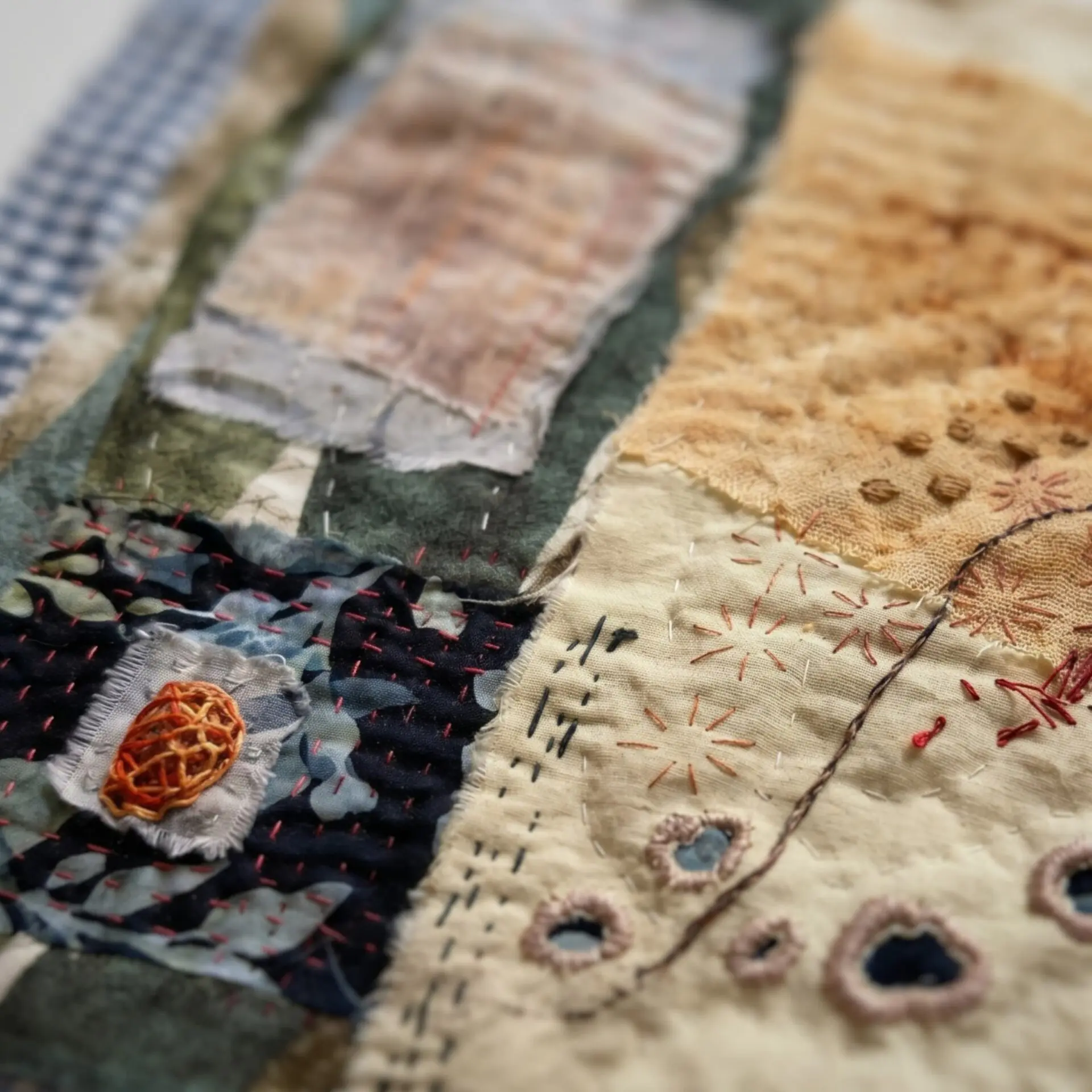
My mini seed bank quilts are love letters to the thousands-year-old practice of saving seeds for next year’s crop. I collected seeds and nuts from the native plants and trees in my yard and then preserved them in a tulle capsule. Each piece references the regeneration of life and how nothing in nature really ends.
Each composition is somewhat linked in my mind to the feelings I hold for each plant. I’ve collected goldenrod seeds, echinacea, milkweed, acorns and beechnuts.
Experimental books
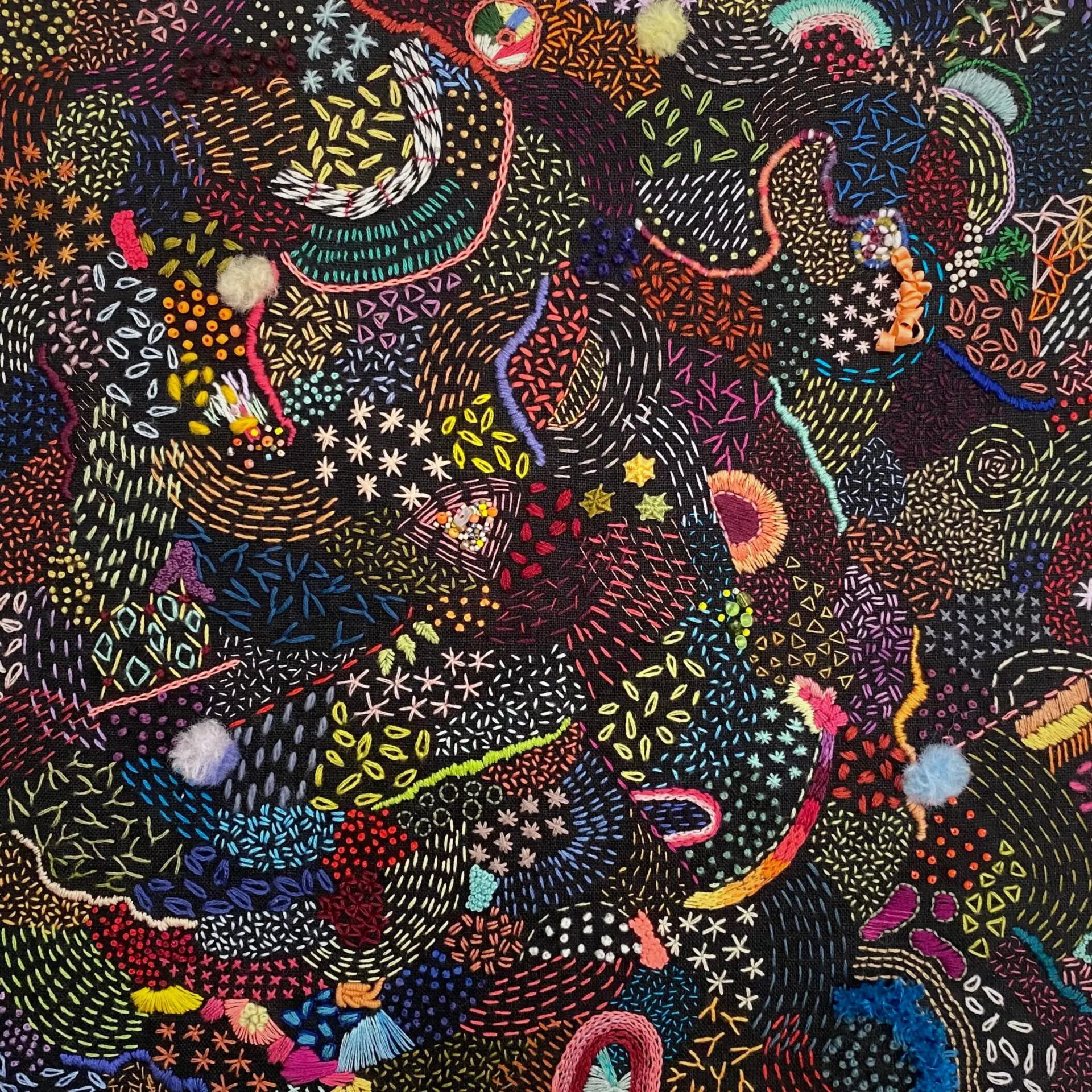
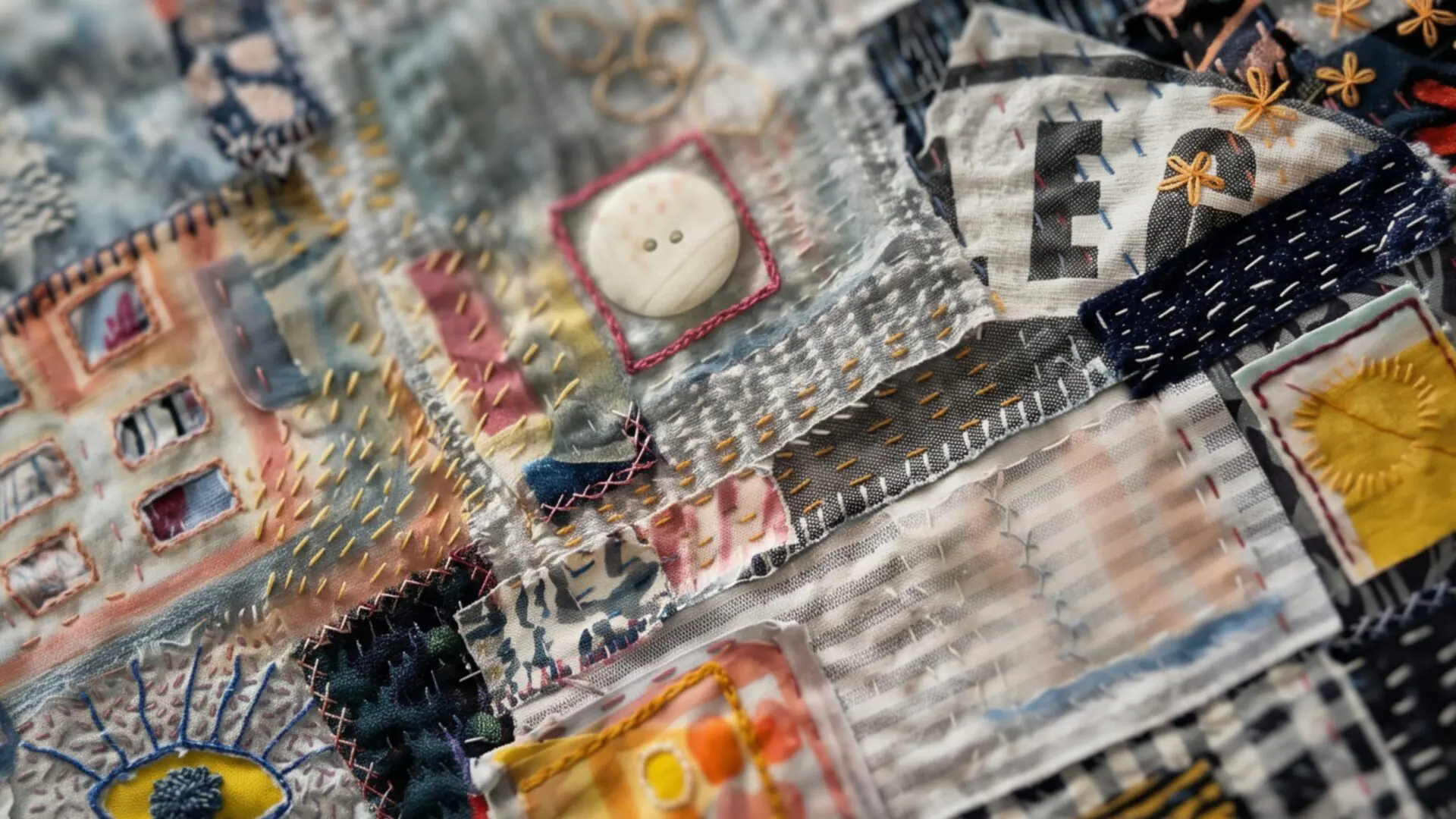
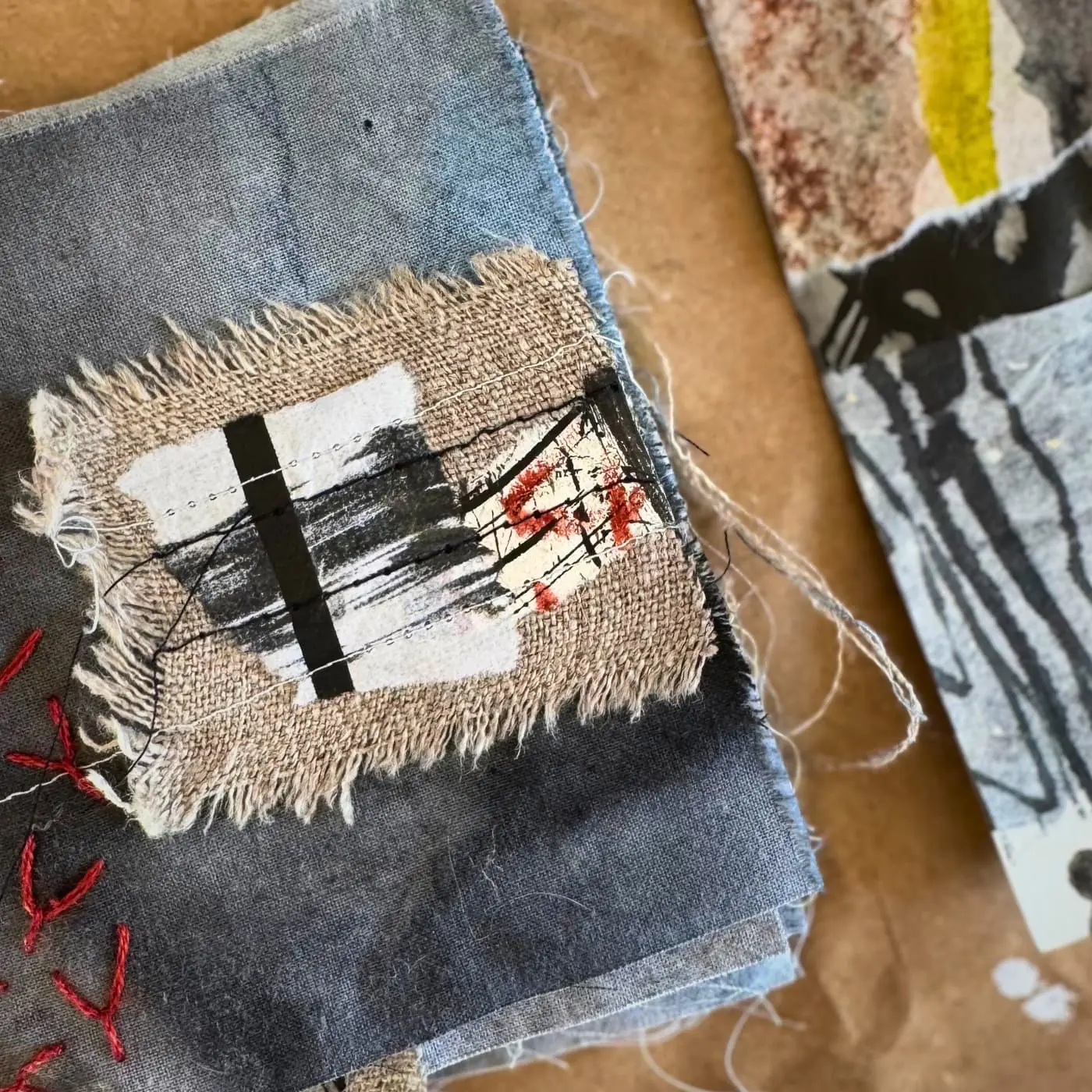
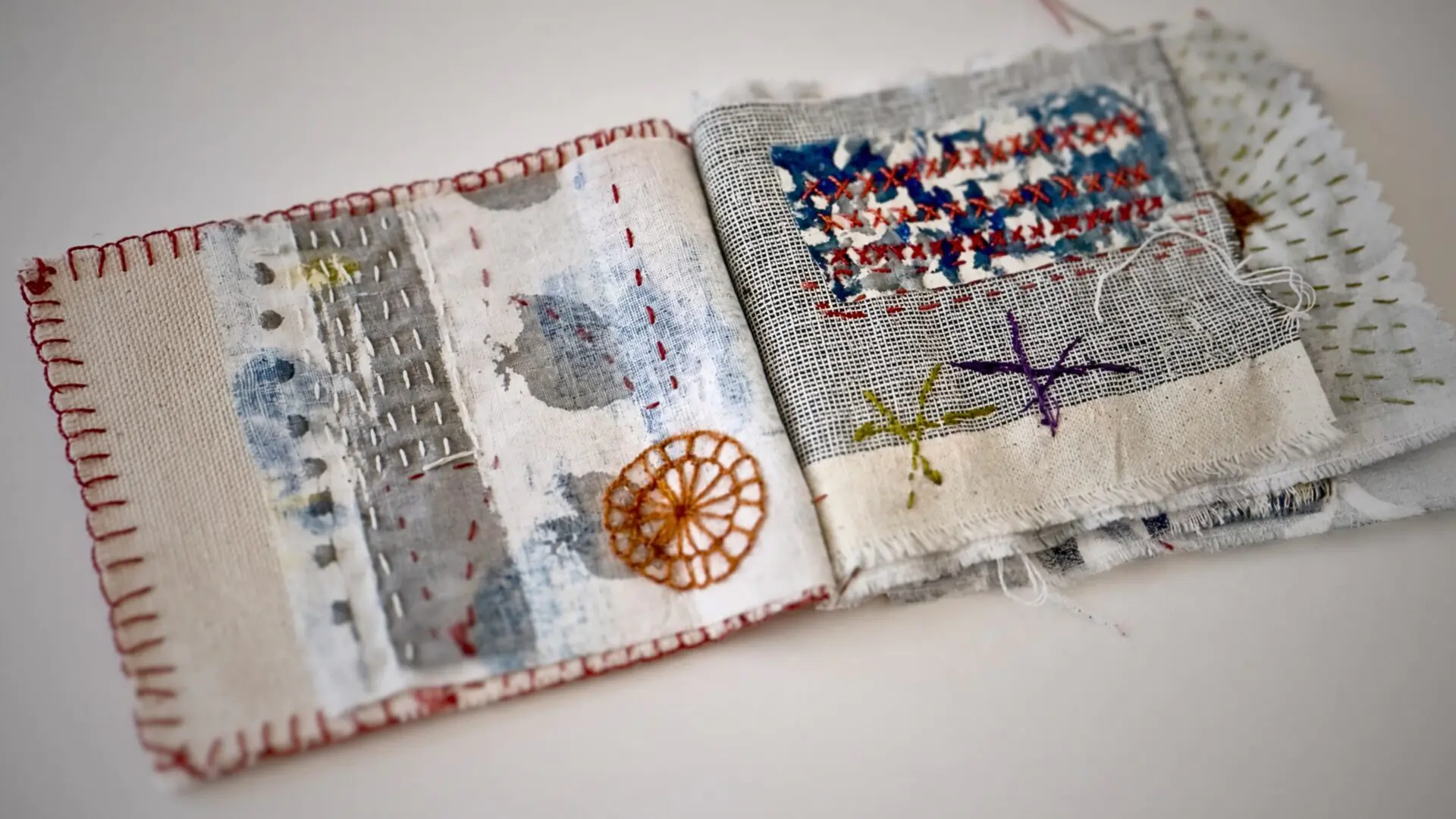
My little textile books are an extension of experimenting and improvising. They serve as a sort of sketchbook for trying out ideas and playing with different techniques and stitches.
Like most of my improvisational work, I start with a palette. I sift through my on-hand fabric and materials such as ribbons, yarn, buttons, beads and shells. I choose whatever is calling to me.
I throw all the bits and bobs into a little basket, and usually a story or theme comes to life by that time. Even if it’s just related to a pattern or colour, it starts to suggest itself to me.
By the time I’m done stitching one page, there’s usually a plan of some kind. But I leave it open ended.
I’ll also sometimes incorporate fabric paint, block printing, stamps and more.
For the cover, I usually use a thicker piece of upholstery fabric or the like. Three to four rectangular pieces serve as the pages, and I make a simple two-stitch binding in the middle.
Maker space
I create my art in a room on the back of the house. It has good natural lighting and looks out onto the back yard. I’ve set up different work surfaces and lots of storage, so I can switch between projects and still have room for the virtual classes I teach. It’s an amazing space.
Still, I think you can create in most any space. I do a lot of stitching in front of the TV at night. And when my husband was in the Air Force, we moved around quite a bit. I always needed to set up a new space. With all the supplies and stash I’ve collected over the years, that would be tough to do again!
1 comment
Janet Lynch
Loved this article. Really inspirational. Thank you.