

Textile artist Gillian Cooper is endlessly curious about what materials can do. Whether experimenting with cyanotype printing, stitching into dissolvable fabric, or allowing weather and time to alter a surface, exploration is her goal.
That spirit of experimentation is one reason Gillian works in series. After spending significant time researching and sketching her source material, she sees endless ways to revisit an idea through different materials, techniques, and perspectives.
Nature plays an especially important role. Gillian creates cyanotype and botanical pieces using plants gathered during favourite hikes and visits to meaningful places. She has even installed her work in forests, blurring the line between artwork and environment. And be sure to read about her accidental laundering incident…
We’re grateful to Gillian for reminding us that some of the most interesting work begins with a willingness to experiment.
From accountant to artist
I was pushed down the academic route as a child, and to be honest, I didn’t show much artistic potential. But I did love experimenting, and being creative has always been part of my life. A memorable incident in my early teens was destroying my Mum’s new blender to make papier mâché.
I was gently discouraged from my creative endeavours, and I eventually became an accountant.
I didn’t not enjoy the training, but when I reached the level of manager and the learning curve slowed down, I realised I was going to be very bored, very quickly.
I started taking evening classes at the City Lit in London. I wanted to do something more creative, but my traditional drawing and painting skills weren’t exceptional, so that wasn’t a viable route.
It wasn’t until I took a textile course with Caroline Bartlett that everything fell into place. She was very supportive and helped me apply for a foundation course in Art and Design at the Central School of Speech and Drama. My portfolio was non-existent, so I think I was accepted on the basis I was dedicated (nuts) enough to give up a really good job to pursue art.
After completing that programme, I completed a textile degree at Goldsmiths.
Exploring is key
My work is very process-driven because I explore a variety of ways to express my ideas. I tend to start with sketching. Not the actual textile piece, but more my general inspiration. Sketching gives me time to reflect on what really excites me about the source.
That leads to sampling ideas in fabric before I settle down to make a final piece.
I’ll often fill a sketchbook on one subject with a sketch a day for a set period of time, using the same resources.
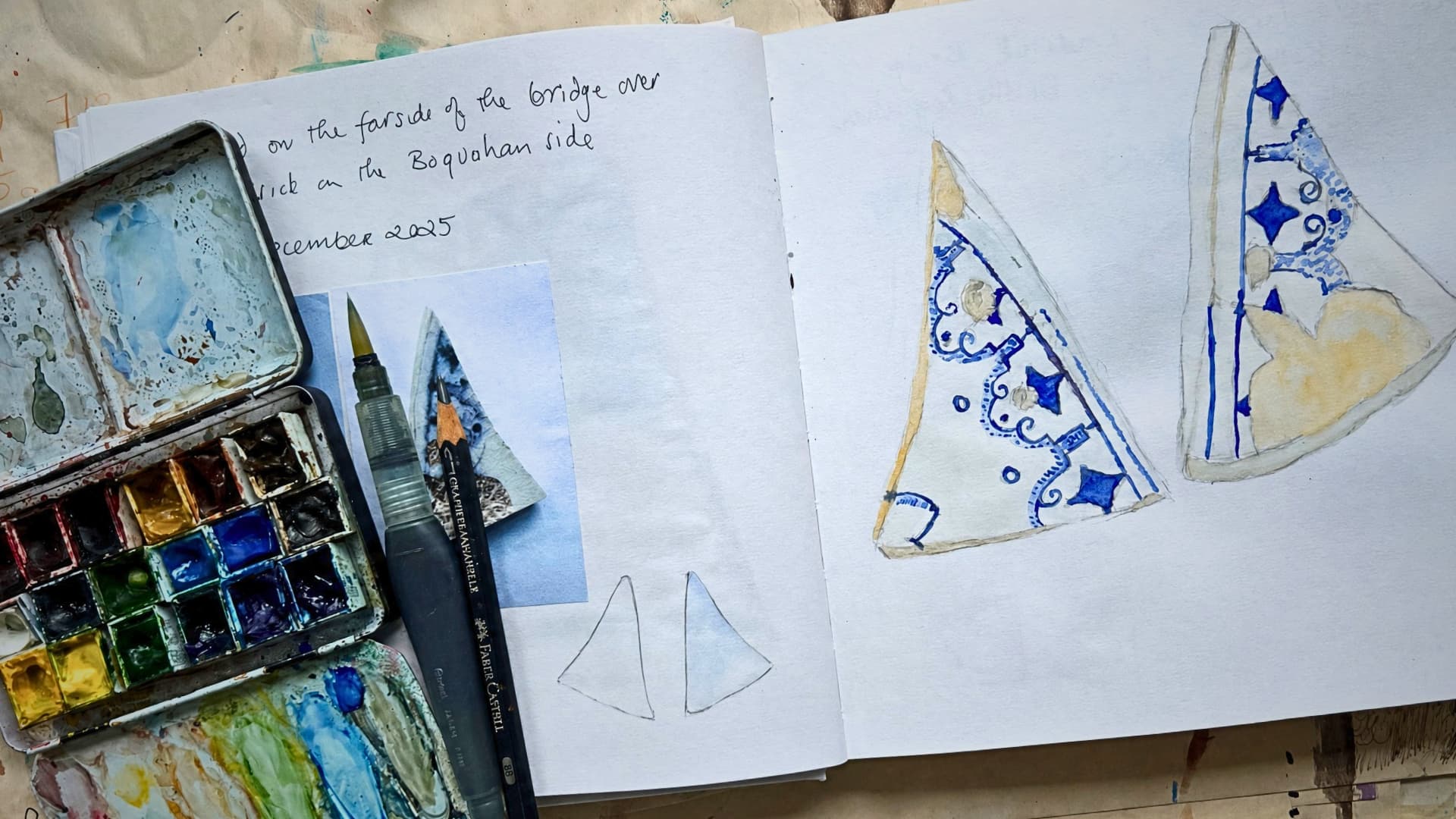
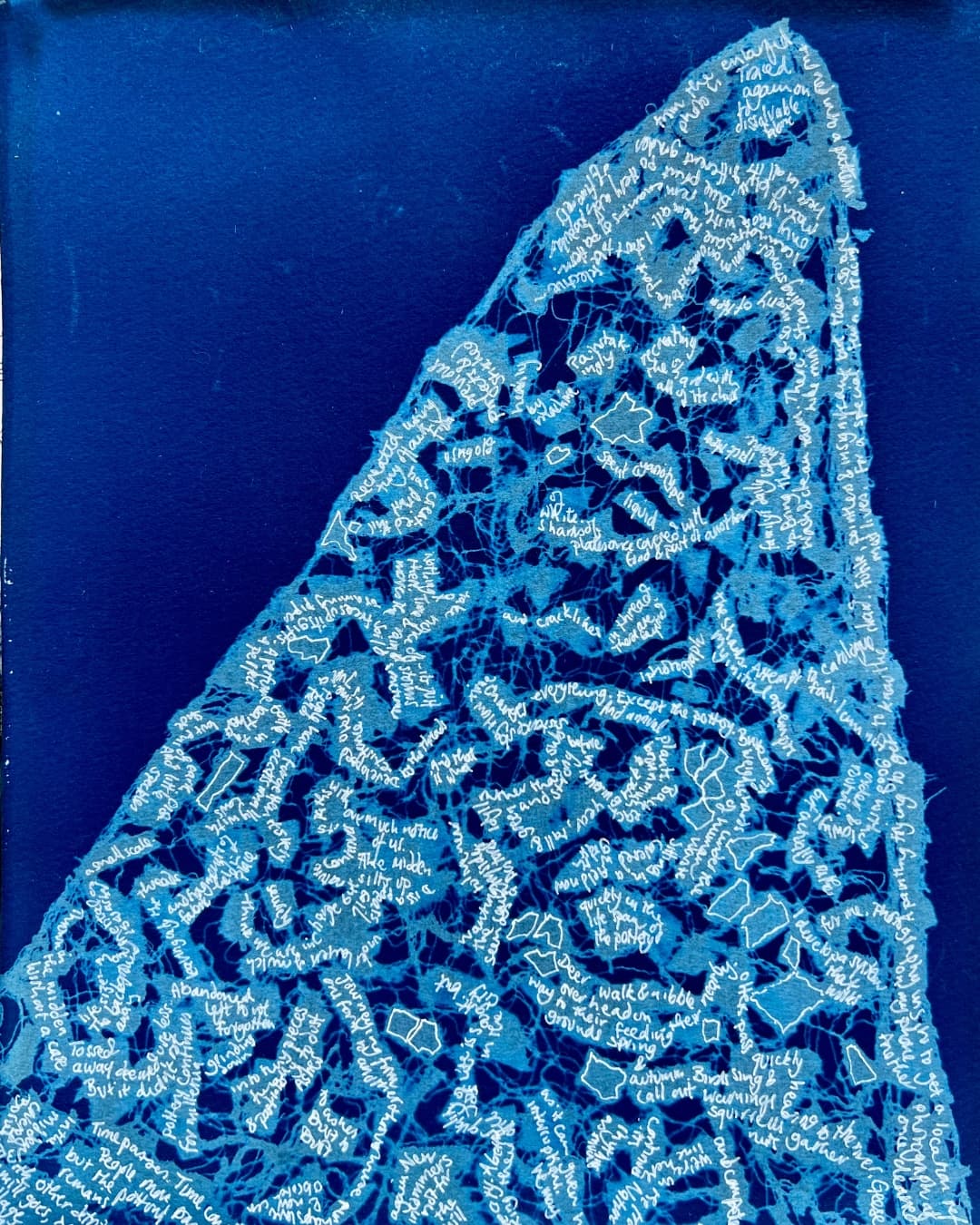
I’m currently drawing from my collection of pottery shards found on walks. I sketch each shard in pencil and then paint with watercolour, and then I note where each was found. My paintings are more interpretations than exact likenesses.
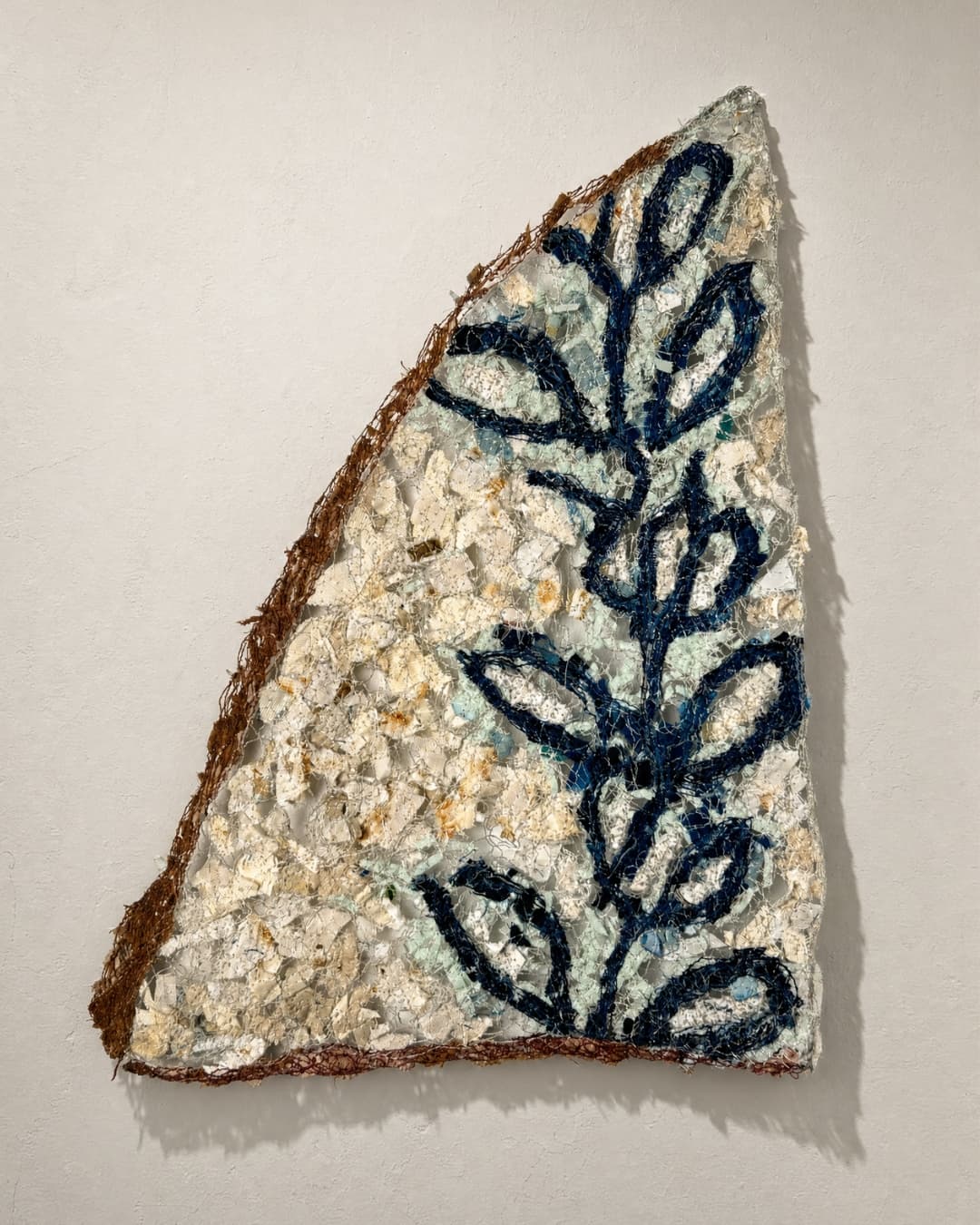
I made some large-scale versions of the shards using scraps and dissolvable fabric, and now I’m using those fabric pieces as masks for cyanotype prints. I don’t know where this will end up, but I’m liking the possibilities.
“Limiting my source material and media helps me concentrate on what is happening, and means I’m not distracted in the initial phase.”
Gillian Cooper, Textile artist
Finding inspiration
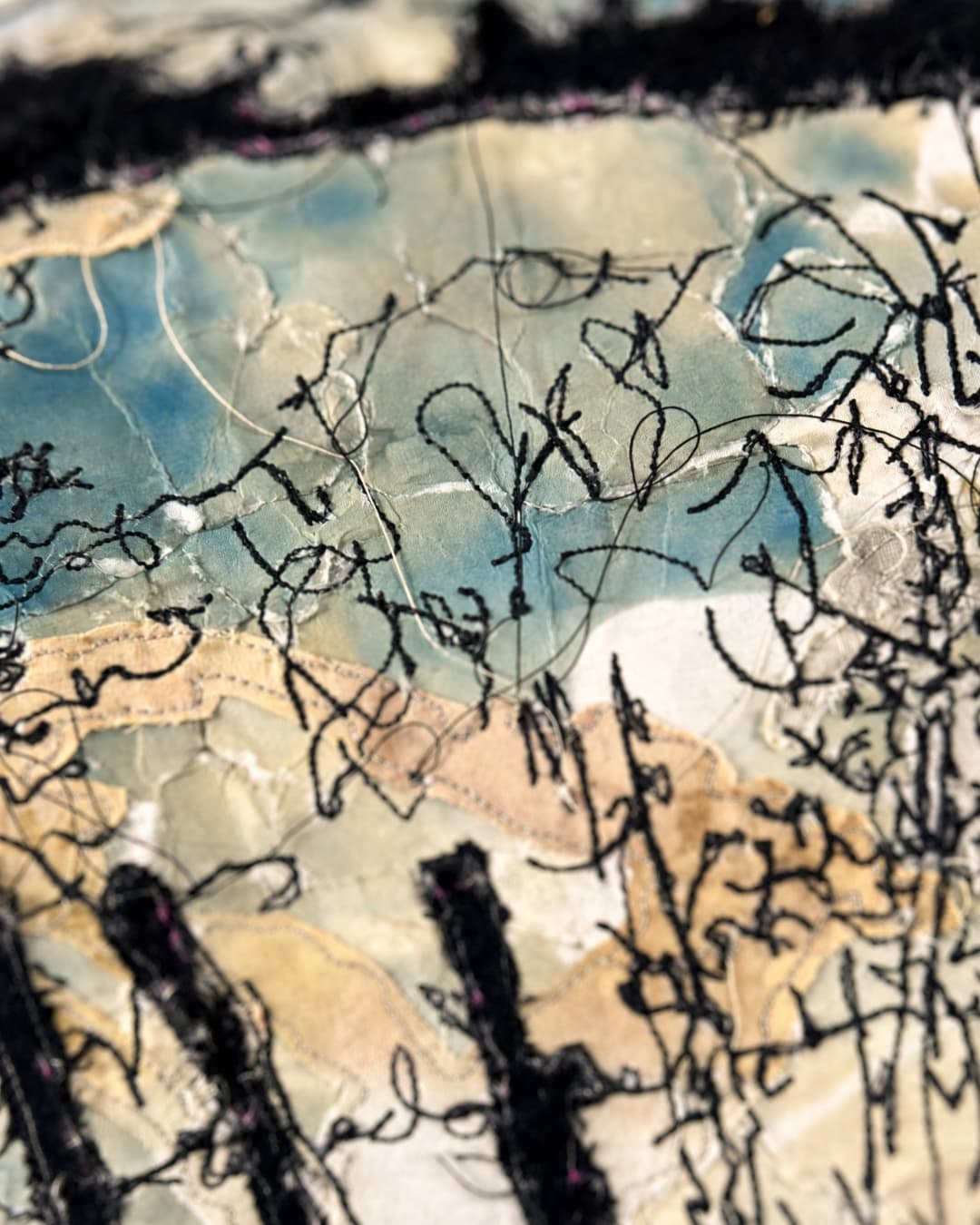
Much of my work is inspired by the specific places that I visit again and again. Walking and drawing allow me time to get to know a place and to absorb a sense of it. My aim is to portray the feelings places evoke, not photographic reproductions.
But I can find inspiration everywhere. I’ve always loved museums, and my children have lost count of the archaeological museums we’ve visited over the years. I take my camera and sketchbook and do as much as I can before they lose interest. My partner is also very good at taking them to a café to give me more time.
I’m also a big believer in finding inspiration without having to go anywhere. I’m lucky to live in a beautiful part of Scotland where I can see hills within seconds of leaving the house. But the cracks in the pavement can be beautiful too. It’s all about learning to look.
Working in series
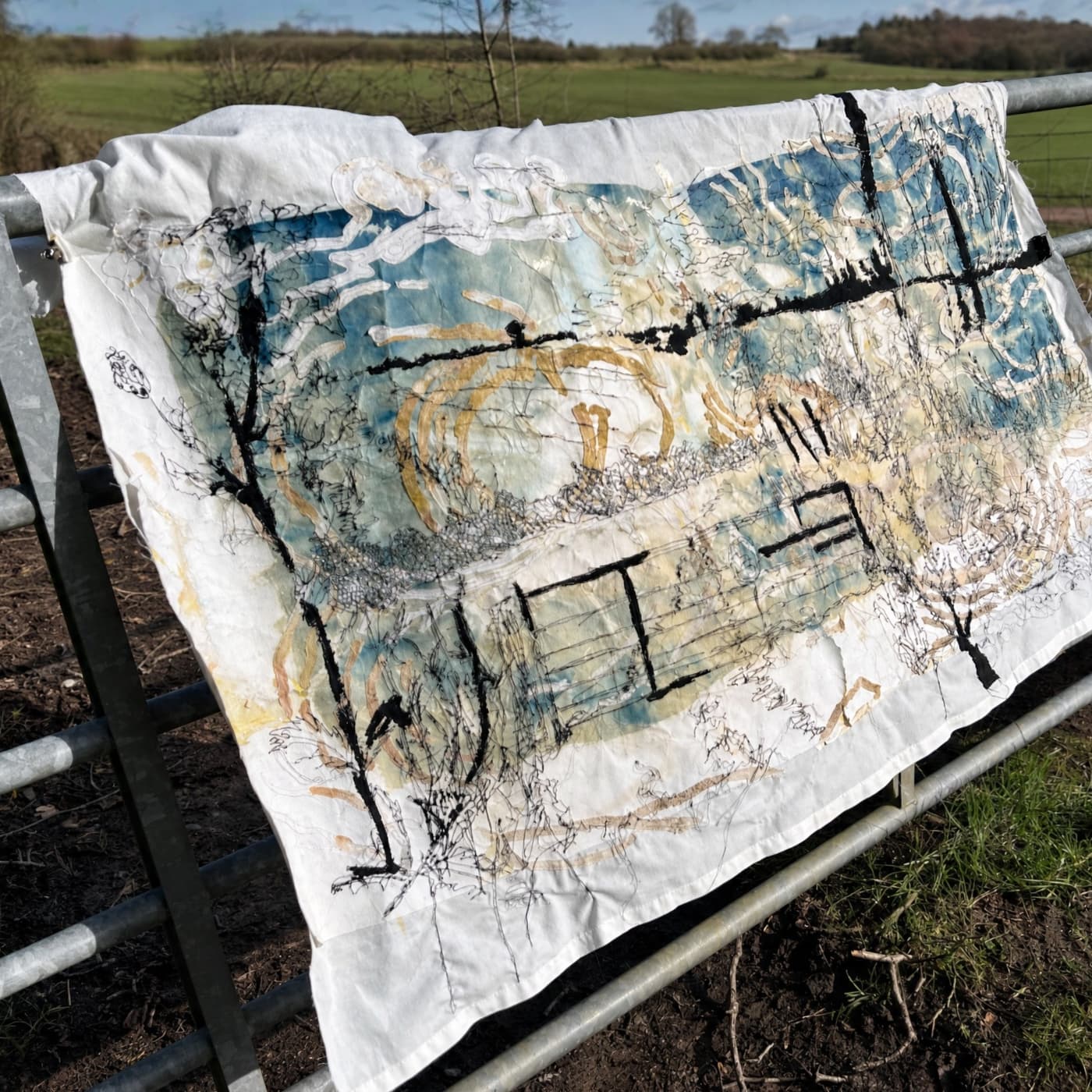
Because my work is process-driven, I regularly work in series. While making one piece, I’m already thinking about what the next one will be or what I could do differently. There are always so many more things I want to try out.
And given the amount of time I spend researching and drawing, it would seem wasteful to put all my efforts into just one work.
Most importantly, working in series takes off some of the pressure to create perfect pieces. I know it doesn’t matter if a piece isn’t exactly as I wanted, because I can correct things with the next one.
“When I stop worrying about perfection, I can relax and experiment and push things further – often the work ends up being better than expected.”
Gillian Cooper, Textile artist
The magic of botanical dyes
I’ve always enjoyed colouring my own fabric, and the results often influence the direction a piece will take. Because I never know exactly how a dyeing process will turn out, I can’t plan a final piece in advance.
I originally worked with Procion dye and have experimented with transfer printing. I also use acrylic paint on some pieces, particularly with gelli-plate printing.
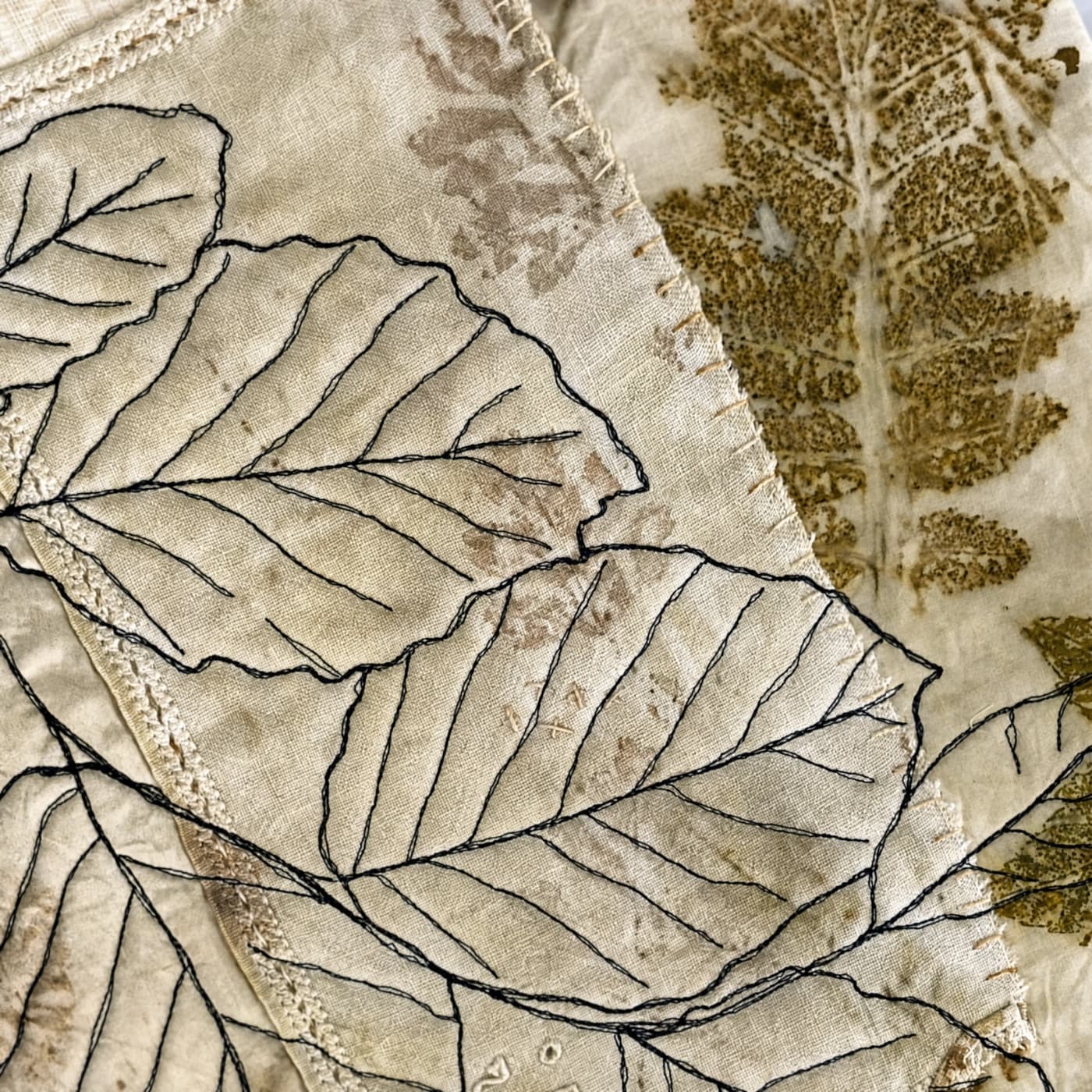
But in the last few years, more of my art focuses on specific walks or places, so I prefer using materials from those locations to colour fabric. Sometimes I rust dye, as there seems to be no shortage of discarded metal. And I’ve experimented with botanical contact printing.
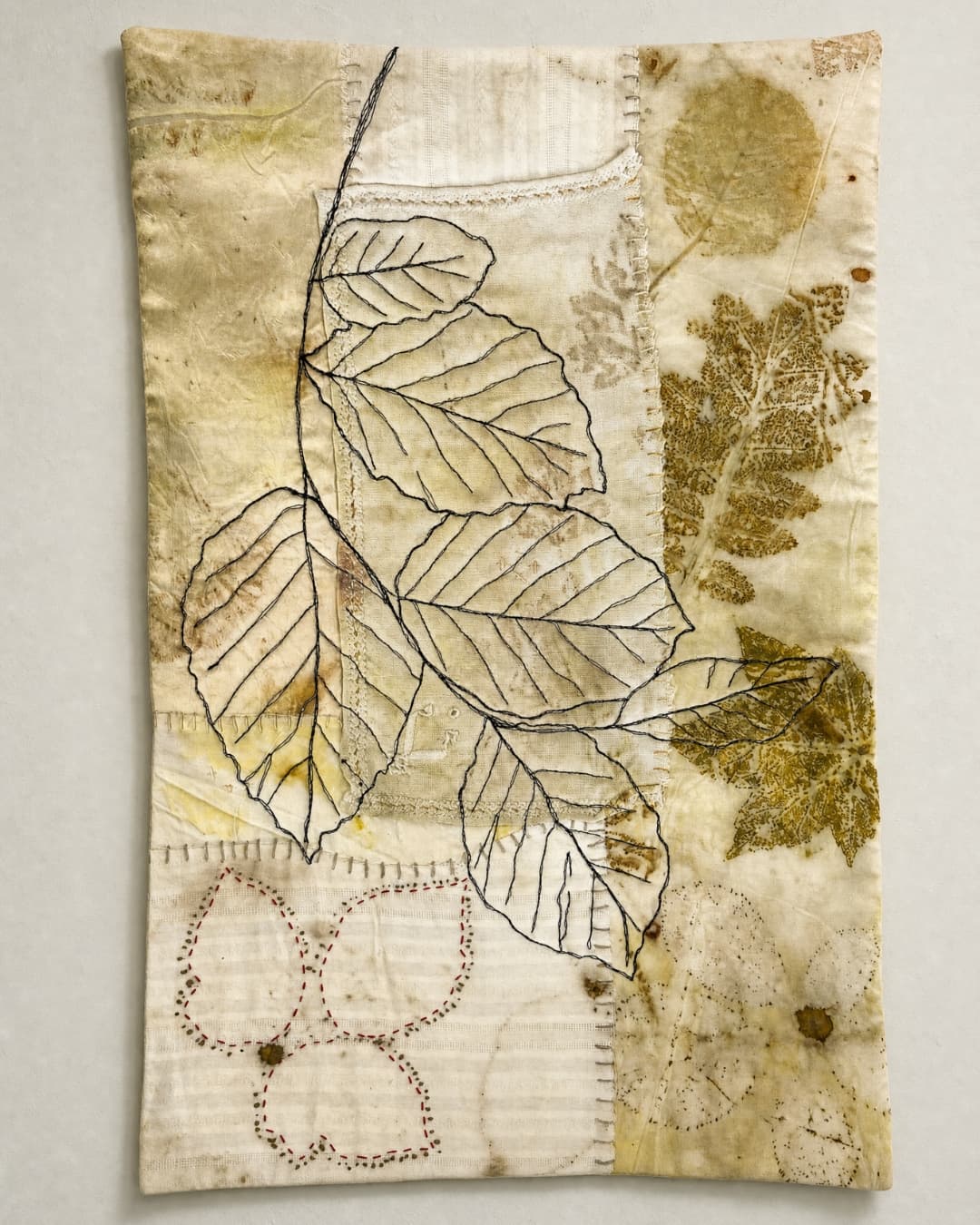
About five years ago, I began a monthly botanical contact printing project using leaves gathered on local walks. I wanted to explore how the colours shifted with the seasons.
While more exotic plants would have produced brighter colours, I found myself drawn to the leaves that reflected my own surroundings and experience. Oak, beech, elder, rowan and hawthorn leaves lasted throughout the year and seemed almost indestructible.
I also use plants with gelli plate printing and cyanotype. These allow me to make use of a wider variety of plants as not all leaves release colour in the botanical contact printing process.
Letting fabric take the lead
Once a piece of fabric is coloured, I pin it to the wall where it can sit for ages whilst I think about how to use it. I have a lovely piece that has been on my wall for a long while. It became almost too precious to use! But after eight months, it is about to be used. My patience is finally paying off.
My go-to fabric is basic cotton, but I like mixing in fabrics with different textures. I try to use existing fabrics, especially old plain linens found in charity shops. The old fabrics bring their stories into my work.
I’m extremely poor at throwing out fabric, even small offcuts. Fabric is a precious resource, so I have lots of scrap bags.
It’s so lovely when I use fabrics I’ve held onto for years – I feel vindicated for holding on to them!
“In the early design stages, I often work in black and white – colour can be distracting at first.”
Gillian Cooper, Textile artist
Colour strategy
Before I went to art school, I took a year’s evening class in colour where we learnt how to colour mix. I was struggling with colour, and the class was incredibly useful. By the end of the year, I could look at any colour and be able to make it from gouache.
My colour palette tends to be quite soft, and I think that’s because of where I live. As I look out of my studio window today, the sky is a flat grey, and I see wet greens of the different trees and the browns of branches and bricks.
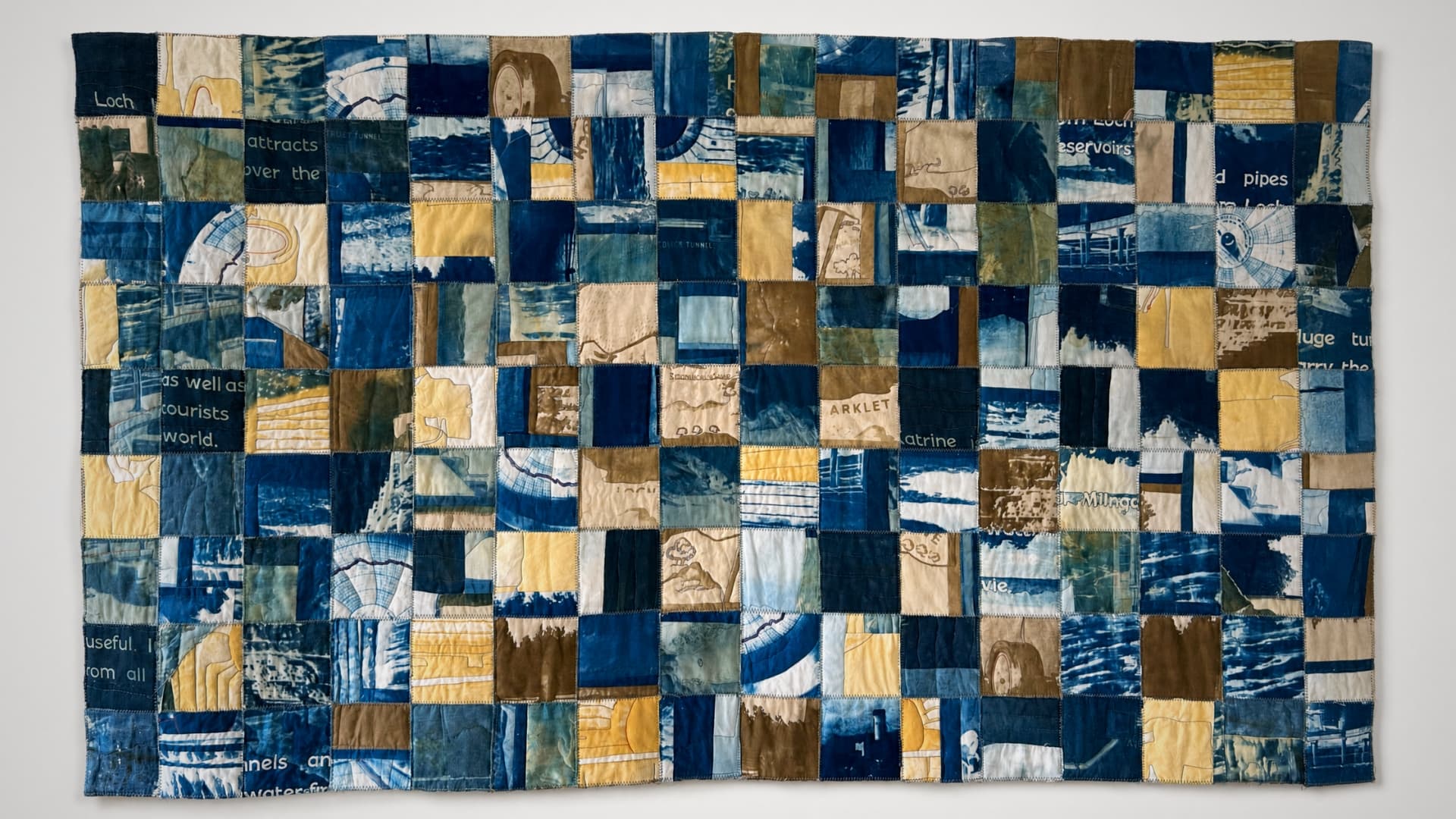
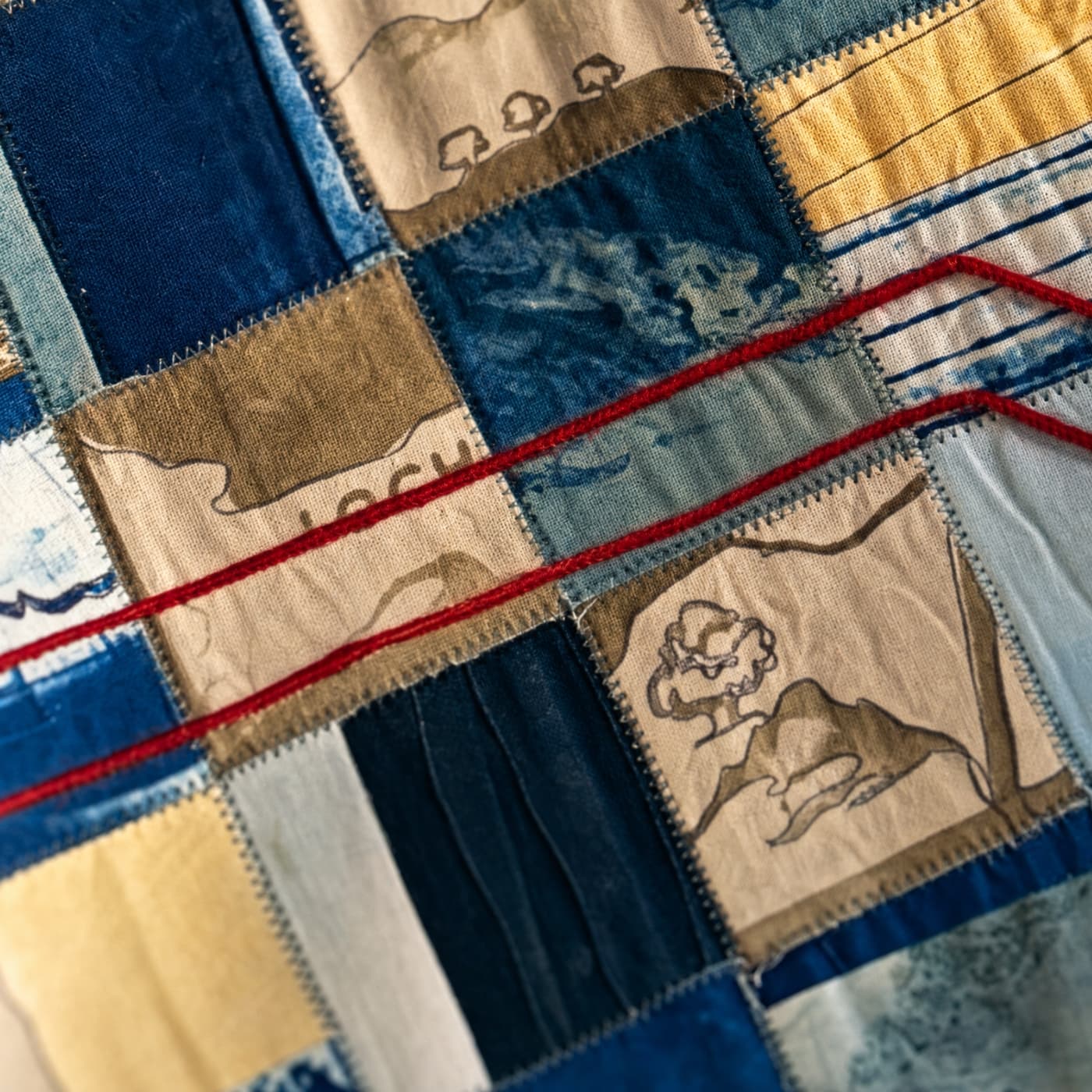
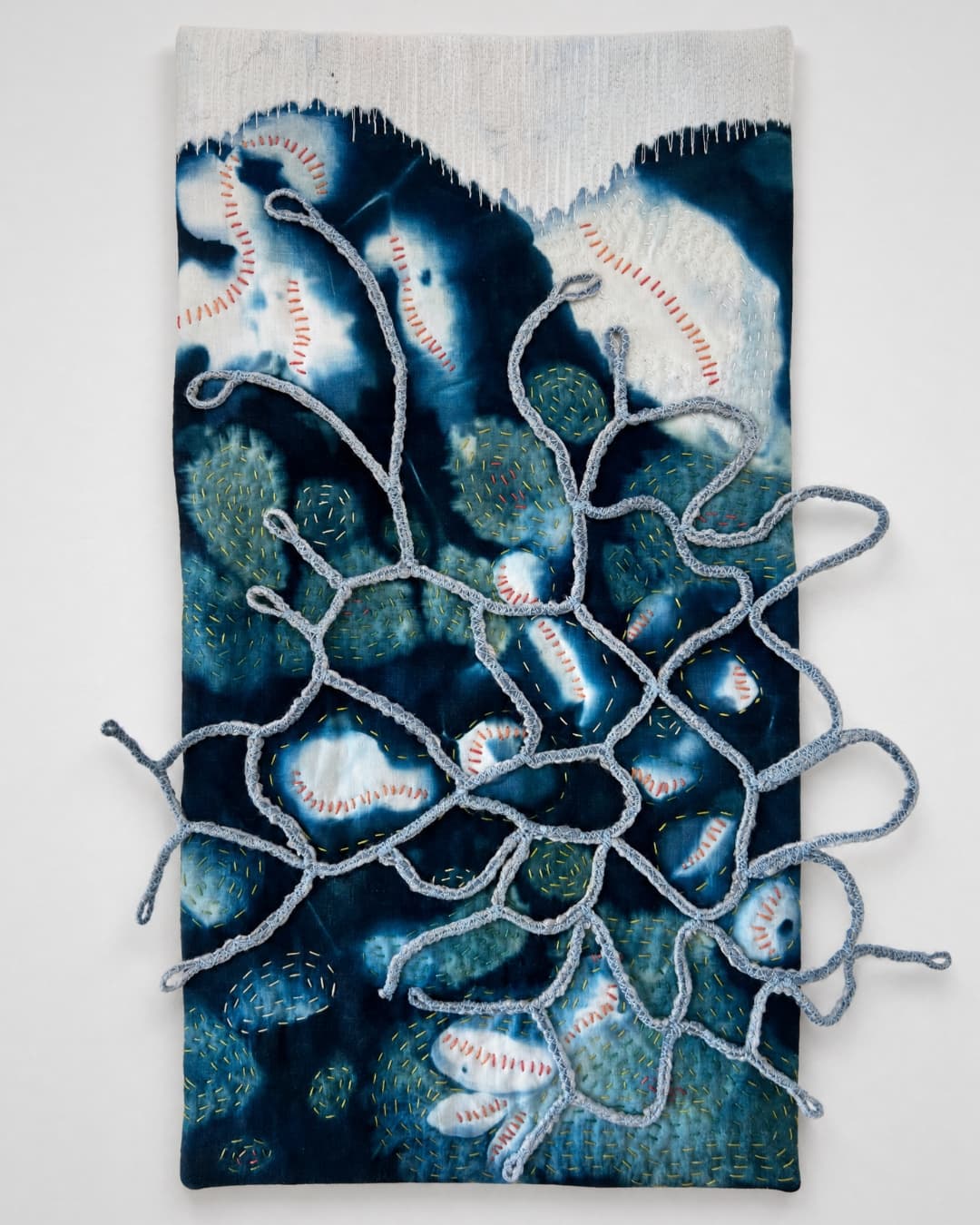
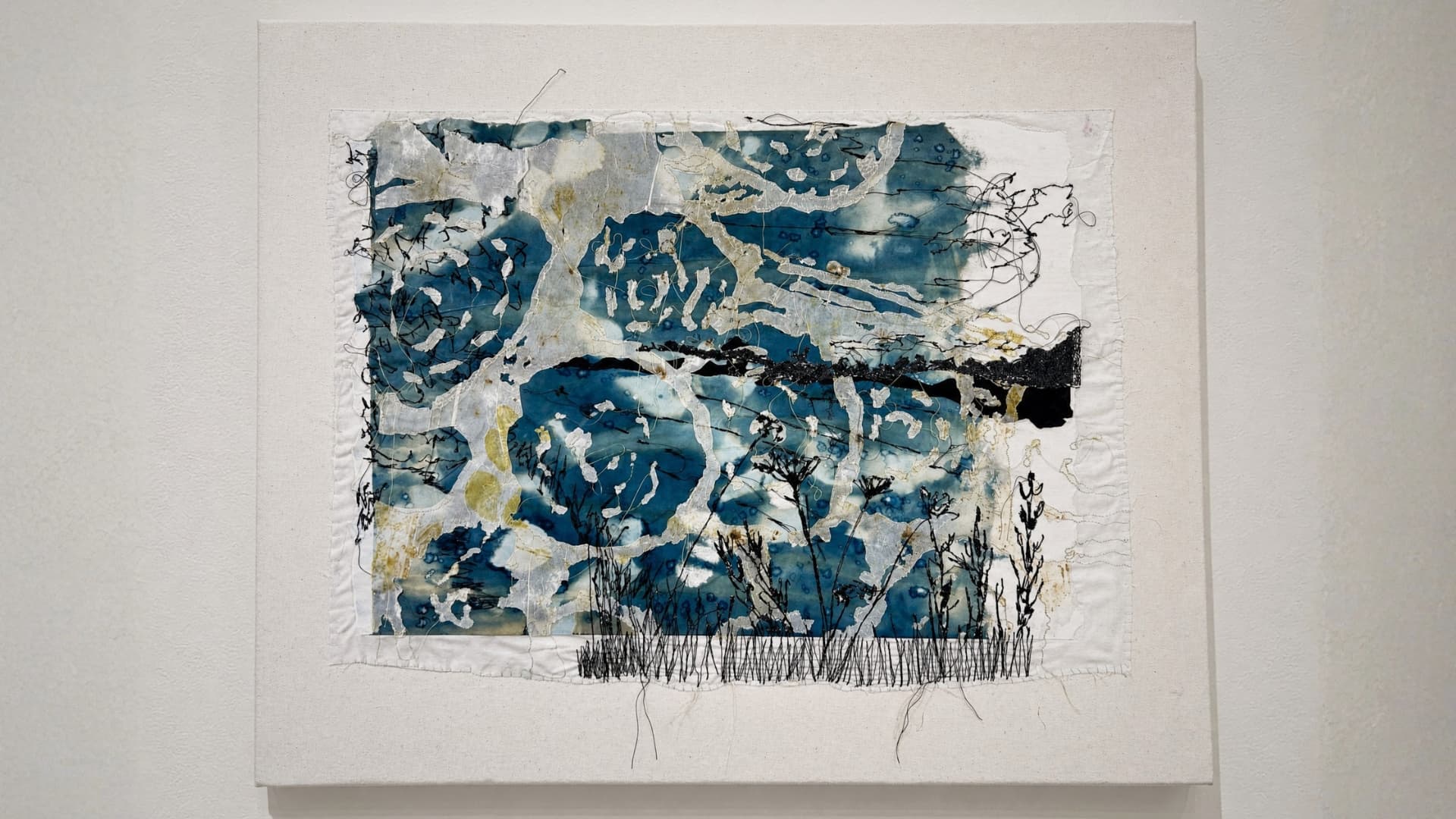
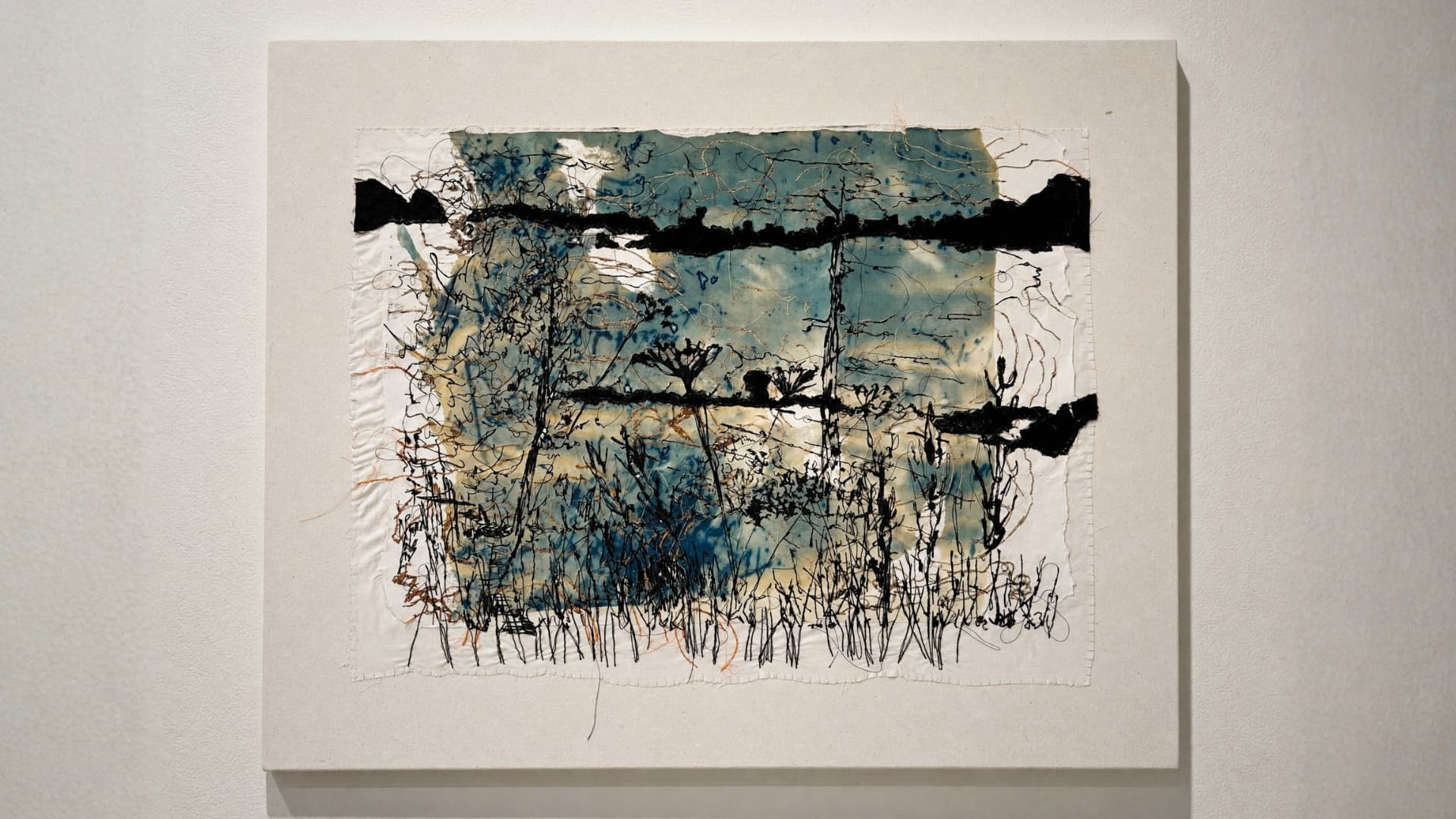
I use a lot of cyanotypes, loving the blues, yellows and browns it gives me. I have also used a lot of rust dyed and botanically contact printed fabrics. I think they go well together.
In the early design stages, though, I often work in black and white.
I find colour can be distracting at first, so removing it helps me focus on the composition. Since we usually respond to colour before design, working this way lets me better assess the actual composition.
A quilted approach
I kind of fell into quilting. When I graduated from Goldsmiths, I had a part-time job writing for and subediting the now-defunct magazine Popular Patchwork. It became natural to make quilts.
I love the layers and substantial feel quilts have, along with the textures that can be achieved with stitching.
I like how a quilt’s layers can represent the layers of history that led to the point of me making a piece. Some can be peeled back to reveal the past.
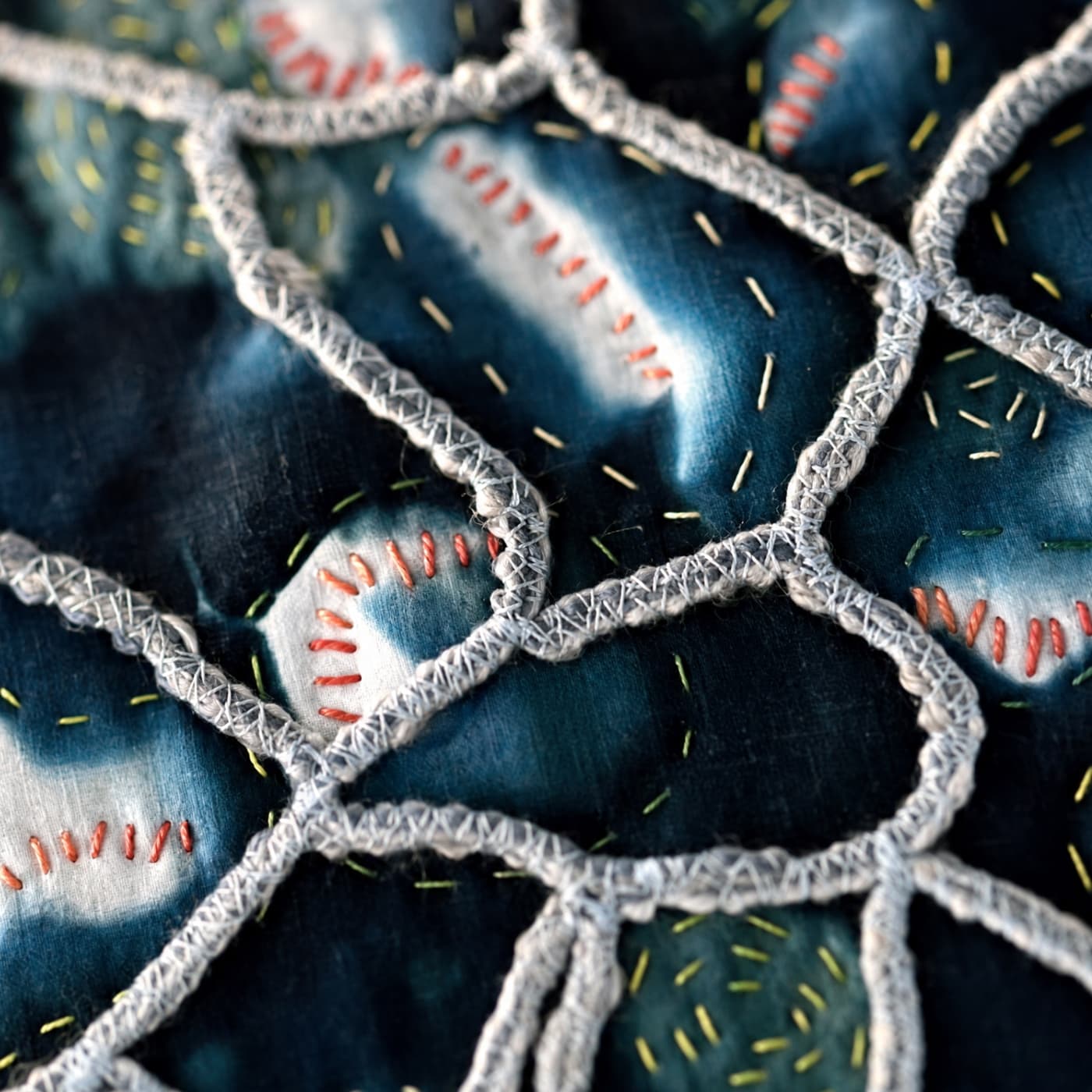
“I’m not a traditional quilter – my original training was in embroidery – so I enjoy using different thicknesses of thread to make marks and give texture to a piece.”
Gillian Cooper, Textile artist
The Big Beastie
I have three sewing machines on the go. My Pfaff is great for piecing and straight lines, as it has a built-in walking foot. For free machining, I have a basic Bernina that I couldn’t be without. It’s fabulous for free machining.
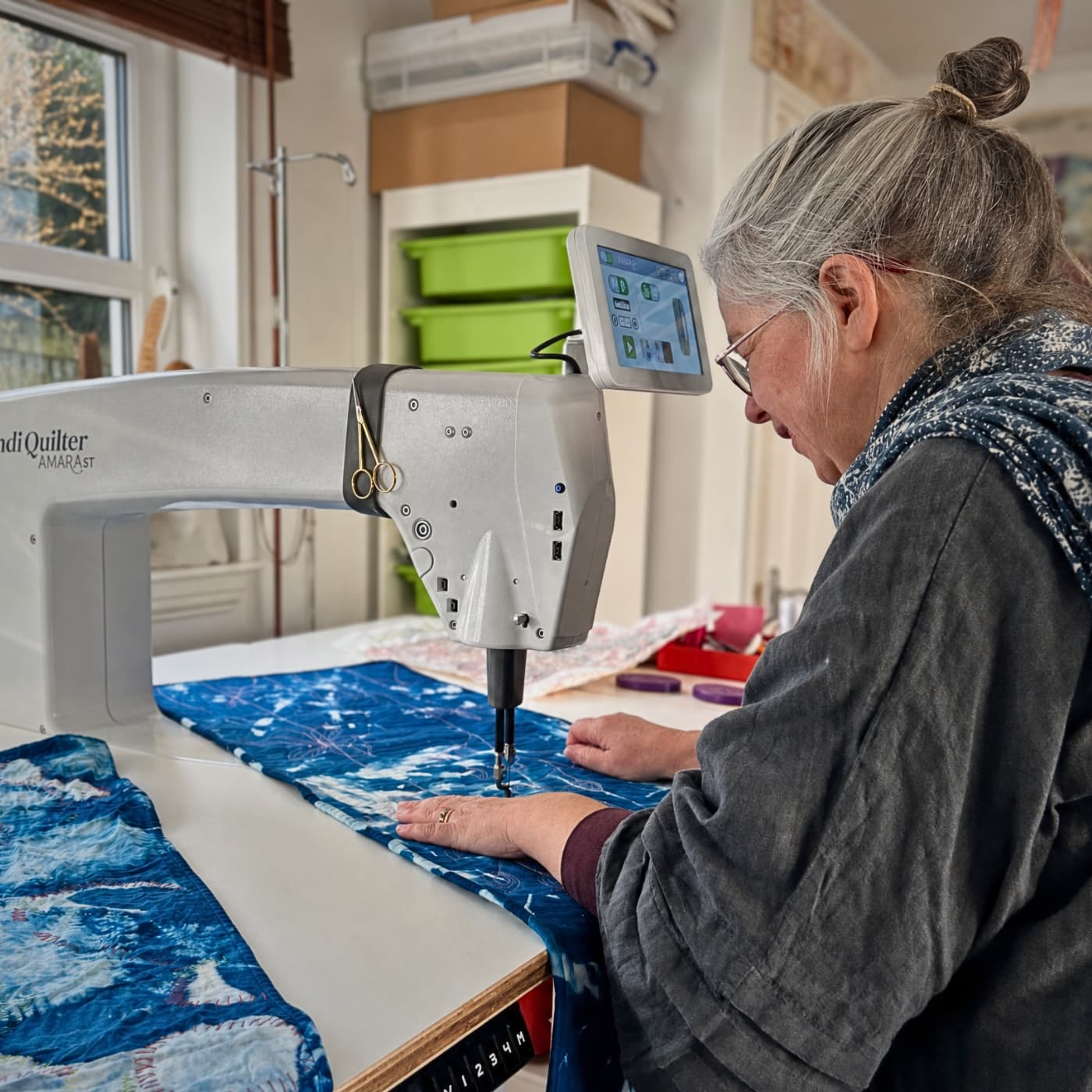
And I recently bought a Handi Quilter Amara. I call it ‘Big Beastie’. It has a huge throat, which allows me to see the entire piece as I stitch. It goes super fast.
I also enjoy hand stitching. At the moment, I’m stitching thousands of tiny tally marks into the third of my Making Time series.
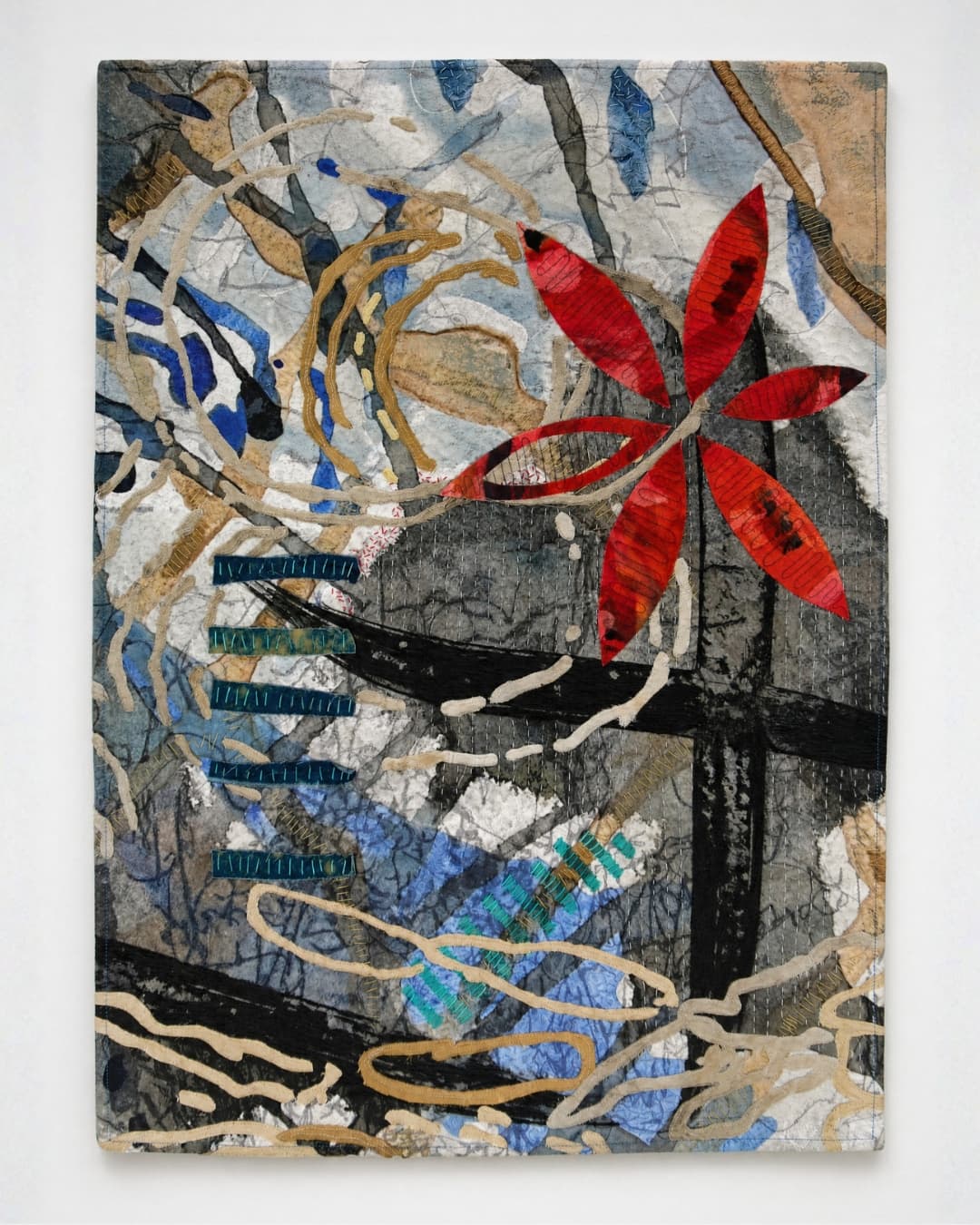
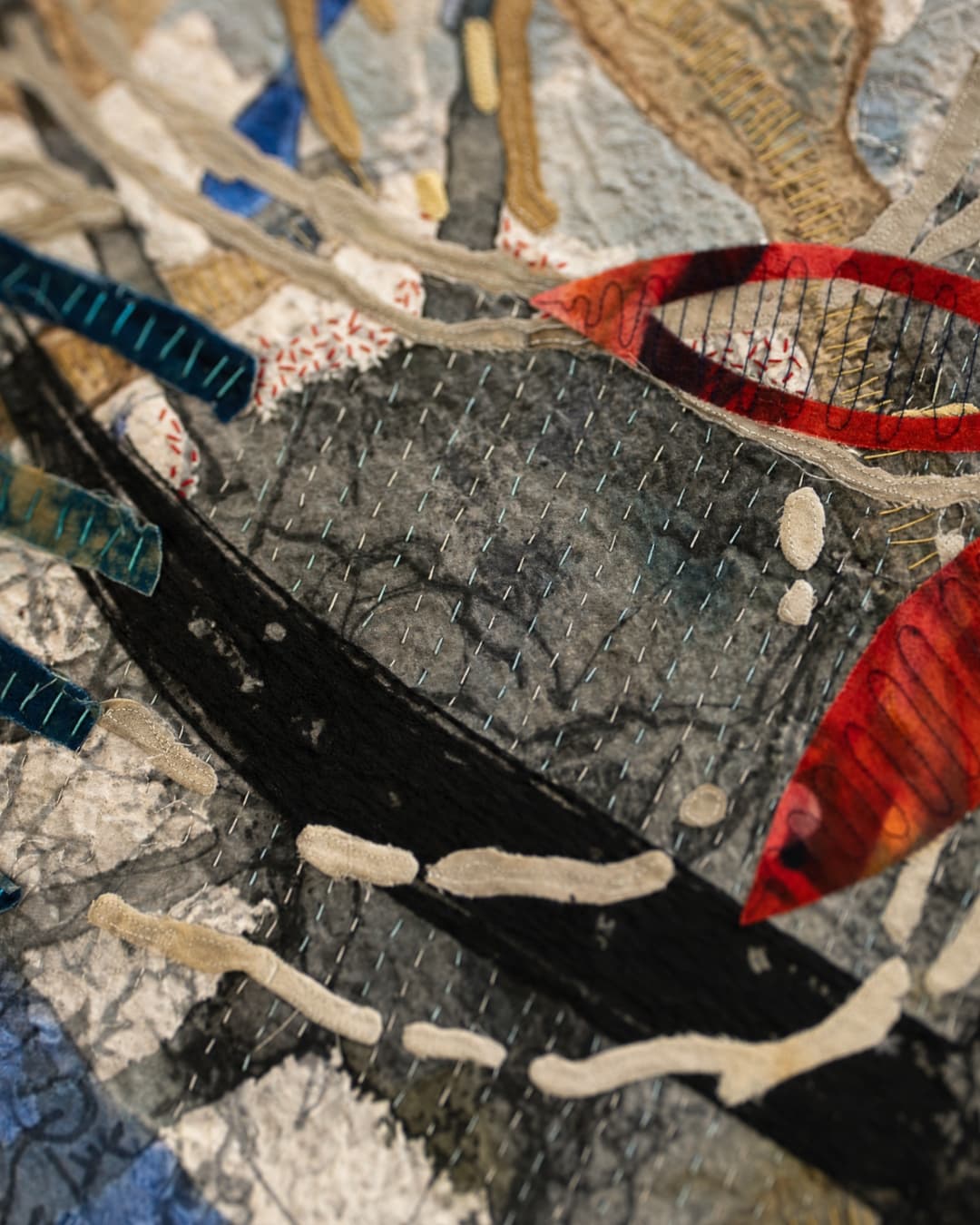
Tackling unmaking
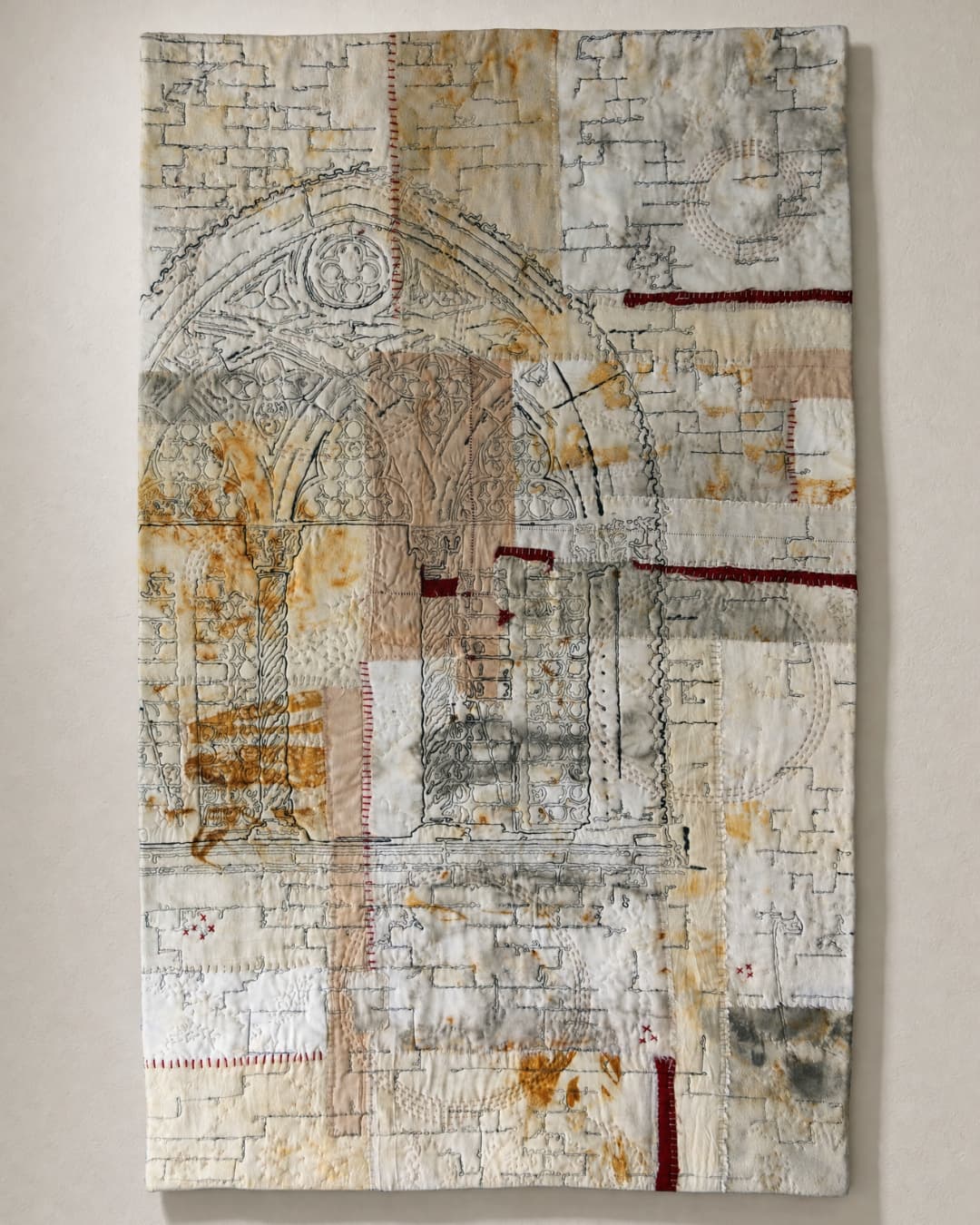
My Manes series was created for my first Textile Study Group exhibition. The theme was ‘Unmaking’, which I found rather challenging, as unmaking something goes against all my practice as a maker and tutor.
My students will tell you I really dislike them unpicking their work unless absolutely necessary. I think it’s better to accept what happened and improve on the next piece.
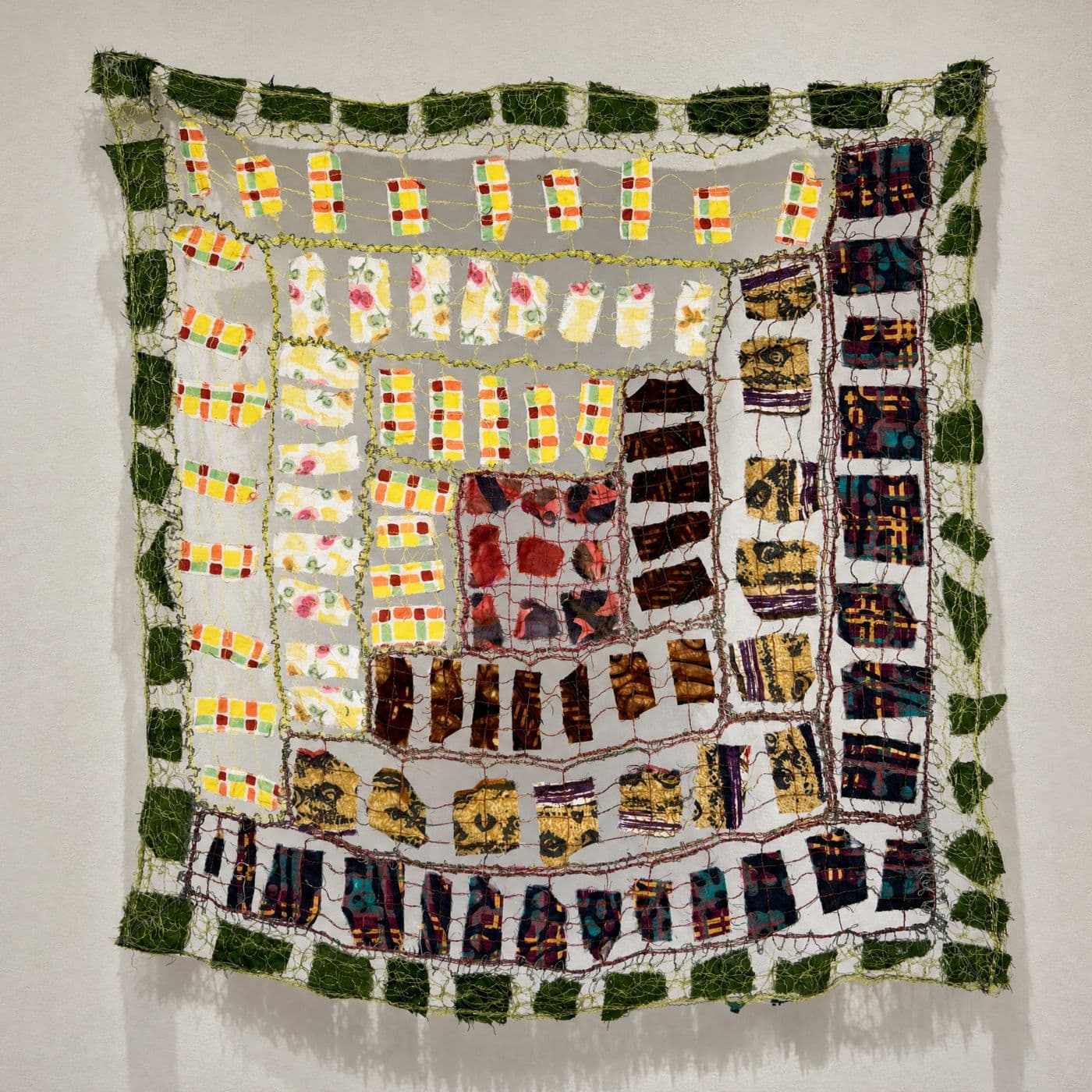
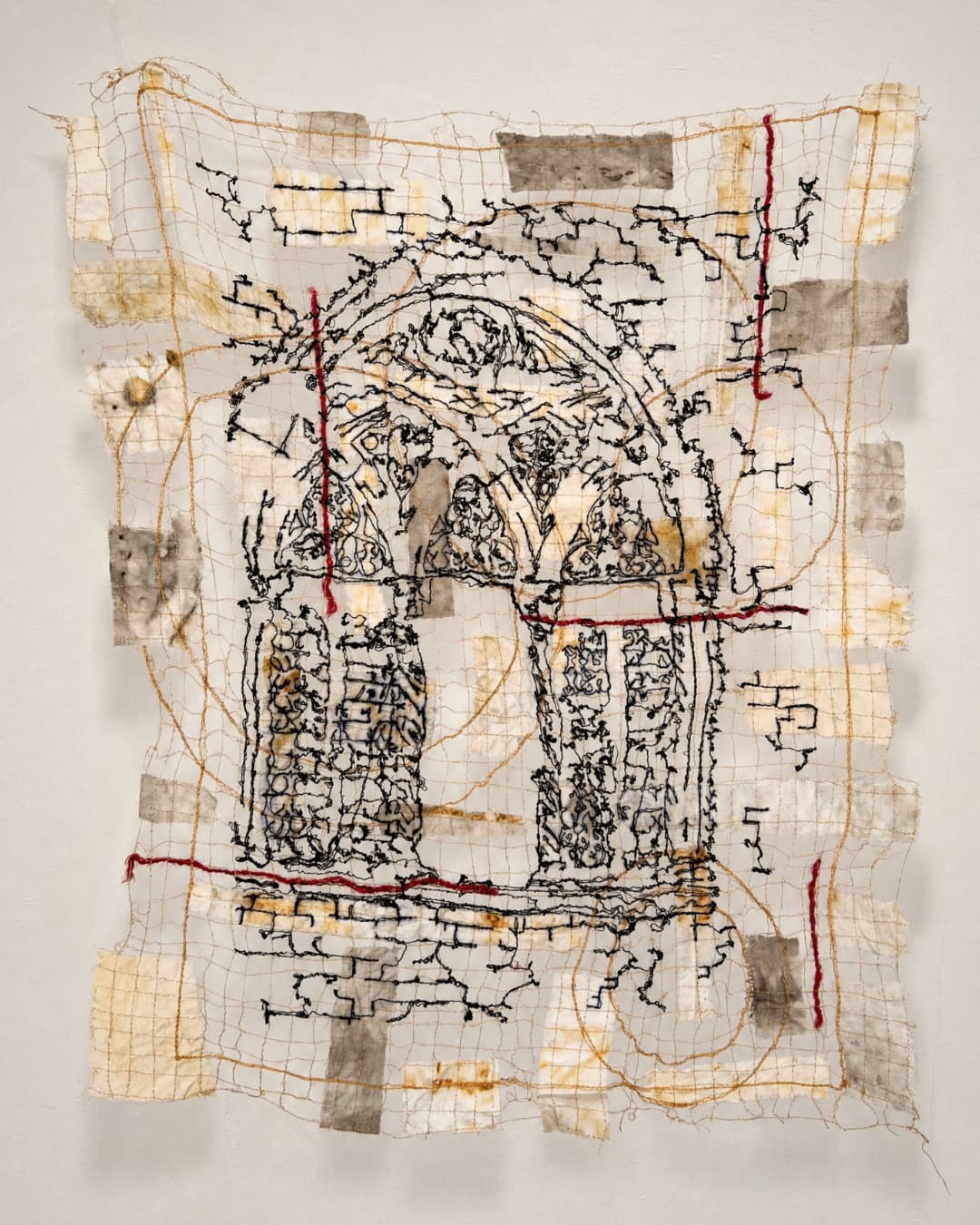
I decided to unmake my artistic development by making versions of earlier pieces that would appear ghost-like, ethereal. The title Manes comes from Ancient Rome. Manes were the souls of ancestors that people worshipped as benevolent personal deities. My Manes were the spirits of earlier works, exploring questions of continuity and remembrance through unmaking.
At the time, I had just bought Big Beastie, and I needed to practice using it. I had a roll of dissolvable fabric, which I thought would be great because once I washed it away, you couldn’t see any of my tension errors.
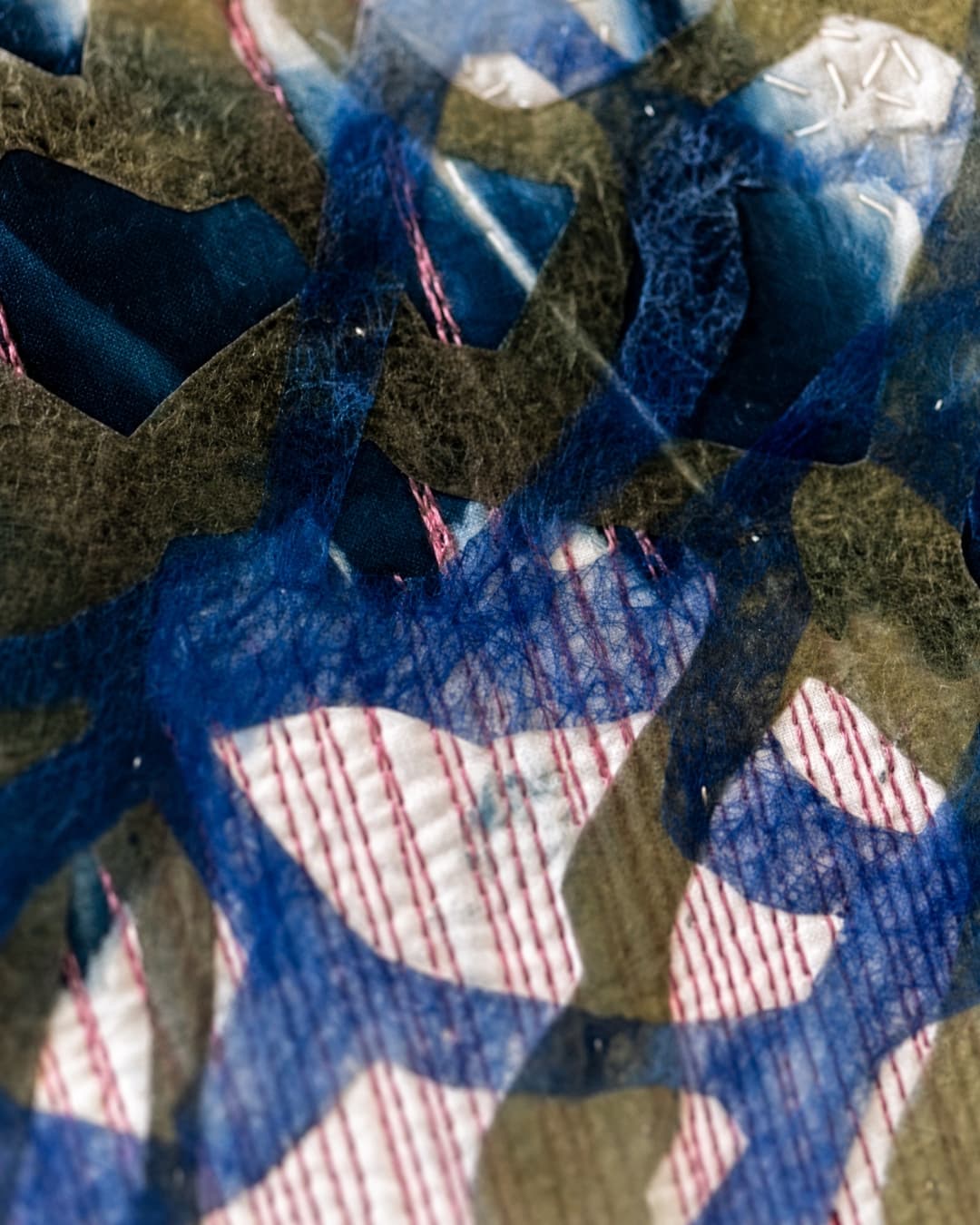
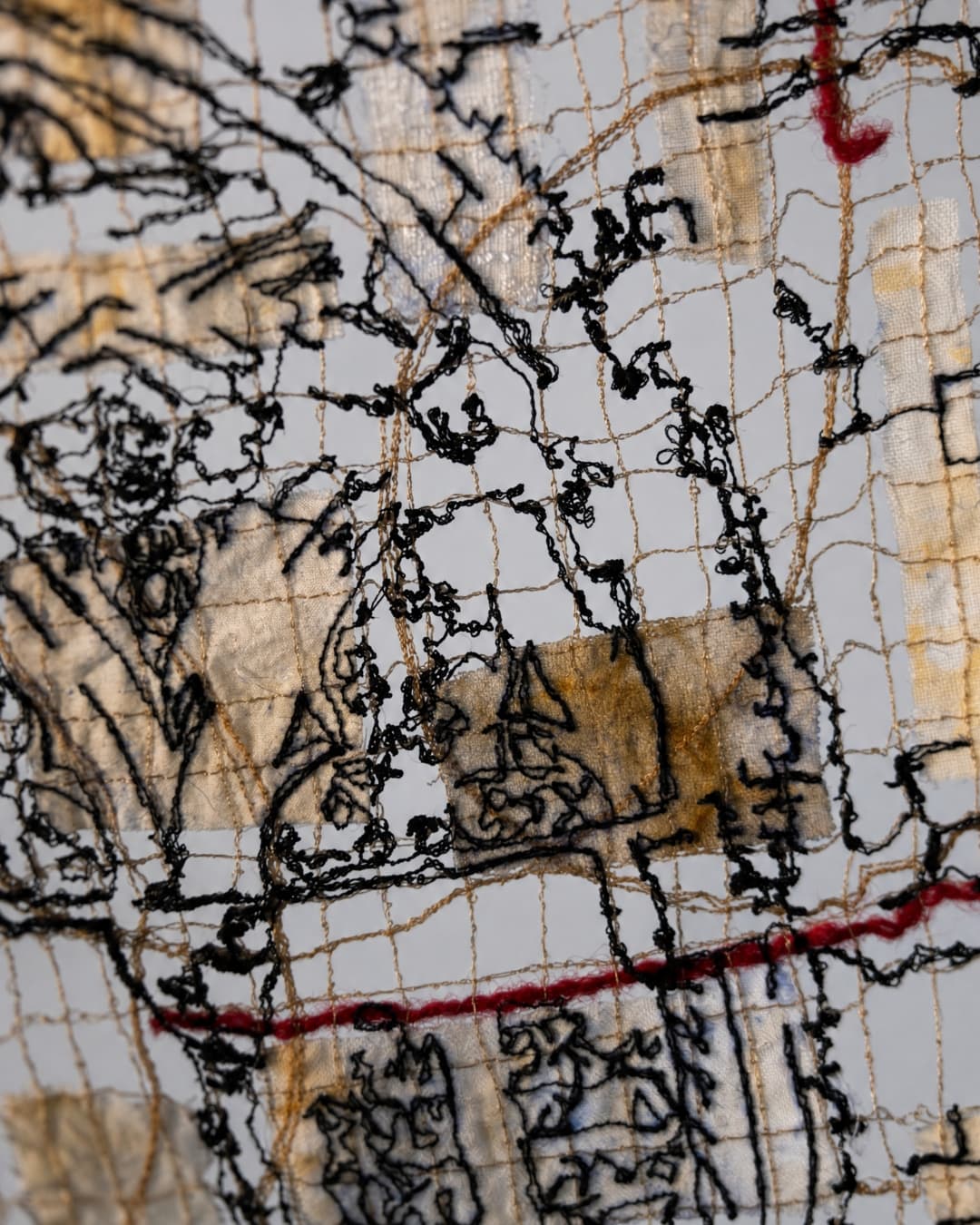
I placed leftover scraps from earlier projects between layers of dissolvable. As the solid substrate washed away, earlier work was quite literally taken apart and reimagined. What remained were fragments and stitches.
I love experimenting with dissolvable and seeing how little stitching I can get away with and still have the piece hold together. There are still occasional disasters, but that’s all part of pushing the technique.
The great outdoors
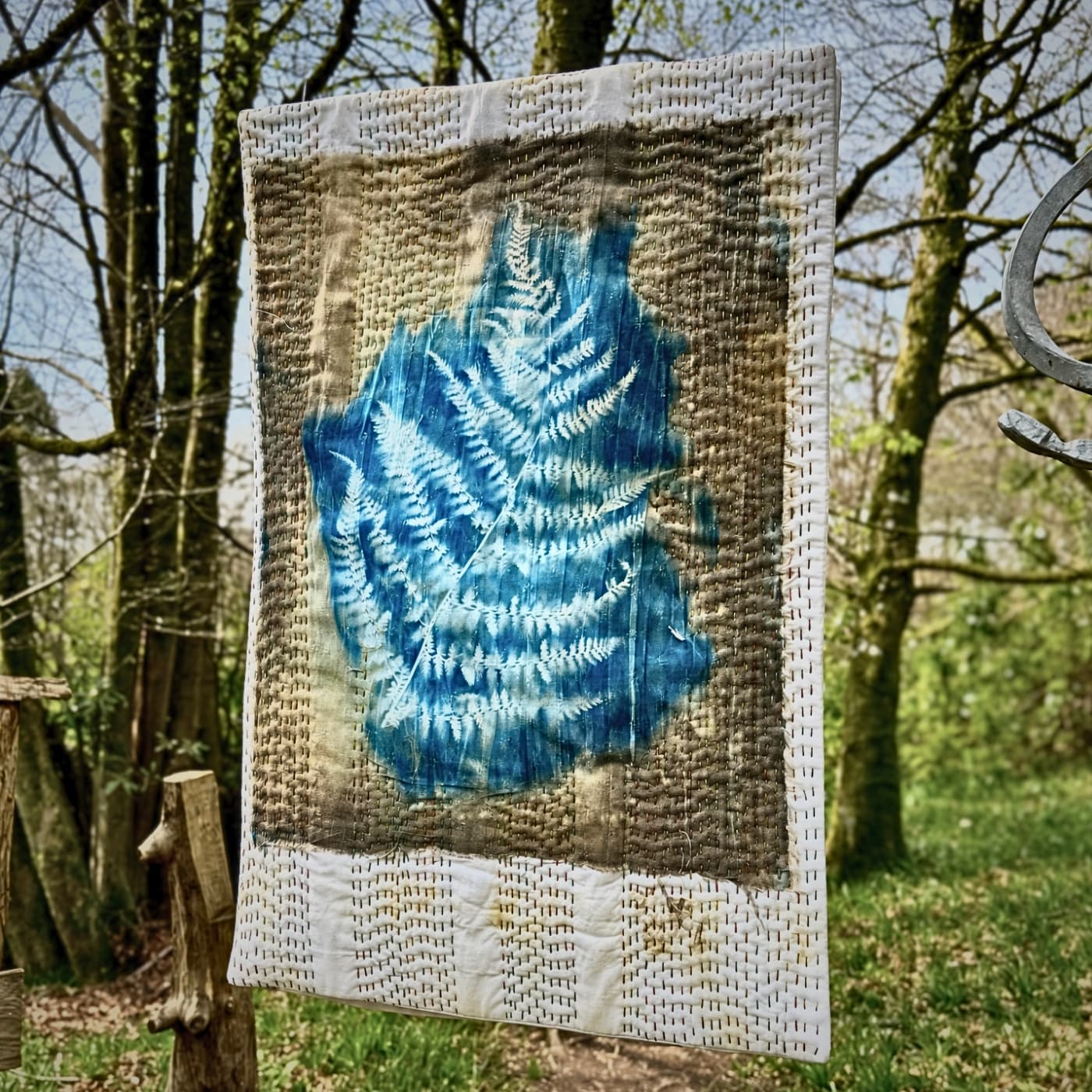
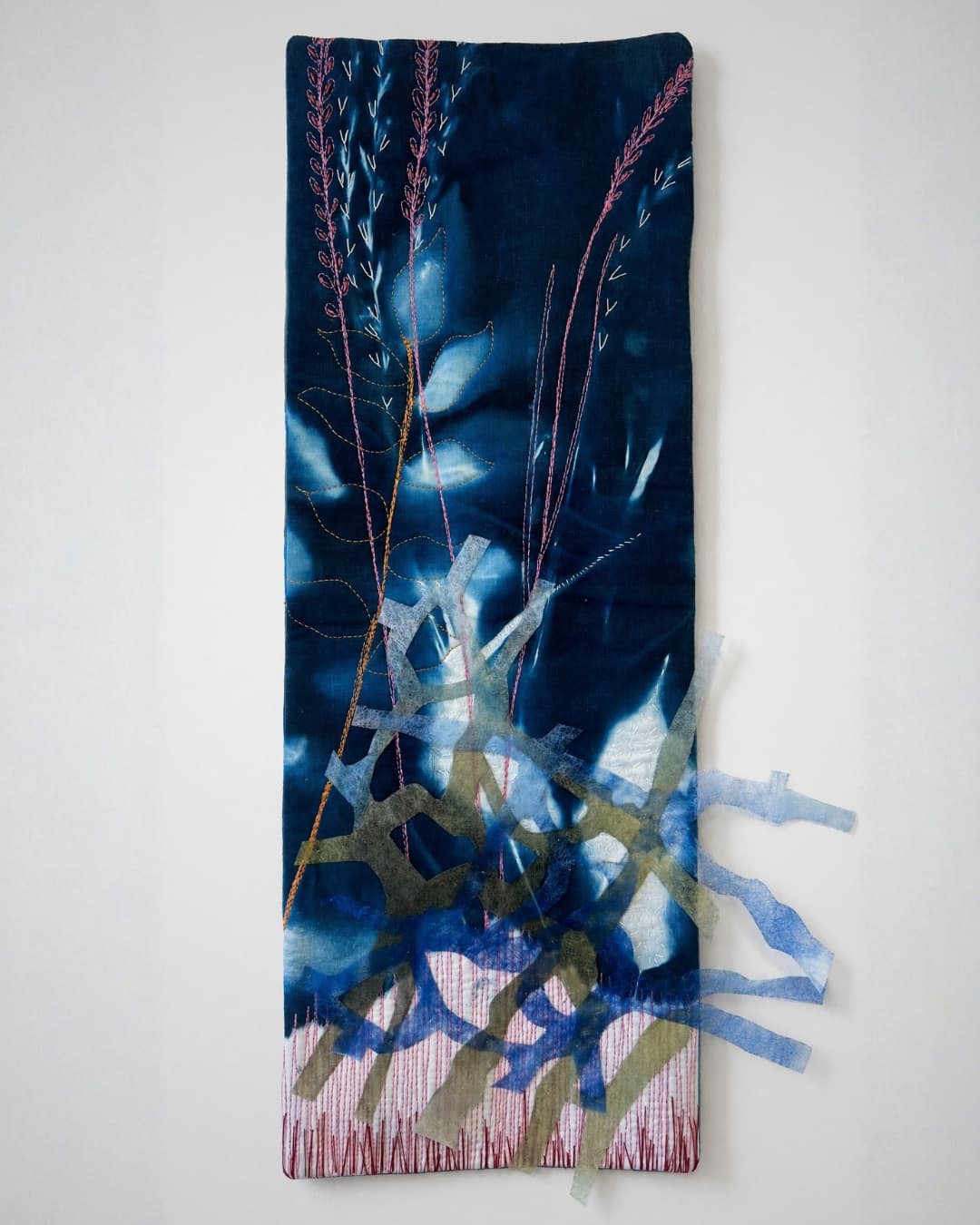
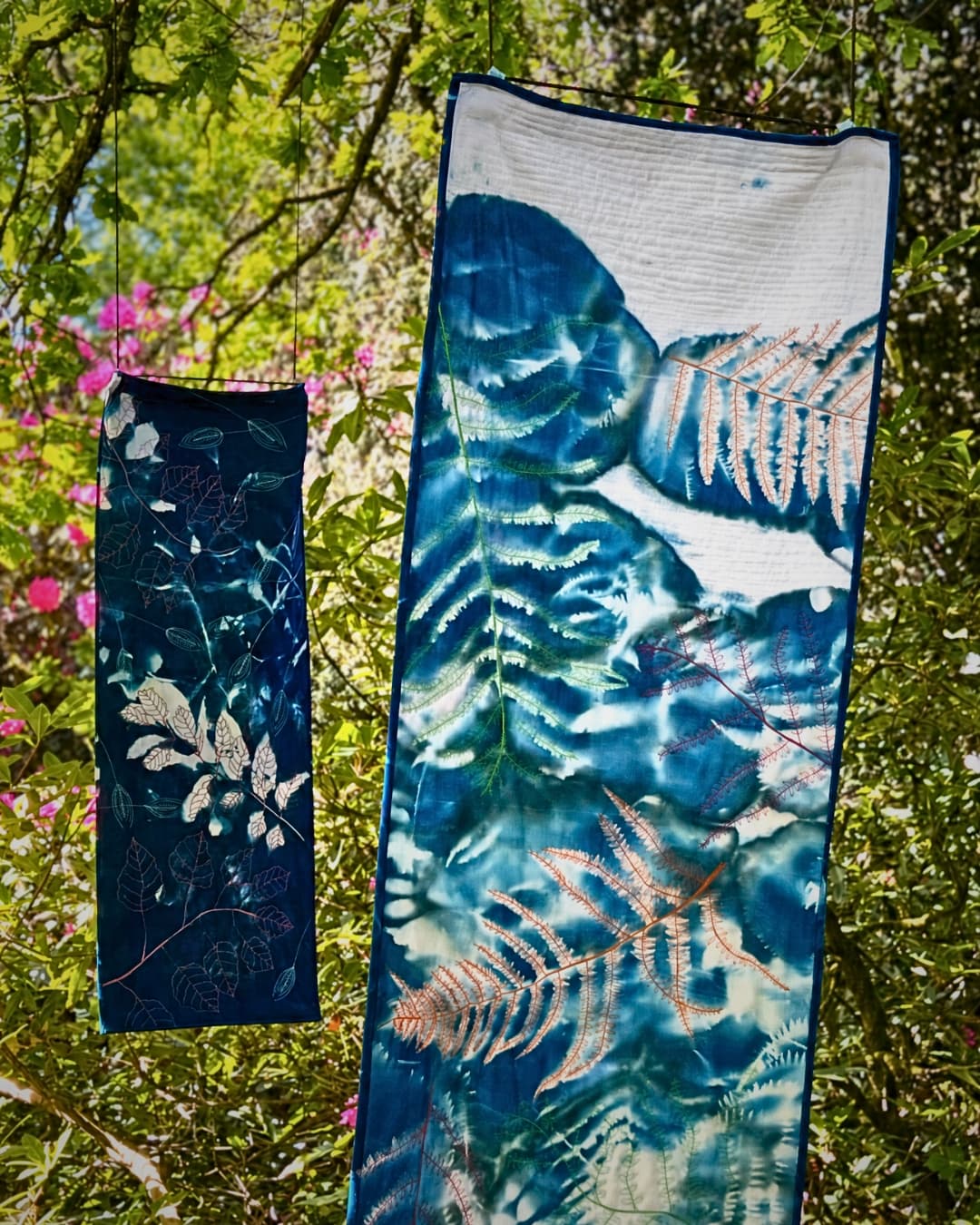
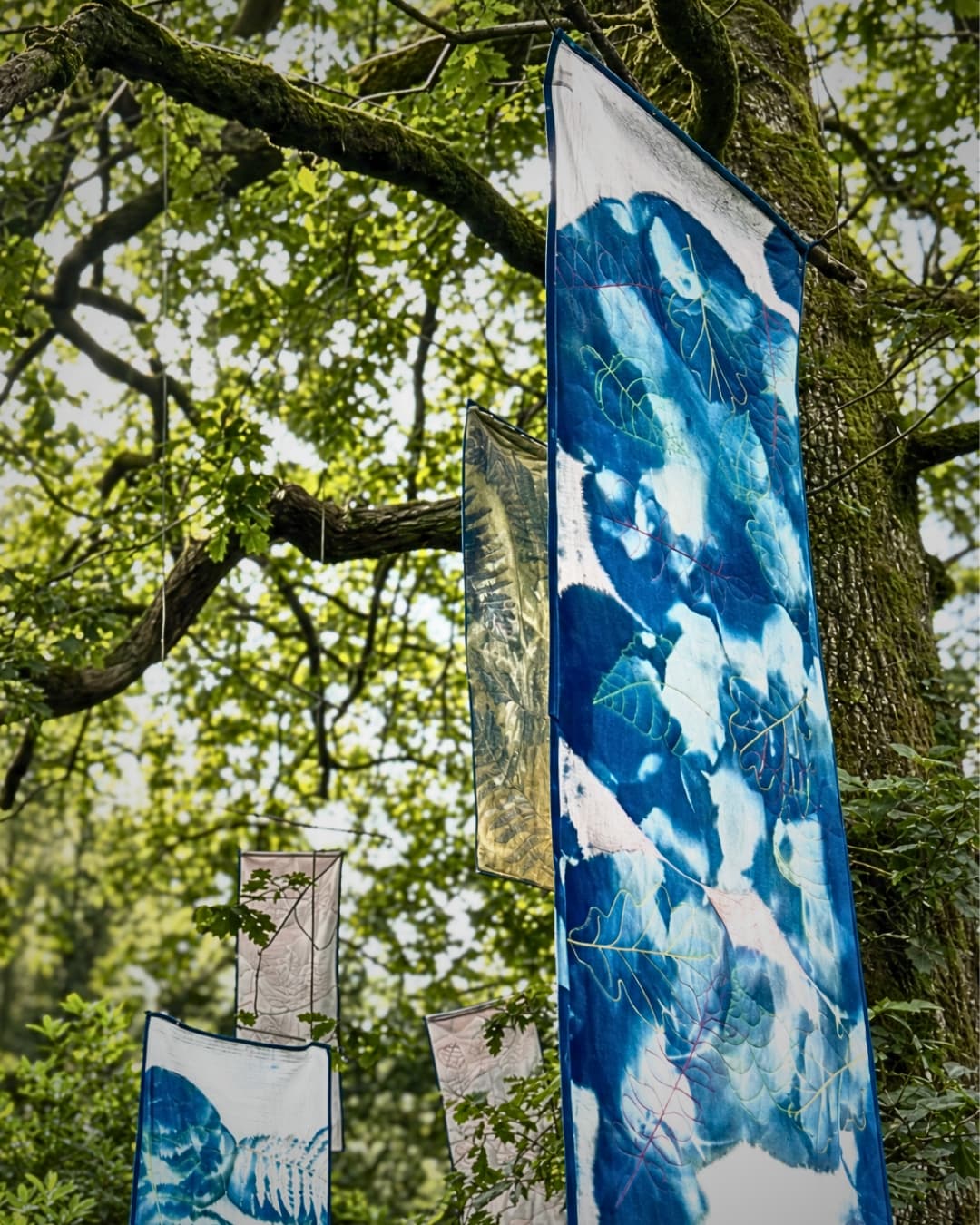
For the Blue Woods series, I coated large sheets of fabric with cyanotype and laid them on my lawn with various leaves, branches, and ferns from the beautiful woodland walk at Tir na nOg, near Drymen.
I originally thought they’d be hung from frames, so I cut the sheets with a maximum width of 40cm (16″). In the end, we decided to hang them around an old oak tree to better make them part of the woodland. The bits of fabric that weren’t very interesting were used for the binding.
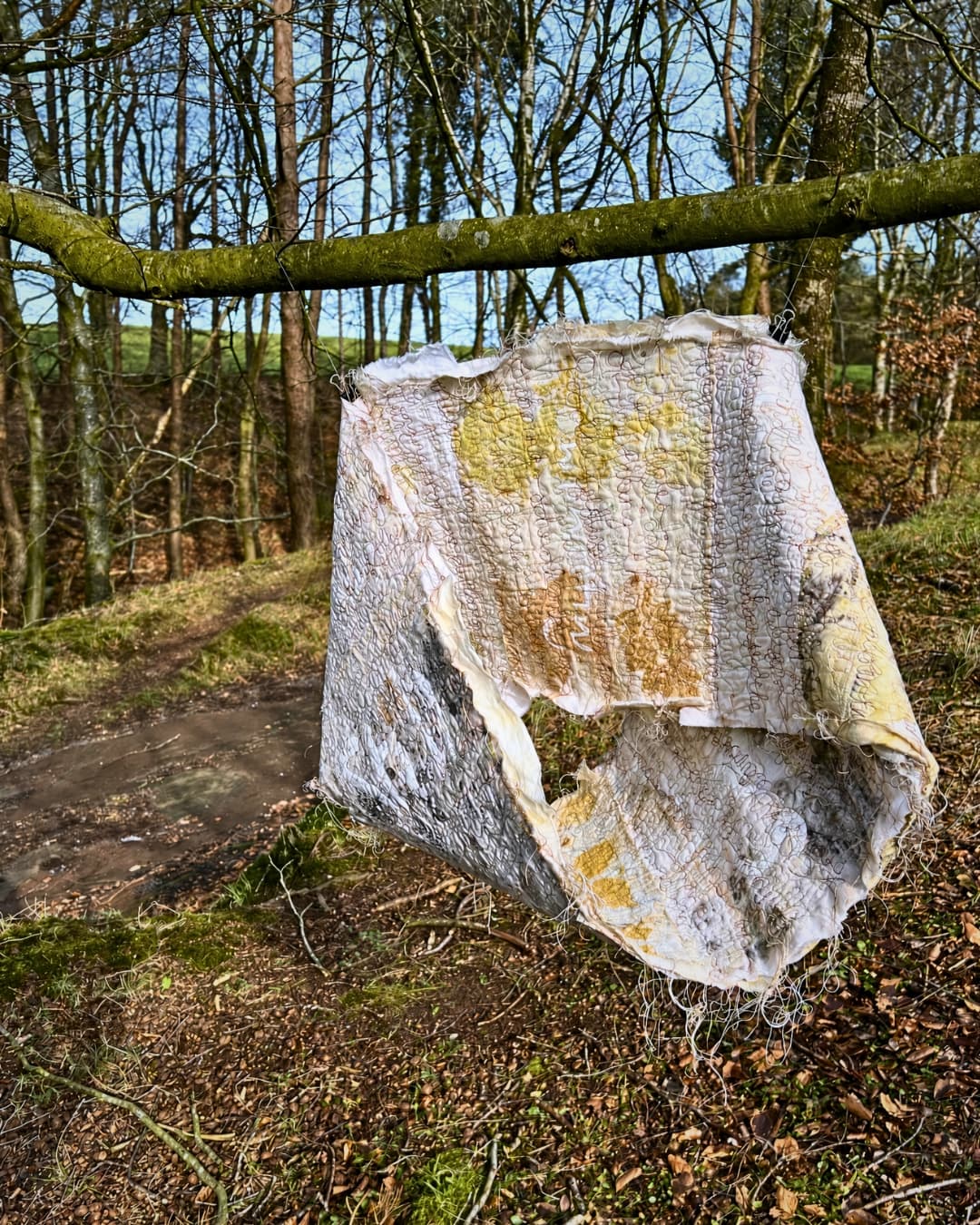
For over six months, the pieces hung from the tree through sun, wind and rain. Moss greens began to appear alongside marks from bark and falling leaves, as the woods slowly reclaimed the fabric.
To help with the hanging, I had stitched metal bars at the top and bottom of each panel. They eventually rubbed holes in the fabric, so I brought the panels home to change the hanging mechanism.
I also decided to give them a spruce up and put them in the washing machine. Bad idea!
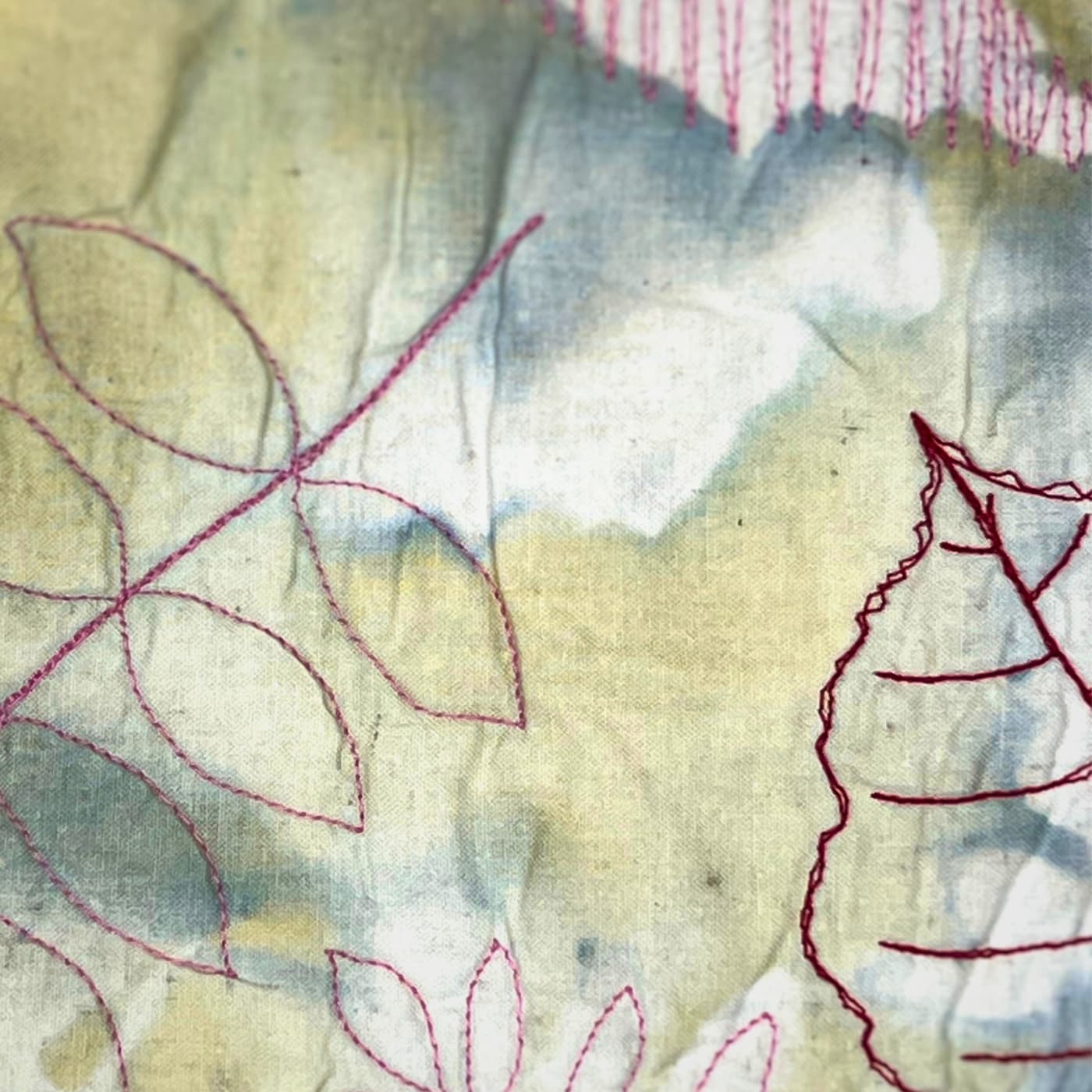
I gave them a wash at 40°C (higher than normal) and on a long cycle with my normal washing detergent, which I had forgotten was strongly alkaline. It stripped away the cyanotype colours and left a very clean and lovely shade of yellow. Oops!
I did consider just putting them back out in the woods with their yellow colour, but I instead re-cyanotyped them and added more stitch. I also cyanotyped the backs that time.
The panels are now back in the woods and their new name is Blue Woods Revived.
Walk words
In a word-based series, instead of my usual drawing while walking, I decided to write words, like Walk | Words | Moor, about what I was seeing and thinking and feeling.
Given the mundane nature of these everyday walks, this was not profound. Just things like how nippy it felt with clear skies and a full moon. Or the time a pheasant squawked in alarm as I walked nearby. I don’t know who got the bigger fright.
I layered these words up using a different pen each day. I had to transcribe the words as soon as I got home, and over time, the layered words became more of a pattern than distinct words.
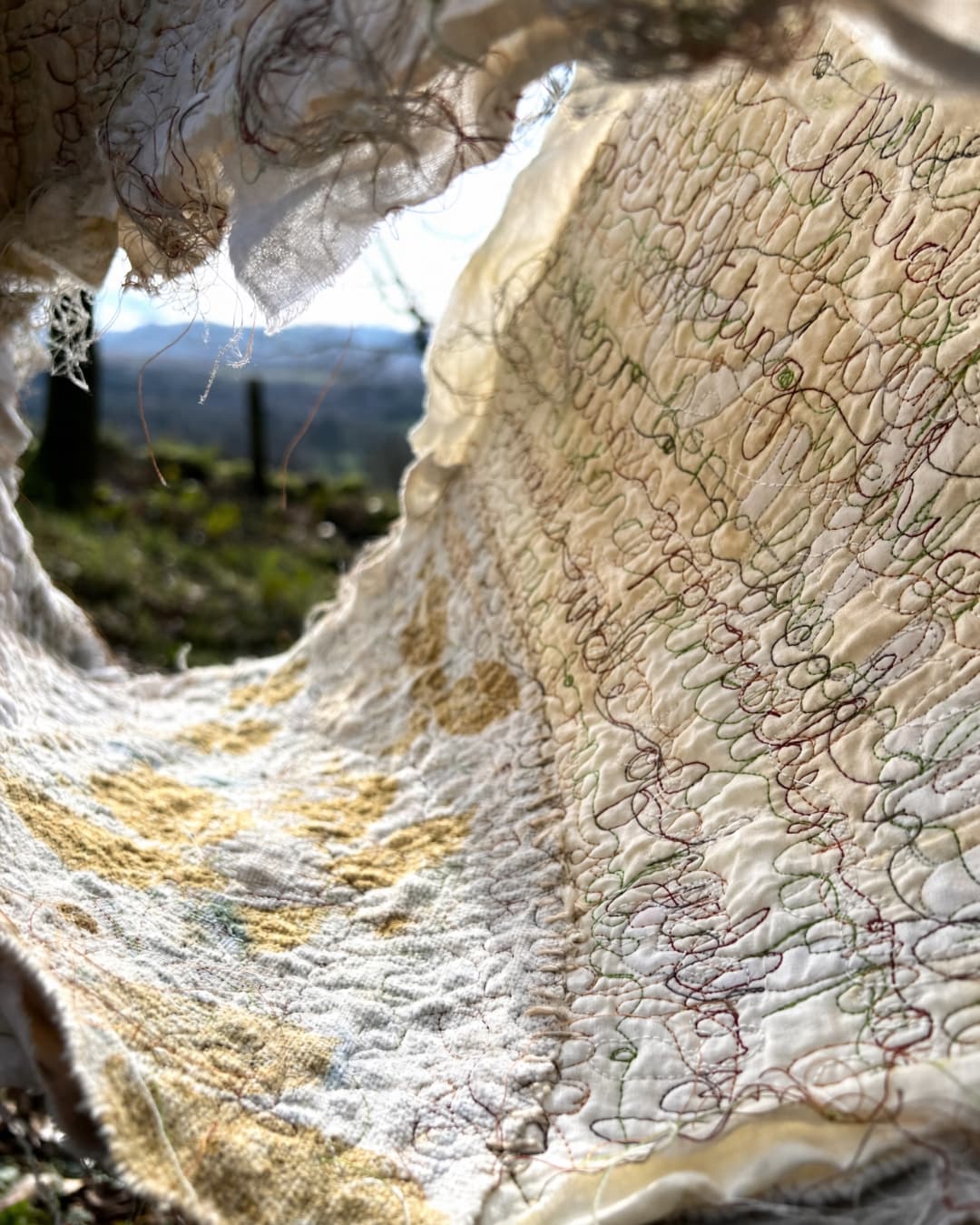
I then stitched those words onto a three metre (10 foot) piece of fabric that had been dyed with leaves collected on walks. I stitched each day’s words on top of the others until they all merged together into the background. Sometimes an odd word would catch the eye.
I looped the strip of fabric back on itself in the shape of a mobius loop to emphasise the days running into each other, the walks that continued and layered on one another. It became a sum that was very different from its parts, as you can see in the short video Walk | Words.
A cyanotype workshop
I’m excited to introduce Stitch Club members to cyanotype and have them explore how it can be used to create exciting fabric using plant materials. The process doesn’t use anything fancy or exotic. Members will discover how even roadside plants can create great textures and patterns.
I’m hoping members take away the thrill of turning fabric blue using just sunlight and two chemicals. And that they will continue to experiment with the technique to create their own exciting fabrics.
Comments