
How does a mathematician specialising in statistics pivot to become an award-winning international artist?
For Eszter Bornemisza, it started with a bus trip from her home in Budapest to QuiltExpo in Lyon, France. There, she discovered contemporary art quilts and knew she’d found ‘her thing’.
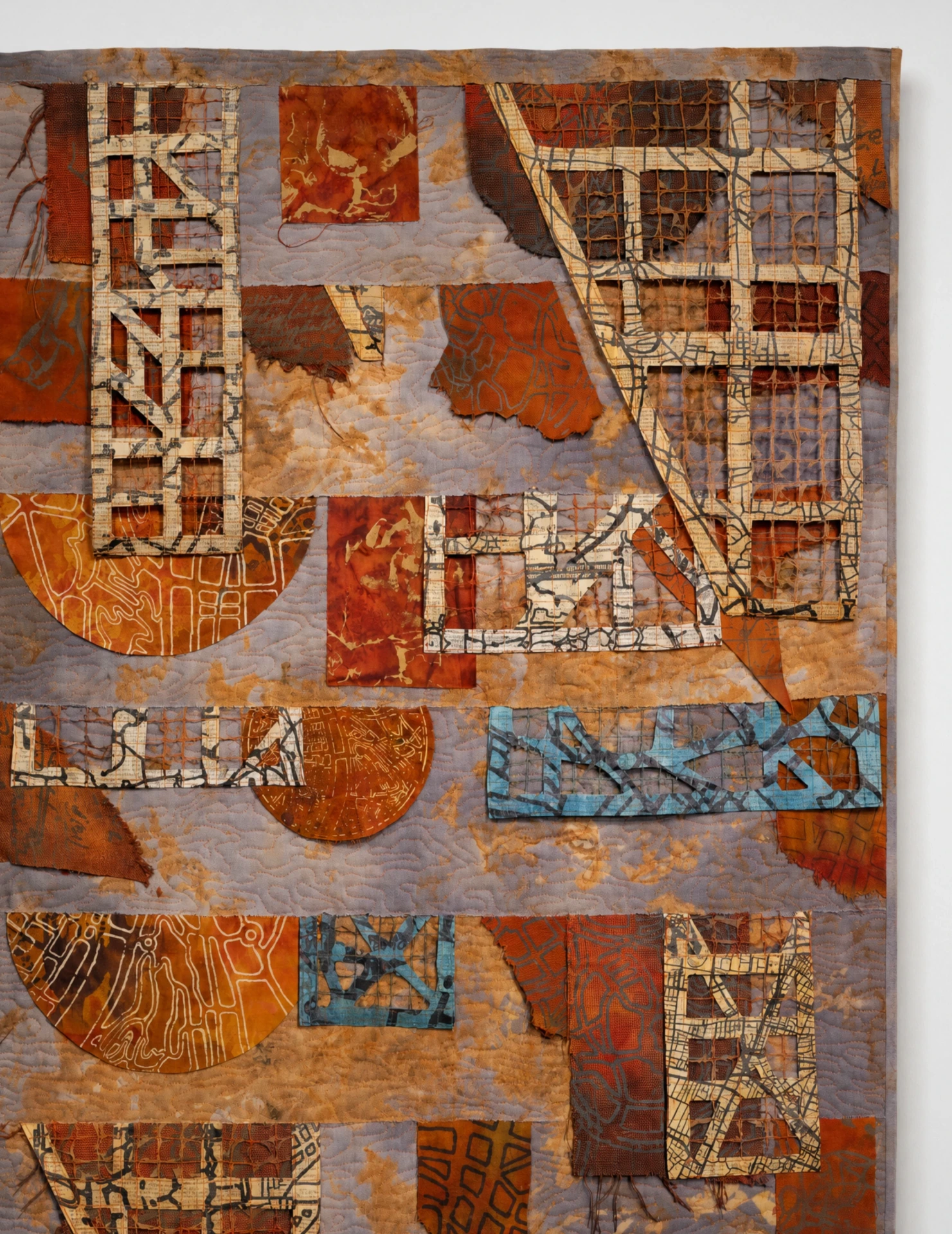
Eszter no longer crunches numbers but has embarked on a journey of learning, experimentation and discovery. Her work has evolved as she explores a sense of identity, place and belonging through the language of cartography, reusing recycled materials.
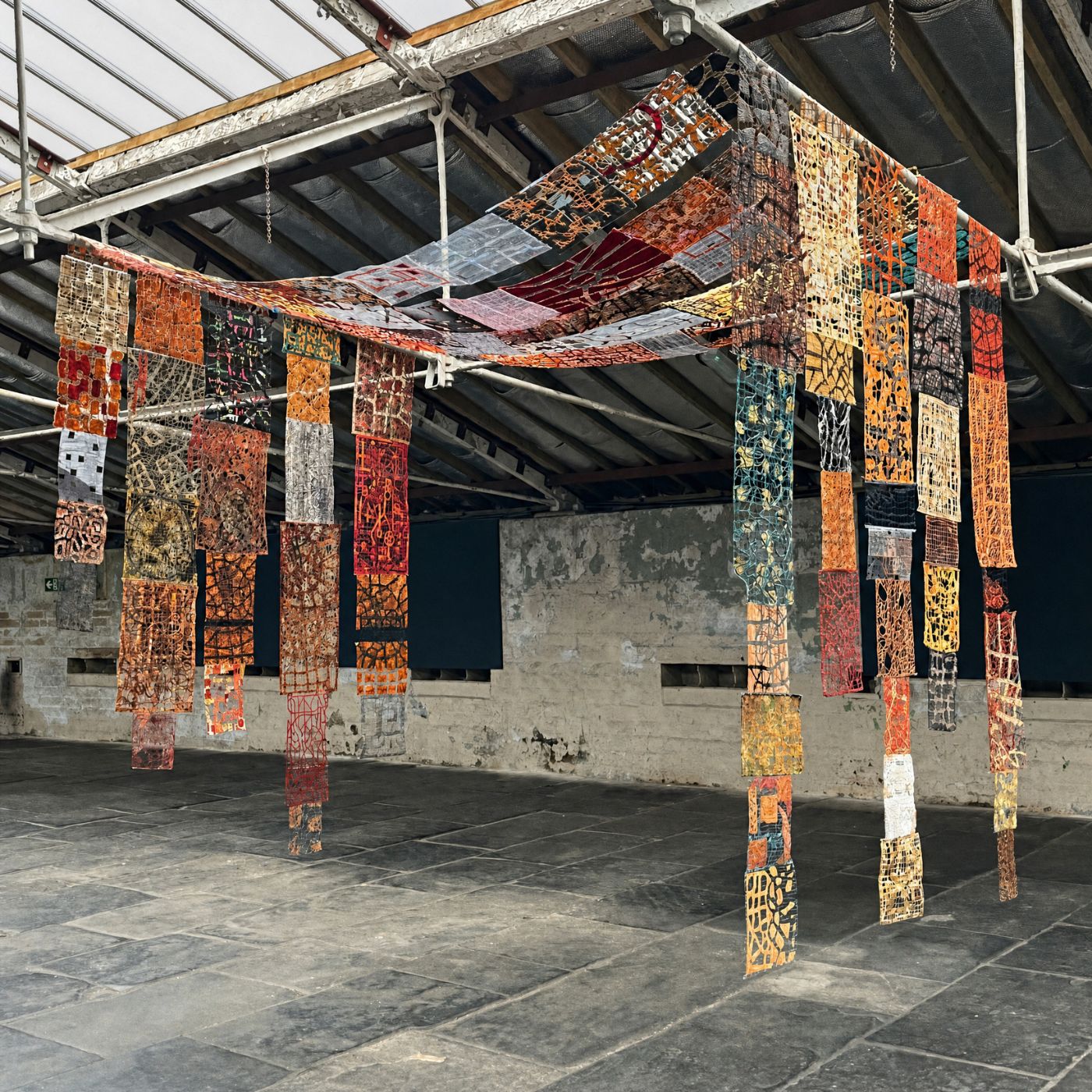
Discover how she plays with space and layers, adding colour and pattern as well as cutting away negative spaces to reveal labyrinths of real and imagined streets.
Maps & shadows
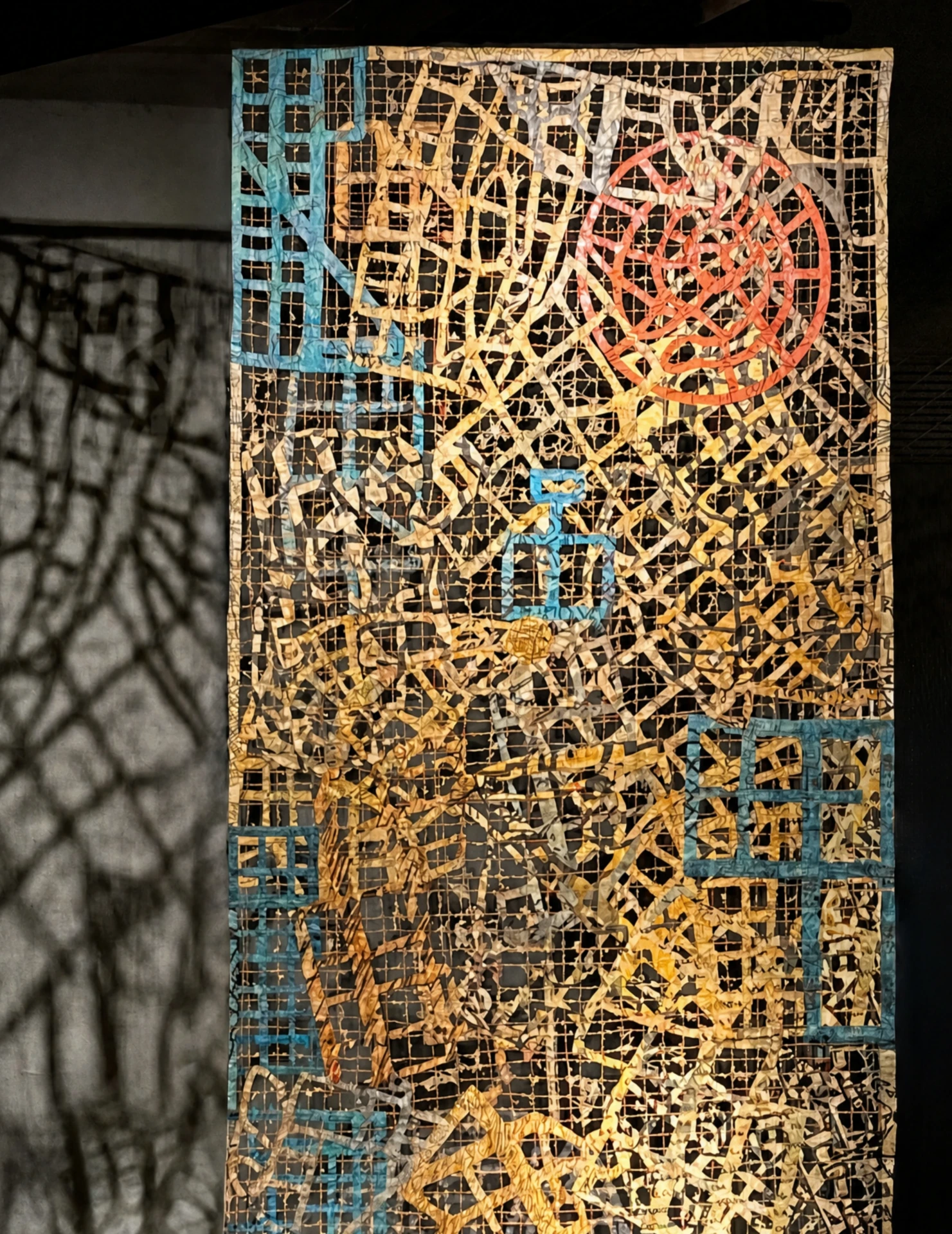
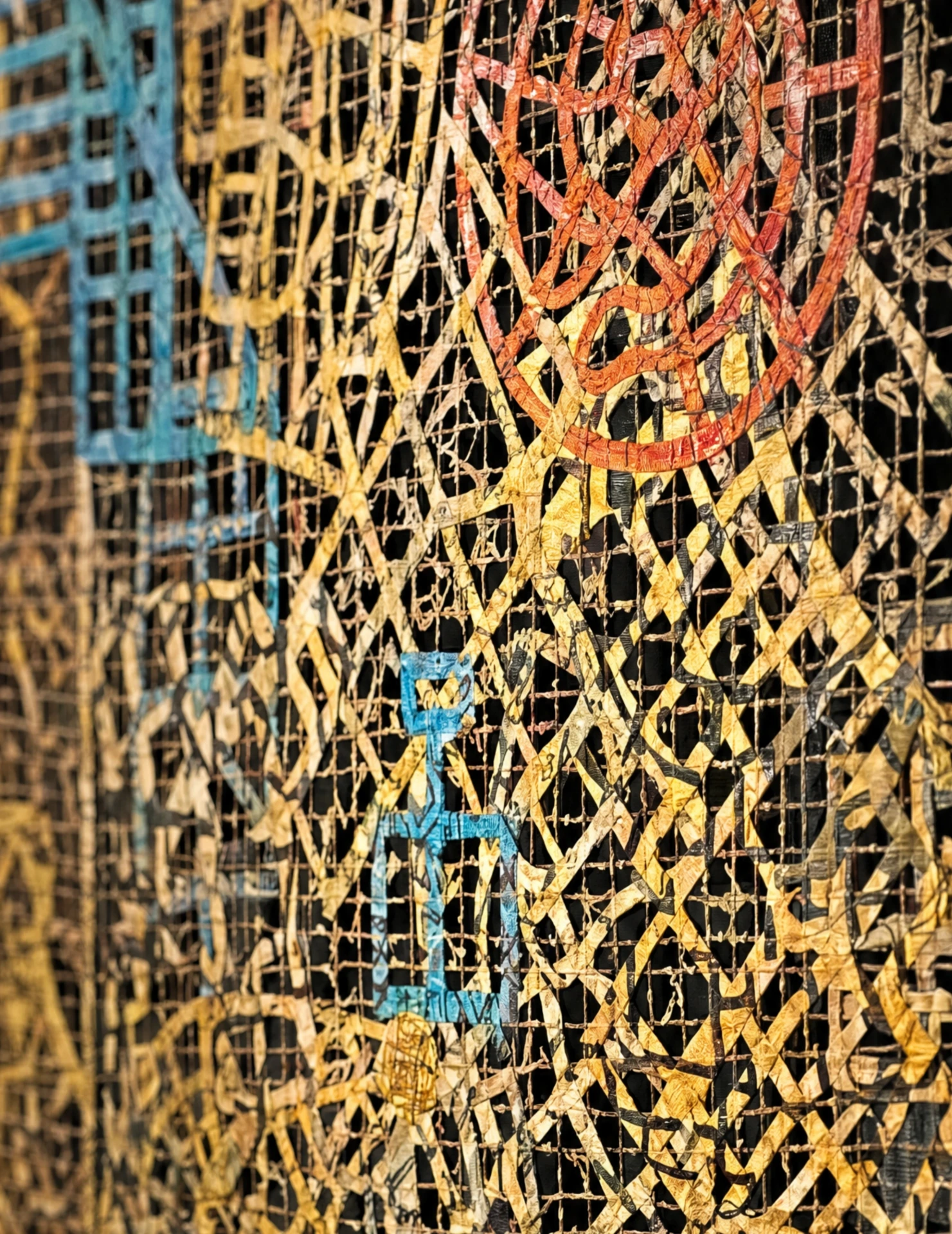
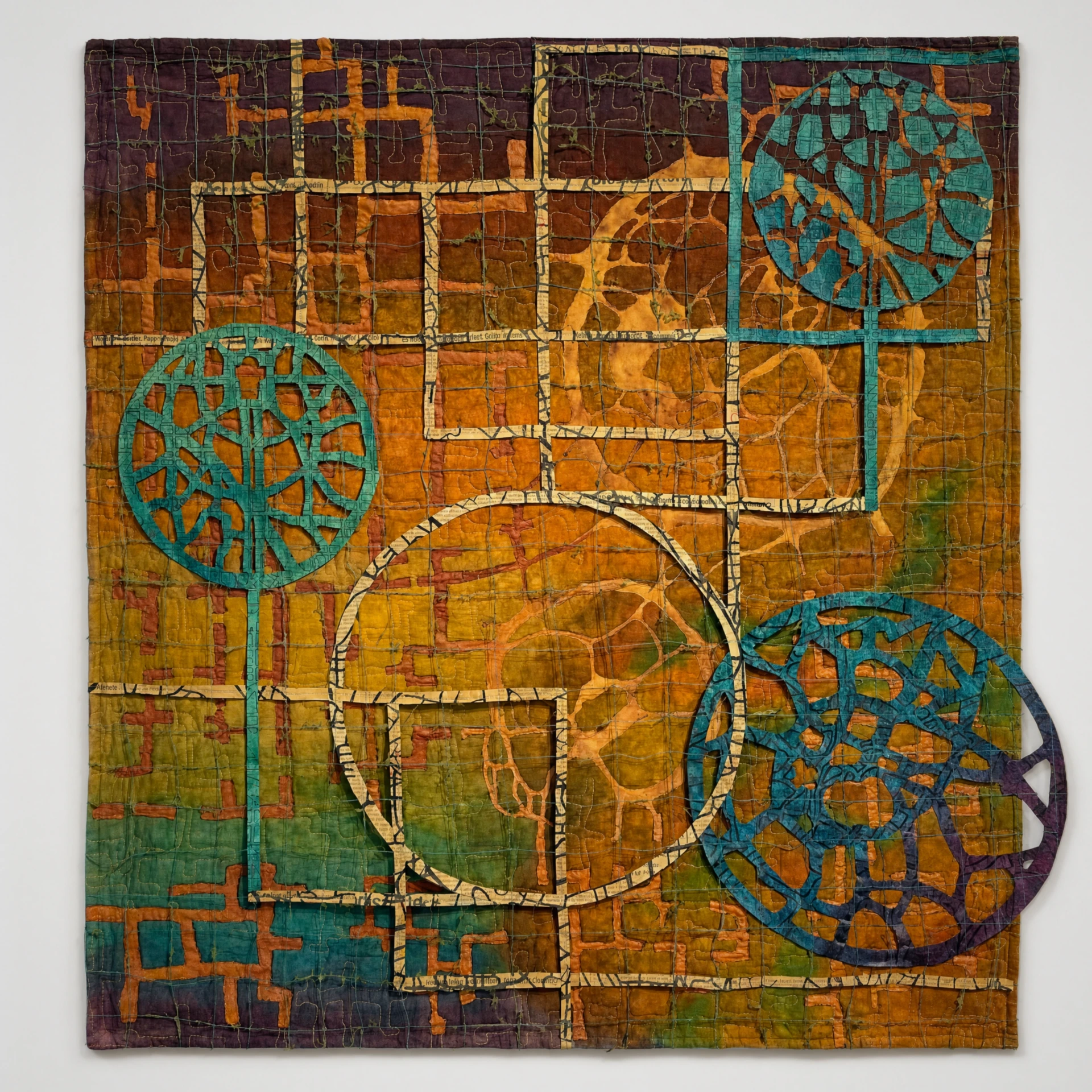
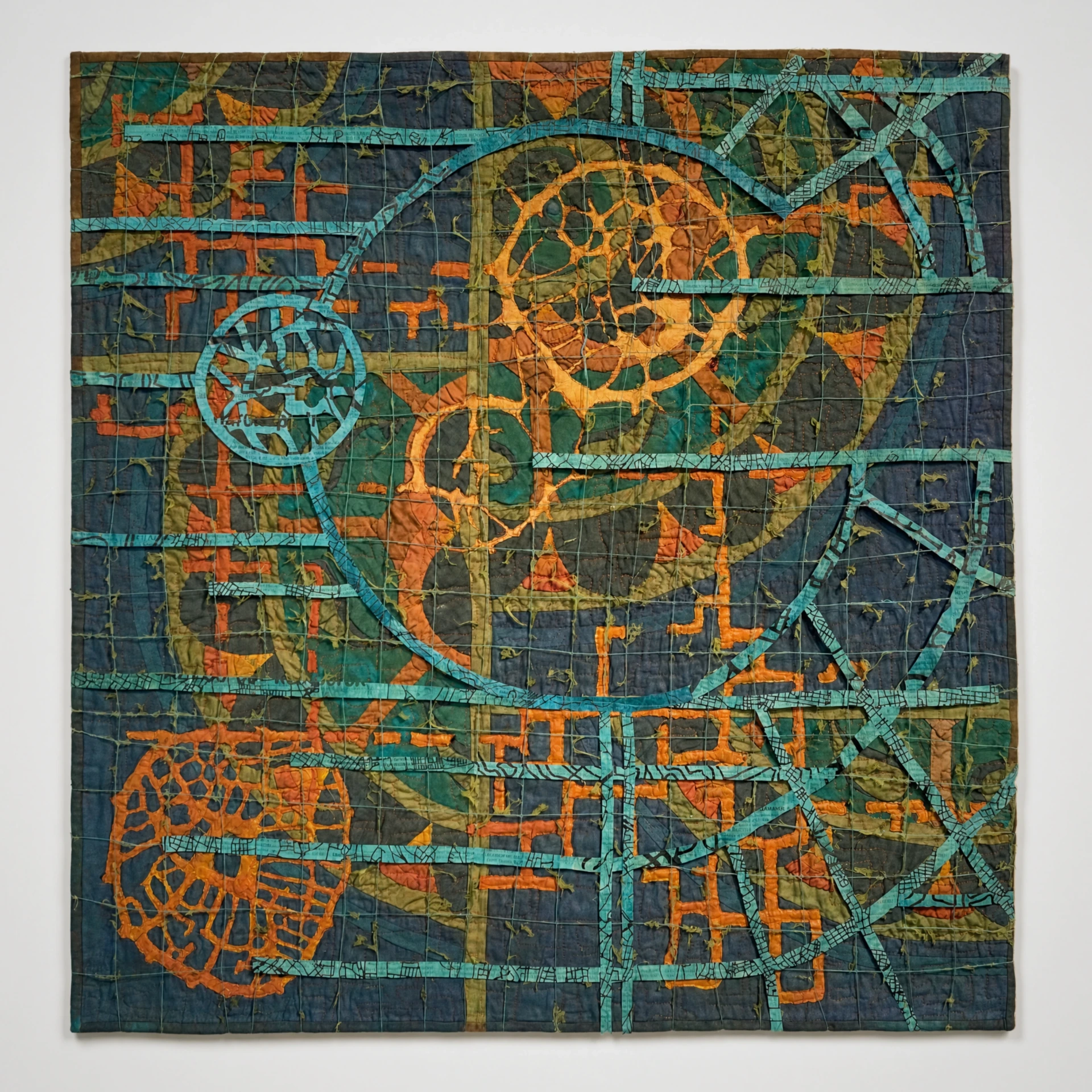
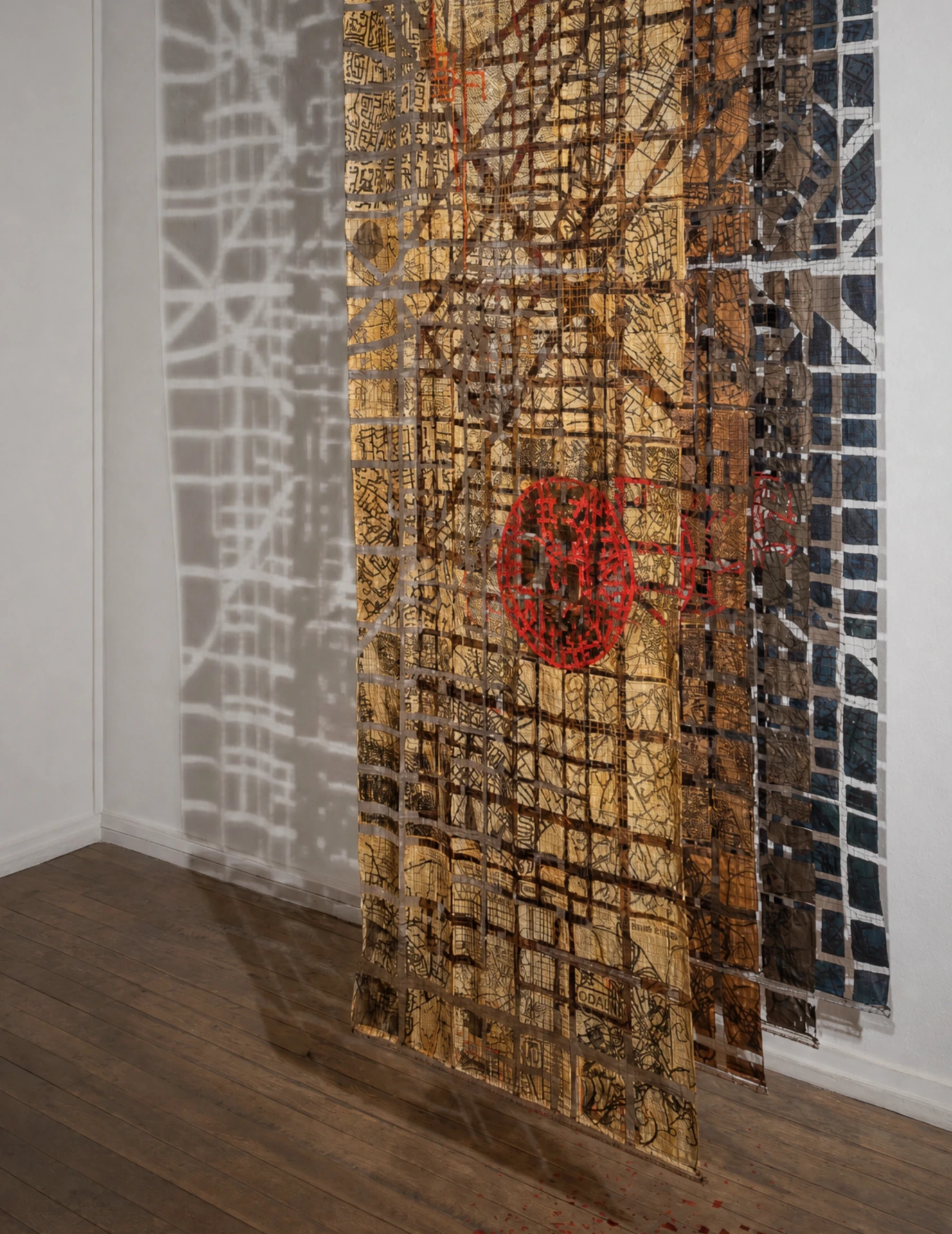
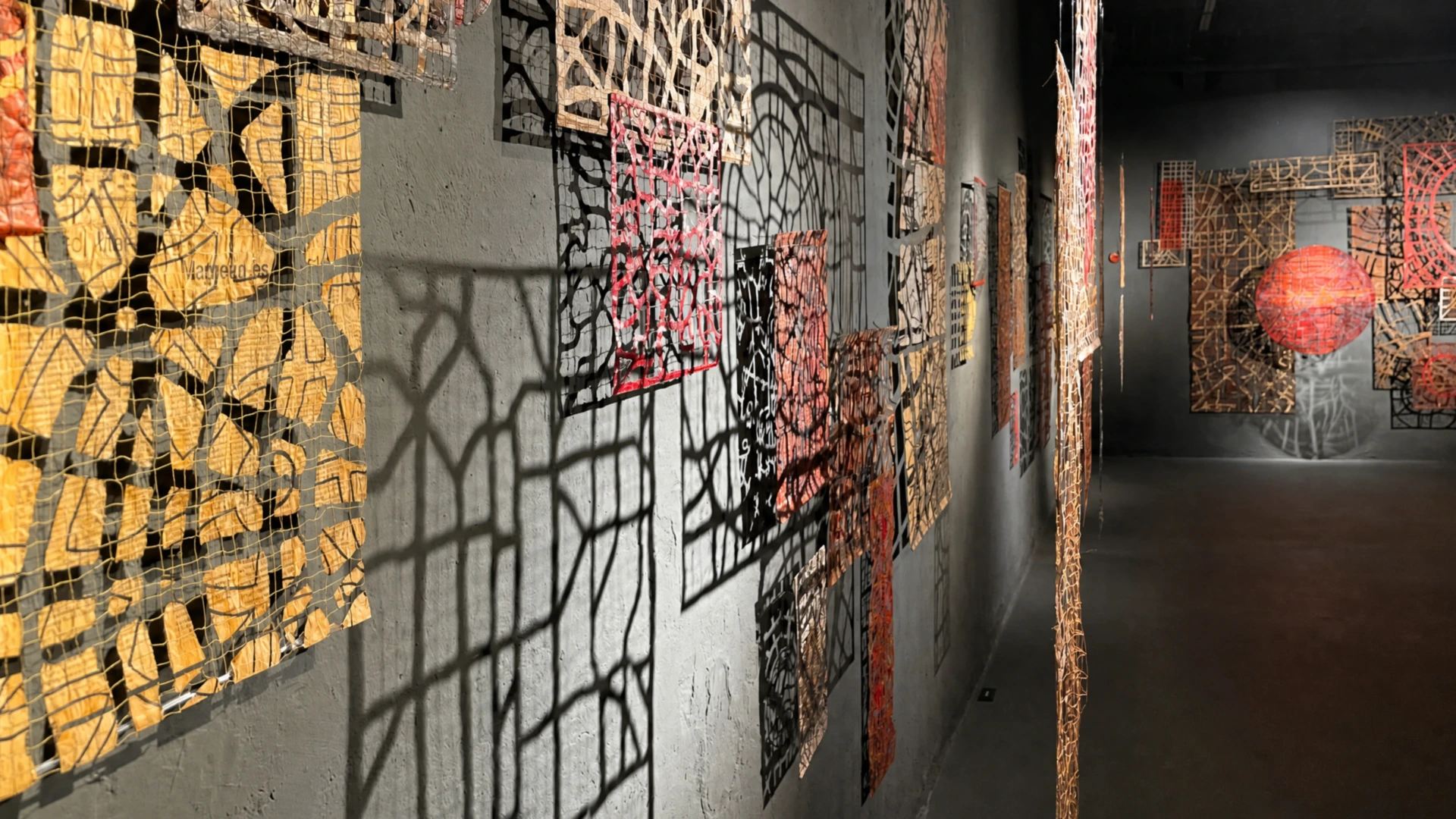
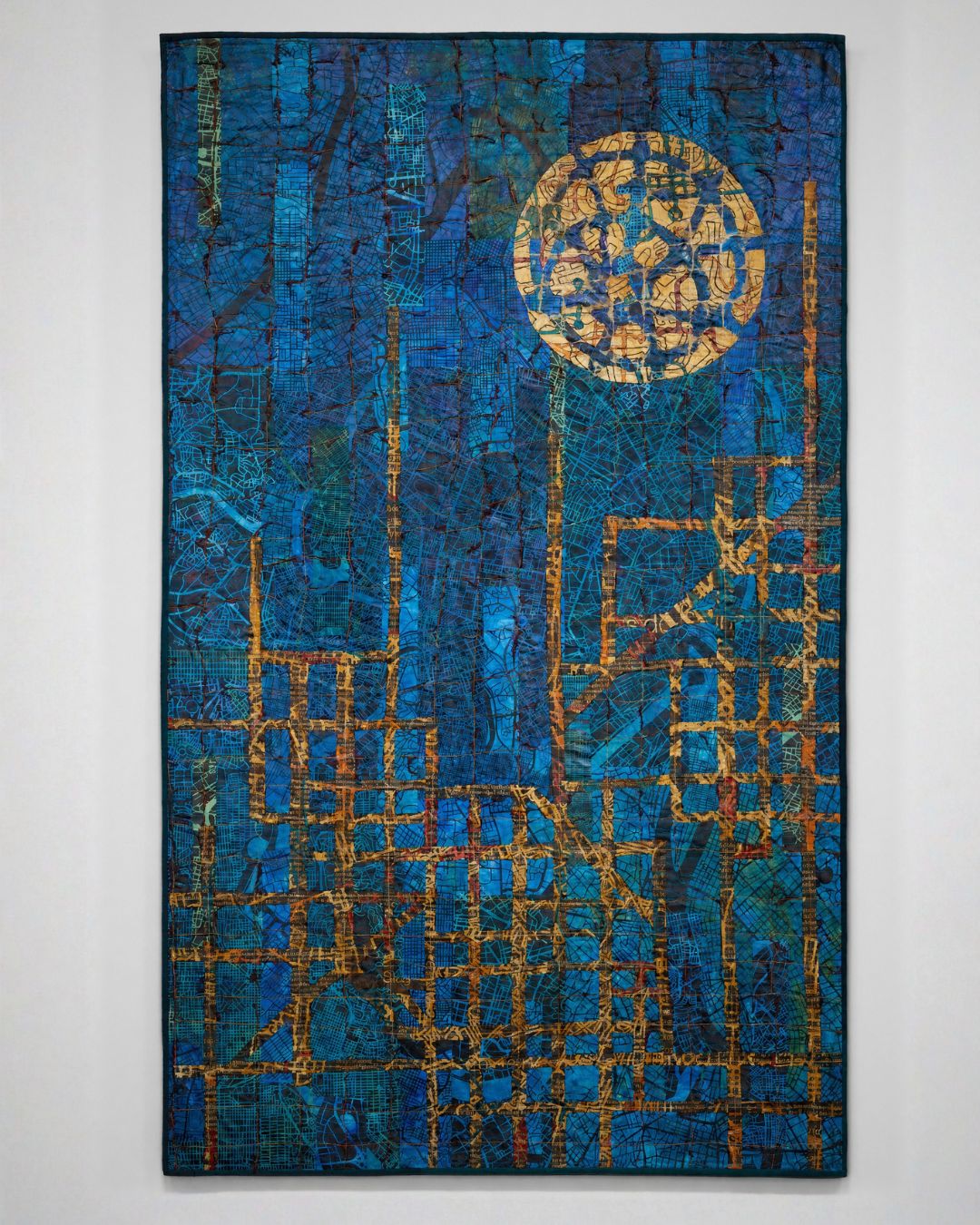
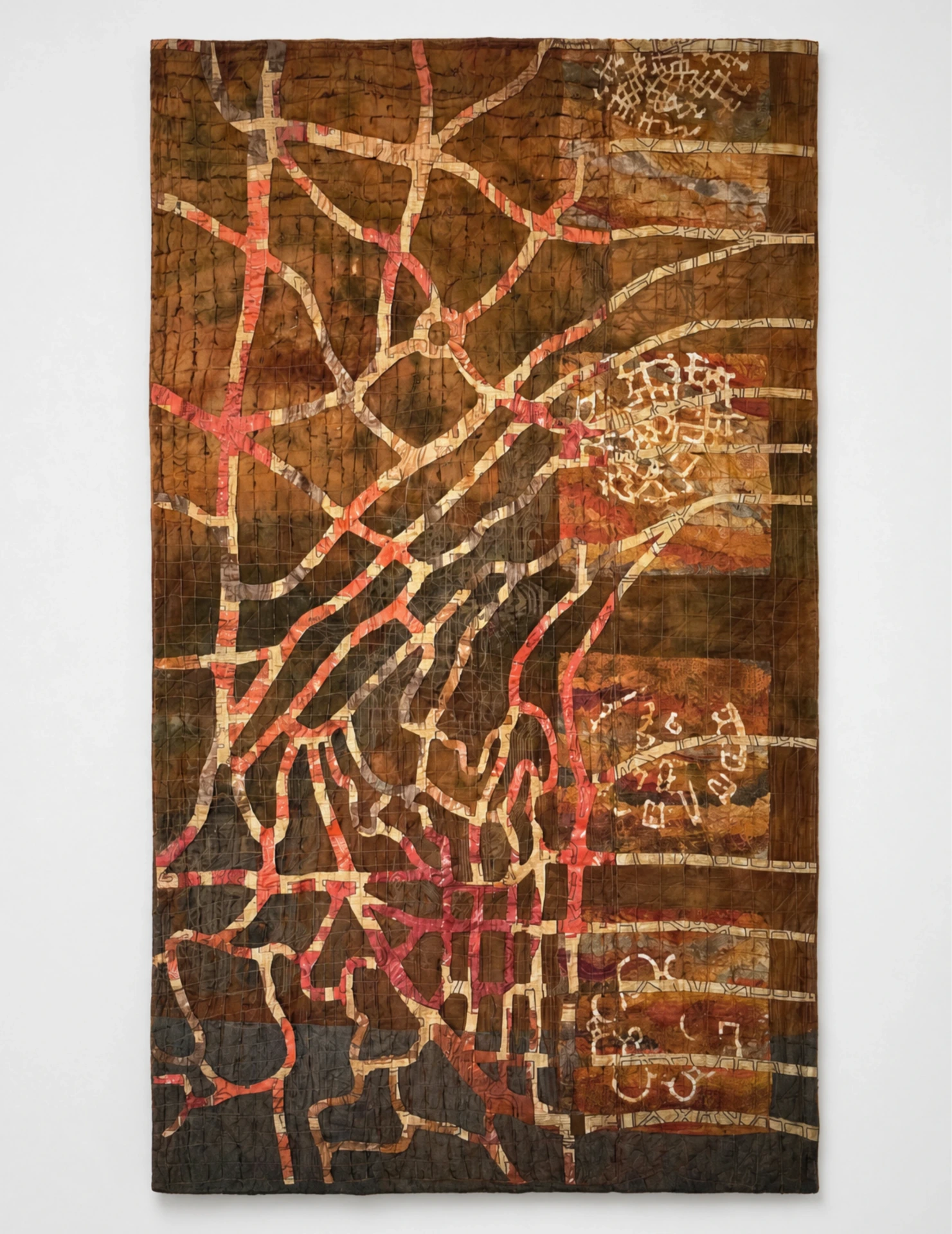
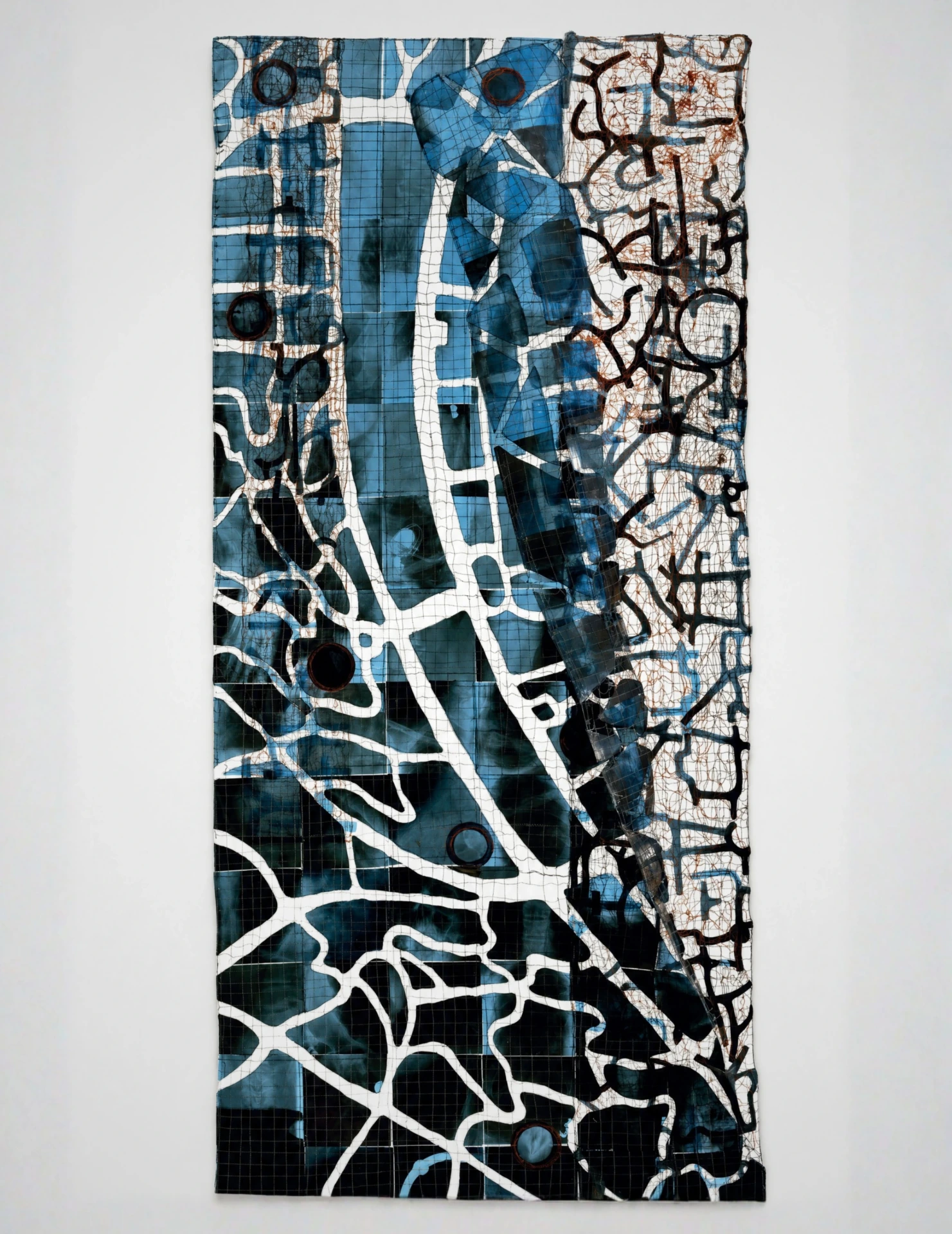
Eszter Bornemisza: My art explores urban life through the language of cartography. I distort, layer and reimagine city maps into transparent surfaces where light and shadow become part of the work.
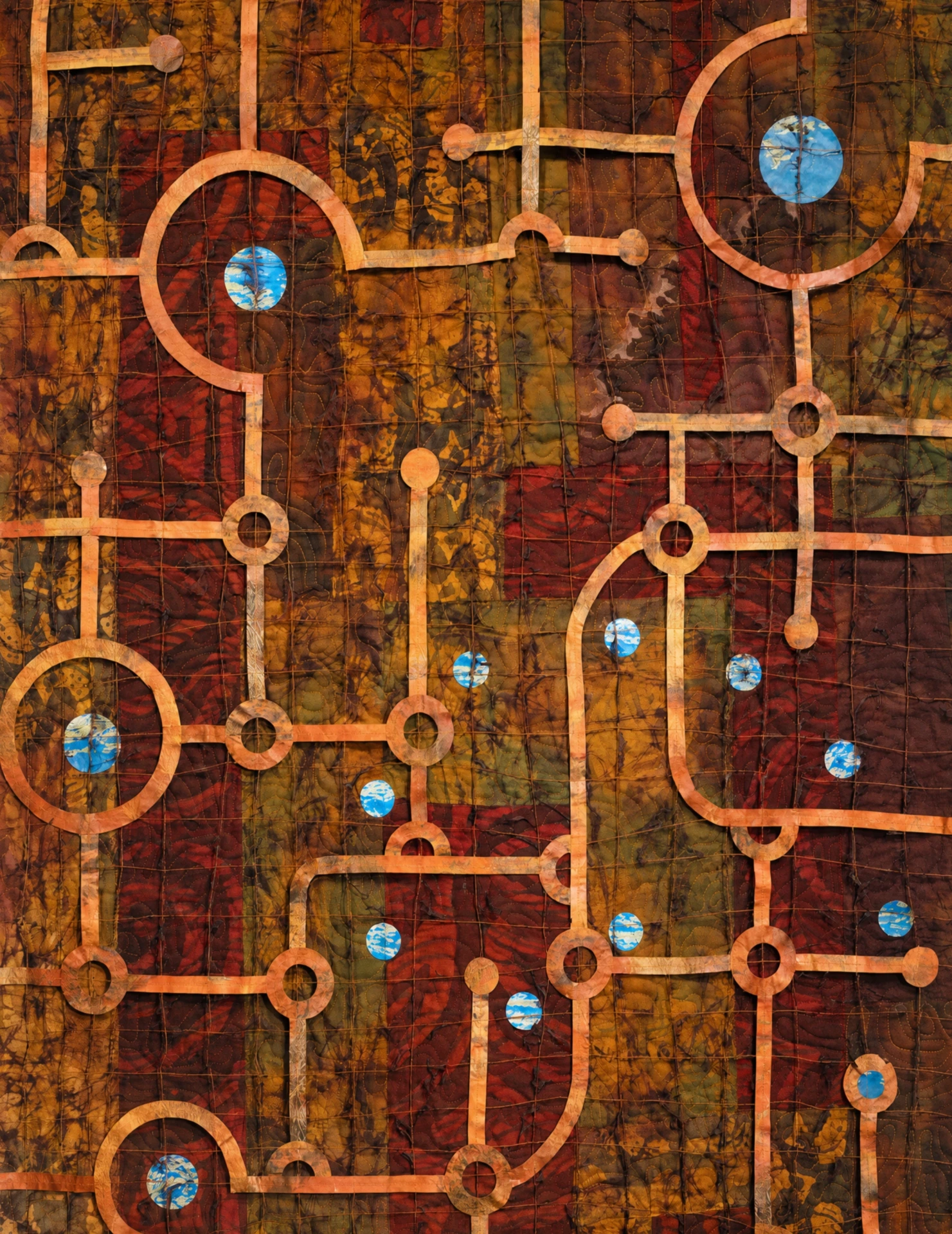
Drawing on both real and imaginary maps, I reflect on our relationship with the places we inhabit and on the ways we orient ourselves physically, socially and mentally.
Through an ongoing process of experimentation, maps have become visual metaphors for navigating questions of identity, belonging and place.
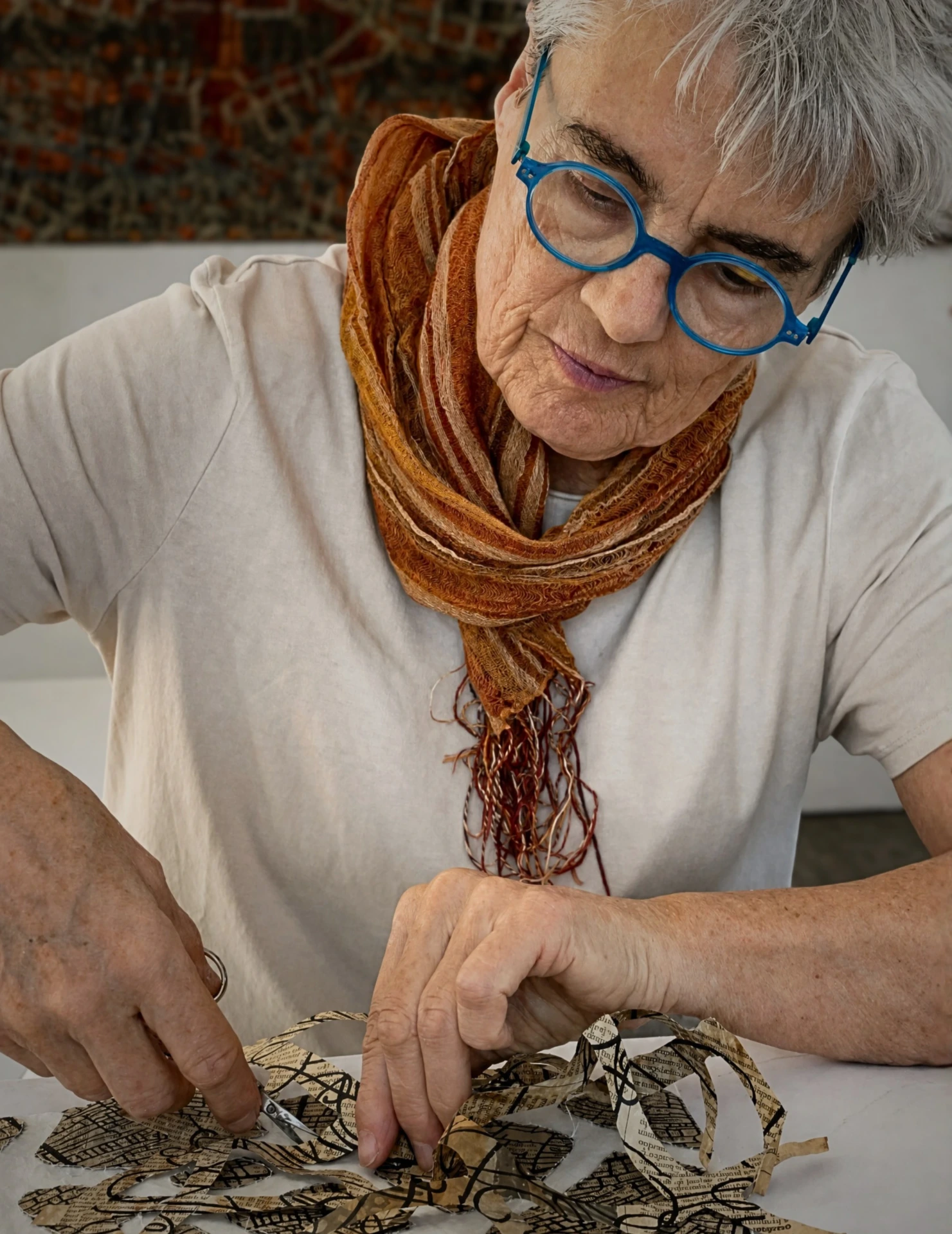
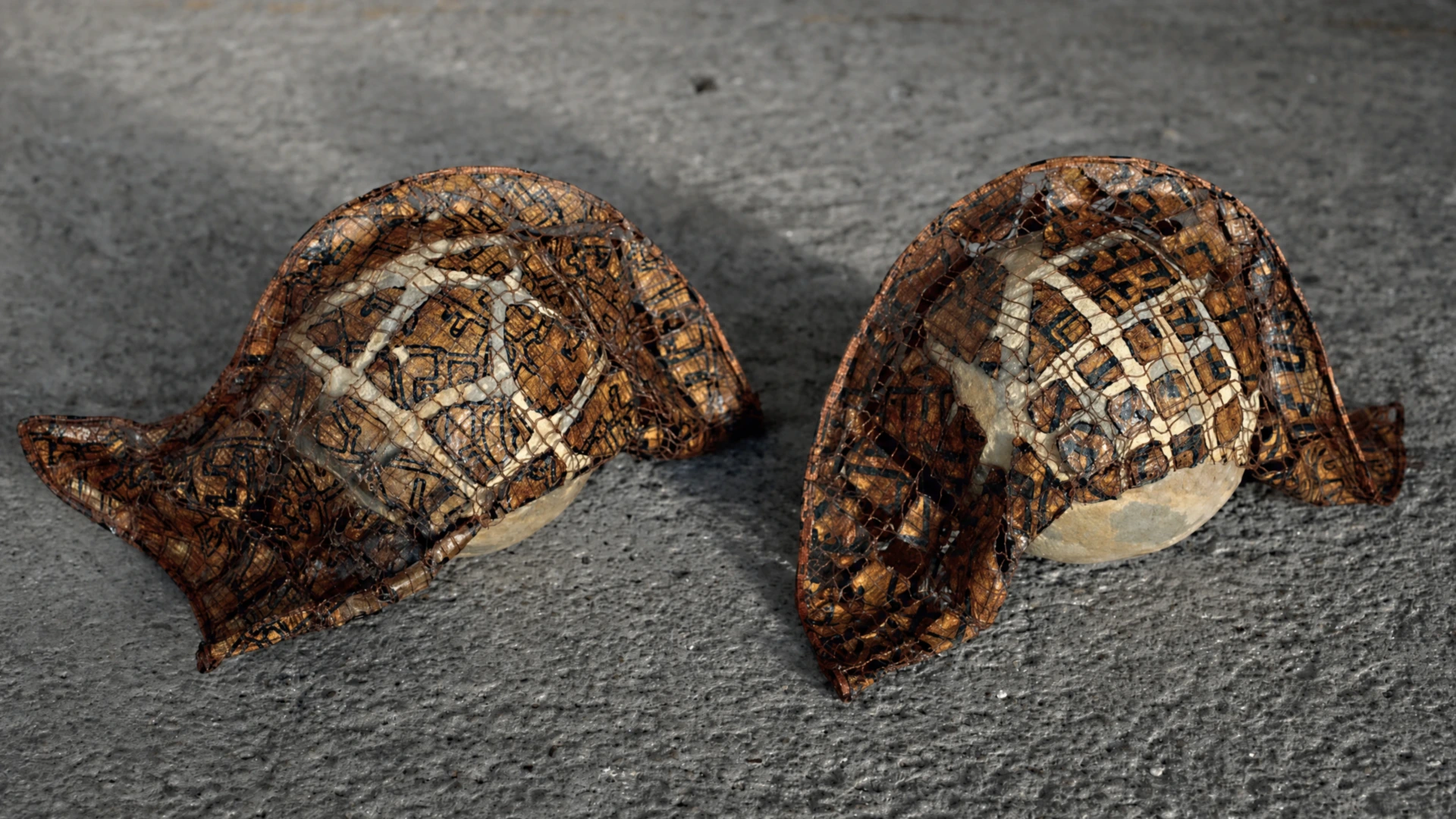
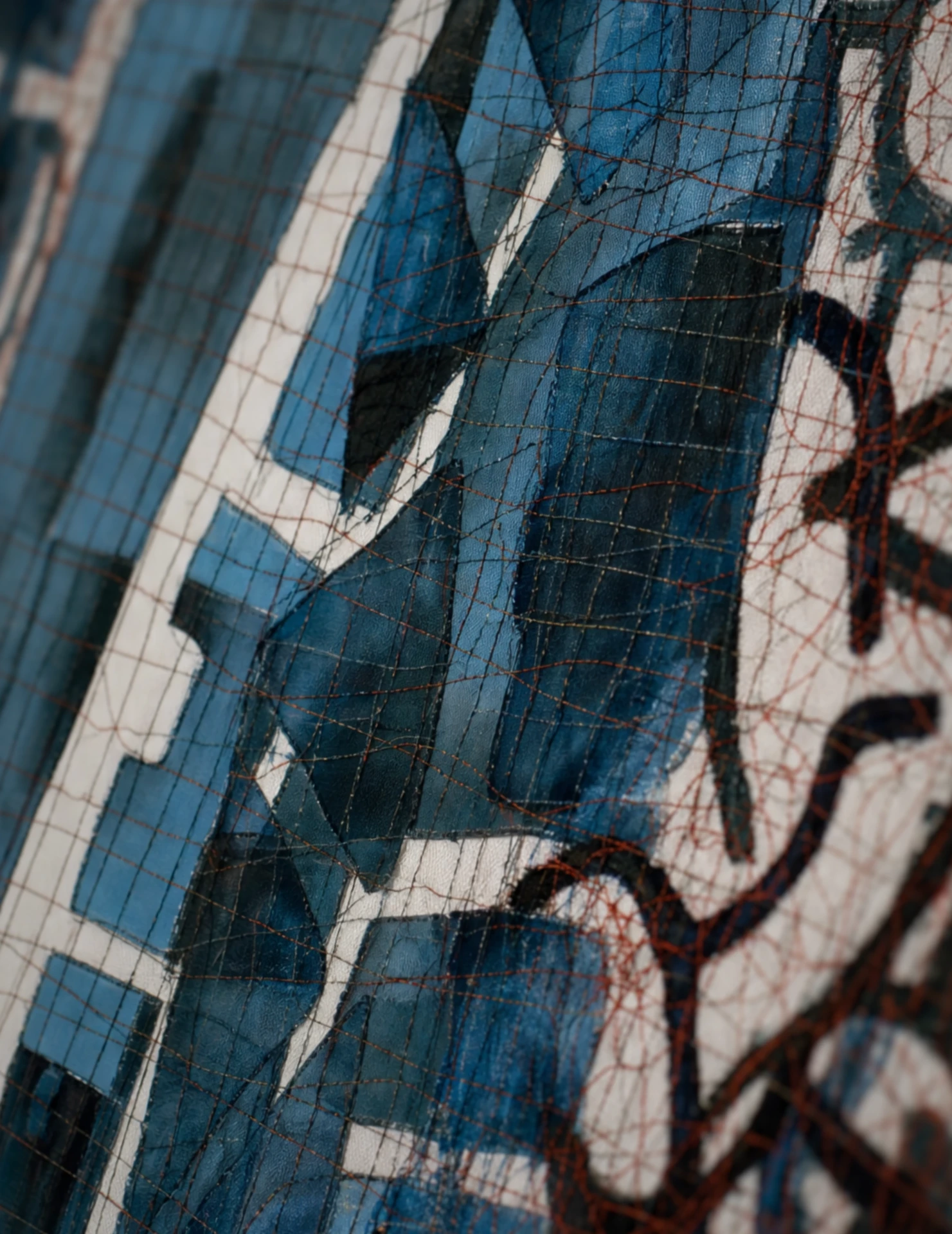
I work with recycled paper, textiles and other discarded soft materials. My practice combines traditional textile techniques with experimental approaches to paper pulp making and casting, together with printing, painting, cutting and machine stitching.
These processes have led to a body of work that includes large-scale installations, wall pieces and three-dimensional objects.
“Maps have become visual metaphors for navigating questions of identity, belonging and place.”
Eszter Bornemisza, Fibre artist
Inspired by fragments
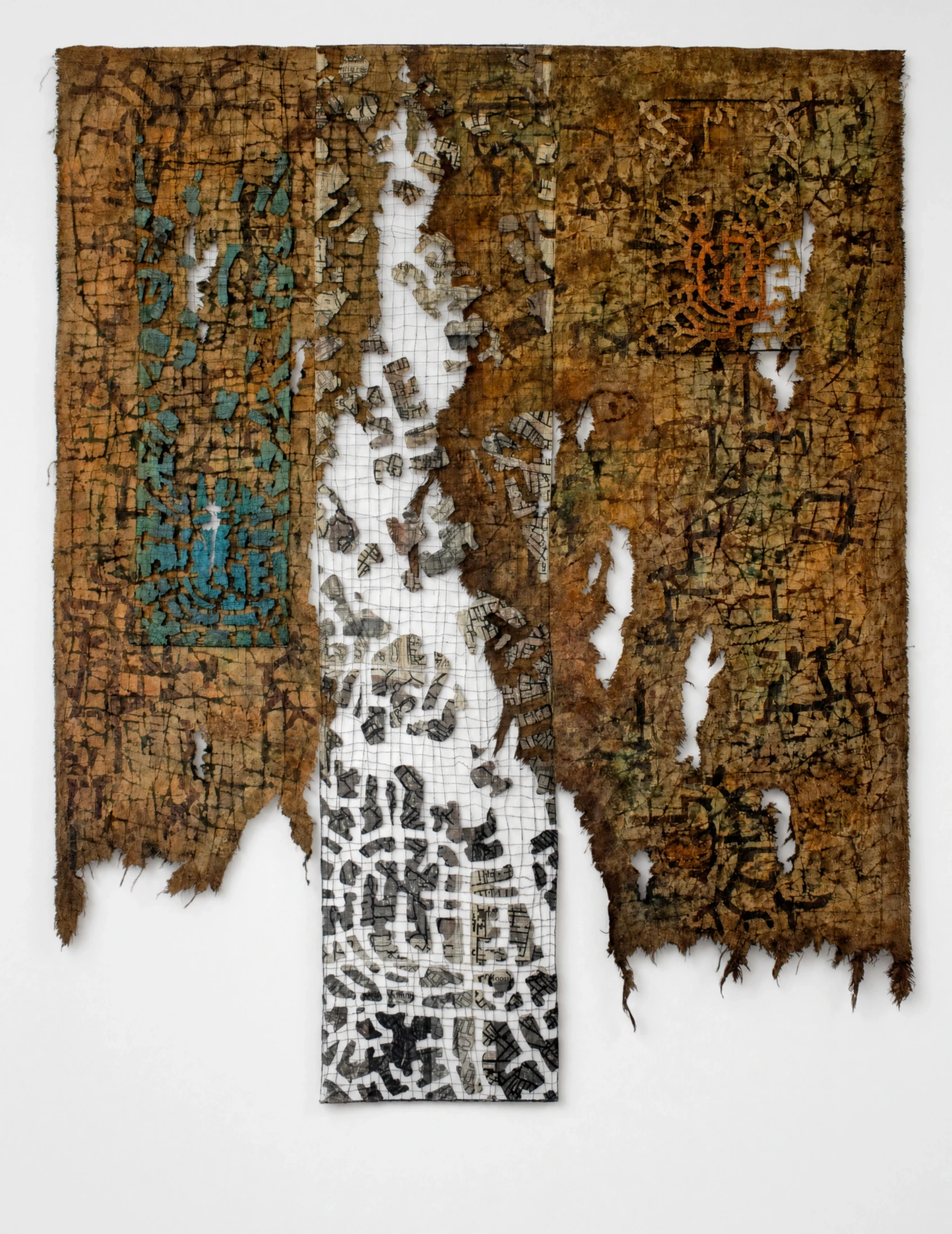
I rarely make precise plans before I begin. Usually, I start with a raw idea and let the work develop through experimentation.
My starting points are often fragments left over from earlier pieces, alongside new elements that I create specifically for the installation. I arrange them in front of a white wall, then gradually add, remove or reposition pieces until the composition feels right.
My process is largely intuitive, and I don’t consciously bring my background as a mathematician into my work. However, when I reach a point where I’m not happy with the results, I often switch to a more analytical way of thinking.
I systematically consider different possibilities, remove elements that don’t contribute to the piece and evaluate which solutions are most likely to work. Perhaps that problem-solving approach is where my previous life as a mathematician still finds its place in my practice.
Most of my work is constructed using a sewing machine, with only the final finishing touches completed by hand.
“I look for a balance between harmony and tension, while allowing one area to become the visual focus.”
Eszter Bornemisza, Fibre artist
Discovering the unexpected
Early in my textile career, I began incorporating maps into my work because I was fascinated by their graphic language.
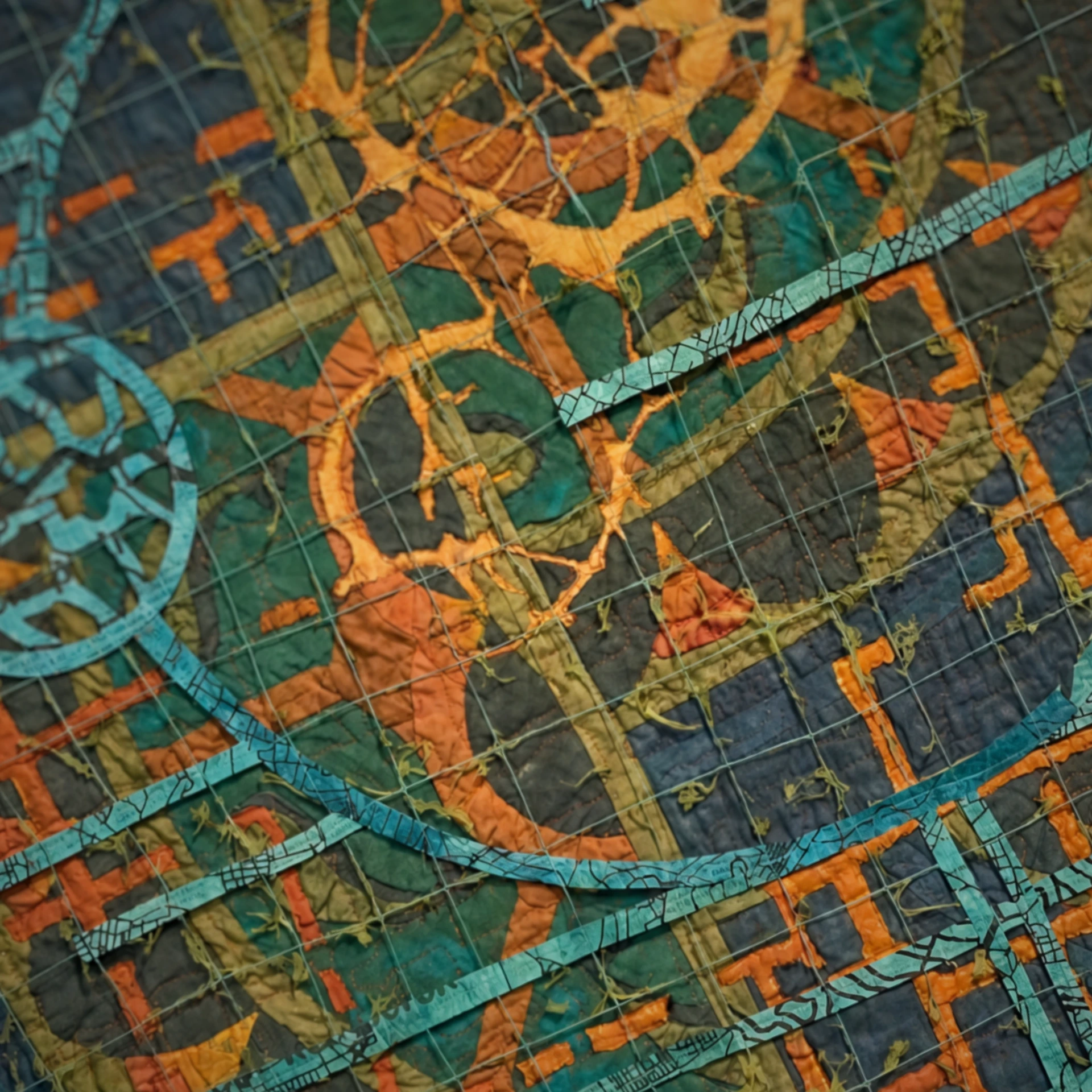
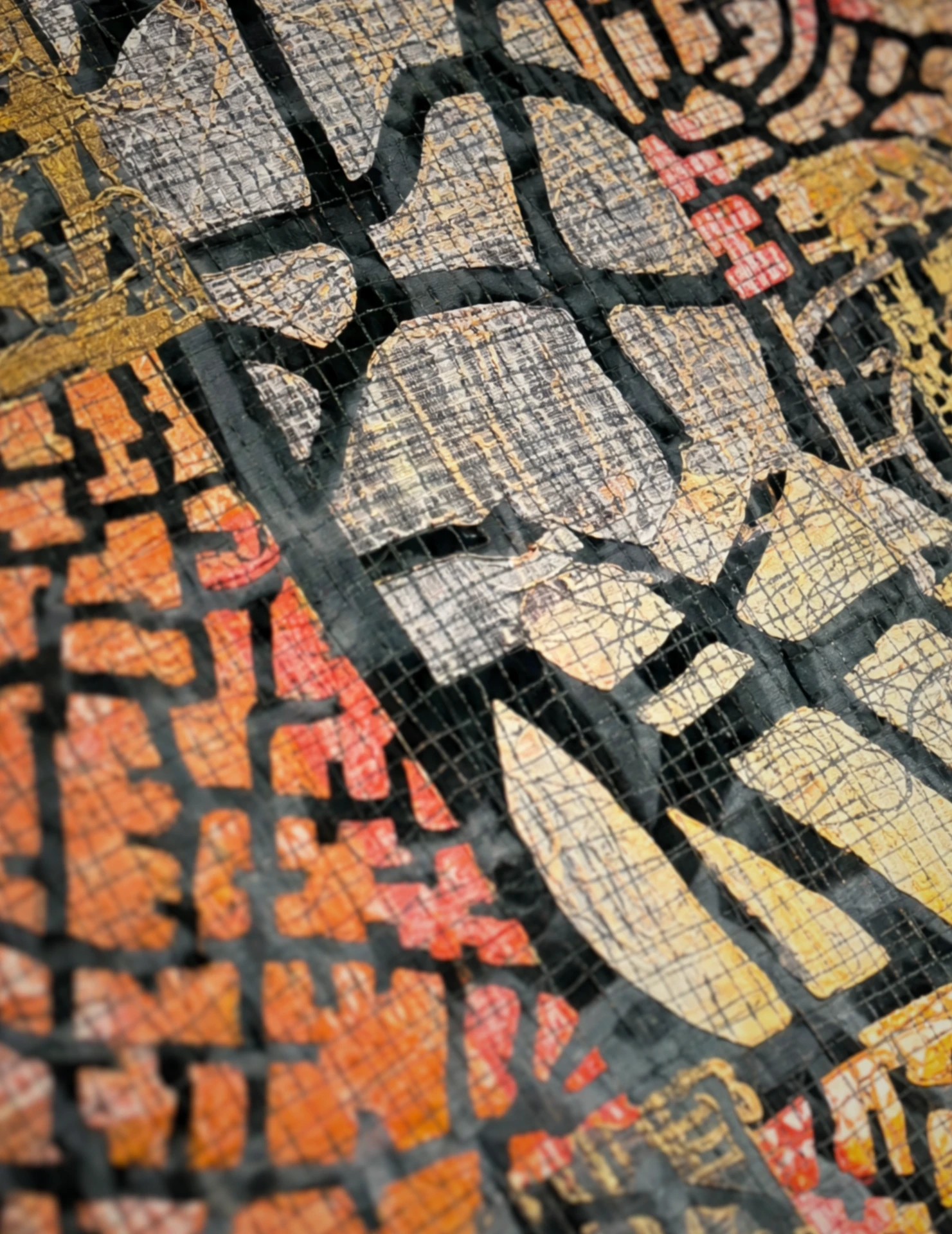
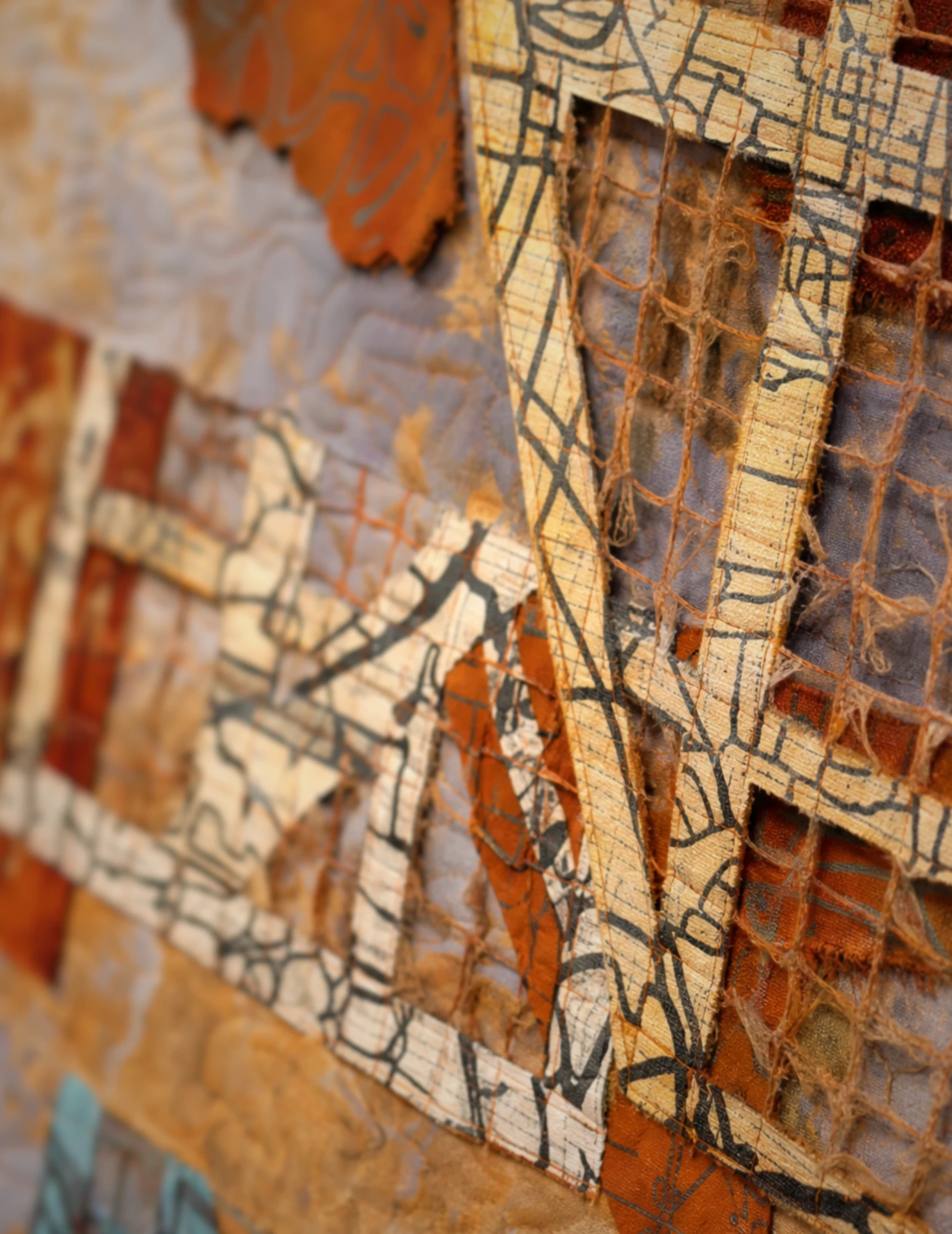
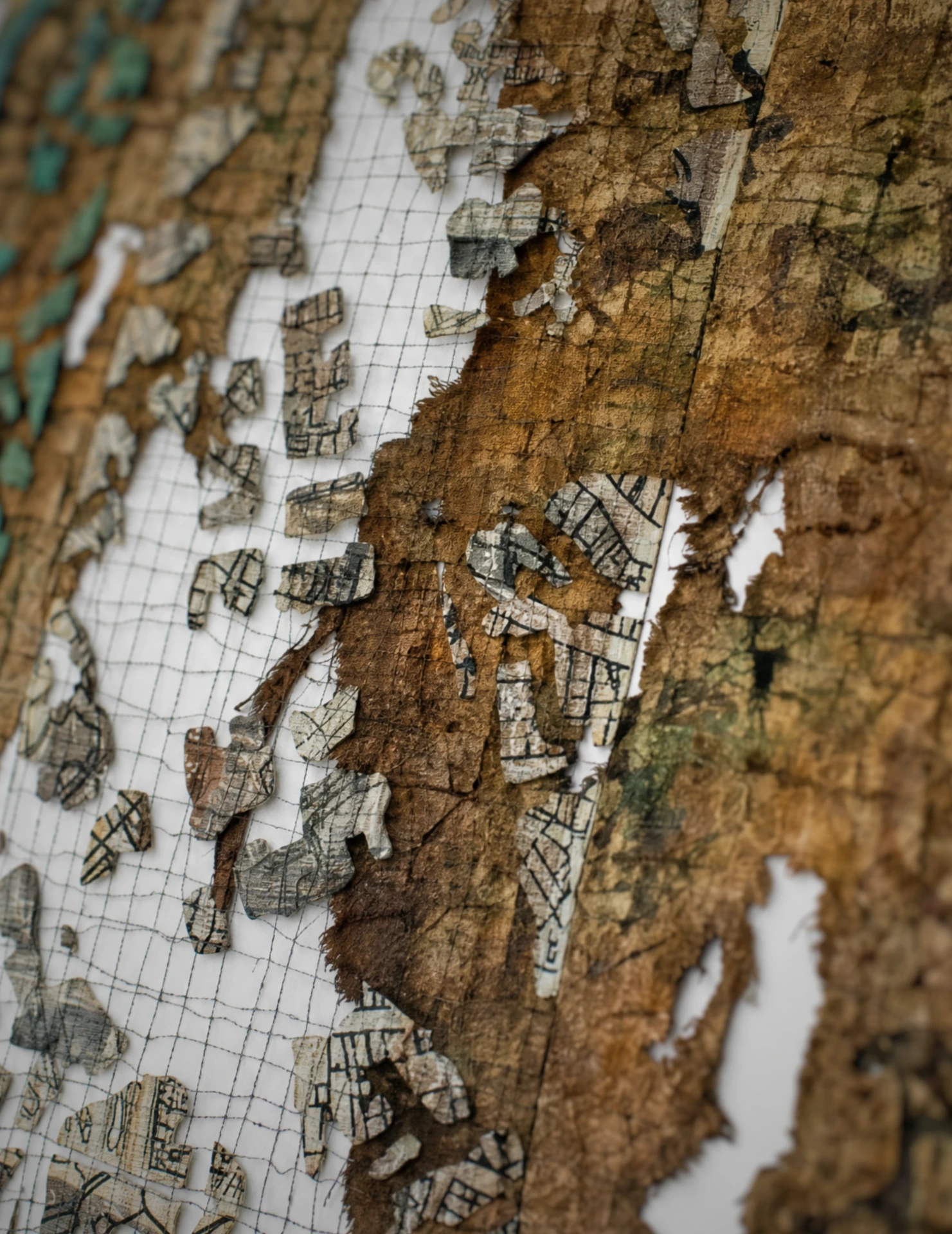
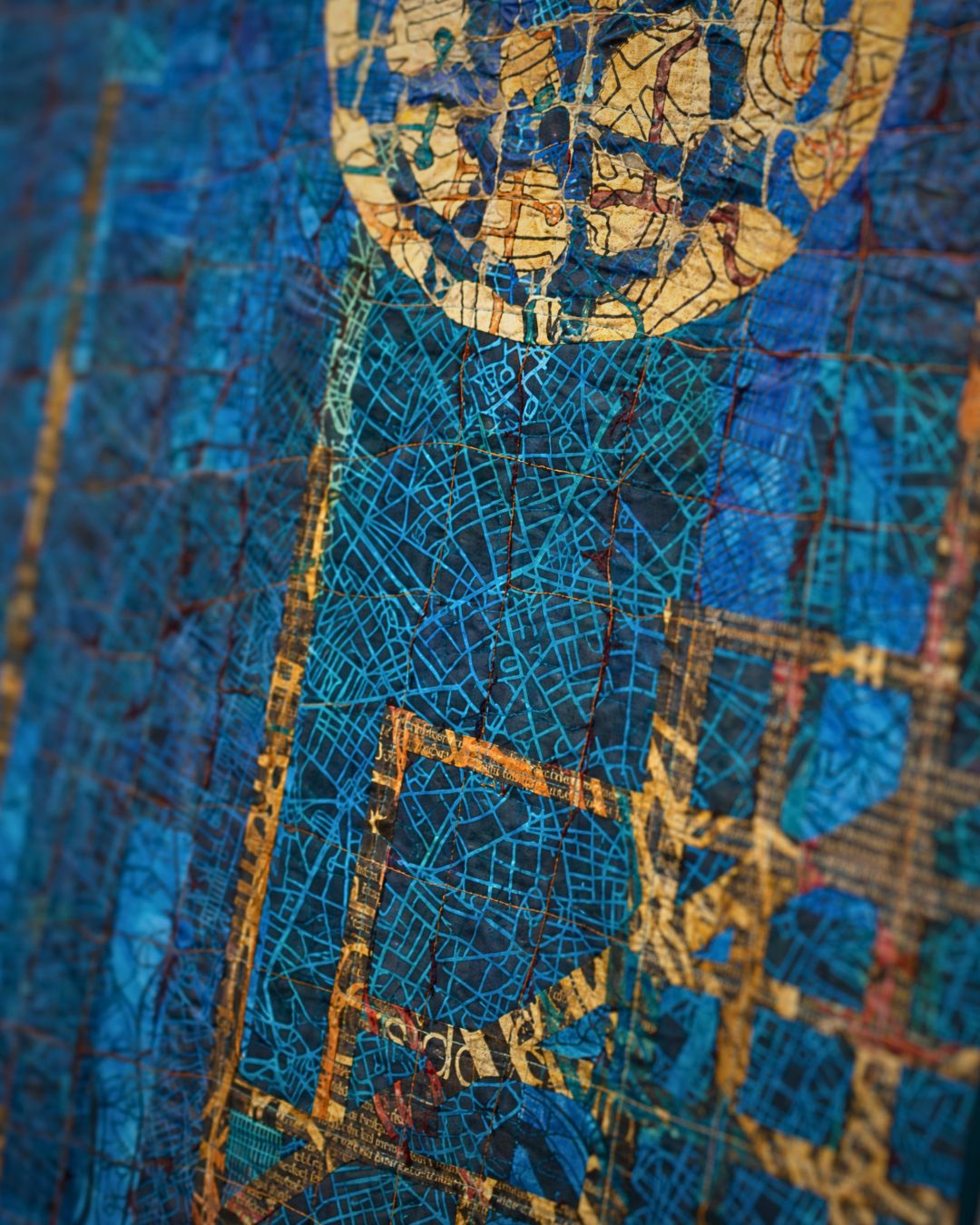
At first, I cut map shapes from synthetic fabrics using a soldering iron. However, I found them a little flat, so I began experimenting with newsprint, which I found much richer because the fragments of text add another layer of meaning.
More recently, I have been overprinting with black-and-white maps, building up layers of imagery and occasionally adding colour while ensuring that each layer remains visible. Then I cut out the maps by hand and incorporate them into my work.
Because paper is more fragile than fabric, I usually seal it before stitching, as I demonstrate in the Stitch Club workshop.
“Different papers behave in different ways and unexpected results often lead to new ideas.”
Eszter Bornemisza, Fibre artist
Finding my way
When I started making art quilts, I quickly realised that despite my technical skills, I needed to learn to think visually.
I considered taking courses, but I knew that traditional education wasn’t the right path for me. I’ve always preferred learning through observation, experimentation and finding my own way rather than following instructions.
Instead, I began systematically studying books on modern and contemporary art, as well as exhibition and museum collection catalogues that we had at home.
For years, I made a habit of returning to my favourite books. I would look at them again and again. Over time, I noticed that my responses to the same artworks had subtly changed. I realised that I had obviously learned something.
I tried to understand and put into words why certain artworks drew me in while others, although equally accomplished, did not.
Hobbyist to artist
Originally, I trained as a mathematician; however, I always enjoyed making things. I loved sewing garments, making shoes, weaving jackets and painting shawls, but these activities were just hobbies.
A turning point was a bus tour I joined in 1996 to visit the Quilt Expo in Lyon, France.
Encountering the contemporary quilts there was a real ‘aha’ moment for me. I knew immediately this was what I wanted to do. I even said to myself that one of my own quilts would be exhibited at the next Expo. And it was.
Since then, I have participated in numerous solo and juried group exhibitions.
I’ve held solo shows at Timeless Textiles Gallery in Newcastle, Australia – my fifth exhibition there – and in Budapest I presented There Was a Point. This exhibition was a summary of my ongoing exploration of layered, translucent map fragments as a way of reflecting on how we find our place physically, socially and mentally.
Paper & cloth
Curiosity led me to explore combining paper and cloth. These explorations gradually evolved into translucent hangings made from newspaper and thread. For my sculptural installations, I cook my own paper pulp from rush and sedge grass-like plants, casting it over a variety of armatures.
I like the tactile nature of textiles and the freedom they give me to print, dye, paint and build up layers of traces until the surface feels right.
I enjoy the dialogue between textile and paper, and the way both materials carry memory through their textures and marks.
Using what I have
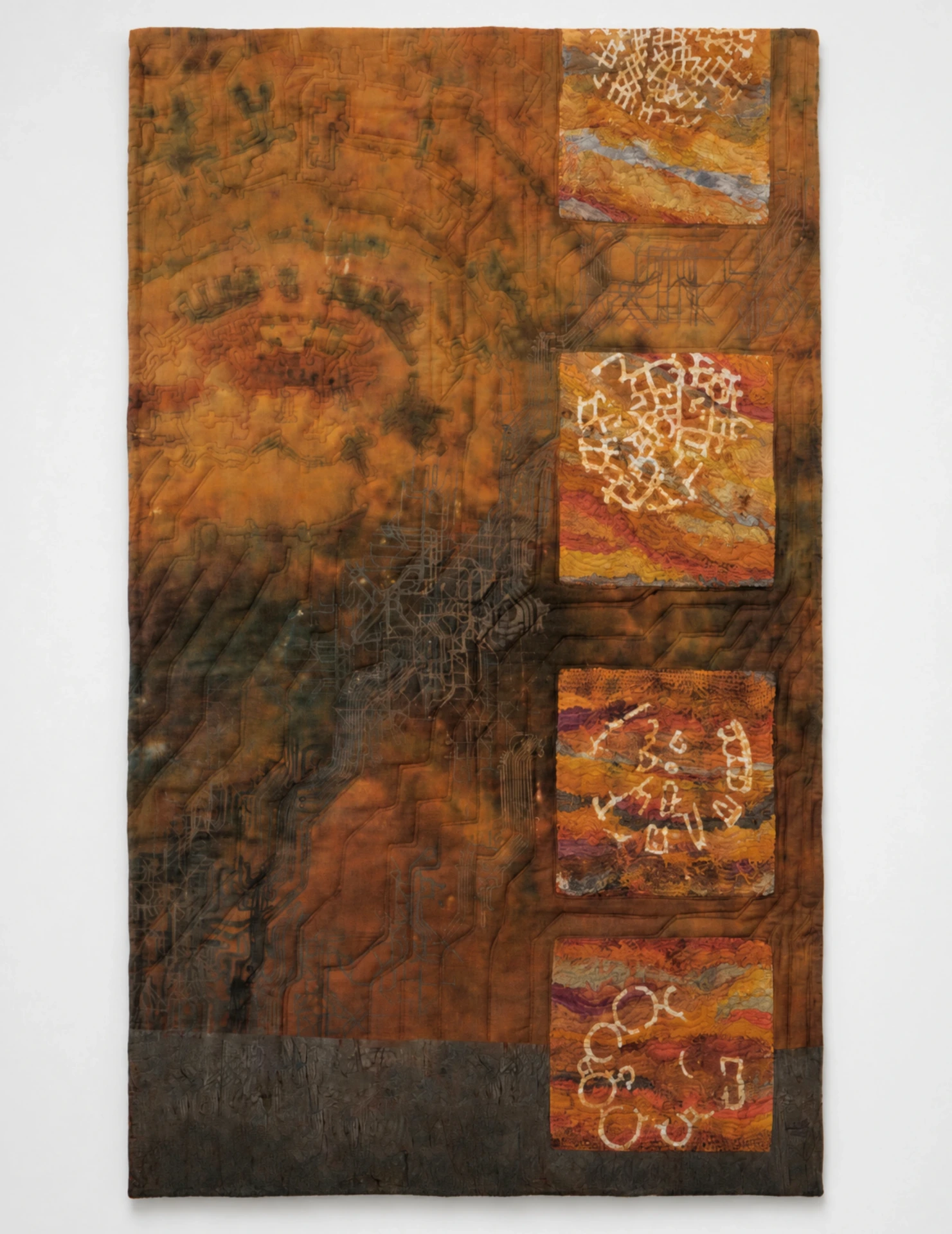
Nowadays, I rarely buy new materials apart from paints and dyes. I prefer to work with what I already have, upcycling discarded clothing, paper and various found materials, including old X-ray films, transparencies and plastics.
This approach has become an integral part of my practice, as I enjoy giving overlooked materials a new life and discovering their hidden possibilities.
In my Stitch Club workshop, I used many of the paper and textile scraps left over from earlier projects. I have piles of them in my studio, so for the workshop I simply selected a few that worked well together. Using these remnants reflects the way I normally work.
I recommend looking around at what is already at hand. Leftover materials, discarded objects and fragments from previous projects can often become valuable resources for new work.
“Nothing is wasted, and even the smallest fragments can find their place in a new piece.”
Eszter Bornemisza, Fibre artist
Comments